
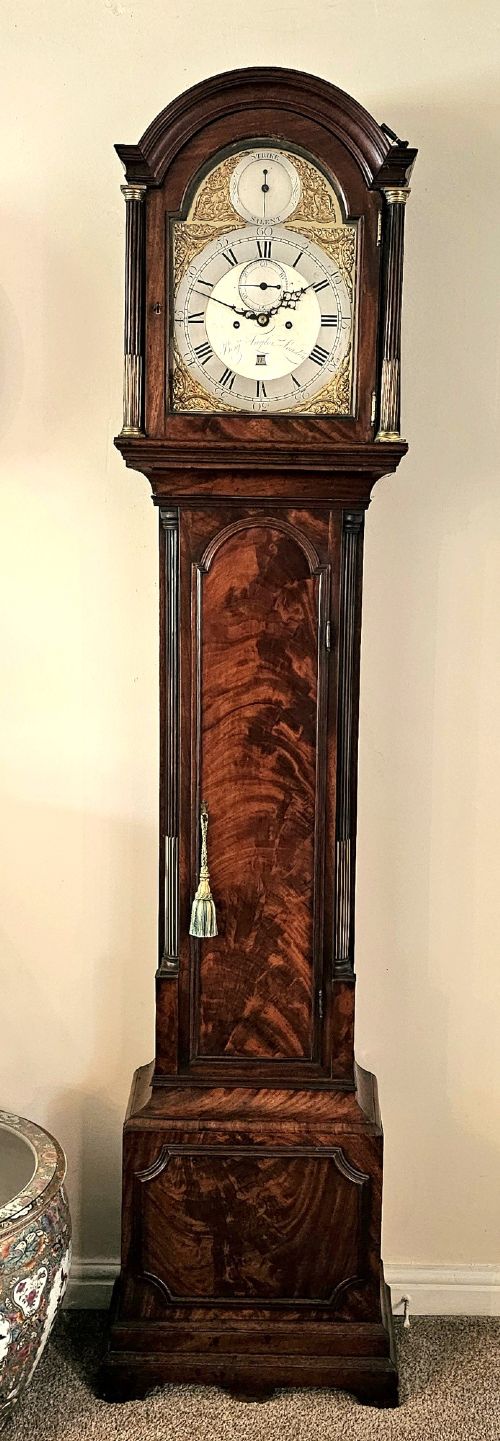
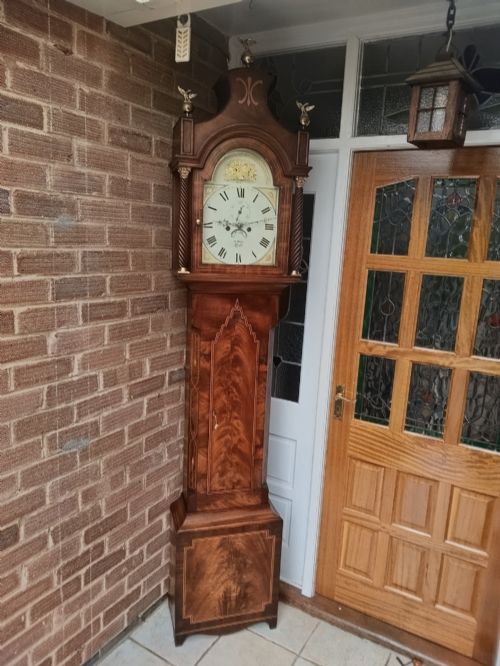
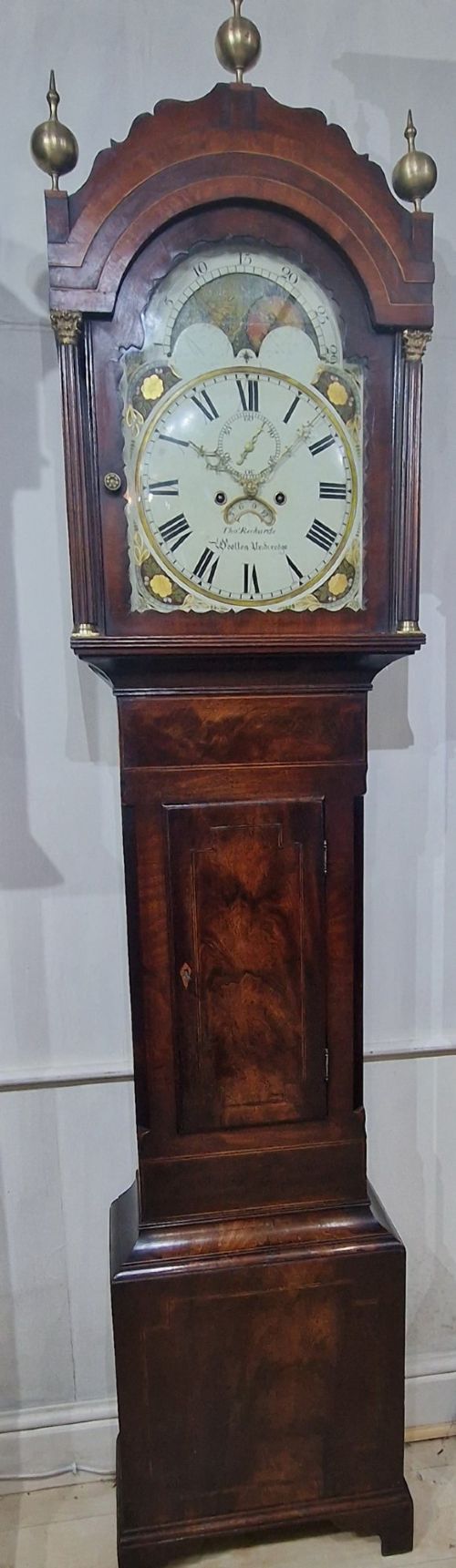
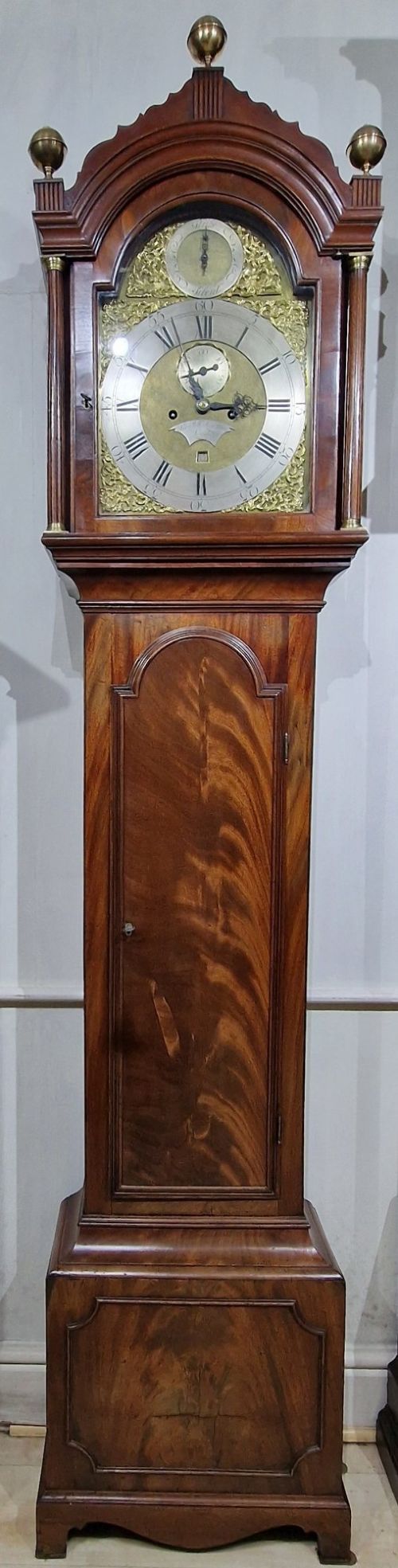
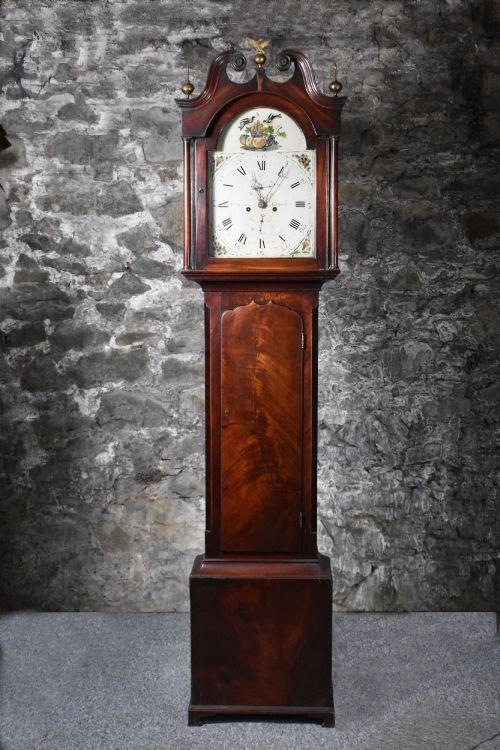
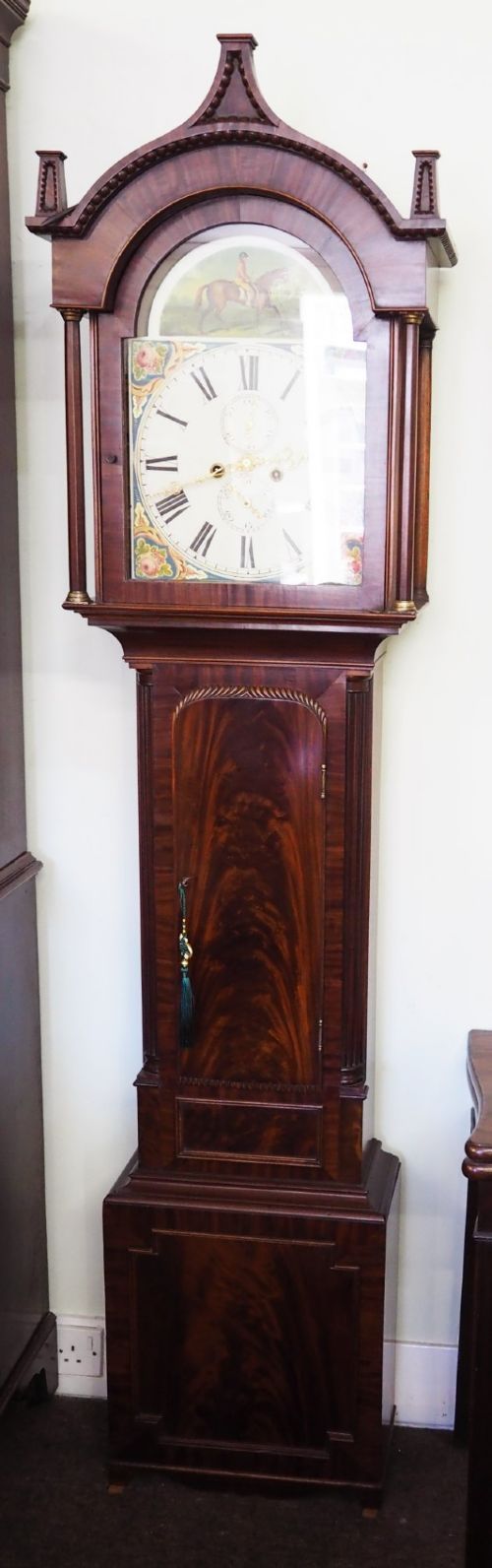


Flame Mahogany Standing Clock
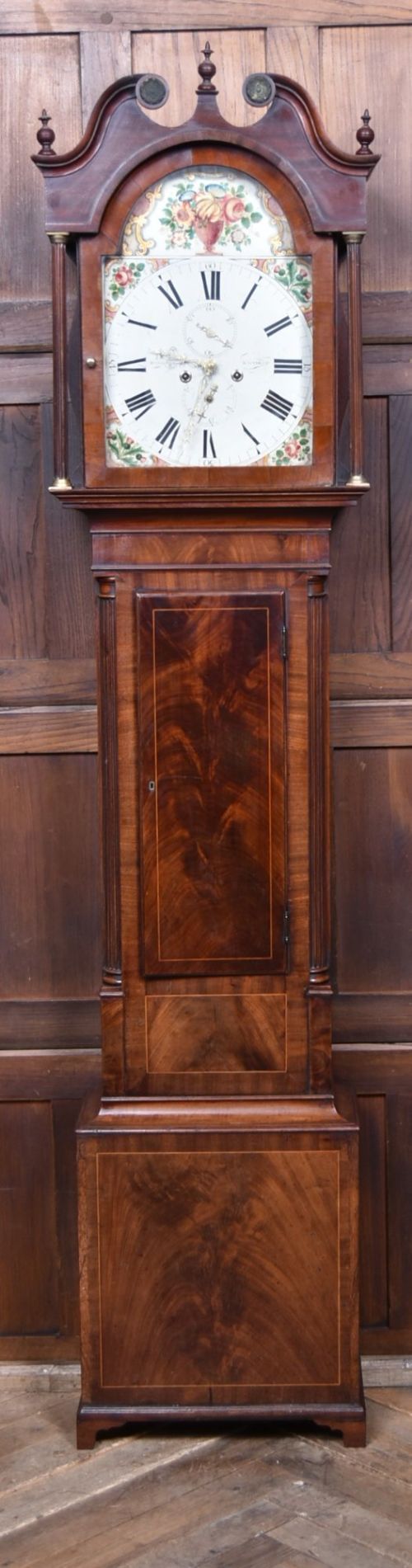
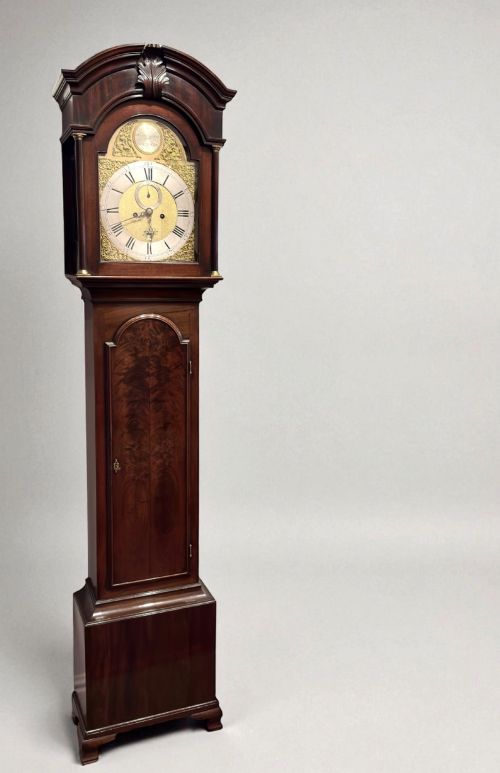
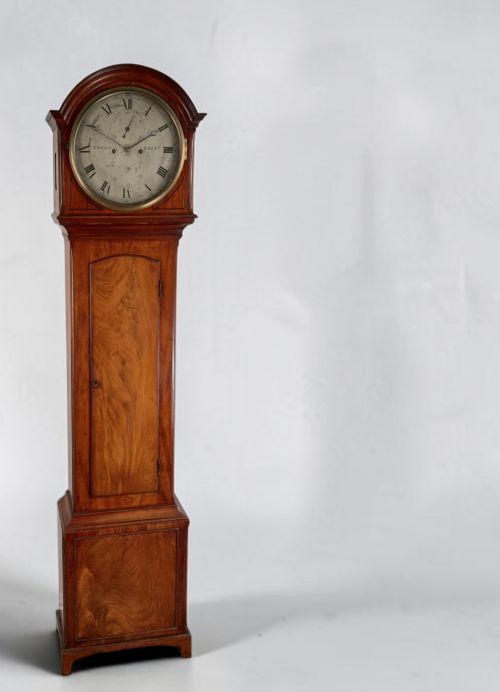
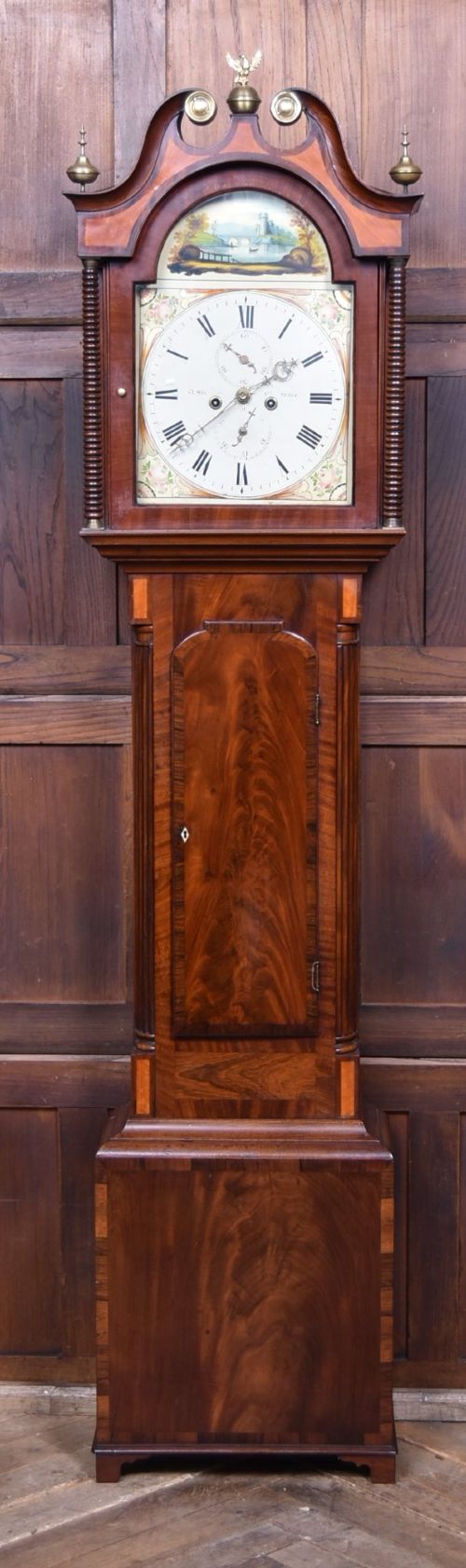
A flame mahogany standing clock is a tall floor-standing timepiece housed in timber with dramatic figuring, bringing mechanical precision and presence to a room.
Flame Mahogany Standing Clock
When searching for a flame mahogany standing clock, buyers examine tall floor-standing timepieces that combine functional movement with architectural cabinetry. These works date across several eras, appearing in Georgian, Regency, Victorian, and later nineteenth-century periods.
The most frequent examples found here take the form of longcase or grandfather clocks constructed in mahogany and flame mahogany veneers, often incorporating painted iron dials and brass fittings. Regional variations span English workshops from London, Liverpool, and provincial towns, alongside Scottish and Welsh centres of clockmaking.
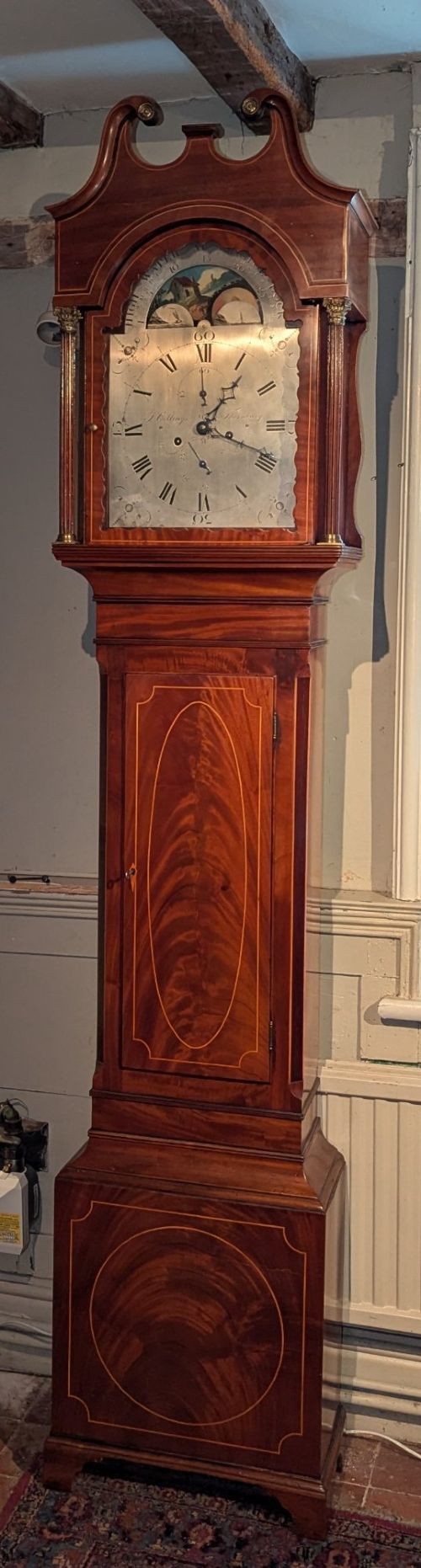
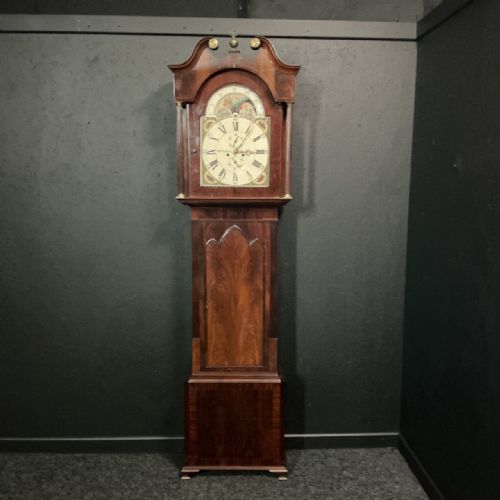
Makers recorded on these pieces include notable horologists such as James McCabe, Thwaites, and Francis Perigal, as well as Scottish and regional makers. The cases range from simple architectural proportions to inlaid versions featuring moon phase dials and rolling moon mechanisms.
What varies in quality
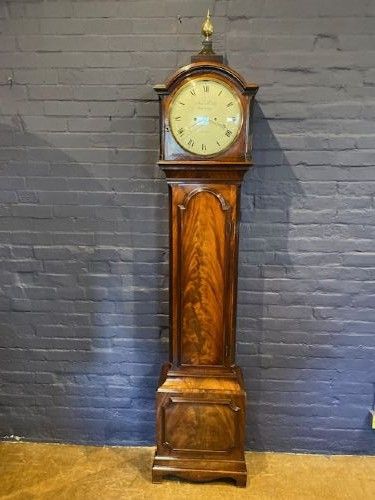
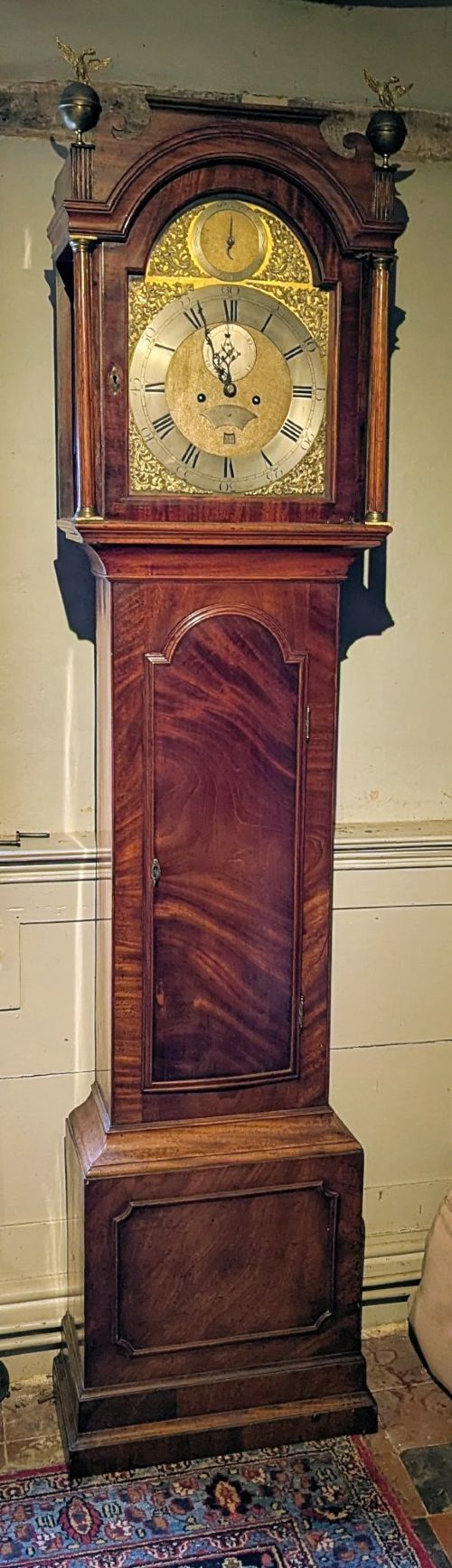
The visual impact of the timber figure distinguishes finer examples, where symmetrical flame mahogany veneers wrap across the longcase door with careful grain alignment. The depth and crispness of brass dial engraving, arched face details, and inlaid stringing further separate standard production from superior cabinetwork.
Movement sophistication also dictates standard, ranging from simple timepieces to complex eight-day movements with rolling moon phases, musical chiming capabilities, or regulatory precision. The integration of well-proportioned hoods with freestanding columns and swan-neck pediments completes the architectural hierarchy.
Some rolling moon dials feature delightfully plump painted moons with human facial profiles gazing placidly across the centuries.
James McCabe·Thwaites·Francis Perigal·Handley and Moore·Parkinson and Frodsham
The Flame Mahogany Standing Clock Glossary
- Flame mahogany
- A timber veneer sliced from the branching point of the mahogany tree, producing a distinctive flickering flame pattern. This decorative grain was prized for principal door panels on tall clock cases.
- Longcase clock
- A tall floor-standing timepiece enclosed in a wooden case with a pendulum and hanging weights. Often referred to colloquially as a grandfather clock.
- Moon phase dial
- A secondary dial face tracking the lunar cycle through a rotating painted disc visible behind an arched aperture. It appeared on higher-grade clocks from the eighteenth and nineteenth centuries.
- Regulator
- A high-precision clock designed for absolute accuracy, typically featuring a simplified dial layout for reading seconds independently. These movements were utilised in observatories and workshops.
- Painted iron dial
- A metal face coated with white paint and hand-lettered numerals, replacing the earlier engraved brass square dials during the late eighteenth century.
Flame Mahogany Standing Clock: Frequently Asked Questions
How do I wind an eight day clock?
Winding involves inserting a key into the winding holes on the dial face and turning it slowly until the weights reach their upper limit near the top of the trunk.
Care must be taken not to overwind the mechanism, stopping as soon as resistance increases to prevent damage to the brass arbors and cords.
Where should I place a longcase clock?
These clocks require a stable, dry interior wall away from direct sunlight, central heating vents, and exterior doors where temperature fluctuations might affect the wood and movement.
Positioning the case on a level floor ensures the pendulum swings evenly and the escapement maintains an accurate beat.
How do I set the correct time?
The minute hand is gently moved clockwise to the correct hour, allowing the strike train to complete its sequence on the hour and half-hour marks.
Moving the hands backwards should be avoided unless specified by the mechanism design, as this can jam the striking gears.
What maintenance do these movements need?
Periodic cleaning and lubrication by a qualified horologist prevents old oils from gumming up the brass wheels and wearing down the steel pivots.
Dust accumulation inside the hood is minimised by keeping the glass door closed and ensuring the trunk fits securely against the wall.