
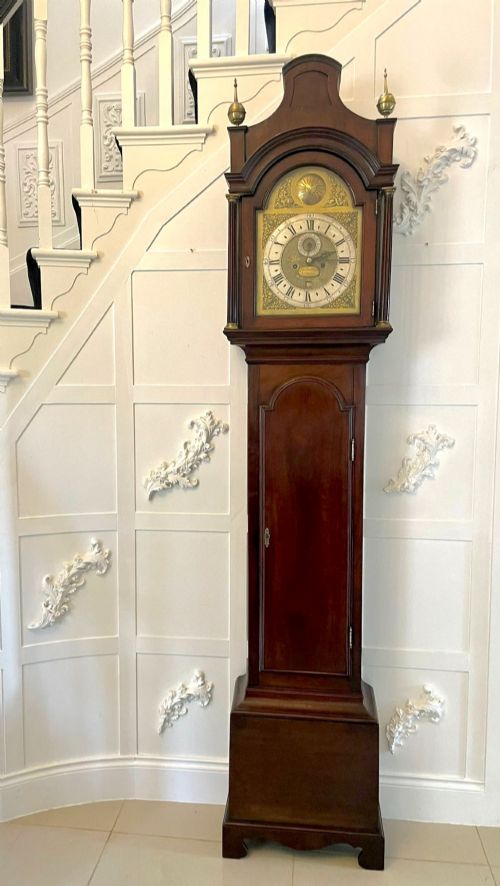
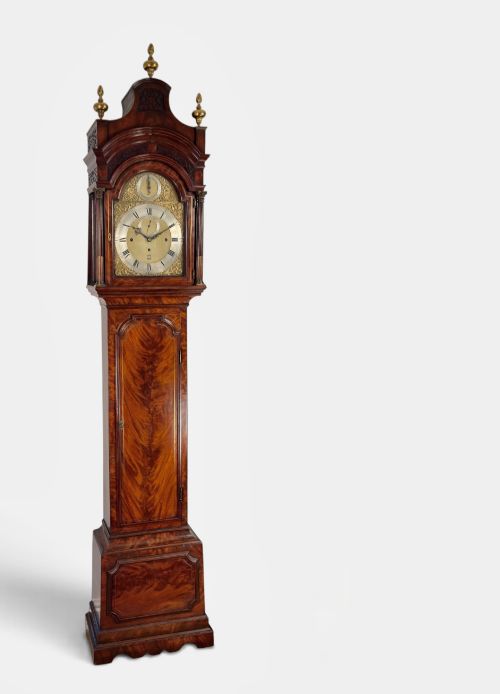
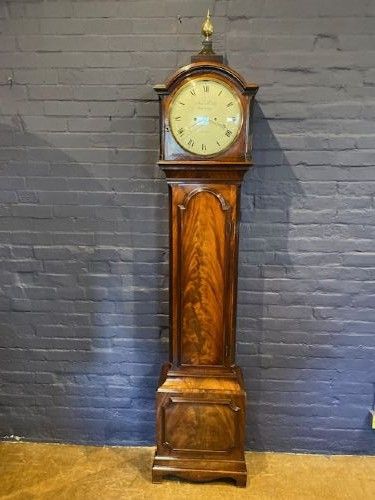
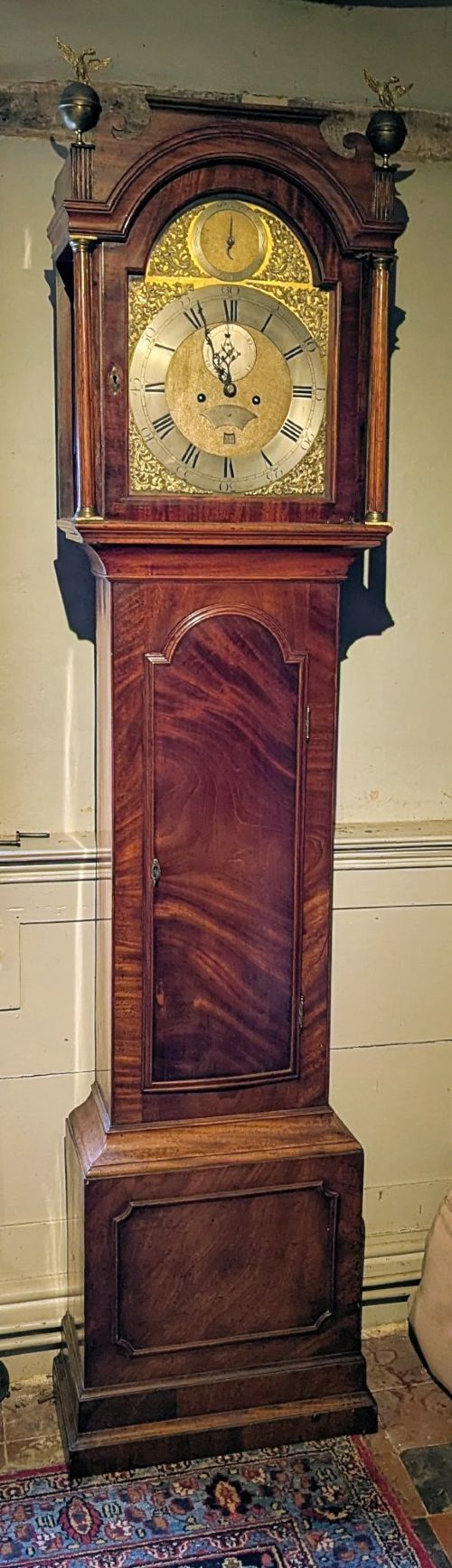
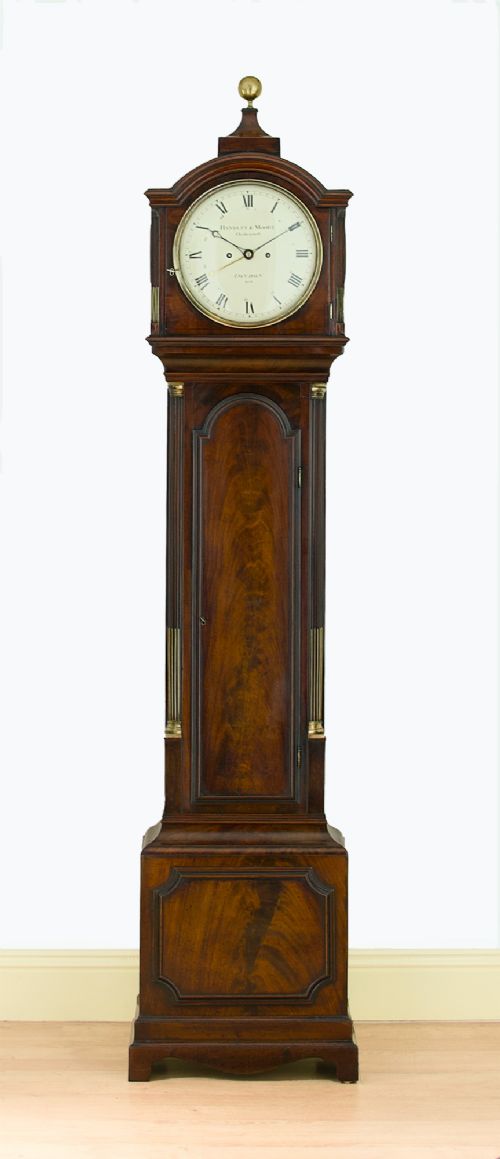
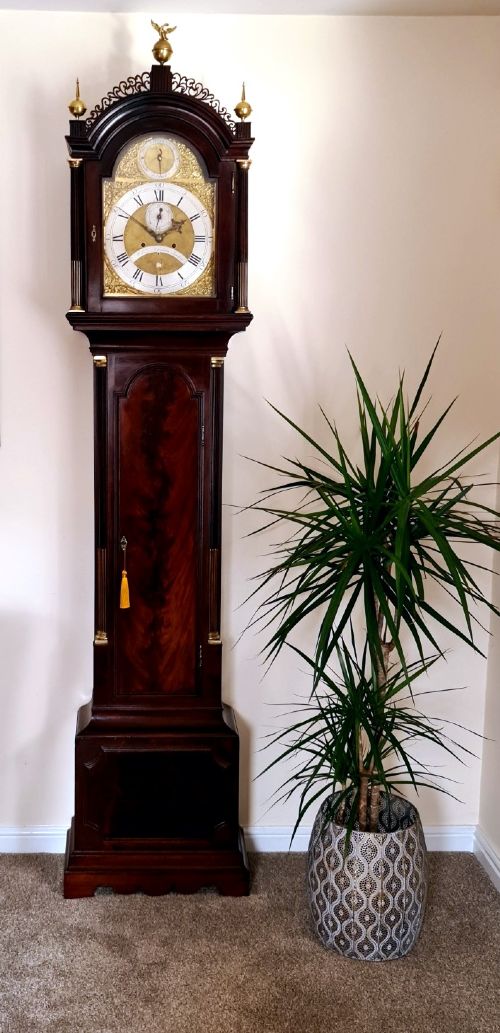
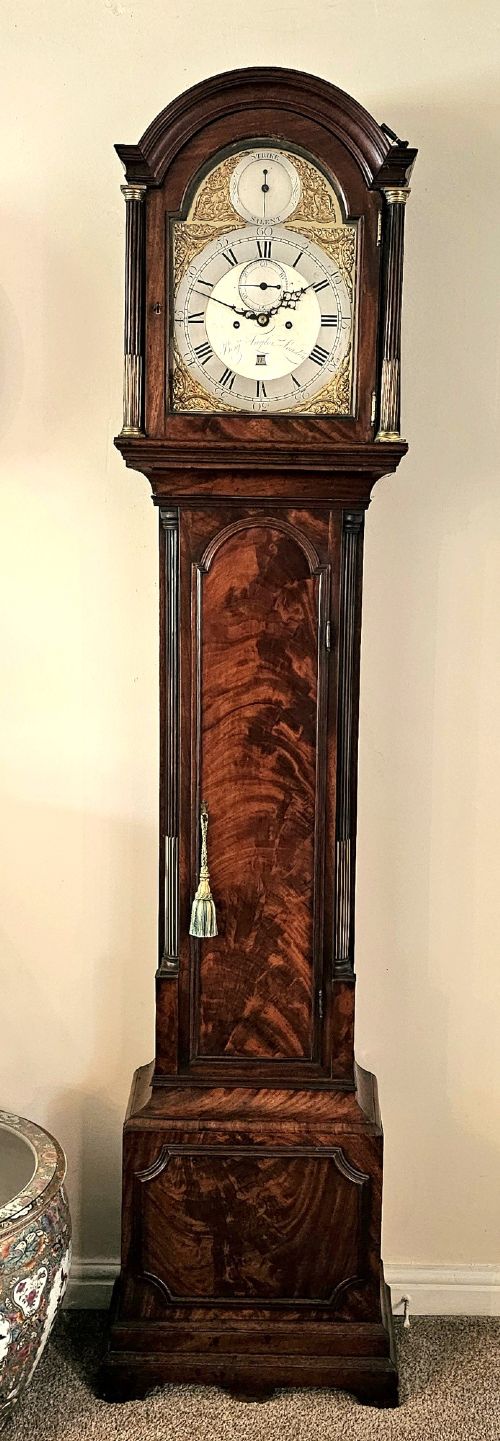
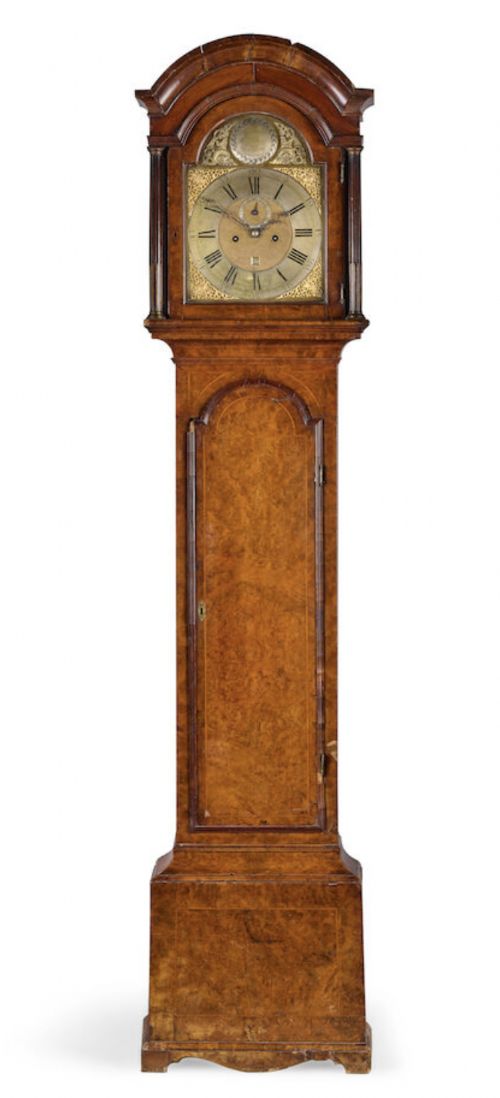

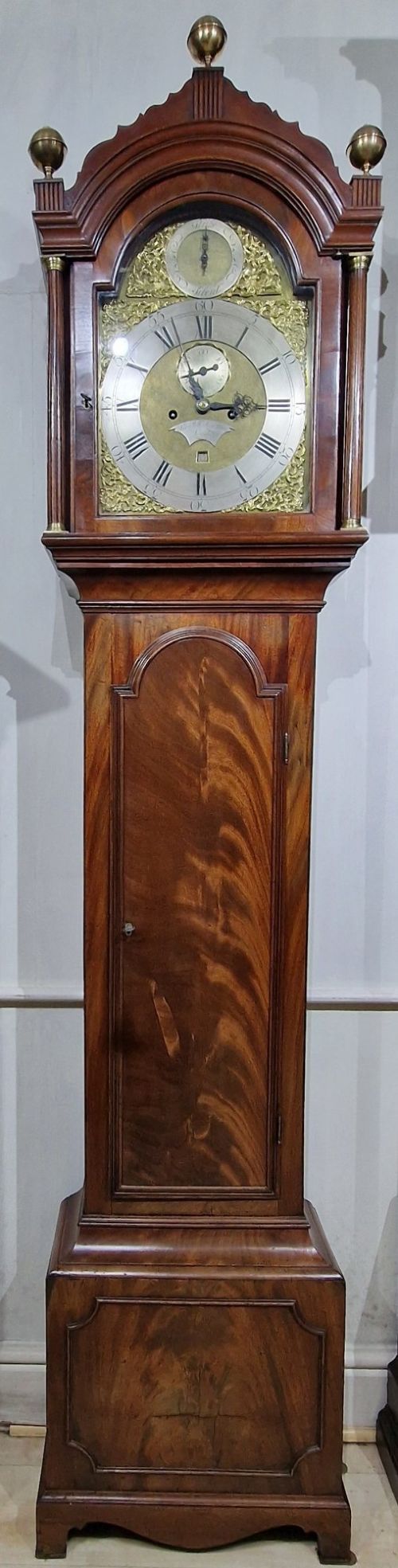


Georgian Longcase Clock London
A georgian longcase clock london stands as a monumental achievement in horology, combining cabinet-maker skill with intricate mechanical movement to anchor a room.
Georgian Longcase Clock London
When searching for a georgian longcase clock london, a buyer encounters tall, floor-standing timepieces designed to house weighted movements and swinging pendulums within timber enclosures. These pieces range from restrained, architectural forms to highly decorative examples originating from capital workshops.
The versions most frequently met on this page span the eighteenth and early nineteenth centuries, drawing on George I, George II, George III, and Regency periods. Mahogany, walnut, and gilt-lacquer surfaces dominate, reflecting the prevailing taste of metropolitan cabinet-makers and clockmakers.
Object types include both standard longcase clocks and miniature grandfather clocks, often featuring dials signed by prominent makers. These survivors bridge domestic utility and decorative arts, serving as functional timekeepers that commanded prominent positions in period interiors.
How They Were Made
Cabinet-makers constructed the tall cases using solid timbers and decorative veneers such as flame mahogany and burr walnut, laid over sturdy pine or oak carcases. Dial faces combined engraved brass, silvered chapter rings, and sometimes painted details with glass panels protecting the hands and movement.
Inside the case, complex brass and steel mechanical movements operated gear trains driven by hanging weights, with pendulums regulating the beat. Specialised workshops applied finishes ranging from clear wax polish to black ebonising and intricate Chinoiserie lacquer work.
Listings feature movements spanning the 18th century, Georgian, Regency, and 19th-century periods, housed in mahogany, walnut, oak, and gilt-lacquer cases.
What Varies in Quality
The standard of a georgian longcase clock london rests on the fidelity of the cabinet-work and the sophistication of the internal movement. Top-tier pieces exhibit finely figured timber veneers matched across the door and plinth, paired with signed movements capable of quarter-striking, moonphase displays, or automata.
Proportion and dial execution dictate distinction within the range, where engraved brass work and signed dial plates demonstrate superior metropolitan craftsmanship. Lesser examples feature simpler pine carcases with plain painted dials and standard eight-day time and strike movements.
Charles Shuckburgh·John Ellicott·James McCabe·Handley & Moore·William Jourdain·Benjamin Taylor·Windmills and Wightman·Henry Weedon·Thwaites·William Kipling·Thomas Vernon·Langley Bradley·William Allam·James Tregent·John Rainsford·Thomas Goddard·Francis Perigal·Wightman·Parkinson & Frodsham·John Shelton·John Thompson·Gardner·James Bullock·William Tomlinson·Dent
The Georgian Longcase Clock London Glossary
- Longcase clock
- A tall, weight-driven pendulum clock housed in a wooden case designed to rest directly on the floor. These pieces are frequently referred to as grandfather clocks.
- Chapter ring
- The metal ring on a clock dial that bears the hour numerals. In better examples, this ring is separately silvered and engraved.
- Quarter-striking
- A mechanism that sounds the quarters of the hour on bells or gongs in addition to striking the full hour. This complication requires extra gear trains within the movement.
- Chinoiserie
- A decorative style employing European interpretations of Chinese artistic motifs, often rendered in gilt lacquer on a dark ground. This finish appears on specialised tall clock cases.
- Grid-iron pendulum
- A temperature-compensated pendulum constructed from alternating rods of steel and brass to counteract expansion and contraction caused by weather changes. This device maintained accurate timekeeping.
Georgian Longcase Clock London: Frequently Asked Questions
Where did these clocks stand in a period home?
Metropolitan timepieces occupied prominent communal areas such as hallways, landings, and formal reception rooms where their height and striking capability commanded attention.
Their substantial presence made them both functional household anchors and visible displays of household status.
How do eight-day movements differ from thirty-hour ones?
An eight-day movement requires winding approximately once a week via holes in the dial face, utilising suspended heavy weights and a longer drop inside the trunk.
Thirty-hour versions need winding much more frequently and often employ simpler internal gear trains without elaborate striking complications.
What is a moonphase dial?
A moonphase display uses a rotating painted disc behind an arched aperture in the dial to track the lunar cycle over roughly twenty-nine and a half days.
Clockmakers added this feature to help agricultural and tidal planning, alongside its decorative appeal.
How should a longcase clock be set up?
Installation requires securing the tall wooden trunk to a stable wall using internal brackets to prevent tipping, then ensuring the case stands perfectly plumb on a level floor.
The pendulum is hung and the weights attached before the clock is gently set to the correct time.