

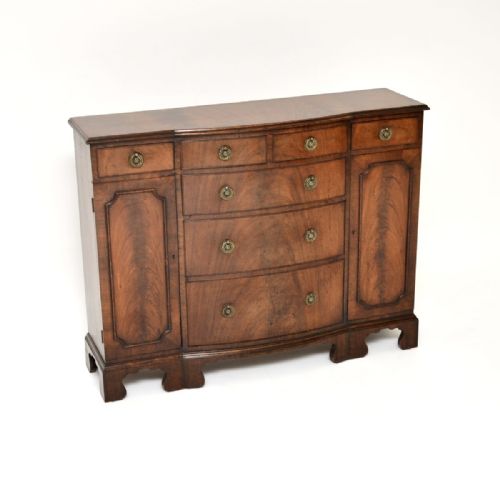
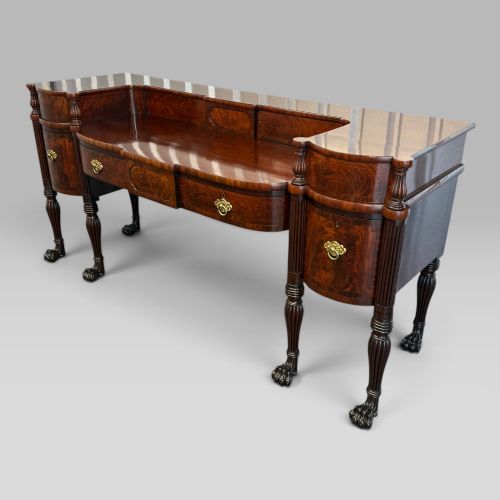
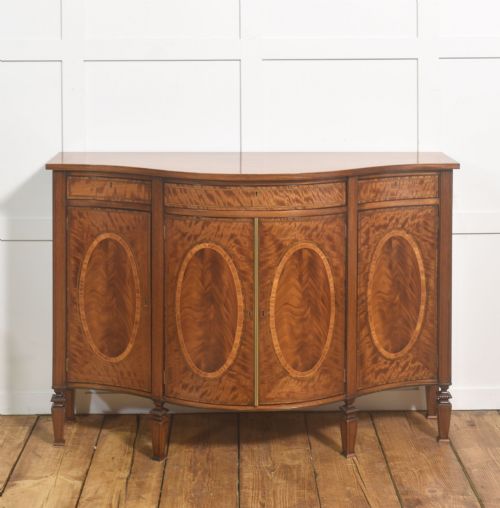
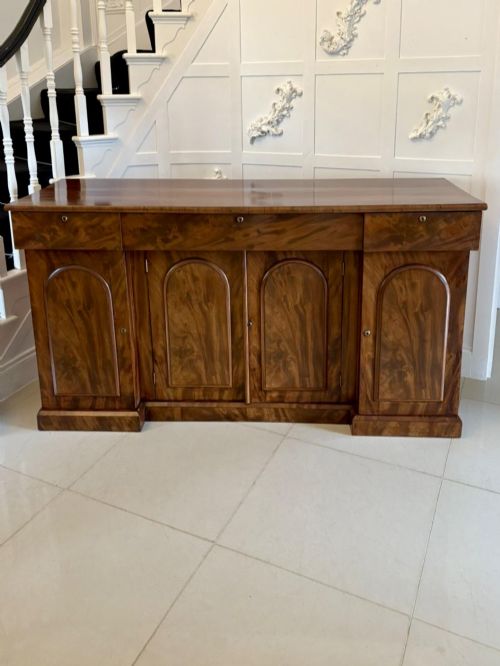
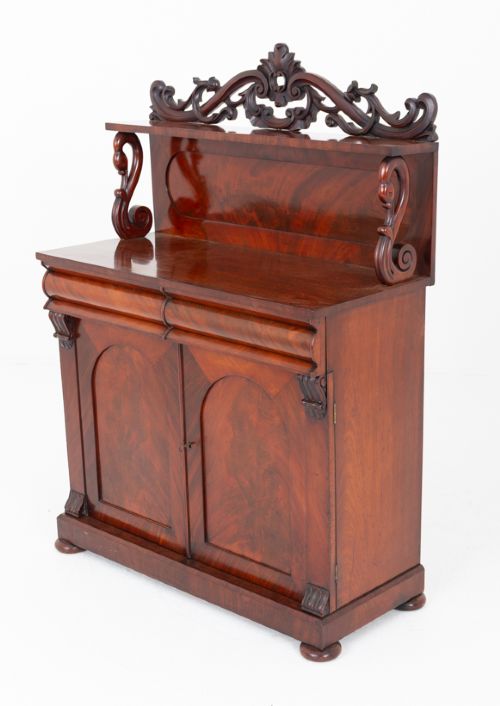
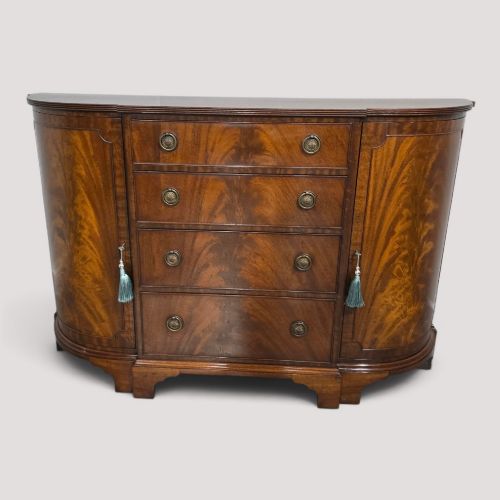
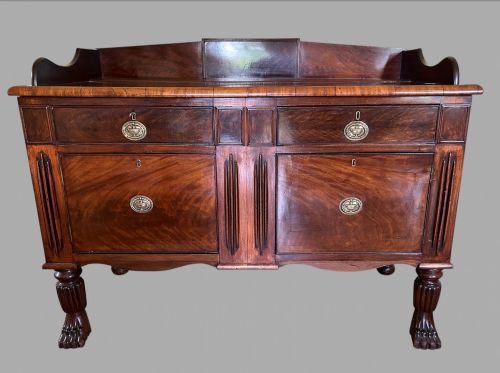
Flame Mahogany Buffet Cabinet
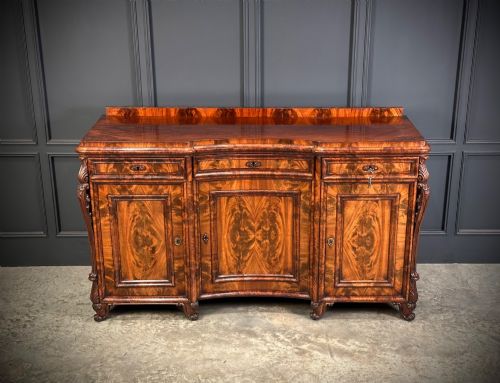
A flame mahogany buffet cabinet brings deep, fiery grain figures into a room while offering substantial dining storage.
Flame Mahogany Buffet Cabinet
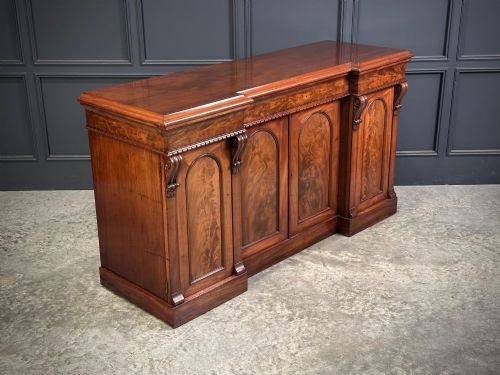
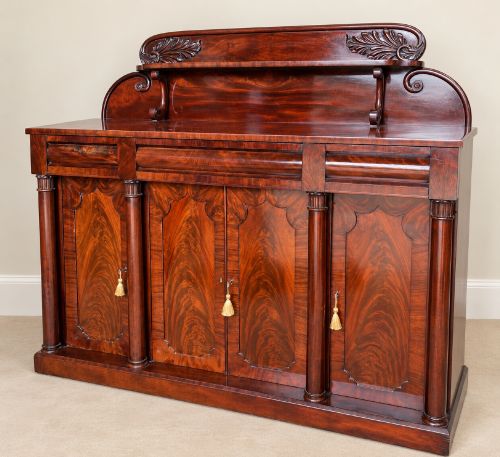
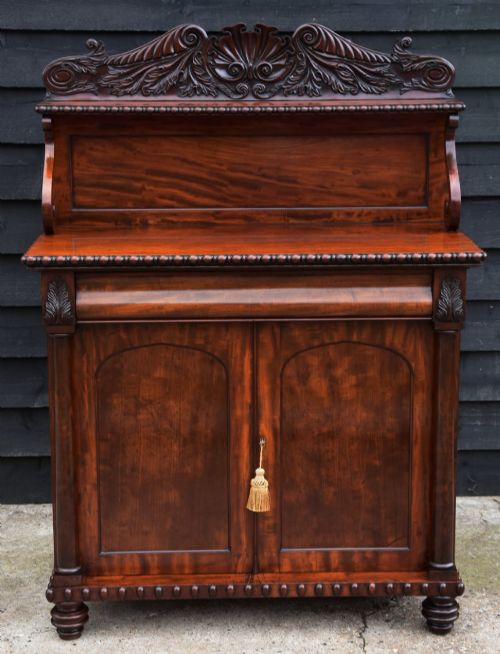
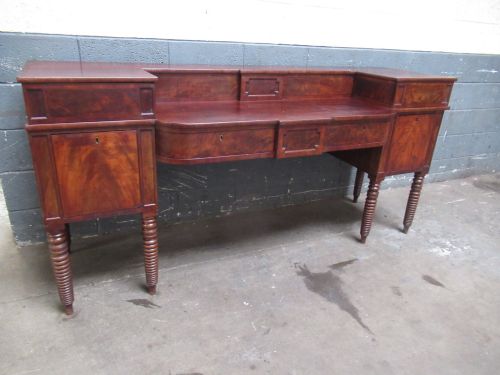
A flame mahogany buffet cabinet is fundamentally a storage piece designed for the dining room or parlour, appearing across periods from the Georgian era through to the Edwardian period. The selection includes sideboards, side cabinets, chiffoniers and breakfront servers sharing a common lineage in British cabinet-making. Most examples found here date from the 19th century, particularly the Victorian and Regency eras.
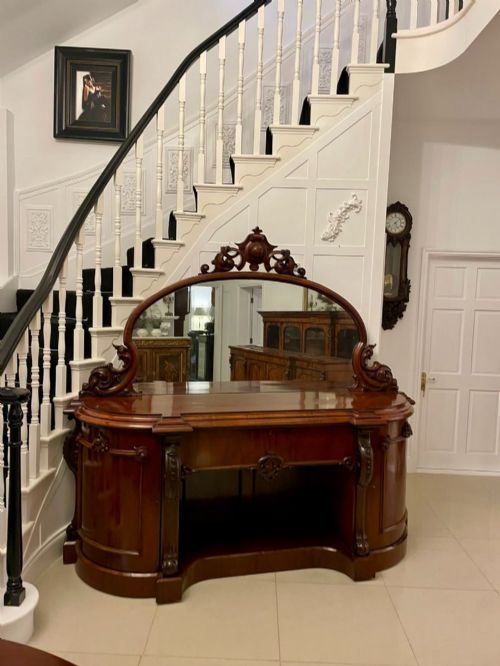
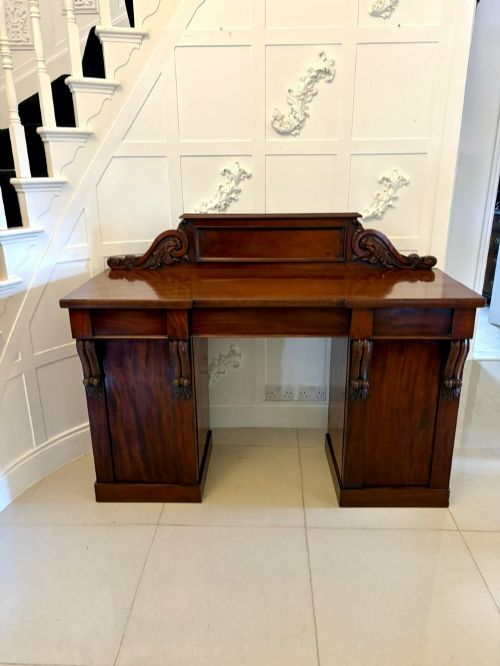
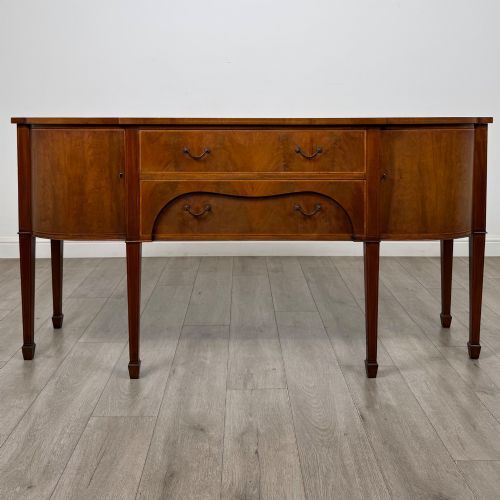
Forms vary from compact two-door cupboards and small chiffoniers to large pedestal sideboards and four-door units. Many pieces incorporate bow fronts or serpentine shapes, while others feature mirror backs or marble tops. The lineage extends from formal Georgian designs to later Edwardian and revival interpretations.
How they were made
Makers utilised solid mahogany and applied flame mahogany veneer to large flat surfaces to display dramatic, flamy grain patterns. Inlaid details in satinwood provide contrast on later Edwardian and revival pieces.
Structural elements often incorporate brass hardware, such as handles and lion paw feet, whilst specific formats utilise glass doors or marble surfaces. Construction relies on traditional cabinet-making joinery suited to heavy timber and large case pieces.
Listings span multiple eras from the 18th century through to 1930, capturing Regency, Georgian, Victorian, and Edwardian periods.
What varies in quality
Quality rests primarily on the choice and matching of the timber veneers, where intensely figured flame mahogany creates a striking visual impact compared to plain mahogany boards. The precision of inlaid satinwood details and the crispness of carved elements further distinguish superior examples.
Proportion and scale dictate the success of the form, from small bowed servers to grand breakfront sideboards. Substantial hardware, such as cast brass lion paw feet or fine door grills, elevates the execution of the piece.
The Flame Mahogany Buffet Cabinet Glossary
- Flame mahogany
- A veneer cut from the fork of the mahogany tree where branches join the trunk, producing a rippling, flame-like pattern. This figured timber was favoured for primary display surfaces on finer cabinets.
- Chiffonier
- A low sideboard or cabinet, popular during the Regency and Victorian periods, typically featuring doors enclosing shelves and sometimes a raised tier or mirror at the back. It served a similar function to a buffet for storing dining silver and linen.
- Breakfront
- A cabinet or sideboard whose central section projects forward from the flanking sections. This architectural arrangement creates depth and breaks the linear monotony of long dining furniture.
- Bow front
- A convex curved cabinet front that swells outward in the centre. This curved form softens the corners of a dining room and showcases continuous wood grain.
- Serpentine
- A shaped furniture front featuring a concave centre flanked by convex ends, resembling the curves of a snake. It requires high skill in joinery and veneer application.
Flame Mahogany Buffet Cabinet: Frequently Asked Questions
What is a flame mahogany buffet cabinet?
A flame mahogany buffet cabinet is a large dining or serving piece finished with highly figured wood veneers that display characteristic fiery grain patterns. These cabinets encompass sideboards, chiffoniers and side cabinets designed for storage.
Originating largely in the 19th century, they combine practical cupboard space with decorative timber surfaces intended to anchor a dining room.
How do I date a mahogany sideboard?
Dating relies on stylistic markers such as hardware, leg shapes, and overall proportions spanning the Georgian, Regency, and Victorian periods. Regency pieces often display classical lines and brass mounts, while Victorian examples lean towards heavier carved details.
Later Edwardian and revival pieces echo these earlier styles while incorporating lighter satinwood stringing and distinct construction methods.
Where were these cabinets used?
These cabinets were traditionally placed in dining rooms or grand reception spaces to hold silver, serving dishes, and linens. They functioned as both practical storage units and display surfaces during meals.
Today, they translate easily into modern living spaces as credenzas, hallway storage, or media units while retaining their original architectural presence.
What is the difference between a sideboard and a chiffonier?
A sideboard is typically a longer dining room piece designed for serving food and storing large table items. A chiffonier is generally smaller and often includes a raised back tier, originating as a compact version for smaller reception rooms.
Both forms utilise mahogany construction and feature doors enclosing interior shelving.