




Fitted Writing Box
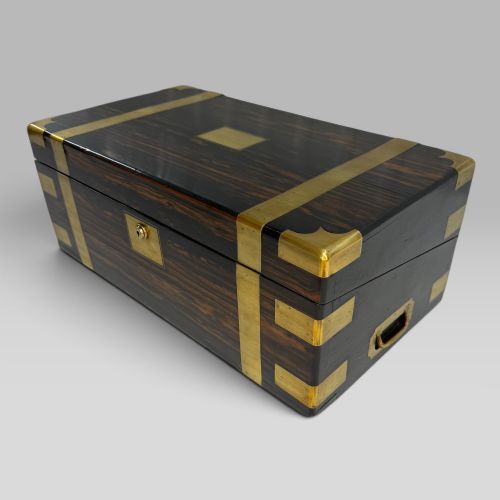
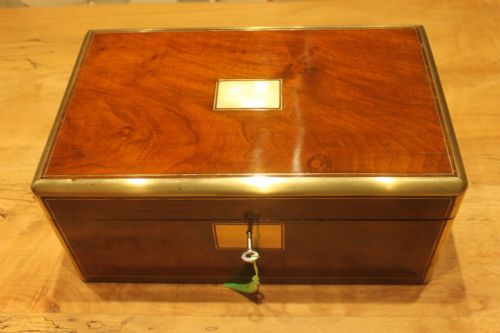
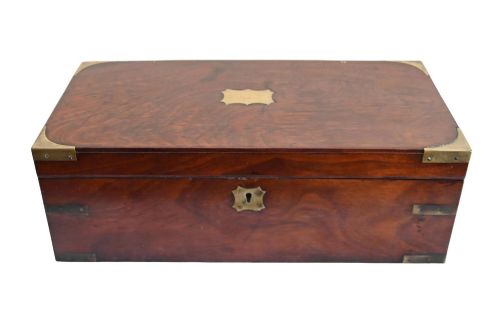
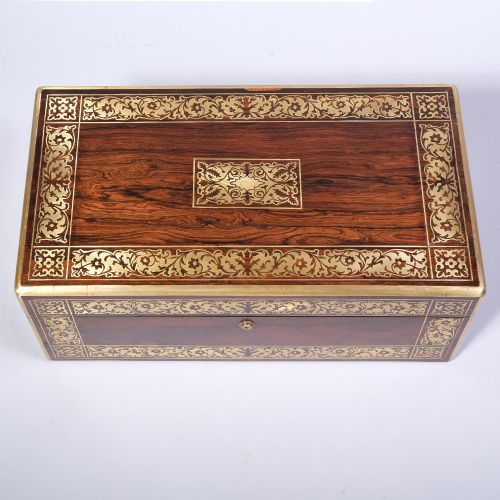
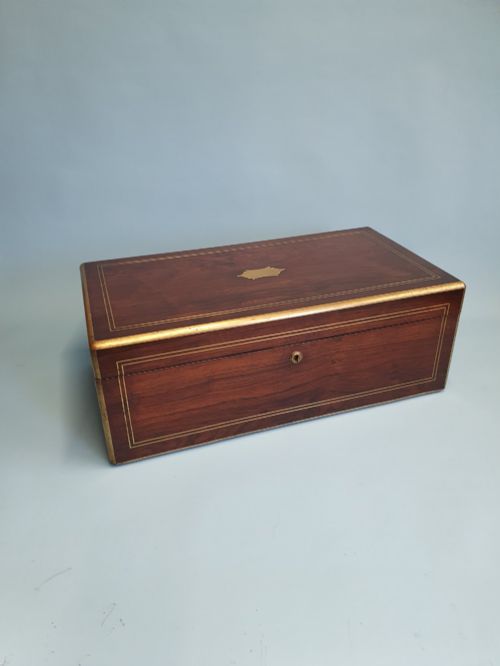
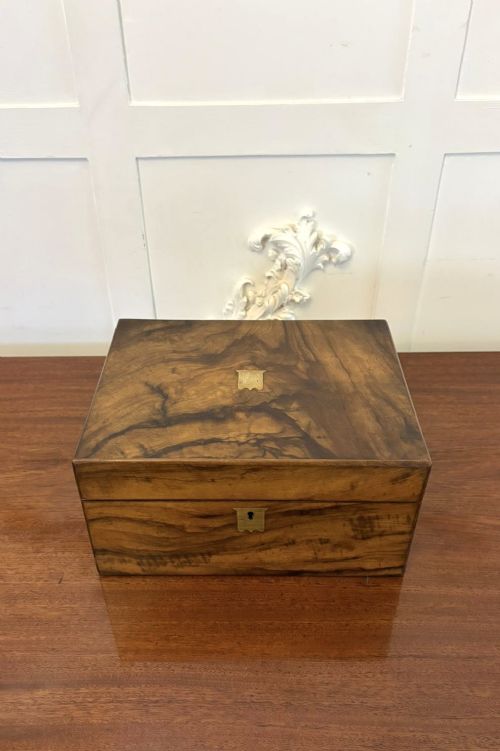
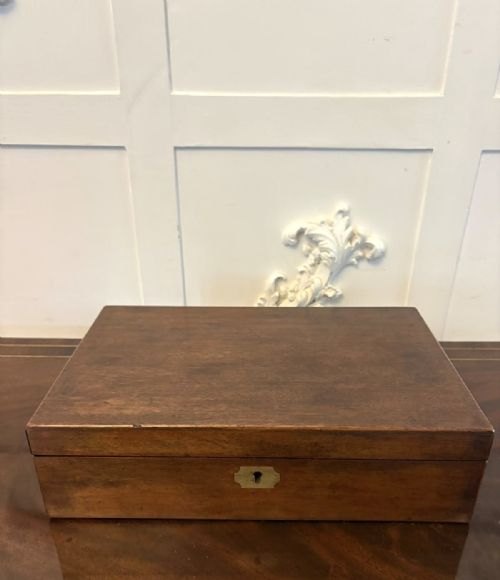
A fitted writing box is a portable desk engineered for correspondence, most frequently seen here in Victorian rosewood, mahogany or walnut.
Fitted Writing Box
A fitted writing box is a portable desk designed to hold paper, ink and nibs for travelling or home use. The form spans several periods, though the pieces encountered most often date from the Victorian era and the 19th century.
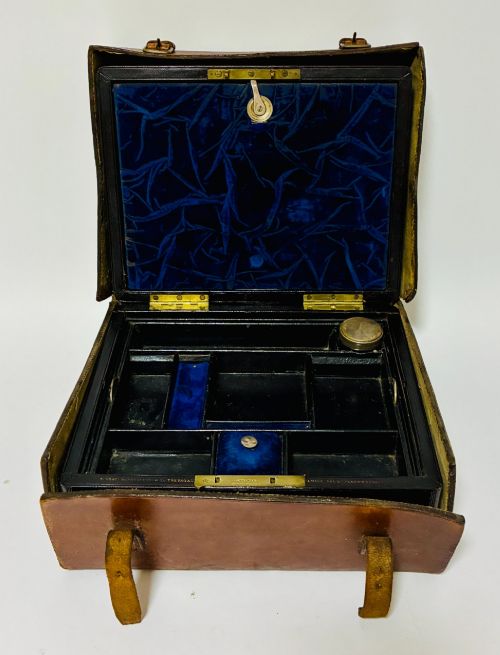
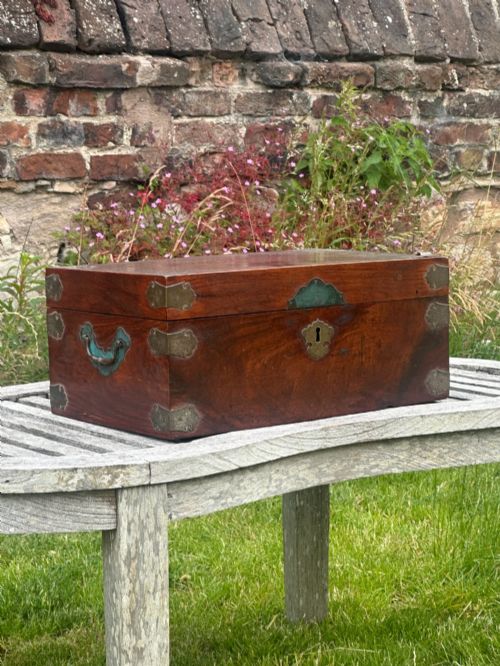
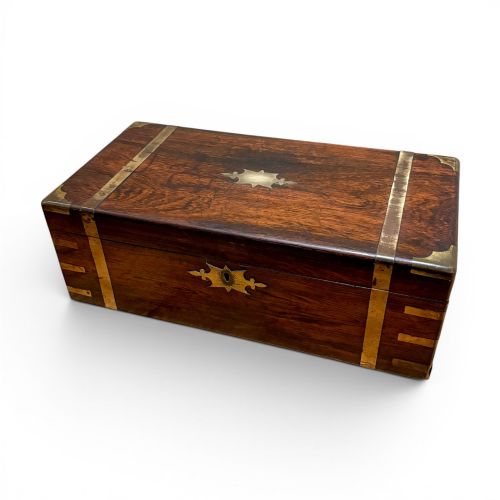
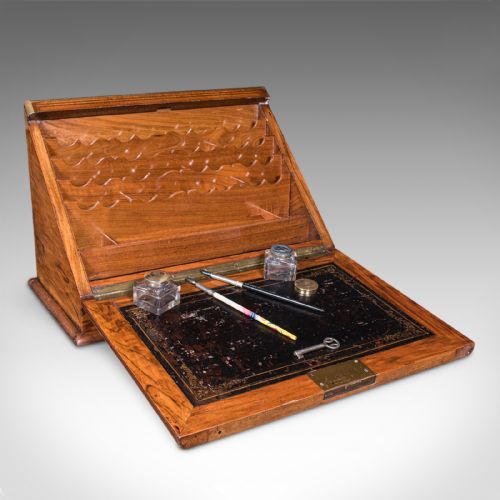
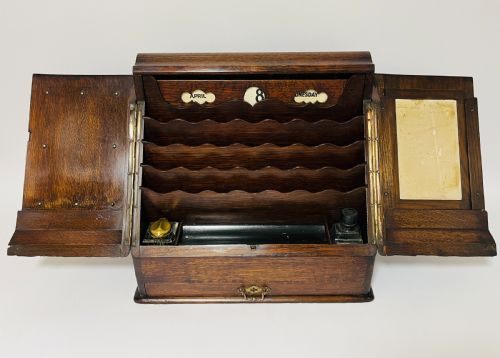
The selection here includes brass bound writing slopes, campaign boxes, stationery cabinets and smaller desk accessories. Many open to reveal fitted interiors, secret drawers and compartments for inkwells.
Origins range across English, Anglo-Indian, Japanese and Italian workshops, reflecting the global reach of 19th-century trade and travel. Each variation served a specific domestic or military purpose for writers on the move.
How they were made
Cabinet makers utilised dense hardwoods such as mahogany, rosewood, walnut and burr walnut, often reinforcing the corners and edges with brass banding to withstand travel. Interiors frequently incorporated fitted velvet or leather writing surfaces alongside compartments for stationery.
Inlay work relied on materials such as brass, mother of pearl, ivory and bone, set flush into the wooden surfaces. More elaborate examples from Anglo-Indian or Japanese traditions featured detailed carved ebony, padouk, lacquer or parquetry.
Mechanical ingenuity defined the construction, hiding secret drawers behind false partitions or incorporating Bramah locks and spring-loaded mechanisms. These hidden compartments required precise joinery to operate smoothly within a compact box.
Some military campaign boxes included dedicated candle sconces so officers could write dispatches long after the sun went down.
What varies in quality
Quality rests on the selection of timber and the precision of the cabinet work, particularly in how the grain of burr walnut or rosewood matches across the lid and sides. Superior boxes show meticulous attention to the fit of internal lids and secret compartments.
F. West·Edwards
The Fitted Writing Box Glossary
- Writing slope
- A portable box with an angled lid that folds down to form a desk for writing. The sloping surface typically houses compartments for stationery underneath.
- Campaign box
- A sturdy portable desk built for military use during travel. These often feature recessed brass handles and robust reinforcement.
- Bramah lock
- A high-security cylindrical lock patented by Joseph Bramah in the late 18th century. It became a mark of quality on fine boxes and writing slopes.
- Secret drawer
- A concealed compartment hidden behind moveable partitions or sliding panels. They were designed to secure valuables and private correspondence.
- Stationery cabinet
- A tabletop cabinet with compartments or shelves for paper, envelopes and writing tools. They are distinct from folding writing slopes.
- Padouk
- A heavy tropical hardwood with a reddish hue, often found in Anglo-Indian boxes. It provided durability for items destined for long journeys.
Fitted Writing Box: Frequently Asked Questions
What is inside a fitted writing box?
A fitted writing box contains compartments for inkwells, pens, stamps and folded paper. Many feature a sloping writing surface lined in leather or velvet.
Lifting the writing surface often reveals deeper storage areas, while secret drawers are frequently tucked away behind internal partitions.
How do you use a writing slope?
To use a writing slope, unlatch the exterior and fold the hinged lid down towards you to create an inclined writing surface. The sloping board provides a comfortable angle for handwriting with ink and quill.
When finished, the hinged sections fold back together and lock securely, keeping the writing materials contained for transport.
How can you tell the age of a box?
Dating relies on the primary wood, construction techniques, style of brass work and the type of locks used. Georgian pieces tend to show simpler mahogany frames, while Victorian examples often utilise burr walnut and elaborate brass binding.
Documentation, maker signatures and historical design motifs help narrow down the period of manufacture further.
Were these boxes meant for travel?
Many writing boxes were built specifically for travel, particularly military campaign styles and brass-bound models designed to endure rough handling. Recessed handles and sturdy corner braces protected the wood during voyages.
Other versions, such as stationery cabinets and table-top desks, stayed fixed in a home study or office.