
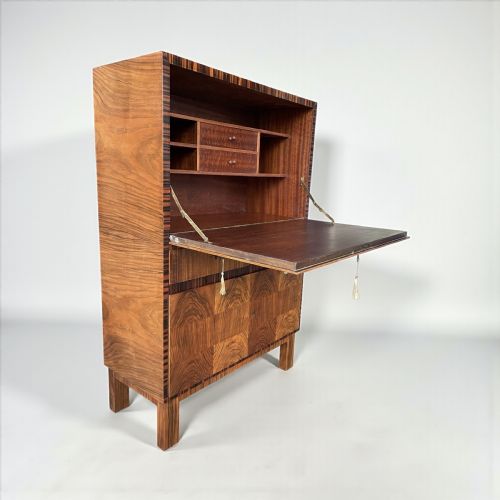


Fitted Secretaire Cabinet
When you search for a fitted secretaire cabinet, you enter a world of ingenious fold-down desks and concealed compartments designed for private correspondence.
Fitted Secretaire Cabinet
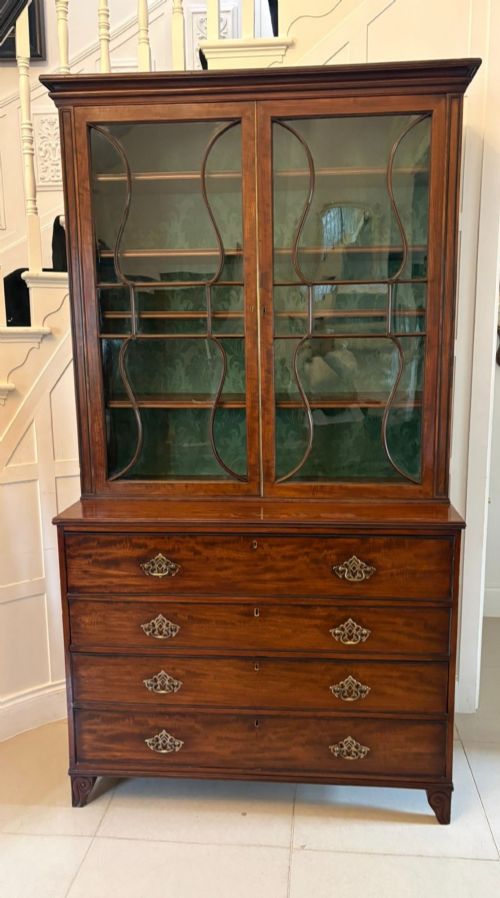
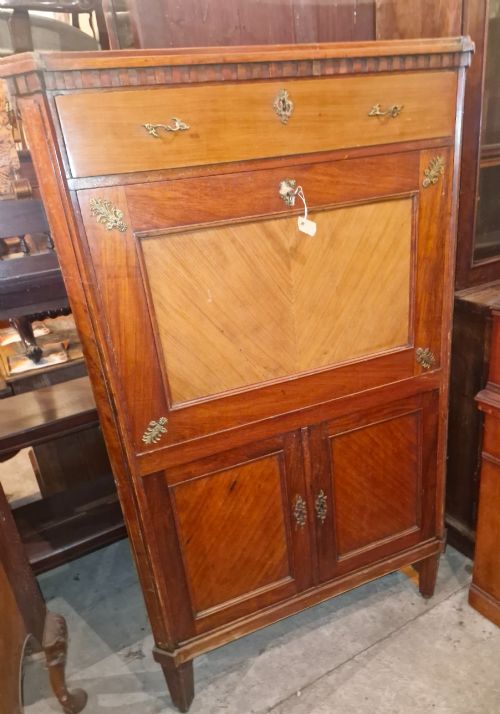
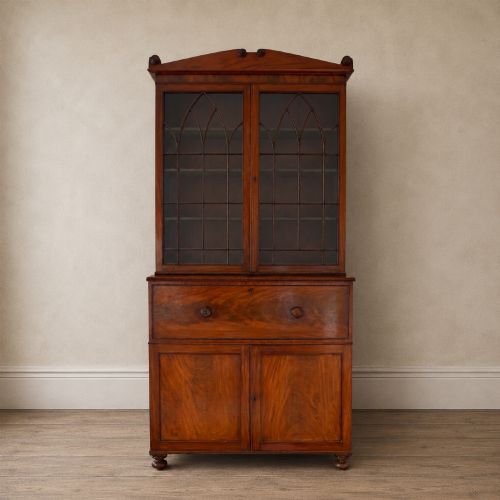
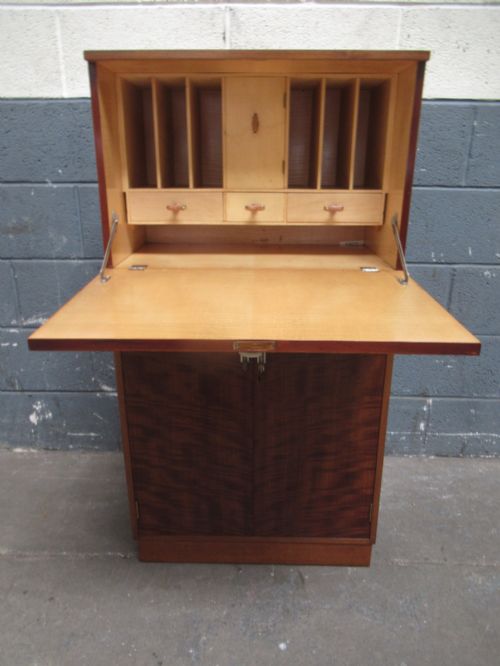
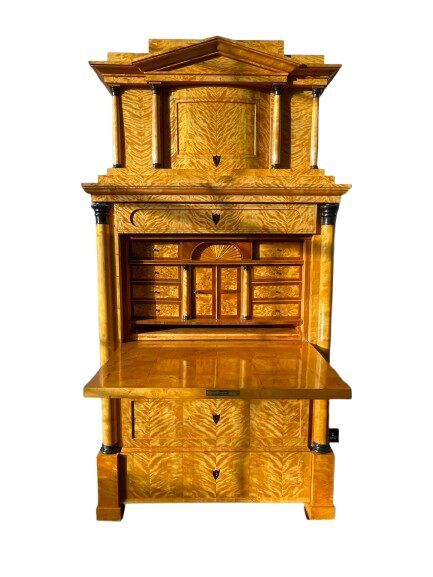
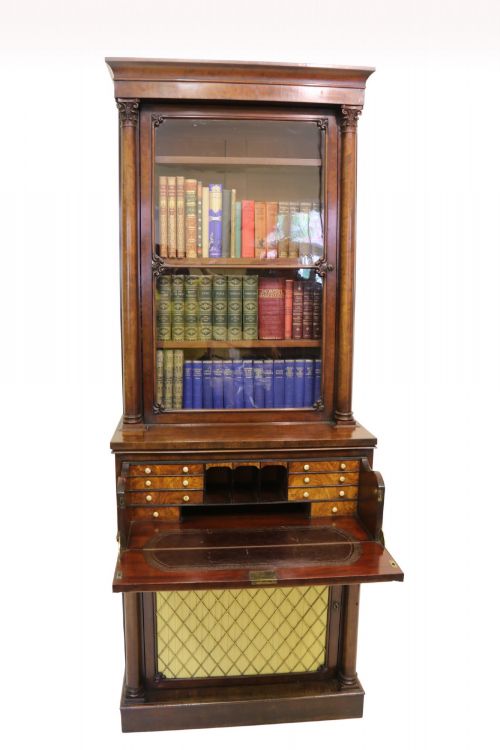
A fitted secretaire cabinet combines the external appearance of a chest of drawers, bookcase, or tallboy with a concealed writing drawer that drops forward on hinges. Inside, users encounter an architectural arrangement of small pigeonholes, tiny drawers, and often a central cupboard.
The most common examples on this page date from the Georgian, Regency, and Victorian periods, constructed primarily as tall bookcases or chest-on-chest forms. Makers utilised rich hardwoods such as mahogany, walnut, and rosewood to house these complex writing compartments.
How They Were Made
Cabinetmakers relied upon dense timbers like mahogany and walnut, frequently cutting them to reveal figured flame grains or applying decorative veneers over stable secondary woods. Brass hinges, quadrant arms, and drawer pulls provided the necessary mechanical support for the heavy drop-front writing surfaces.
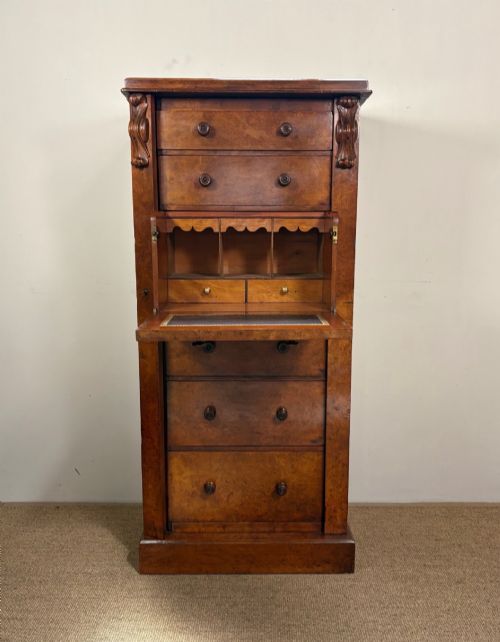
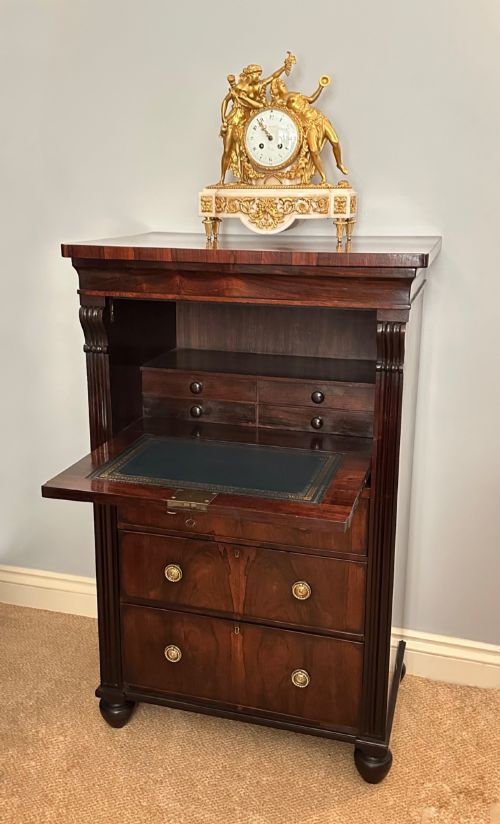
Interiors often incorporated secondary woods and delicate cockbeading around tiny drawer fronts, sometimes finished with leather or baize writing inserts. Structural ingenuity governed the design, ensuring the fold-down drawer front balanced securely without tipping the entire cabinet.
Listings span four centuries of cabinetmaking, featuring Georgian mahogany, Regency rosewood, Victorian walnut, and Arts and Crafts oak.
What Varies in Quality
Quality rests upon the architectural ambition of the internal fitments and the choice of timber figure. Finer pieces display secondary drawers veneered in satinwood, secret compartments, and finely carved bracket feet or cornice mouldings.
The precision of the joinery around the fall-front mechanism separates workshop standards, ensuring the writing surface remains perfectly horizontal when open and flush when closed.
Gillows of Lancaster·William Trotter·James Shoolbred and Co
The Fitted Secretaire Cabinet Glossary
- Secretaire
- A desk or chest of drawers containing a concealed writing drawer with a fold-down front. This drop-front reveals an interior fitted with pigeonholes and small drawers.
- Wellington chest
- A tall, slender chest of seven drawers secured by a single locking vertical side-locking bar. Some incorporate a secretaire drawer within the upper section.
- Tallboy
- A double chest of drawers, one stacked upon another, creating a tall storage unit. Certain examples integrate a central secretaire chest tier.
- Baize
- A coarse woolen material resembling felt, traditionally used to line writing surfaces within desks. It provides a soft, protective layer for paper and ink bottles.
Fitted Secretaire Cabinet: Frequently Asked Questions
How do you open a secretaire drawer?
The top drawer of the chest or the middle section of the bookcase pulls outward like a standard drawer. Once extended, the front panel releases via internal latches or a key to fold downward on quadrant hinges.
This reveals the fitted interior of pigeonholes and small drawers without disturbing the papers or inkwells stored safely inside.
What were secretaire cabinets used for?
These cabinets served as private writing desks and correspondence stations in period homes. Owners kept personal stationery, account books, and sensitive letters locked safely behind the main exterior doors or drawers.
When closed, the furniture maintained the formal appearance of a bookcase or chest, concealing the private writing activities of the household.
How do I date a mahogany secretaire?
Dating relies upon timber selection, hardware, and structural proportions. Earlier pieces from the eighteenth century often feature solid mahogany construction with bracket feet and fine cockbeaded drawer edges.
Nineteenth-century examples frequently display heavier flame veneers, rosewood crossbanding, or neoclassical ormolu mounts reflecting Regency and Victorian tastes.
Where should I place a tall secretaire bookcase?
Tall secretaire bookcases require stable wall placement and adequate clearance in front for the drop-down writing flap to open fully. Libraries, studies, and grand reception rooms suit their imposing vertical scale and extensive book storage capacity.
Keep them away from direct sunlight and strong heat sources to protect the polished mahogany or walnut veneers from drying out.