


Fitted Liquor Cabinet
A fitted liquor cabinet gathers decanters, glasses and bottles into one purposeful home, offering both ceremony and hospitality.
Fitted Liquor Cabinet
A fitted liquor cabinet encompasses everything from timber cellarettes and portable decanter boxes to towering cocktail cabinets and metamorphic bureau forms. These pieces serve the singular purpose of storing and presenting spirits and wine with appropriate ceremony.
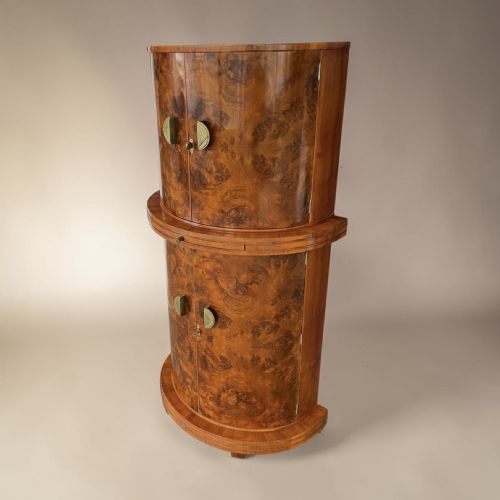
The selection here draws heavily upon the 1930s Art Deco period, alongside earlier Victorian, Edwardian, and Regency examples in mahogany, walnut, and burr walnut. Buyers frequently encounter walnut cocktail cabinets from the interwar decades alongside substantial nineteenth-century wine coolers and cellarettes.
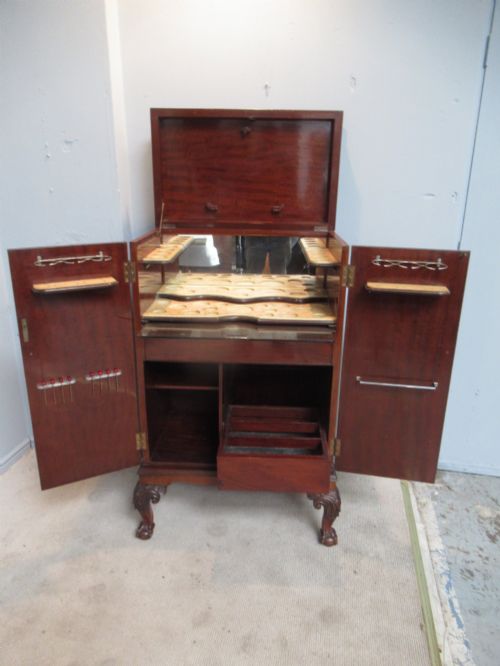
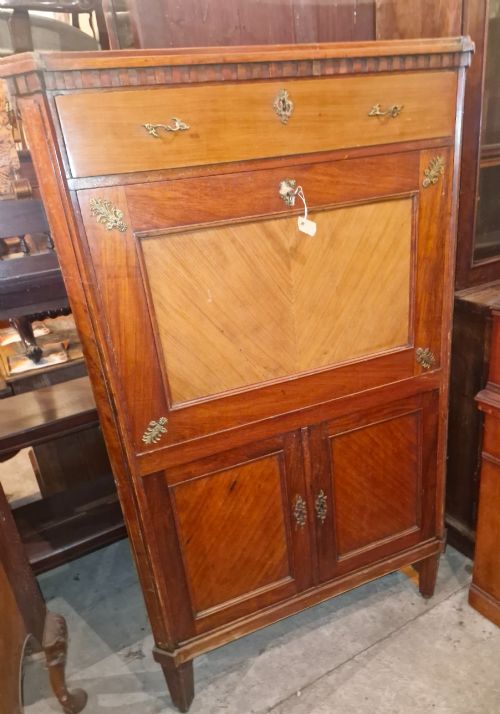
Forms vary from grand freestanding corner cabinets to tabletop boxes and compact bureau styles fitted with internal mirrors and specialised storage. Each variant reflects the drinking customs of its era, from formal nineteenth-century dining rooms to twentieth-century cocktail hours.
How they were made
Makers utilised dense hardwoods such as mahogany and oak as the foundational structure, often applying highly figured burr walnut veneers to external surfaces for visual depth. Brass handles, hinges, and bindings provide both structural reinforcement and decorative contrast against the dark wood.
Internal spaces frequently incorporate mirrored panels and specialised shelving designed to secure glassware and bottles during use. Cabinetmakers employed precise joinery to accommodate drop-down writing surfaces, sliding trays, and fitted compartments within compact footprints.
Listings feature woods including mahogany, oak, coromandel, and burr walnut, alongside brass and mirrored glass.
What varies in quality
Quality rests primarily in the selection of timber veneers and the precision of the internal fittings. Cabinets featuring book-matched burr walnut or substantial brass mounts demonstrate a higher level of craftsmanship than simpler veneered carcases.
The sophistication of the mechanism also distinguishes better examples, such as smoothly operating metamorphic desks, well-fitted mirror backs, and original internal hardware. Superior pieces maintain structural integrity in their drop-down flaps and specialised bottle racks over decades of use.
Waring and Gillow
The Fitted Liquor Cabinet Glossary
- Cellarette
- A lockable container or cabinet designed to hold bottles of wine or spirits, typically positioned beneath a sideboard or beside a dining table. These nineteenth-century vessels often feature lead linings or fitted interior dividers.
- Decanter Box
- A portable wooden container fitted with internal compartments to securely hold glass decanters and stoppers. Such boxes frequently utilise brass binding and campaign handles for travel.
- Burr Walnut
- Timber taken from the growth excrescences of walnut trees, yielding highly decorative swirling grain patterns. Cabinetmakers applied this veneer to prominent exterior surfaces of twentieth-century pieces.
- Metamorphic
- Describing furniture designed to transform from one form into another, such as a bureau converting into a cocktail bar. These pieces rely on clever hinges and sliding sections.
- Wine Cooler
- A receptacle used for chilling bottles prior to serving, often taking the form of a heavily constructed timber vessel from the Regency or Victorian periods.
Fitted Liquor Cabinet: Frequently Asked Questions
How were cellarettes used?
Cellarettes held wine and spirits close to the dining table during formal meals in the eighteenth and nineteenth centuries. Their internal divisions kept bottles secure and upright.
Many featured lead linings so ice could be added to chill the contents directly.
How do I care for burr walnut?
Burr walnut surfaces require protection from direct sunlight and excessive moisture to prevent veneer lifting and fading. Regular dusting with a soft cloth maintains the finish.
Applying appropriate wax occasionally nourishes the timber and preserves the grain pattern.
What period are Art Deco cabinets from?
Art Deco liquor cabinets on this page primarily date from around 1930. This era favoured geometric lines and highly figured wood veneers.
They reflect the rising popularity of cocktail culture during the interwar period.
Can I use a decanter box for travel?
Decanter boxes were originally constructed with sturdy brass handles and heavy timber to withstand transport. Modern owners generally keep them stationary to protect the antique glass inside.
The fitted interior prevents movement when closed properly.