


Vintage Bar Storage Cabinet
A vintage bar storage cabinet is the piece you choose when you want to bring proper theatre back to serving drinks at home.
Vintage Bar Storage Cabinet
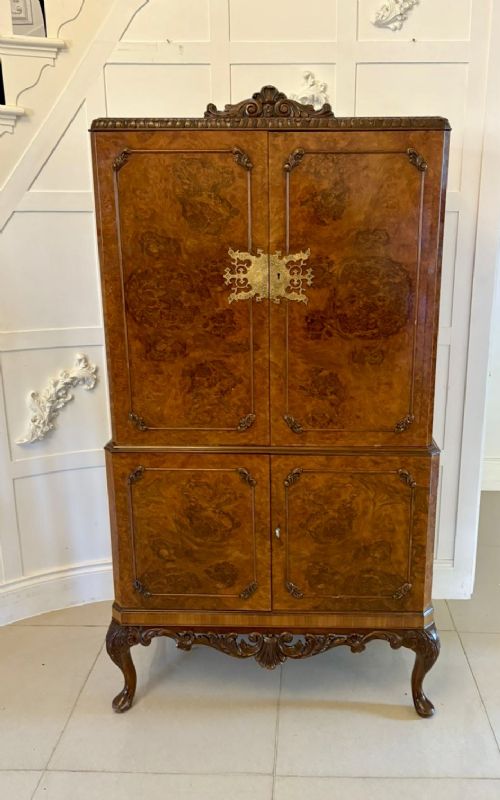
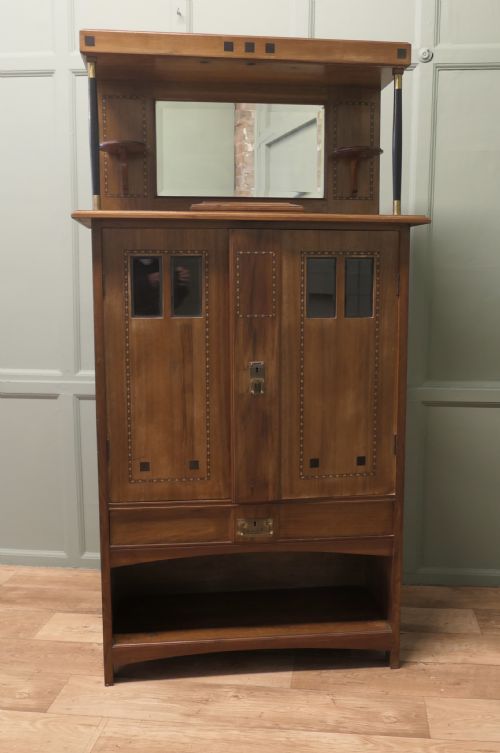
When you search for a vintage bar storage cabinet, you enter a world of dedicated drinks furniture designed to hold bottles, glassware, and mixing tools behind closed doors. The selection relies heavily on twentieth-century forms, with Art Deco examples and walnut cocktail cabinets appearing with great frequency alongside earlier cellarettes and bookcases.
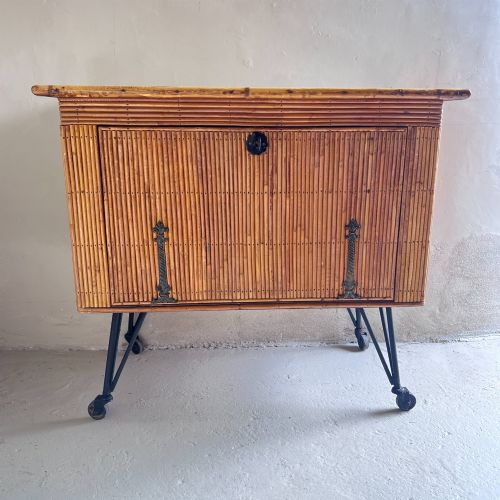
The objects span from the nineteenth century into the 1930s, taking shapes that range from dedicated cocktail cabinets and drinks cabinets to wine coolers, cellarettes, and library bookcases adapted for hospitality. Buyers find both British workshop pieces and continental designs, including French items on cast-iron legs or finished in lacquer and marquetry.
While traditional cellarettes from the 1800s provided simple bottle storage, twentieth-century versions evolved into elaborate social centres with fitted interiors for entertaining. These pieces balance functional storage with striking facades, using rich wood veneers and decorative hardware to anchor a dining room or sitting room.
How they were made
Cabinet makers built these pieces using solid timbers and decorative veneers over structural carcases, employing walnut, burr walnut, mahogany, oak, and kingwood. These woods received careful polishing to highlight natural grain patterns, whilst specialist examples incorporated red lacquer, chinoiserie decoration, or delicate marquetry work.
Metal components played a structural and decorative role, featuring brass hinges, escutcheons, and handles, alongside more industrial elements like cast-iron legs on specific French variants. Bakelite details also appear on mid-century fittings, adding tactile contrast to the timber surfaces and glass shelving within.
Some French drinks cabinets arrive standing proudly on sturdy cast-iron legs, ready to roll out the cocktail hour.
What varies in quality
The standard of a vintage bar storage cabinet rests on the ambition of its interior architecture and the execution of its decorative veneers. Superior examples feature fitted pull-out slides, mirrored serving trays, and specialised racks that demonstrate thoughtful design for entertaining.
Makers who utilised high-grade burr walnut or meticulous marquetry created pieces with lasting visual weight, whereas simpler utilitarian items relied on plain timber surfaces. The integration of original hardware, supportive internal lighting elements, and stable secondary woods separates standard storage from exceptional collector pieces.
Hille·Epstein·Waring & Gillows
The Vintage Bar Storage Cabinet Glossary
- Cellarette
- A lockable container or cabinet designed specifically for storing bottles of wine and spirits near the dining table. They frequently date to the Georgian and Victorian eras.
- Burr Walnut
- A specialised wood veneer taken from the knotted growth of a walnut tree, prized for its swirling, highly decorative grain patterns. It forms the primary visual draw on many Art Deco drinks cabinets.
- Marquetry
- The art of applying small pieces of veneer to a structure to form decorative patterns and pictorial designs. Cabinet makers used exotic woods to create intricate floral or geometric motifs.
- Chinoiserie
- European decorative style inspired by Chinese artistic traditions, featuring hand-painted motifs and lacquerwork. This technique appears on select cabinets to create an exotic, theatrical finish.
- Art Deco
- Design movement of the 1920s and 1930s characterised by sleek geometric lines, stylized motifs, and lavish materials. It remains the defining aesthetic for mid-century cocktail furniture.
Vintage Bar Storage Cabinet: Frequently Asked Questions
What is a cocktail cabinet?
A cocktail cabinet is a dedicated piece of furniture designed for preparing and serving mixed drinks, typically featuring a drop-front serving surface, mirrored interior, and glass racks.
These pieces gained immense popularity during the interwar period as home entertaining shifted away from formal butler service into the living room.
How do I style a drinks cabinet?
Position your cabinet in a principal living space or dining room where it can function as a visual focal point during social gatherings. Keep glassware arranged on the internal shelves and use the pull-out slide for mixing drinks.
Allow the natural timber grain or decorative lacquer to stand out by keeping surrounding decor complementary rather than competitive.
What is the difference between a cellarette and a cocktail cabinet?
A cellarette is a traditional cellar-style container built primarily to store upright bottles of wine and spirits safely, often sitting low to the ground or mounted on legs. A cocktail cabinet is a taller, upright piece created for mixing drinks with specialised internal compartments.
Cellarettes date from the Georgian and Victorian periods, while cocktail cabinets are predominantly twentieth-century Art Deco creations.
How do I identify Art Deco furniture?
Art Deco pieces display streamlined geometric forms, symmetry, and rich surface textures derived from exotic wood veneers like burr walnut. They reject excessive Victorian ornamentation in favour of bold, clean architectural lines.
Details like bakelite hardware, contrasting banding, and stylized motifs help confirm this twentieth-century period.