
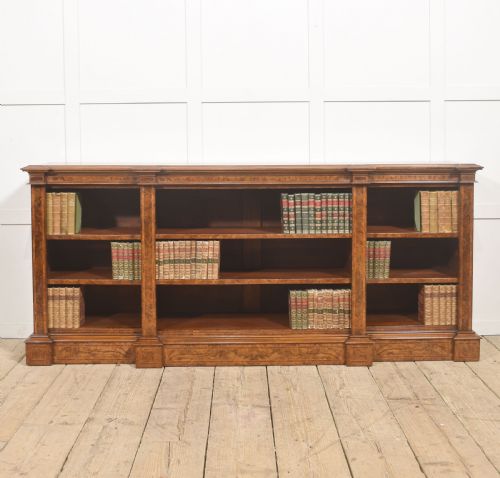


Fitted Library Shelves
Fitted library shelves are substantial book storage fixtures designed to organise large collections, offering serious collectors enduring architectural presence and practical display.
Fitted Library Shelves
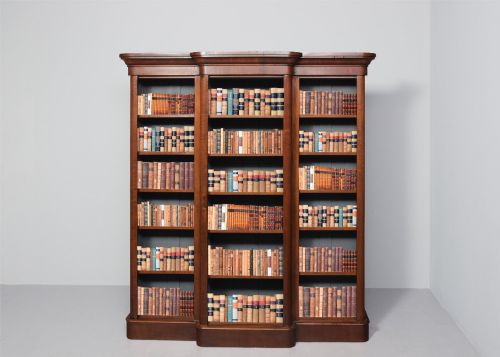
When you search for fitted library shelves, you encounter substantial bookcases and breakfront cabinets designed to house substantial collections. These pieces originate predominantly from the nineteenth century, including Victorian examples and items dated around nineteen hundred.
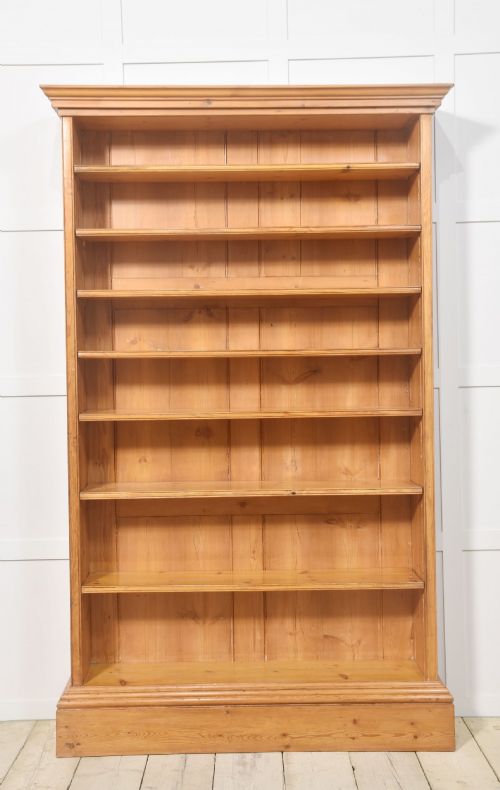
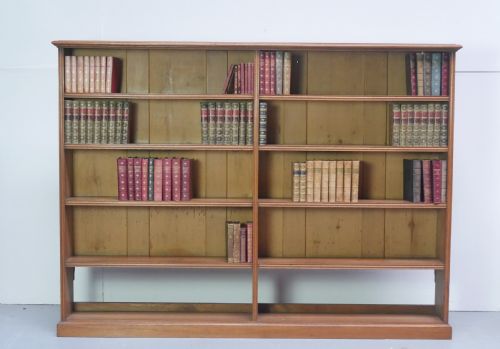
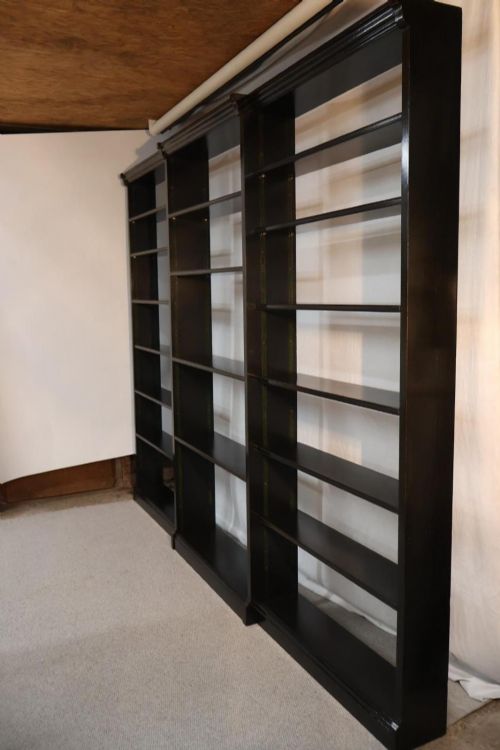
The configurations vary from open bookcases to breakfront open bookshelves and cabinet formats equipped with fitted adjustable shelves. Many pieces incorporate specialised forms such as large oak bookcases, ebonised timber variants, and corner bookcase cabinets.
The materials and construction reflect traditional cabinet-making standards, utilising durable timbers combined with architectural proportions. You are most likely to meet mahogany, oak, walnut, pine, and ebonised timber examples across these listings.
How they were made
Makers constructed these library fixtures using solid timbers and rich veneers such as mahogany, burr walnut, and oak, alongside structural pine and ebonised timber. The selection of cabinet woods provided both structural integrity for heavy book collections and a refined exterior finish.
Workshops integrated functional hardware, predominantly utilising brass for fittings and mechanisms. Structural design frequently incorporated adjustable shelving systems and breakfront cabinetry to maximise both storage capacity and visual balance.
Listings feature nineteenth-century and Victorian pieces constructed from mahogany, oak, walnut, pine, and ebonised timber.
What varies in quality
The standard of timber selection and decorative detailing distinguishes standard volume production from bespoke workshop commissions. Finer library furniture displays carefully matched wood veneers, such as burr walnut, and precise proportions across breakfront layouts.
Structural complexity and maker attribution elevate certain examples significantly above utilitarian storage. Pieces originating from documented workshops exhibit superior joinery, sophisticated carving, and integrated functional elements like adjustable shelving.
Gillows·Maple and Co·Goodhall Lamb and Heighway of Manchester
The Fitted Library Shelves Glossary
- Breakfront
- A cabinet or bookcase design where the central section projects forward from the flanking wings. This configuration adds architectural depth and visual weight to large library pieces.
- Ebonised timber
- Wood treated with a chemical finish or stain to simulate the appearance of ebony. This dark, formal surface treatment was popular for nineteenth-century display furniture.
- Adjustable shelves
- Internal shelving fitted with mechanical supports that allow the height between tiers to be altered. This practical feature accommodates books of varying heights within large bookcases.
- Inverted bookcase
- A library piece featuring a recessed central section flanked by projecting ends. This less common layout alters the standard breakfront profile.
Fitted Library Shelves: Frequently Asked Questions
How do I choose the right size?
Selecting the appropriate bookcase requires careful measurement of your available wall space and ceiling height. Breakfront library cabinets demand considerable floor space and suit large rooms with high ceilings.
Consider the depth of the shelves in relation to the books you intend to store. Corner bookcase cabinets offer an alternative solution for utilising awkward room angles effectively.
Are the shelves adjustable?
Many nineteenth-century and Victorian library bookcases incorporate fitted adjustable shelves to accommodate varying book sizes. This system allows you to reposition shelves according to your specific storage requirements.
Not all historical bookcases feature this mechanism, so examining the interior description is essential before purchasing for large collections.
Which woods were commonly used?
Cabinet-makers utilised a variety of timbers depending on the desired aesthetic and period style. Mahogany and oak appear frequently in nineteenth-century library furniture, offering strength and durability.
Walnut, burr walnut, pine, and ebonised timber also feature across these listings, providing distinct surface textures and colour variations for different interior schemes.