
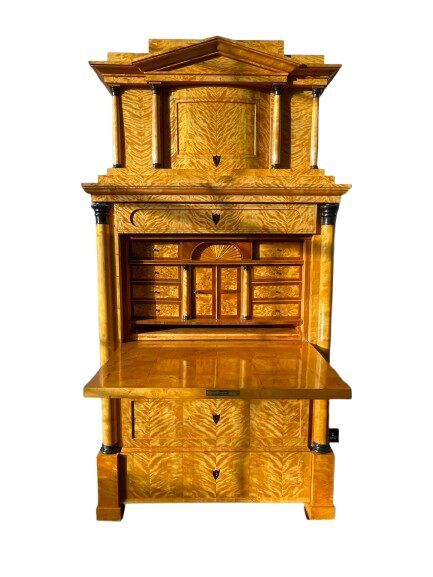
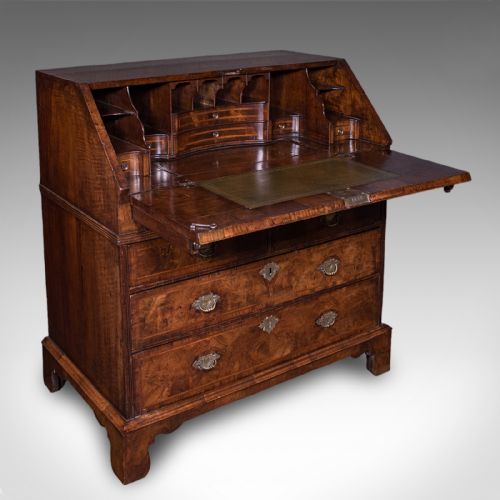
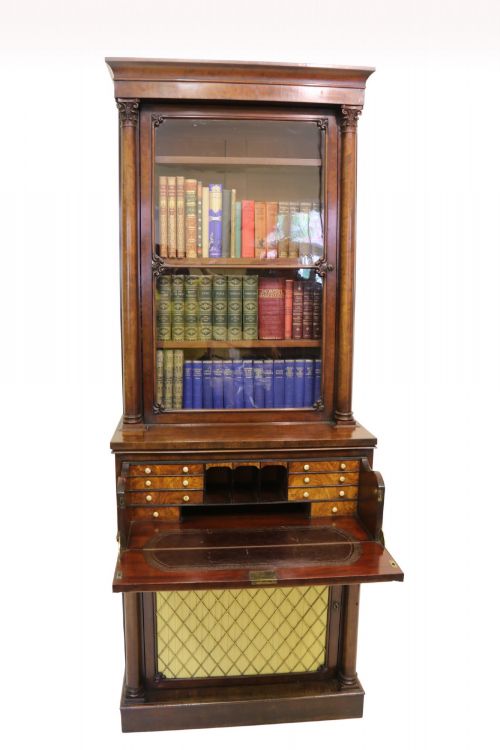
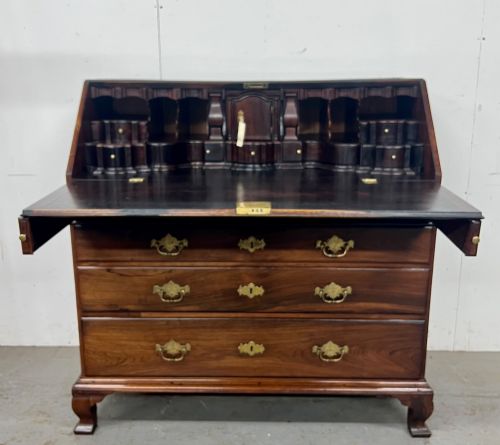
Fitted Interior Bureau Desk
A fitted interior bureau desk offers secret compartments and pigeonholes behind a fall front, bringing classic utility and hidden storage to a room.
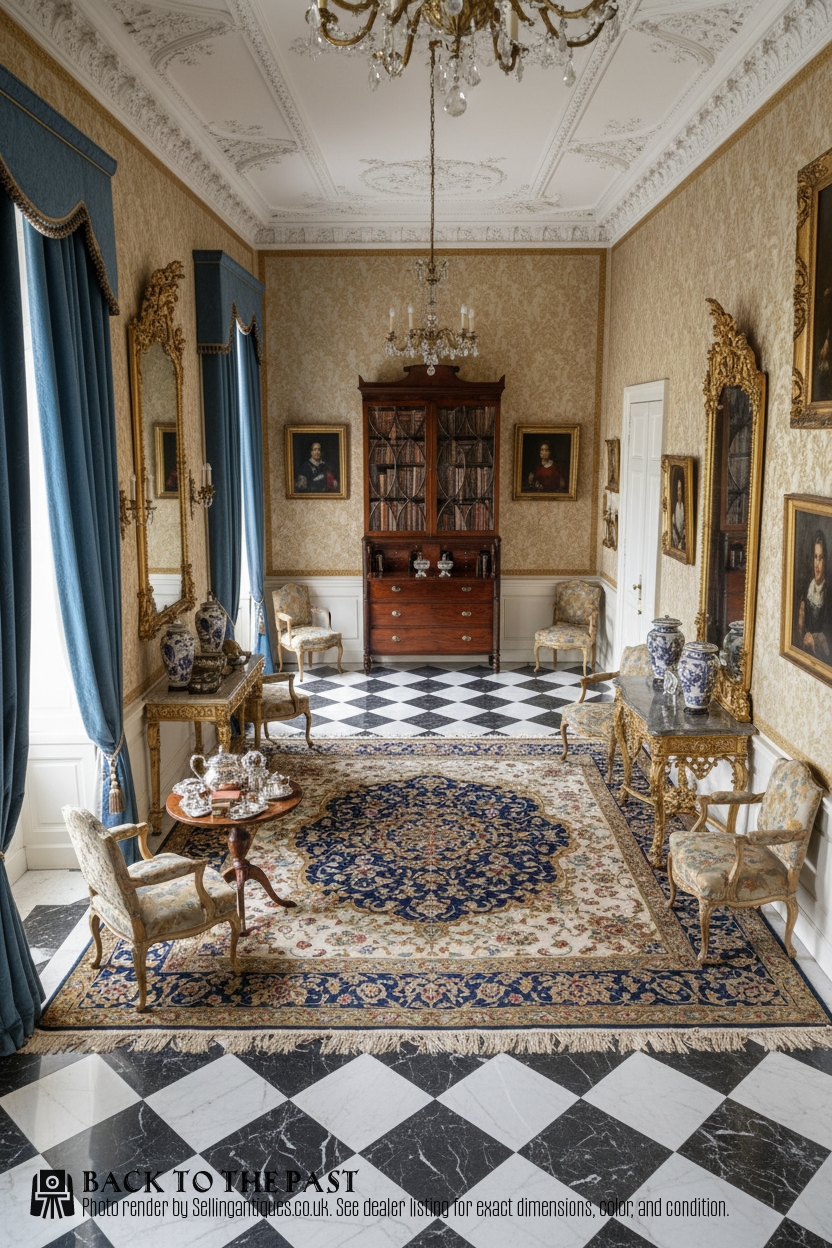
Fitted Interior Bureau Desk
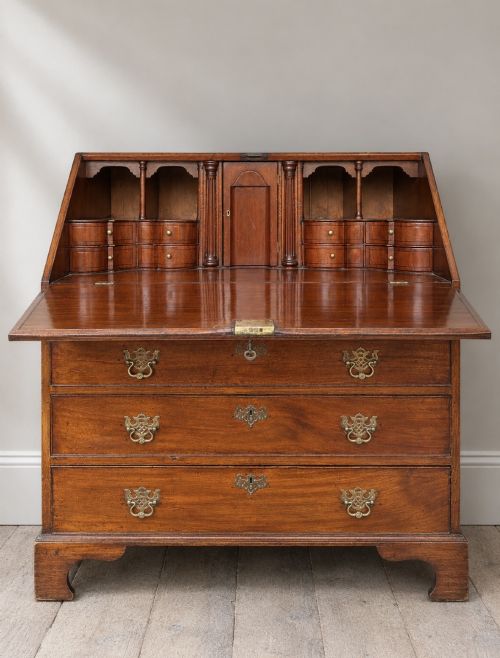
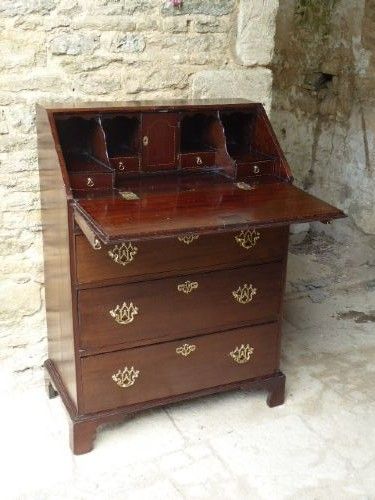
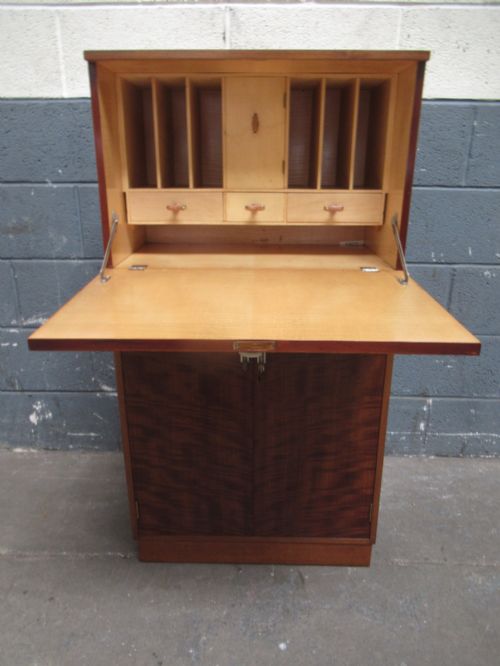
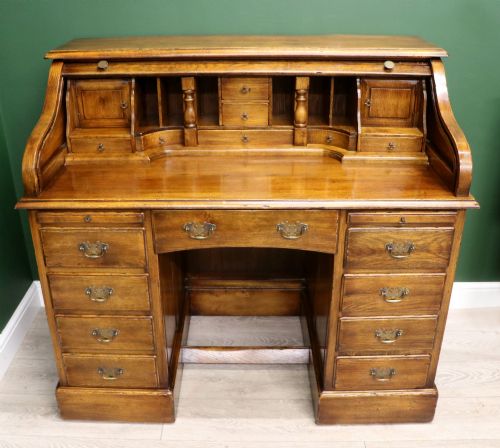
When you search for a fitted interior bureau desk, you encounter writing furniture designed for private correspondence and document storage. These pieces combine a writing surface with internal compartments, drawers, and pigeonholes concealed behind a fall-front flap or cylinder top.
The versions most likely to meet you on this page date from the eighteenth and nineteenth centuries, spanning the Georgian, Regency, and Victorian periods. Mahogany and walnut predominate among these older forms, alongside occasional oak and rosewood examples.
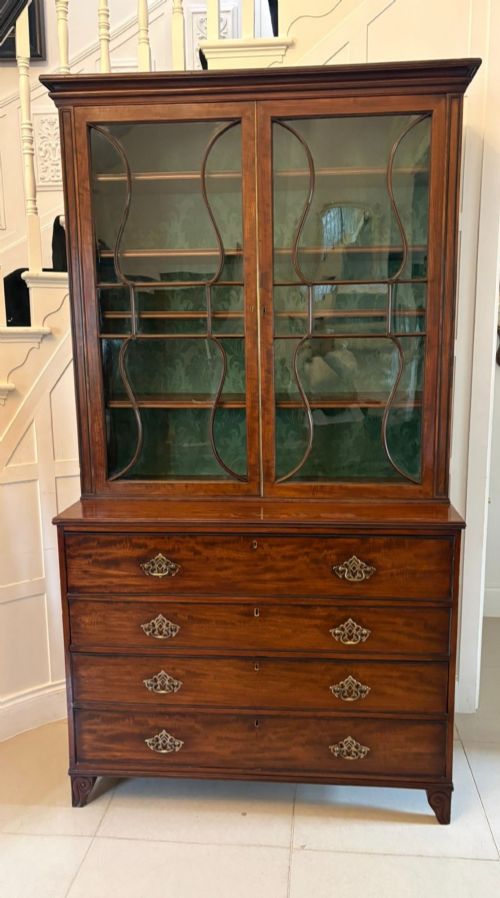
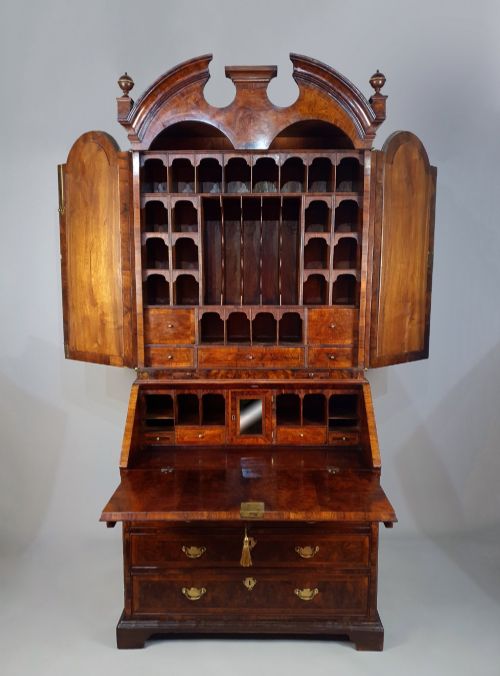
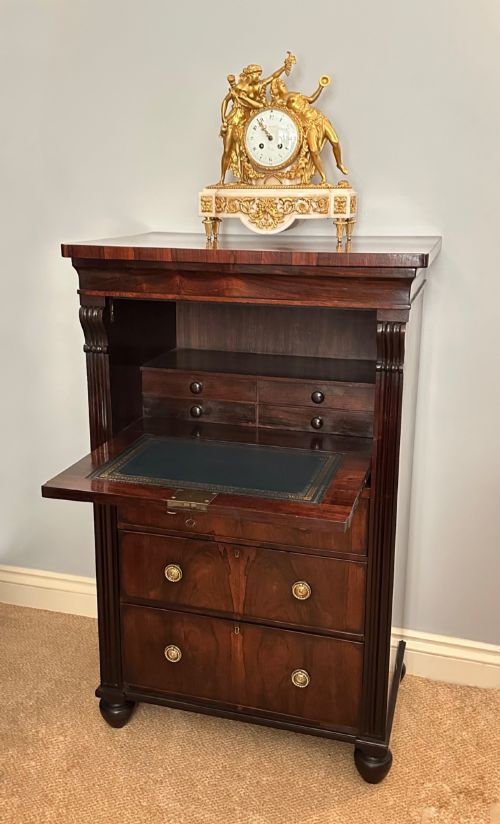
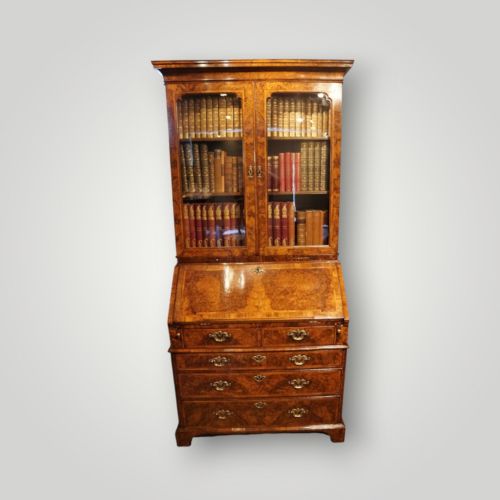
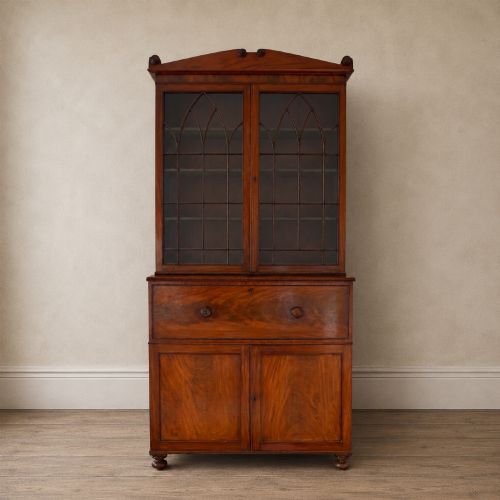
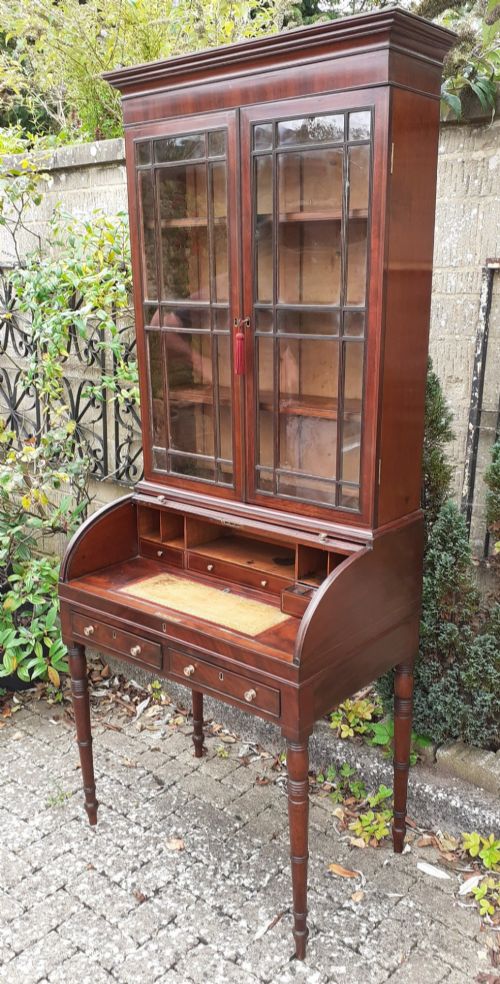
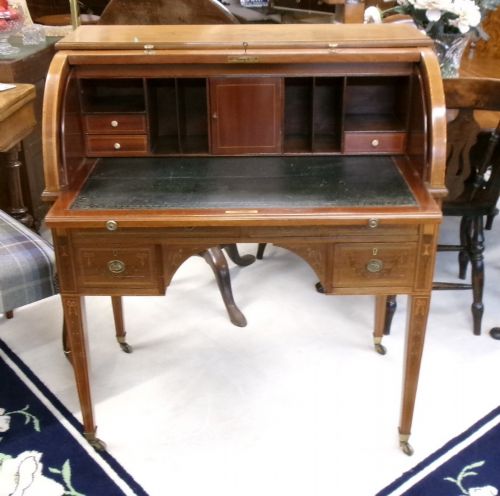
Beyond standard fall-front bureaux, the selection includes bureau bookcases with glazed upper sections, cylinder top writing desks, and secretaire cabinets. Edwardian and Art Deco variations also appear, offering lighter timbers or streamlined twentieth-century designs.
How they were made
Cabinet makers utilised dense hardwoods including mahogany, walnut, oak, and rosewood, often selecting figured veneers for drawer fronts and fall flaps. Secondary timbers like oak or pine appear in internal drawer construction.
Listings feature mahogany, walnut, rosewood, and oak across Georgian, Victorian, and Edwardian periods.
What varies in quality
The choice and figuring of timber dictate much of the visual distinction, from plain solid oak to highly figured mahogany and burr walnut veneers. Master cabinet makers distinguished their work through precise drawer joinery and complex internal arrangements.
Proportion and scale separate simpler provincial pieces from sophisticated urban workshops, particularly in bureau bookcases and secretaire cabinets where cornice mouldings and glazing bars demand refined execution.
Tudor and Burrey·Gillows of Lancaster·Boston Chair Company
The Fitted Interior Bureau Desk Glossary
- Fall front
- The hinged writing flap that drops down to reveal the fitted interior and provides a surface for writing. When closed, it conceals all the small drawers and pigeonholes.
- Secretaire
- A piece of furniture containing a drawer or compartment designed for writing, often disguised as a standard chest of drawers or incorporated into a bookcase.
- Pigeonhole
- A small, open compartment within a bureau interior used for sorting letters and documents. These compartments form a key part of the fitted arrangement.
- Bracket feet
- A simple corner foot shape supporting case furniture, commonly seen on eighteenth-century Georgian and walnut bureaux.
- Cylinder top
- A curved wooden shutter that rolls backward into the body of the desk to expose the writing surface and interior fittings, distinct from a flat fall front.
Fitted Interior Bureau Desk: Frequently Asked Questions
What is a fitted interior bureau desk?
A fitted interior bureau desk is a writing cabinet featuring a fall-front lid or cylinder top that opens to reveal internal drawers, pigeonholes, and small compartments.
These pieces emerged to provide secure storage for correspondence and personal documents before modern stationery cabinets and desks became common.
How were these desks used historically?
Owners used them for private letter writing, accounting, and storing important papers away from household view. The internal pigeonholes and secret drawers kept stationery and valuables organised.
The drop-down flap served as a portable writing slope when lowered, transforming the cabinet into a functional workspace.
How do I distinguish eighteenth-century pieces from later copies?
Eighteenth-century examples display timber patination, hand-cut dovetails, and construction methods appropriate to periods like the Georgian or Queen Anne eras. Secondary woods inside drawers typically match the period's domestic timber usage.
Reproduction pieces built in later styles often reveal uniform machine finishing and modern adhesives upon close inspection of internal framing.
Where should I place a bureau desk at home?
These desks suit studies, living rooms, and bedrooms where their compact footprint and enclosed storage keep paperwork out of sight. A room with controlled humidity helps protect antique veneers and solid hardwoods.
Allow sufficient clearance in front of the piece for the fall-front flap to drop completely horizontal during use.