





Fishing Boat Harbour Painting
When you search for a fishing boat harbour painting, you enter a world of coastal commerce, restless tides and small craft safely tied against stone quays.
Fishing Boat Harbour Painting
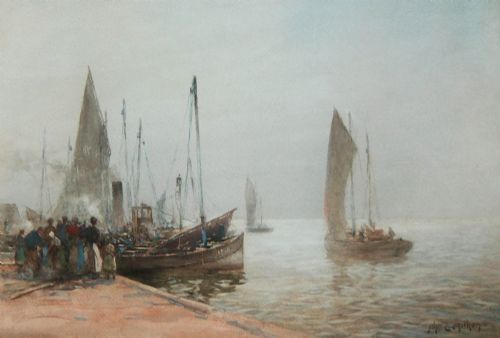
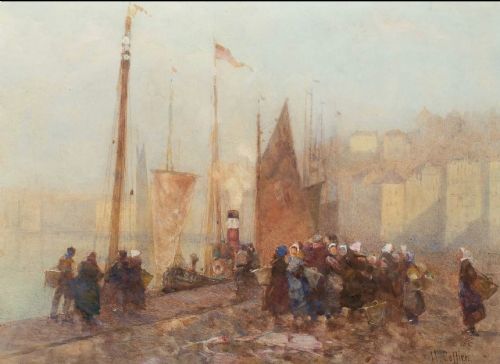
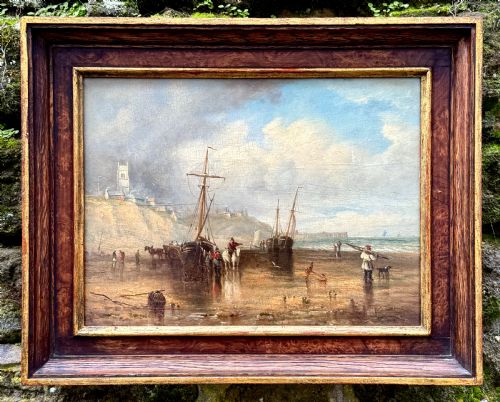
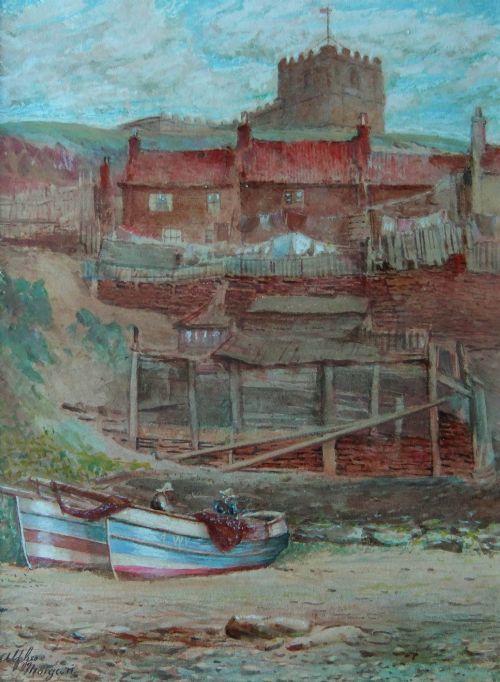
A fishing boat harbour painting captures the working life of coastal communities, depicting vessels moored in sheltered waters, returning with catches or resting at low tide. Most pieces met on this page date from the nineteenth and twentieth centuries, spanning periods from Victorian and Edwardian times through to mid-century modern movements.
The compositions focus on specific harbours in Britain, France and beyond, naming locations such as Whitby, St Ives, Polperro and Boulogne. Painters record these maritime scenes through oil on canvas or board, and watercolour on paper, ranging from intimate watercolours to large oil paintings.
Materials and technique
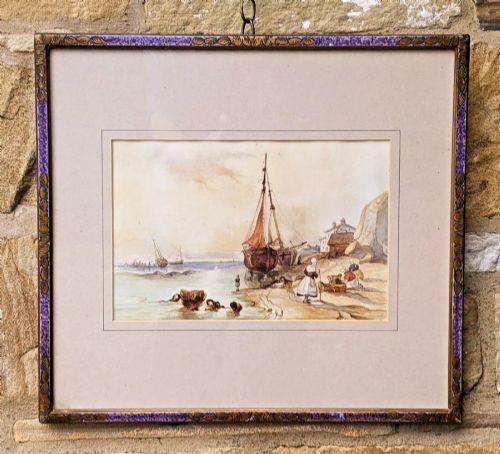
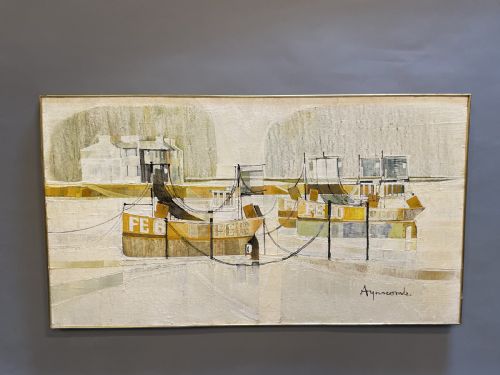
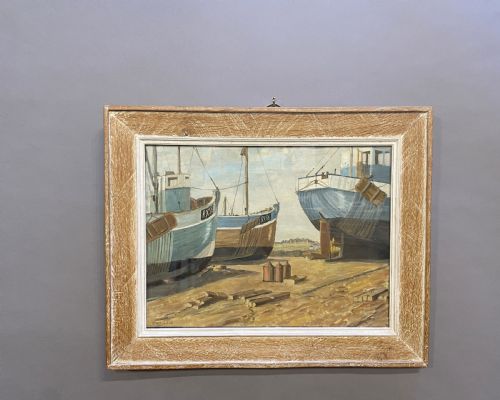
Artists record these maritime scenes using oil paint or watercolour applied to canvas, wood panels, board and paper. Oil paint allows for thick application and layered textures to capture choppy seas and stone piers, while watercolour relies on transparent washes on paper to render light on water and open skies.
Support materials vary by period and preference, with nineteenth-century works frequently utilising canvas stretched over wooden frames, and later twentieth-century pieces often painted directly onto prepared boards or heavy paper.
Several watercolours capture quiet Cornish corners where visiting painters set up their easels among drying nets.
What varies in quality
Quality rests on the sureness of the handling and the artist's command of light, atmosphere and perspective within the harbour setting. Stronger works demonstrate confident brushwork or delicate washes that convey the movement of water and the specific character of coastal architecture without stiffness.
Compositional balance and atmospheric depth separate accomplished marine art from routine topographical illustration, as superior pieces integrate the fishing boats and harbour walls into a unified, convincing visual narrative.
Thomas Creswick·Hector Caffieri·Alfred G. Morgan·Tom Clough·William Lee Hankey·Ernest F. Hill·Owen Bowen·Fred Mayor·Hubert Thornley·Robert Leslie Howey·Alec Caruthers Gould·John W. Gilroy
The Fishing Boat Harbour Painting Glossary
- Watercolour
- A painting method in which fine pigment is suspended in a water-based solution, typically applied to paper. This medium allows for luminous washes that capture coastal light.
- Oil on Canvas
- Pigment mixed with drying oil applied to a stretched woven fabric support. This combination permits rich texture and deep colour layering suited to marine scenes.
- Seascape
- A work of art depicting the sea, coastal views or maritime activity. These pieces focus on the interaction between vessels, shorelines and changing weather.
- Post-Impressionism
- An art movement following impressionism that explored emotional response and structural form through distinct colour and brushwork. Works in this style often emphasise bold outlines and simplified harbour shapes.
- Board
- A rigid flat support made of wood or compressed material used instead of canvas. It provides a stable surface for oil painting.
Fishing Boat Harbour Painting: Frequently Asked Questions
What periods do these paintings cover?
The works span from the nineteenth century through the Edwardian and Victorian eras into the mid-twentieth century. Artists recorded coastal scenes across these decades using traditional and modern approaches.
Most pieces reflect the artistic styles of their specific decade, ranging from detailed Victorian maritime realism to impressionist and post-impressionist interpretations.
Where are the depicted harbours located?
The paintings record specific ports and coastal towns across Britain, including Yorkshire, Cornwall, Scotland and Kent. Locations such as Whitby, St Ives, Polperro and Whitby appear frequently.
Selected works also depict continental European harbours in France, Italy and the Netherlands, capturing international fishing communities and ports.
How should I frame a watercolour painting?
Watercolour paintings require professional framing behind glass with a protective mount to prevent the paper from touching the glazing. This protects the delicate pigments from moisture and environmental damage.
Keep watercolours away from direct sunlight to preserve the original tones of the paper and pigments.
How do I identify oil on canvas versus oil on board?
Oil on canvas involves paint applied to a woven fabric stretched over a wooden frame, which yields slightly to gentle pressure. Oil on board uses a rigid wooden or composite panel as the flat support.
Examining the reverse side of the artwork usually reveals either the woven canvas texture or the solid surface of the board.