




Coastal Town Oil Painting
A coastal town oil painting captures harbours and quaysides in rich pigment, bringing maritime atmosphere straight into a room.
Coastal Town Oil Painting
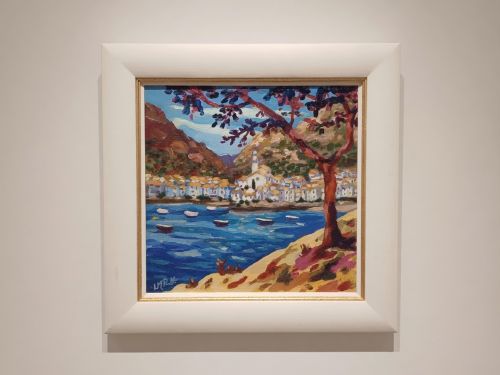
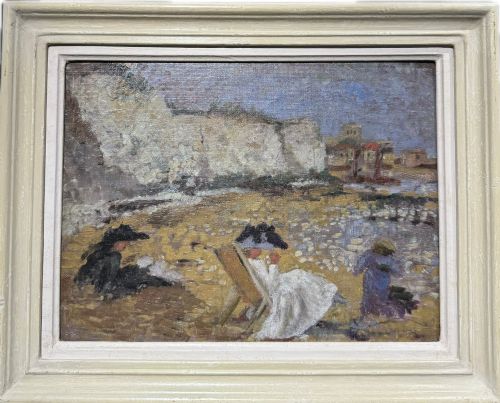
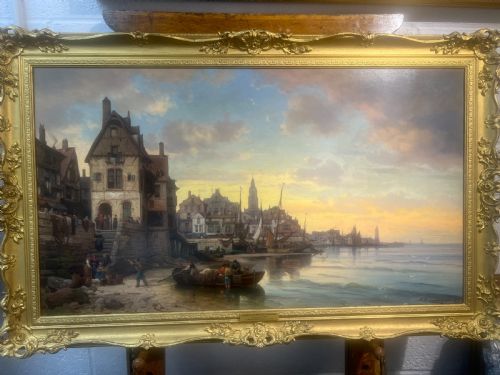
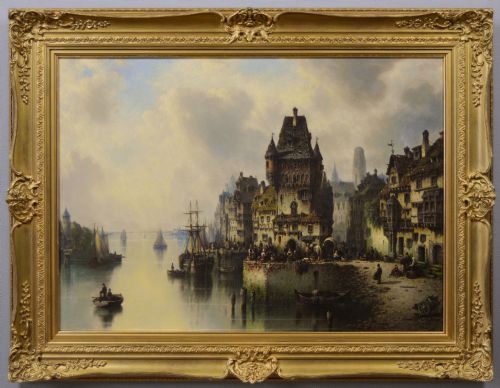
A coastal town oil painting portrays maritime settlements, busy harbours, and fishing ports through brushwork on canvas. These works range from nineteenth-century realism to mid-century impressionism, recording bustling quaysides and quiet coastal retreats.
The selection includes British and continental scenes, spanning Victorian coastal views, French post-impressionist port depictions, and later twentieth-century interpretations. Works frequently feature framed presentations in wood or giltwood.
Materials and construction
Artists apply oil paint to woven canvas stretched across wooden supports, building up texture and depth with pigmented oils. This traditional medium allows for rich colour blending, particularly suited to capturing changing light over water and stone.
Many examples are housed within their original wood frames, occasionally enhanced with gold leaf or finished as giltwood. These surrounds complement the maritime subjects while protecting the canvas edges.
Some paintings capture busy steam boats puffing alongside traditional sailing vessels in bustling French ports.
Assessing quality in coastal town oil painting
Quality rests on the artist's handling of light, atmospheric perspective, and architectural detail within the harbour setting. Superior pieces demonstrate confident brushwork that brings movement to water and solidity to quayside buildings.
The integrity of the canvas and the preservation of the original paint layer distinguish finer examples from standard decorative works. Cohesion between the painting and its period frame further elevates the piece.
Lucy Pratt·Ethel Sands·Charles Euphraisie Kuasseg·Cecil Rochfort D'Oyly-John·Gustave de Breanski·Ludwig Hermann·Donald Wood·Augustus William Enness·F Legge
The Coastal Town Oil Painting Glossary
- Canvas
- A heavy woven fabric used as a surface for oil painting. It is typically stretched tightly over a wooden frame before work begins.
- Giltwood
- Wood carved and covered with a thin layer of gold leaf or metallic gilt paint. It is commonly found on traditional frames enclosing nineteenth-century artworks.
- Post-Impressionism
- An art movement extending beyond impressionism while retaining its vibrant use of colour. It often emphasises distinct brushstrokes and symbolic subject matter.
- Realism
- An artistic style that portrays subject matter truthfully without artificiality. In these paintings, it manifests as accurate depictions of boats, harbours, and coastal architecture.
Coastal Town Oil Painting: Frequently Asked Questions
What periods do these paintings cover?
The works span from the nineteenth century through the 1930s and up to later twentieth-century creations.
Victorian and Edwardian examples sit alongside post-impressionist and mid-century interpretations of European harbours.
How should I display a coastal town oil painting?
Hang the piece away from direct sunlight and damp conditions to preserve the oil paint and canvas.
Match the weight of the frame, whether simple wood or ornate giltwood, to the character of your interior space.
Are these paintings supplied with frames?
Many listings include the original wood or giltwood frame accompanying the canvas.
Frames often reflect the period of the artwork, adding context and protection to the piece.
How do I distinguish nineteenth-century works?
Nineteenth-century pieces often showcase realist or early impressionist techniques focusing on traditional shipping and maritime trade.
Examining the canvas stretcher and framing style helps confirm the historical period.