




Fireside Storage Bin
A fireside storage bin brings hearthside practicality together with period craftsmanship, keeping fuel close at hand in brass, copper, or timber.
Fireside Storage Bin
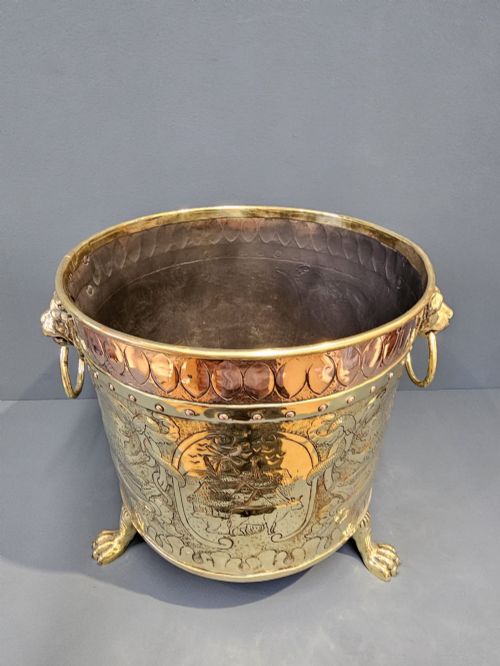
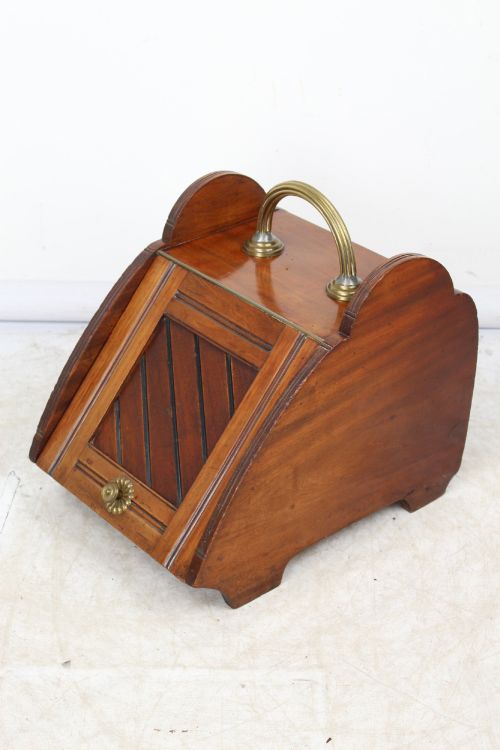
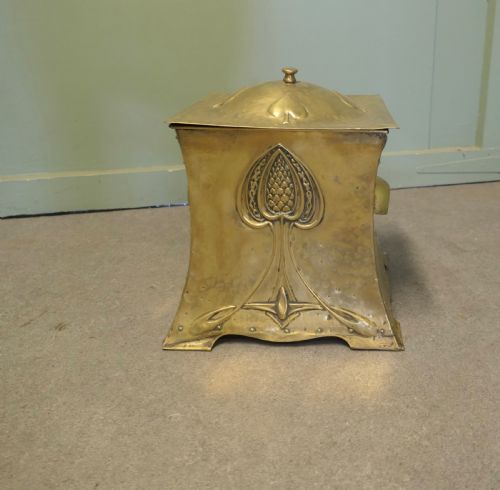
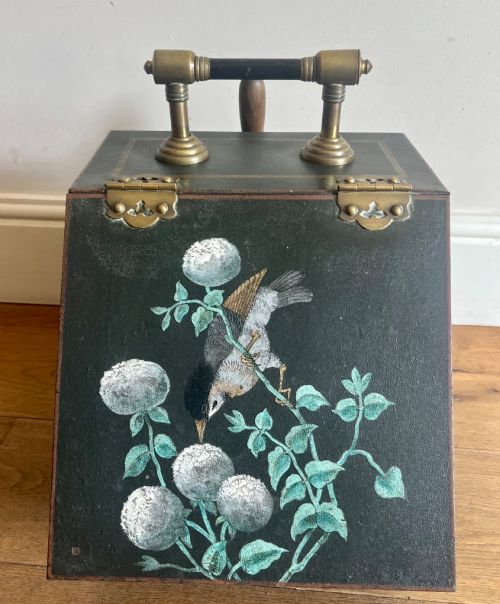
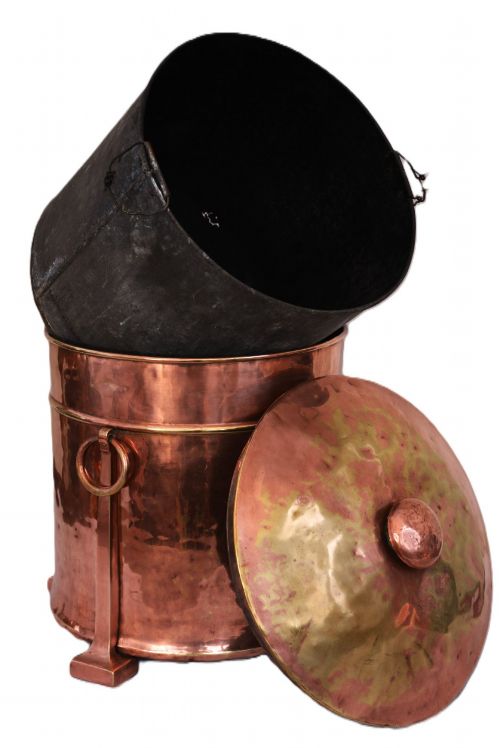
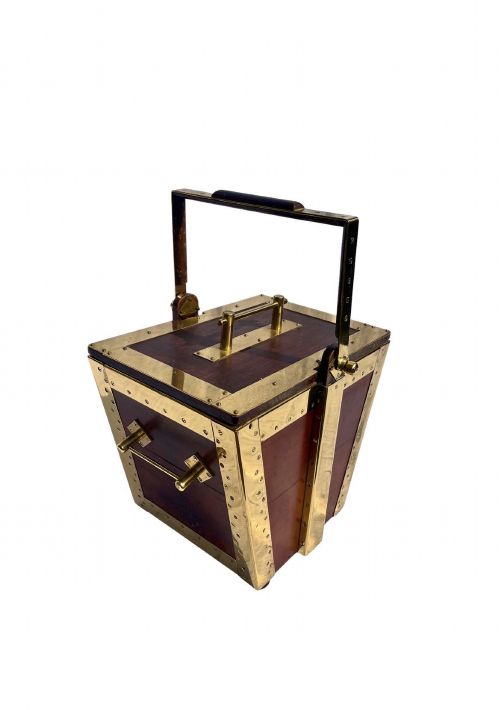
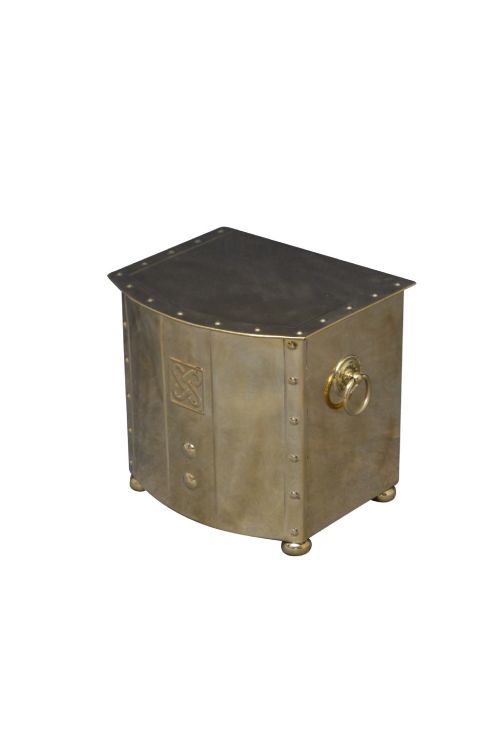
A fireside storage bin serves as a dedicated hearthside container for fuel, appearing primarily as coal boxes, log bins, scuttles, and purdoniums. These practical receptacles keep wood and coal tidy while adding metalwork or polished timber to the fireplace surround.
Materials and construction
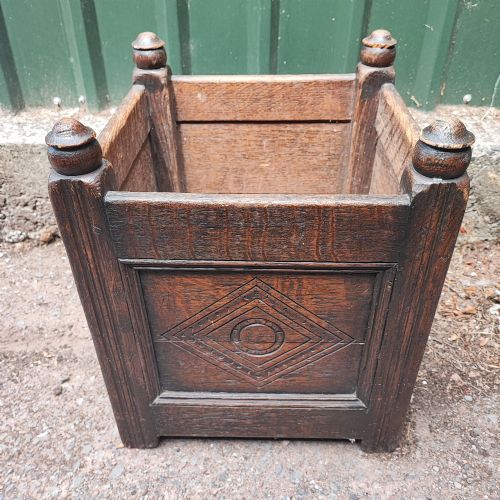
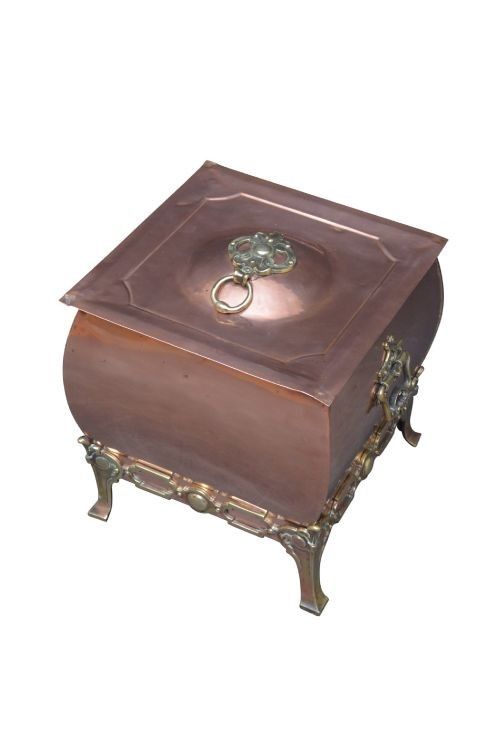
Makers utilised durable hardwoods such as oak, mahogany, walnut, and pine, frequently employing coopered construction or decorative joinery to build strong bodies for heavy fuel. Metal variants combined sheet brass and copper with iron frames, using hand finishing and embossed detailing to decorate the surfaces.
Many wooden purdoniums and coal boxes incorporated interior metal liners to catch debris and protect the timber from moisture and ash. Brass mounts, drop handles, and strap hinges provided both structural reinforcement and functional hardware for daily hearthside use.
Listings demonstrate a strong presence of Victorian and Edwardian pieces, utilising copper, brass, oak, and walnut in traditional forms like purdoniums and log bins.
Distinctions in quality
Quality rests in the weight of the metals, the depth of the embossing, and the selection of timber veneers such as pollard oak or figured walnut. Superior pieces display crisp detailing in stamped copper or brass work and retain original interior liners and matching shovels.
The refinement of the joinery and the integrity of the hardware separate standard utilitarian boxes from high workshop productions. Subtle design touches like inlaid decoration, dovetailed joints, and robust iron framing elevate individual examples.
The Fireside Storage Bin Glossary
- Purdonium
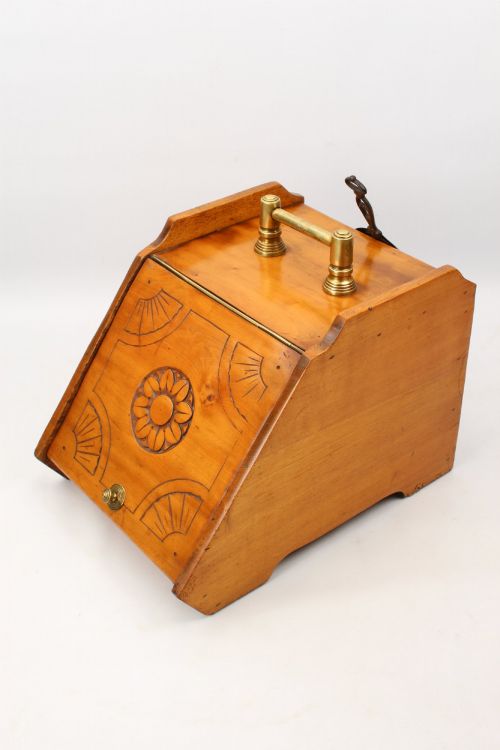
- A specialised type of coal box, typically featuring a sloping front door and a dedicated compartment for a shovel. These pieces gained popularity during the Victorian era for domestic hearths.
- Coal Scuttle
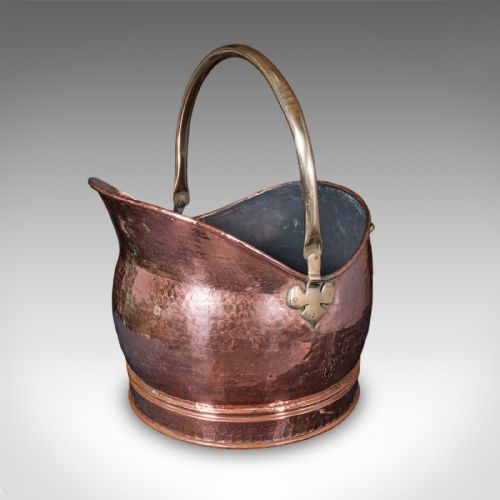
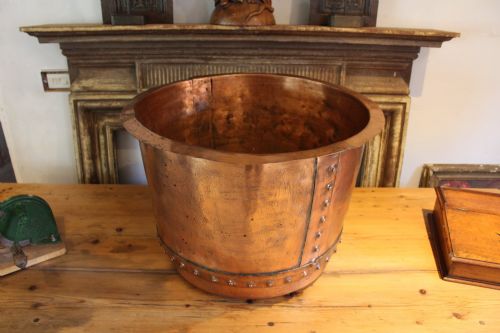
- A deep container designed for holding and transporting coal to the fire grate, often fitted with a swing handle. They appear in both polished brass and hand-finished copper.
- Coopered
- A method of construction where narrow staves of wood are joined edge-to-edge and bound with metal hoops, traditionally used for buckets and round log bins.
- Tole Ware
- Painted or lacquered metalware, offering decorative coloured surfaces that mimic Asian lacquer techniques on domestic items.
- Aesthetic Period
- A late nineteenth-century design movement emphasising beauty and artistic expression over strict historical revival, visible in decorative metalwork and refined furniture forms.
Fireside Storage Bin: Frequently Asked Questions
What is a purdonium?
A purdonium is an enclosed coal box, usually fitted with a sloping drop-front door and a small interior shovel. They were designed to keep coal dust contained while sitting neatly beside the hearth.
Victorian and Edwardian households relied on them to store fuel discretely in formal rooms without spilling debris onto the carpet.
How do I clean a brass log bin?
Polished brass surfaces require gentle cleaning with a soft cloth to remove dust and maintain the metal finish without stripping the underlying patina. Avoid harsh chemical abrasive cleaners that can damage vintage hand-finished details.
For copper components, warm soapy water and a mild polish will preserve the warmth of the metal.
Were these bins meant for coal or logs?
Makers designed these receptacles for various types of hearth fuel, including coal, kindling, and larger logs. Metal scuttles and buckets typically held loose coal, while coopered wooden bins and larger rectangular boxes accommodated logs.
Many examples include interior metal liners specifically intended to catch loose dirt from dry wood or coal.
How can I tell a Victorian bin from an Edwardian one?
Victorian storage pieces often feature heavier brass embossing, darker walnut or oak timbers, and ornate Aesthetic or Arts and Crafts stylistic influences. Edwardian examples tend toward simpler, cleaner lines while maintaining traditional purdonium mechanisms. Nail construction, hinge types, and interior liner materials also help pinpoint the manufacturing era.