


Edwardian Copper Bin
An Edwardian copper bin is a functional fireside piece that brings warmth and texture to a room, and collectors seek them for their enduring metalwork and utility.
Edwardian Copper Bin
When you search for an Edwardian copper bin, you are looking at fireside accessories designed to hold coal, logs, or kindling. These containers also appear as planters, troughs, and umbrella stands, reflecting the versatile utility of the metal.
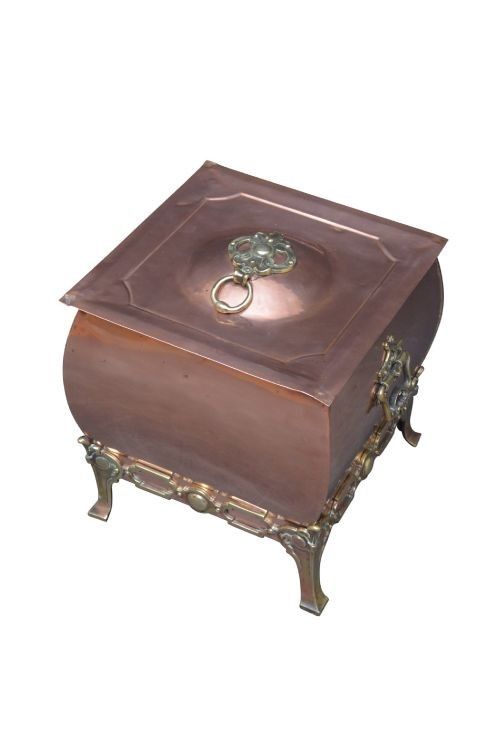
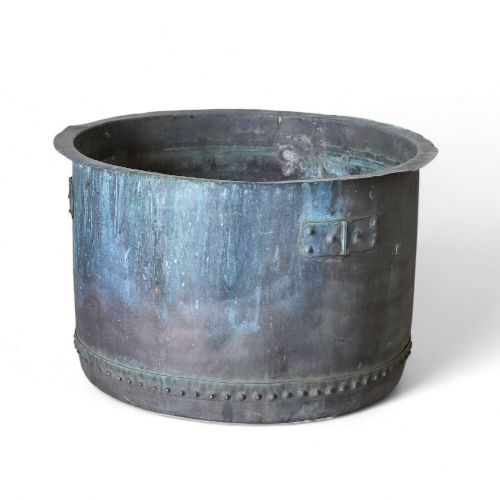
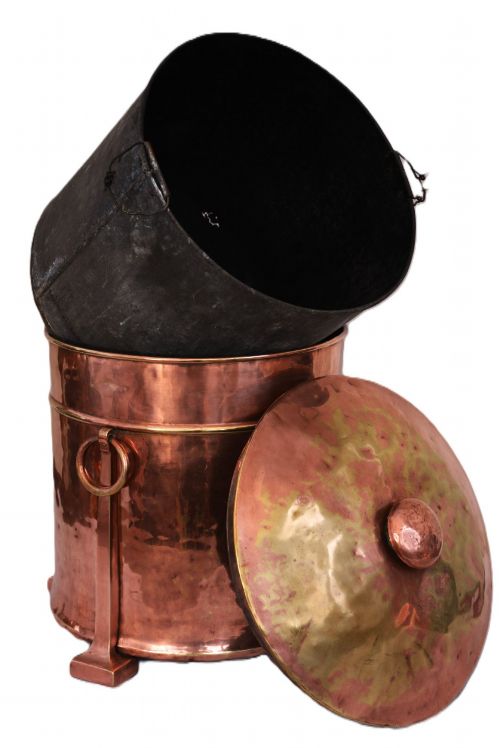
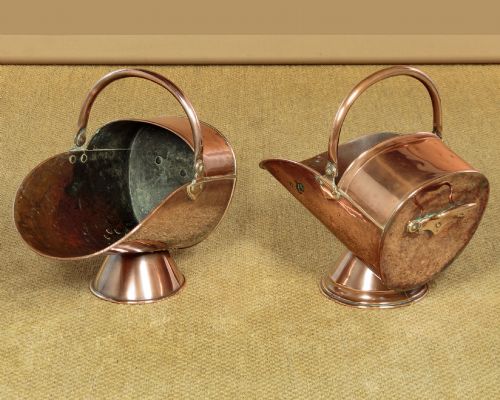
The version you are most likely to meet on this page combines a hammered or smooth copper body with brass, iron, or oak elements. They take shapes ranging from traditional coal scuttles and helmet buckets to large cylindrical log bins and square boxes.
Originating predominantly from English workshops, these pieces often display the distinct design philosophies of the Arts and Crafts movement or Art Nouveau. They bridge the gap between heavy Victorian utilitarianism and early twentieth-century decorative design.
How they were made
Makers shaped these containers primarily from sheet copper, often joining the seams with hand-riveting or visible folded joints to ensure structural strength. Brass handles, feet, and hinges provide sturdy contrast and mechanical support to the softer copper body.
Many examples incorporate wrought iron or cast iron frames, stands, and handles, particularly on larger log bins intended to bear heavy loads of wood. Oak panels and wood linings also appear, providing internal structure and framing exterior metalwork.
Surface finishes display hand-beaten texturing and repoussé decoration, such as galleon motifs or organic plant forms, executed with simple handheld punches and hammers.
Listings feature items spanning the Victorian era through the 1930s, with a strong representation of Edwardian and Arts and Crafts pieces.
What varies in quality
The calibre of an Edwardian copper bin rests on the thickness of the metal gauge and the precision of the hand-beaten work. Heavier copper resists denting and holds a more stable form over decades of heavy fireside use.
Construction details distinguish standard utility pieces from finer decorative examples, specifically the integration of structural iron frames, solid brass fittings, and well-fitted wooden bases or linings. The skill with which rivets are set and seams are joined dictates the structural integrity.
Surface patination and the execution of decorative motifs, whether crisp Art Nouveau whiplash lines or deliberate Arts and Crafts hammer marks, separate mass-produced items from superior workshop output.
The Edwardian Copper Bin Glossary
- Coal scuttle
- A bucket or container specifically shaped with a wide mouth and a hinged handle for carrying coal to a fireplace. They frequently feature a pointed lip or shovel attachment.
- Purdonium
- A specialised type of coal box featuring a sloping front door and an internal metal liner designed to keep coal contained and dust-free.
- Repoussé
- A metalworking technique where the artisan hammers the design from the reverse side to form a raised relief on the front. This method appears widely on Arts and Crafts vessels.
- Patina
- The surface sheen and coloration developed by copper and brass over decades through oxidation and handling. A rich natural patina indicates age and unpolished history.
- Arts and Crafts
- A design movement emphasising handcraftsmanship, visible construction methods, and simple utility over mass-produced ornamentation.
Edwardian Copper Bin: Frequently Asked Questions
What is an Edwardian copper bin used for?
These pieces served originally as practical hearth accessories to store and transport coal, logs, or kindling near the fireplace.
Today, buyers continue to use them for firewood storage or repurpose them as large indoor planters, umbrella stands, and general decorative containers.
How do I clean an antique copper bin?
Most collectors prefer to leave the aged surface untouched to preserve the historic patina and dark oxidation developed over a century.
If cleaning is necessary, use a soft cloth and mild soap to remove dust, avoiding harsh abrasive metal polishes that strip away the character.
Are these bins made of solid copper?
The main body panels consist of sheet copper, but they frequently incorporate structural frames and handles made from wrought iron, cast iron, or brass.
Many examples also feature internal wooden linings or oak framing to provide rigidity to the lighter metal walls.
How do I distinguish Arts and Crafts from Art Nouveau?
Arts and Crafts pieces emphasise visible hand-beaten hammering, structural rivets, and simple, honest construction methods rooted in medieval traditions.
Art Nouveau examples favour flowing, organic plant motifs, whiplash curves, and stylized imagery like galleons embossed into the copper surface.