
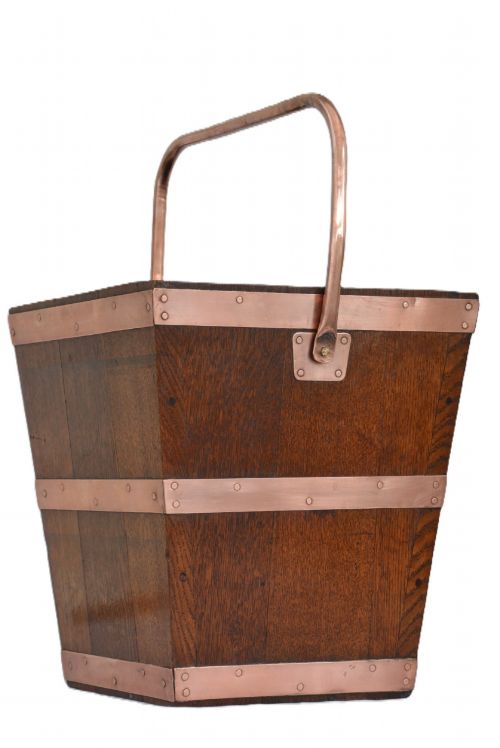
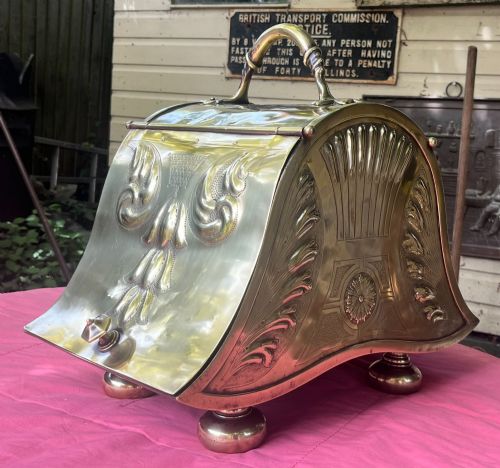


Fireside Hearth Scuttle
A fireside hearth scuttle keeps coal or logs close to the grate while adding metal or timber texture to the fireplace.
Fireside Hearth Scuttle
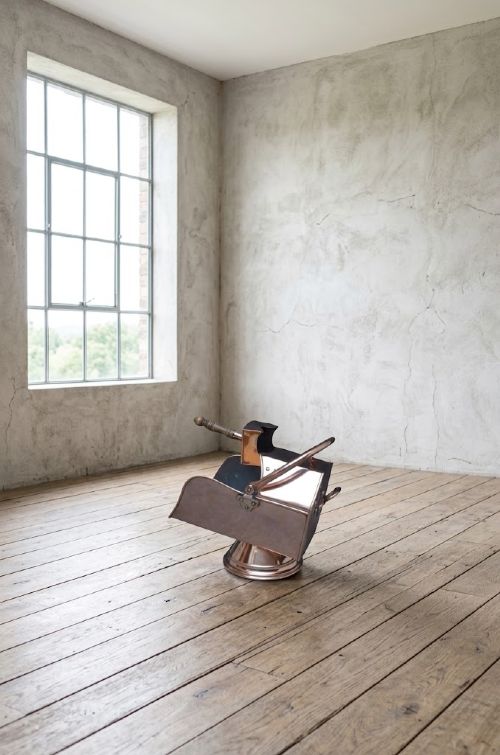
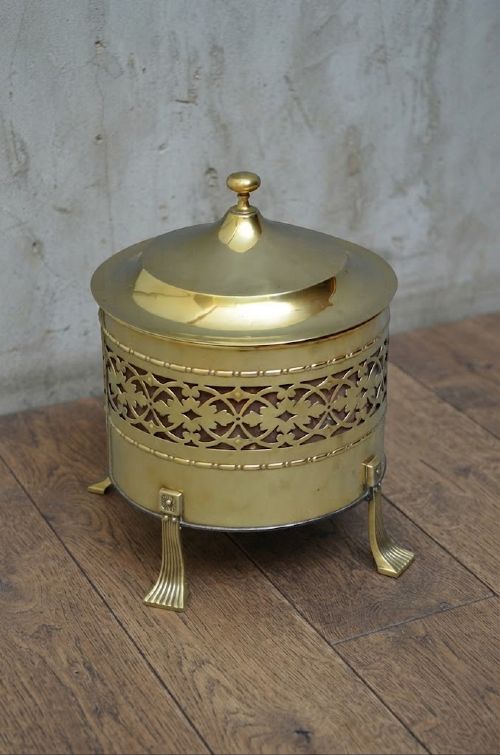
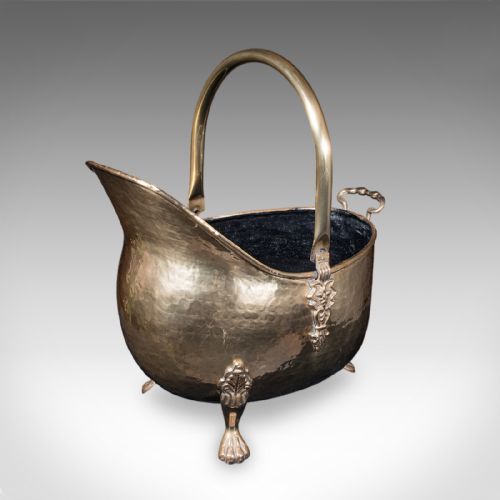
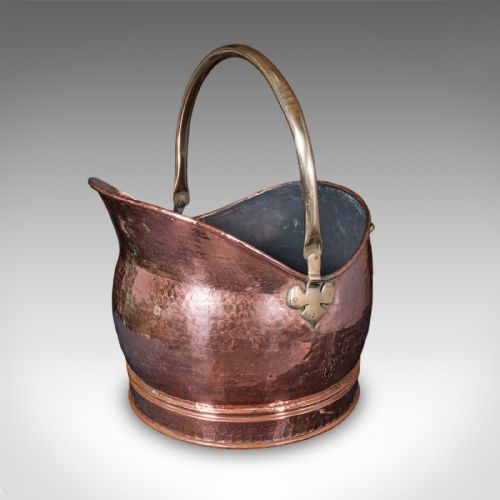
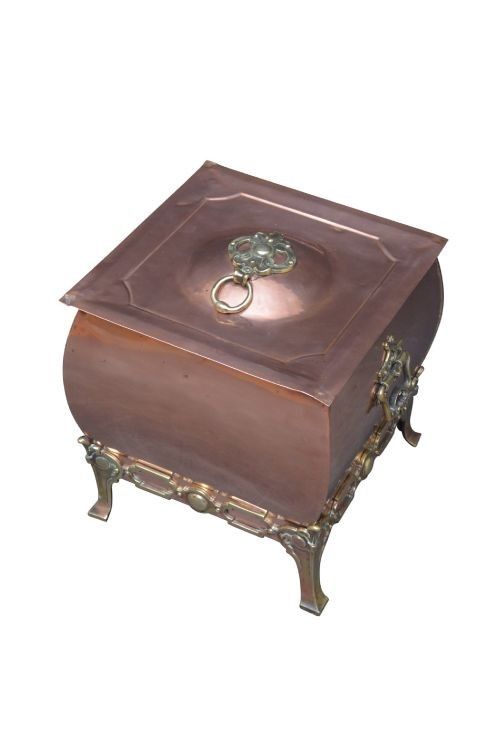
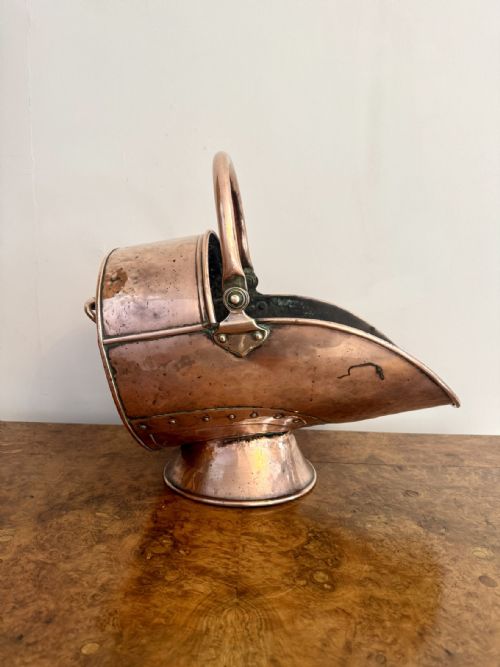
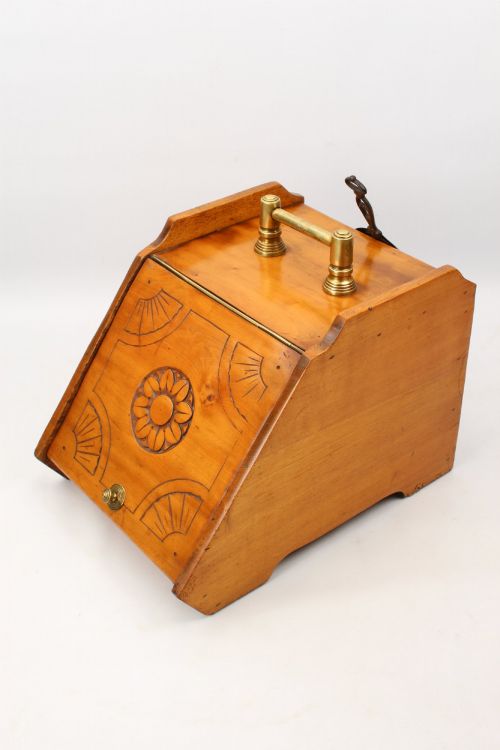
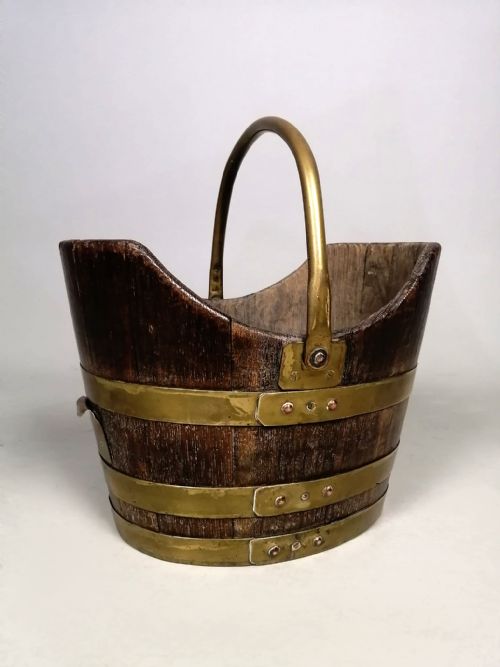
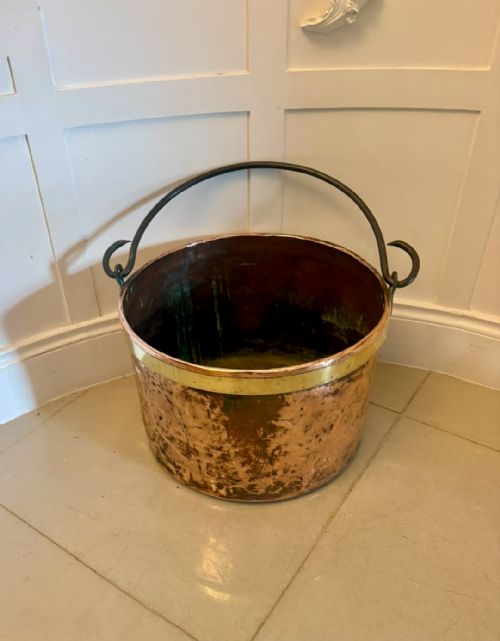
When you search for a fireside hearth scuttle, you encounter practical vessels designed to hold fuel next to the fireplace. The selection on this page leans heavily toward Victorian and Edwardian examples in brass and copper.
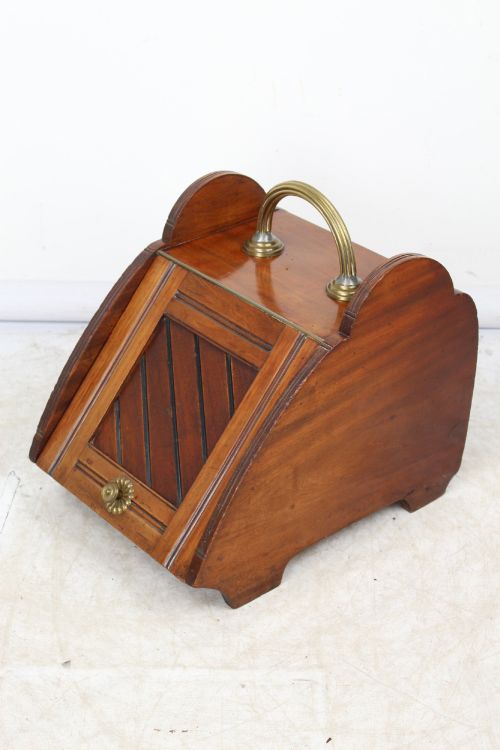
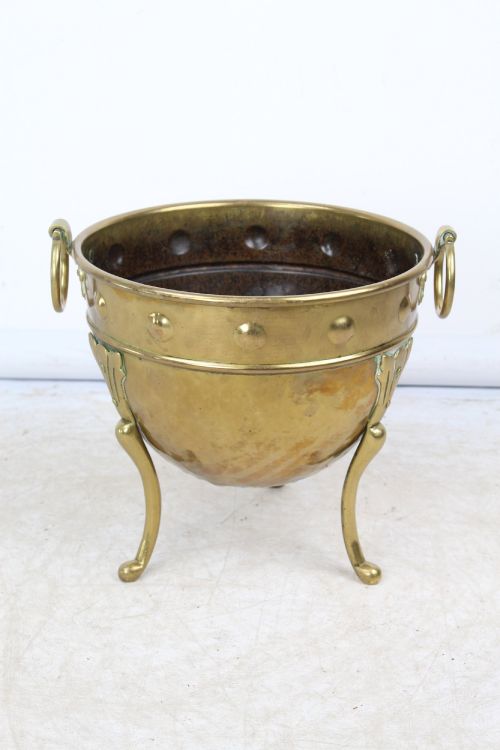
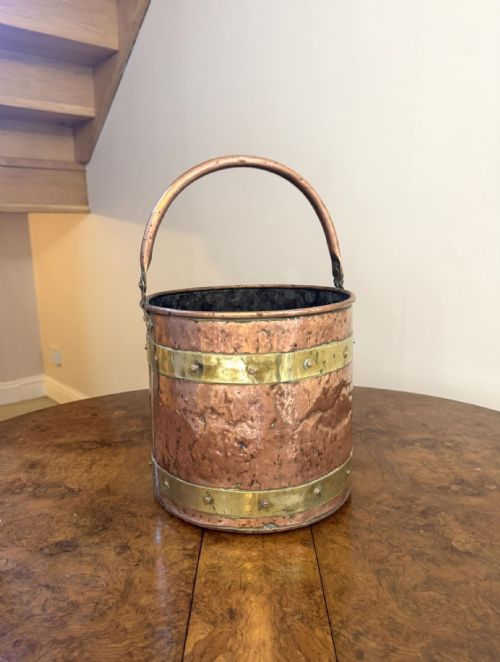
Forms range from traditional helmet-shaped scuttles to cylindrical log bins, oak purdoniums with shovels, and riveted buckets. These items served a purely domestic purpose in sitting rooms and parlours before central heating took over.
How they were made
Metals such as brass, copper, and wrought iron dominate the construction, often shaped with riveted seams or hammered finishes. Coopers and metalworkers utilised timber like oak and mahogany for bucket bodies and fitted them with brass bands.
Makers integrated decorative elements including fretwork designs, tavern scenes, and carved panels on wooden coal boxes. Many pieces included original metal shovels or carried maker stamps from prominent firms.
Some brass buckets boast embossed tavern scenes, ready to host your coal while depicting a pub.
What varies in quality
Metal thickness and the sturdiness of handles and hinges separate robust utilitarian items from lighter decorative versions. Riveting technique and the presence of original brass shovels or liners alter the integrity of the piece.
The crispness of hand-finishing, engraving, or fretwork distinguishes standard production items from finer workshop examples. Wood selection and joinery quality mark the difference in oak and mahogany boxes.
Henry Loveridge·Benham And Froud·Petrus Ramus
The Fireside Hearth Scuttle Glossary
- Purdonium
- A specific type of enclosed wooden coal box featuring a sloping front flap and an internal metal liner. This design kept coal dust contained inside the cabinet.
- Coal Helmet
- A metal scuttle shaped with a flared rim resembling a classical helmet, designed to pour fuel cleanly into the grate. They commonly feature a sturdy carrying handle overhead.
- Log Bin
- A deep cylindrical or tapering bucket intended for storing larger firewood rather than small coal pieces. These often incorporate iron frames or heavy brass banding.
- Fretwork
- Openwork ornamentation cut into metal or wood sheets using a piercing saw. Edwardian makers frequently applied this technique to ventilation panels on coal buckets.
- Riveted
- Joined with short metal pins hammered flat to secure overlapping metal plates together. This construction method ensures durable seams on copper and brass buckets.
Fireside Hearth Scuttle: Frequently Asked Questions
How do I clean a brass hearth scuttle?
Wash the metal gently with warm soapy water and a soft cloth to remove surface dirt without stripping the aged patina. Avoid harsh abrasive cleaners that scratch the polished surface.
Dry the vessel thoroughly with a lint-free cloth to prevent water spots from forming on the brass or copper.
What is the difference between a scuttle and a purdonium?
A scuttle is an open bucket or helmet-shaped vessel designed for carrying and pouring fuel directly onto the fire. It usually remains visible beside the hearth.
A purdonium is an enclosed wooden cabinet with a hinged or sliding front that hides the coal shovel and liner inside a piece of furniture.
Can these bins hold firewood?
Larger copper buckets and designated log bins suit standard firewood lengths and keep logs tidy by the hearth. Oak and metal versions provide sturdy storage for daily burning supplies.
Smaller helmet scuttles function better for coal, kindling, or peat rather than bulky logs.
How do I date a copper coal bucket?
Examine the construction methods, such as hand-riveted seams versus machine-stamped joints, alongside stylistic details like Arts and Crafts or Art Nouveau motifs. Georgian pieces often feature hand-beaten copper with heavy brass bands.
Victorian and Edwardian examples introduce machine-rolled sheets, specific maker marks, and fitted wooden components.