
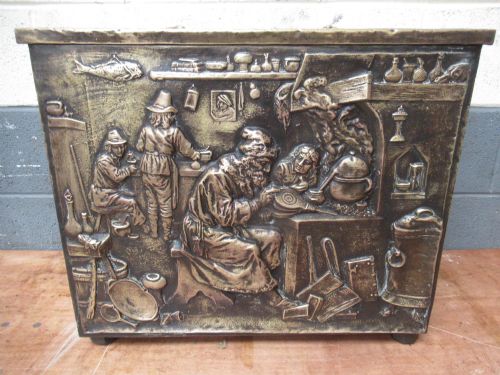


Fireside Fuel Storage Box
A fireside fuel storage box brings solid Victorian and Edwardian craftsmanship to hearthside organisation, keeping wood and coal neat.
Fireside Fuel Storage Box
A fireside fuel storage box provides practical containment for coal, logs and kindling beside the fireplace. These pieces range from simple pine bins to decorative purdoniums and carved mahogany boxes.
Most examples found here date from the Victorian and Edwardian periods, alongside a few pieces from the 1860s through to 1930. English workshops dominate the selection, accompanied by occasional French and Belgian designs.
Buyers will encounter various forms, including traditional coal boxes, log bins, purdoniums and specialised scuttles. Each type fulfills the same functional requirement while reflecting the aesthetic preferences of its era.
How they were made
Cabinetmakers constructed the wooden bodies of these boxes using solid oak, walnut, mahogany and pine. Joinery techniques varied from carved panels and inlay work to sturdy tongue and groove construction.
Metal elements such as brass, copper and gilt metal provide structural reinforcement and decorative contrast. Makers attached hinges, handles and decorative metal panels, including hammered copper characteristic of the Arts and Crafts movement.
Form variations include coal purdoniums, log bins, scuttles and specialised fireside storage boxes originating from English and continental workshops.
What varies in quality
The choice of primary timber and the precision of the joinery distinguish standard utilitarian boxes from finer pieces. Superior examples feature dense hardwoods like oak or mahogany, often enhanced with hand-carving or inlaid details.
The weight and finish of the metal fittings, whether cast brass or hand-beaten copper panels, indicate the standard of production. Makers working within specific stylistic movements, such as Arts and Crafts or the Aesthetic Period, invested greater artistry into surface decoration.
LIBERTY LONDON 'LYNDHURST'
The Fireside Fuel Storage Box Glossary
- Purdonium
- A specialised coal container, typically featuring a sloping front drop-down door and an interior metal liner. This form gained popularity in Victorian homes for neat fuel dispensing.
- Coal Scuttle
- A bucket or container designed for carrying coal to the fire, often fitted with a swinging handle. Many examples include a shovel stored in a built-in side compartment.
- Arts and Crafts
- A design movement emphasising handcraftsmanship, simple forms and honest materials. Pieces from this style often incorporate hammered copper panels and exposed construction details.
- Aesthetic Period
- A late-nineteenth-century movement prioritizing visual beauty over narrative or moral function. Furniture and metalwork from this era display refined ornamentation and artistic balance.
- Ormolu
- Gilt bronze or brass applied as decorative mounts to furniture and metal goods. This technique adds bright metallic accents to the exterior of storage boxes.
Fireside Fuel Storage Box: Frequently Asked Questions
What is a coal purdonium?
A coal purdonium is a dedicated fireside container designed with a sloping front flap to make shovelling fuel easier. It usually contains a removable metal liner to catch coal dust and debris.
These units kept domestic fuel out of sight while sitting neatly beside the hearth in Victorian and Edwardian sitting rooms.
How do I clean a brass or copper box?
Metal panels and fittings benefit from gentle dusting with a soft cloth to prevent dust accumulation. Harsh chemical cleaners can strip historic patinas from copper and brass surfaces.
Preserving the aged appearance of the metal maintains the character and historical integrity of the piece.
Can these boxes store logs today?
These containers suit modern living rooms for holding logs, kindling or magazines. Using an internal liner prevents loose bark and dirt from marking the wooden interior.
They offer a practical storage solution that conceals hearth clutter while displaying period craftsmanship.
How do I date a wooden coal box?
Dating relies on timber choices, construction methods and decorative styles matching known periods like Victorian or Edwardian. Oak and mahogany frequently indicate nineteenth-century production, while lighter pine often points to utilitarian domestic use.
Stylistic markers such as Arts and Crafts copper work or Aesthetic Movement motifs provide further chronological clues.