
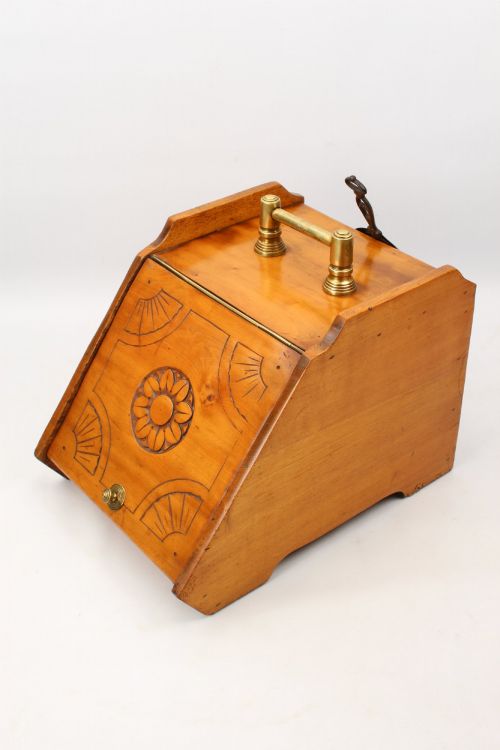


Fireside Coal Box Shovel
These fireside coal box shovel sets combine practical hearth storage with period craftsmanship.
Fireside Coal Box Shovel
A fireside coal box shovel set comprises a dedicated coal container - whether scuttle, purdonium or box - paired with its matching shovel for tending the hearth. These hearth accessories serve both a utilitarian purpose for carrying solid fuel and an aesthetic role beside the fireplace.
The pieces seen here span the Victorian, Edwardian and Arts and Crafts periods, reflecting changing domestic tastes in hearth furniture. Wooden purdoniums with fall-front doors sit alongside metal coal helmets and boxes.
Oak, mahogany and rosewood represent the primary timber forms, frequently fitted with metal liners. Brass and copper variations appear alongside iron and wrought iron examples, showing the range of materials utilised in period fireplace design.
Materials and construction
Makers utilised timber such as oak, mahogany, rosewood and general wood for the bodies of purdoniums and coal boxes, often incorporating carved details or marquetry inlay. Metal components including brass handles, hinges and liners provided durability for daily fuel handling.
Copper and iron appeared extensively, particularly in Arts and Crafts examples where hammered metal finishes and exposed fixings defined the aesthetic. Shovels were fashioned from brass, copper or iron to complement the main coal container.
Listings feature woods like oak, mahogany and rosewood alongside metals such as brass, copper, iron and wrought iron across Victorian and Edwardian periods.
Distinctions in quality
Quality rests upon the selection of materials, from solid oak and mahogany carcases to heavy gauge brass and copper rather than thin sheet metal. Finer pieces demonstrate careful joinery, secure metal liners and robust hinges that withstand regular opening and closing.
Decorative refinement separates standard items from superior examples, such as crisp carved details on wooden purdoniums or deliberate hand-worked elements on Arts and Crafts metalwork. The retention of the original matching shovel and liner adds materially to the integrity of the set.
The Fireside Coal Box Shovel Glossary
- Purdonium
- A specialised coal box featuring a sloping front door or drawer designed to dispense fuel cleanly at the hearth. These containers often house an internal metal liner and accommodate a matching shovel.
- Coal Scuttle
- A bucket-shaped container for holding fireplace coal, typically fitted with a swinging handle for carrying. They appear in brass, copper and iron alongside wooden versions.
- Coal Helmet
- A distinct variety of coal scuttle featuring a flared, asymmetrical rim reminiscent of a traditional helmet. This shape allowed for easier pouring of fuel onto the fire.
- Marquetry
- The art of applying pieces of veneer to a structure to form decorative patterns and pictures. This technique appears on the wooden lids of Edwardian boxes.
- Liner
- The removable metal insert placed inside a wooden coal box or purdonium. It protects the surrounding timber from moisture and dirt associated with solid fuel.
Fireside Coal Box Shovel: Frequently Asked Questions
What is a purdonium?
A purdonium is a specific type of enclosed coal box featuring a fall-front door designed to hold solid fuel neatly beside the fireplace. These items usually contain a removable metal liner and a fitted compartment for the shovel.
They emerged strongly during the Victorian and Edwardian periods as domestic coal storage became more refined and decorative.
How do I clean brass and copper?
Brass and copper components require gentle cleaning using standard metal polishes suitable for antiques. Care must be taken around wooden bodies or applied finishes to avoid accidental staining.
Regular dusting generally suffices for maintaining the patination accumulated over decades of hearth use.
Are original liners important?
Original metal liners protect the interior woodwork from coal dust and dampness, preserving the structural integrity of the box. Finding a set complete with its original liner and matching shovel is preferred by collectors.
Replacements function adequately for everyday use, but original components complete the historic nature of the piece.
How do I date a coal box?
Dating relies upon the materials, construction methods and stylistic markers characteristic of specific eras like the Victorian or Edwardian periods. Arts and Crafts examples display hammered metal surfaces and simpler, honest construction.
Heavier mahogany and carved oak bodies typically point to Victorian manufacture, whereas lighter inlaid rosewood often indicates Edwardian work.