
Fireplace Surround Curb
A fireplace surround curb frames the hearth, and these pieces bring period metalwork and leather seating directly to the fireplace surround curb.
Fireplace Surround Curb
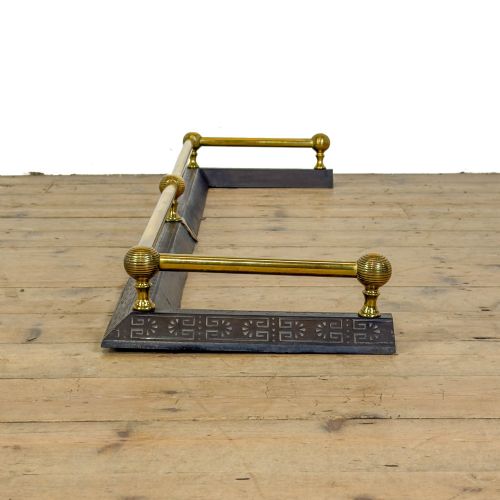
A fireplace surround curb acts as the functional and decorative barrier between the open hearth and the room, protecting floor coverings from stray embers. When exploring a fireplace surround curb, a buyer encounters forms ranging from simple iron rails to elaborate padded club designs.
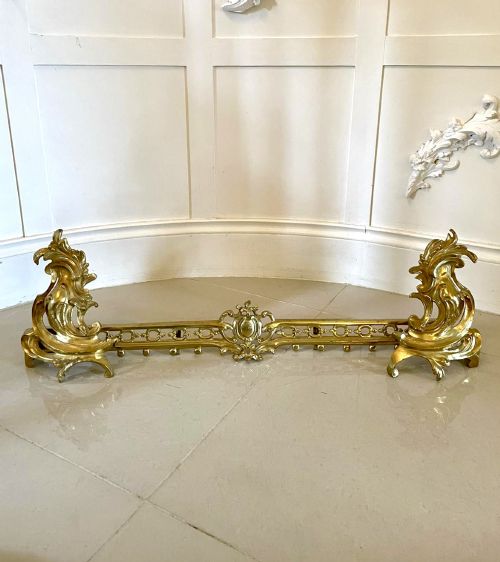
The selections available here draw heavily on Victorian, Georgian, and Edwardian periods, alongside styles such as Arts and Crafts, Art Nouveau, and French Rococo. Brass and cast iron dominate the forms, frequently accompanied by steel, copper, and leather.
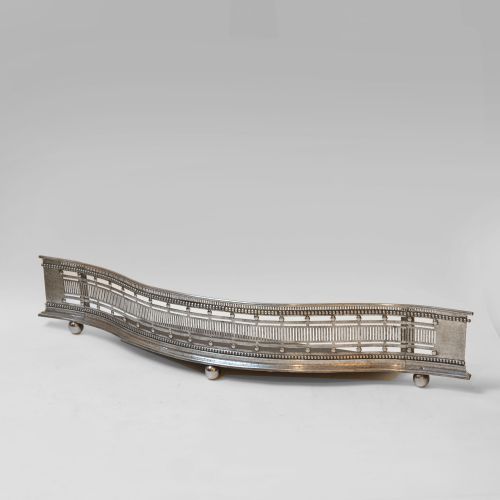
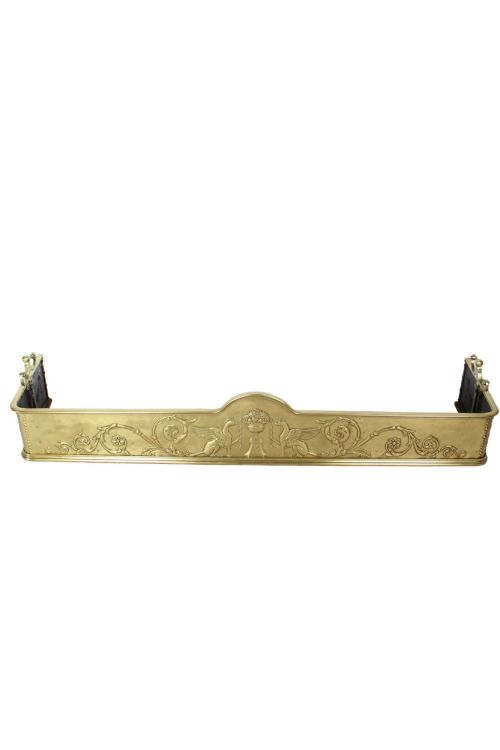
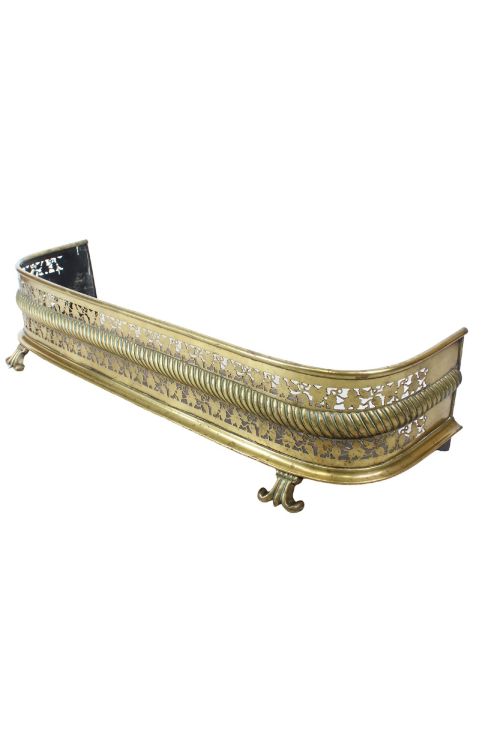
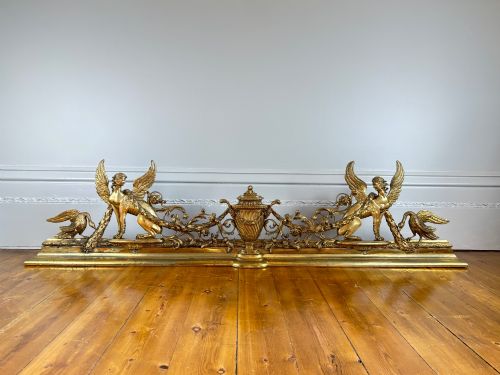
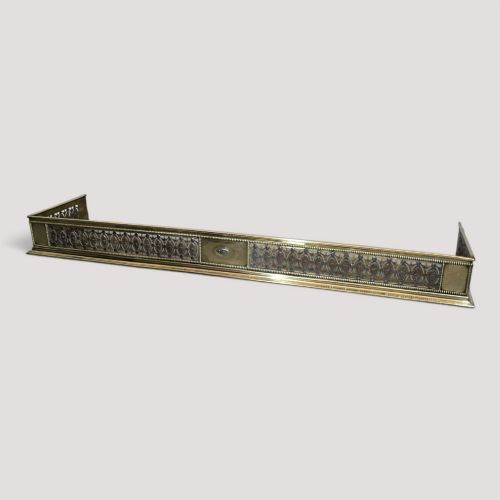
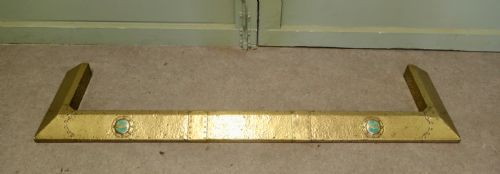
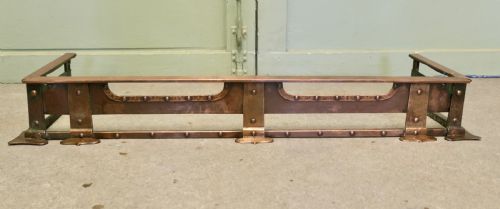
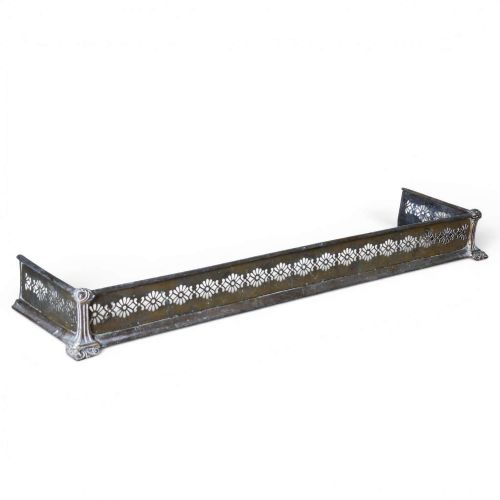
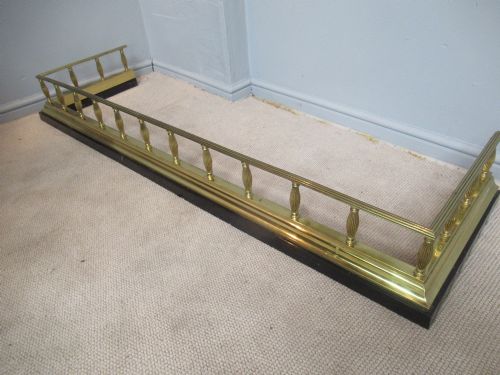
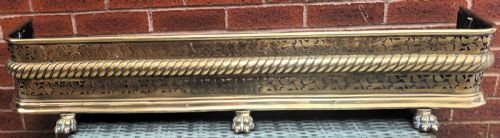
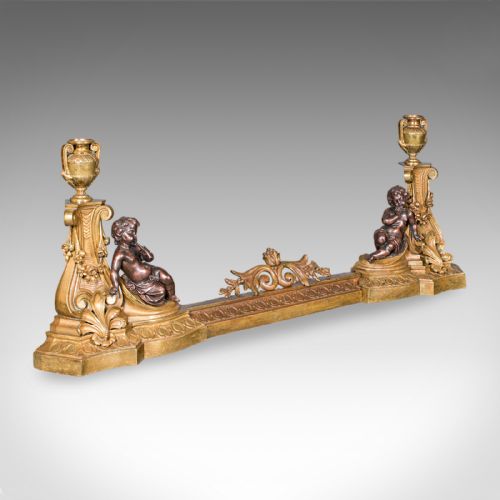
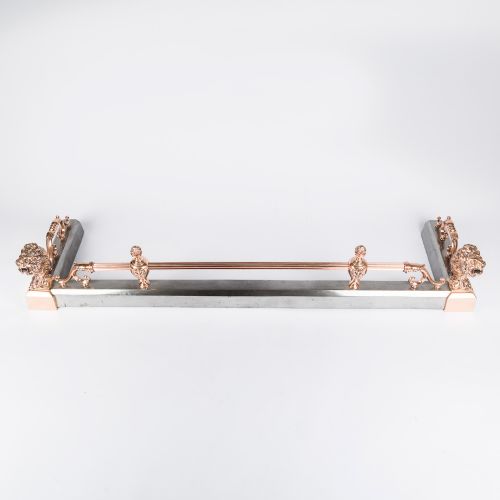
Most examples function as adjustable or fixed hearth fenders, club fenders with upholstered seats, or pierced brass guards. Buyers will meet straightforward brass channels as well as ornate French gilded pieces and riveted copper creations.
Materials and construction
Makers utilised cast iron, brass, steel, and copper as the primary structural elements, often combining metals in a single piece. Brass sheet was pierced, beaten, and engraved, whilst iron and steel provided rigid strength for the main fender body.
Some nineteenth-century brass fenders quietly hide integrated cigar holders beneath their padded leather seats.
Evaluating the pieces
Quality rests in the weight of the metal and the crispness of the hand-finishing, distinguishing heavy cast components from thin pressed sheet metal. Pierced brass work with sharp, clean margins and deeply engraved steel lines command greater attention than shallow, indistinct decoration.
The integration of secondary materials defines the upper tier, seen in thick mature leather upholstery, securely riveted copper plates, and robust extending mechanisms. Original patination across brass and bronze surfaces confirms age and honest wear over time.
E F Caldwell New York
The Fireplace Surround Curb Glossary
- Club fender
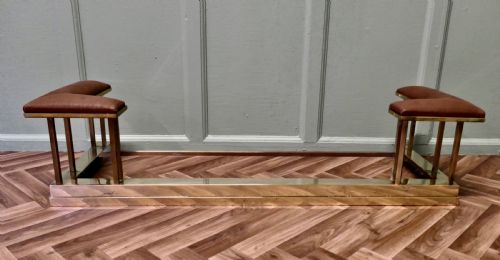
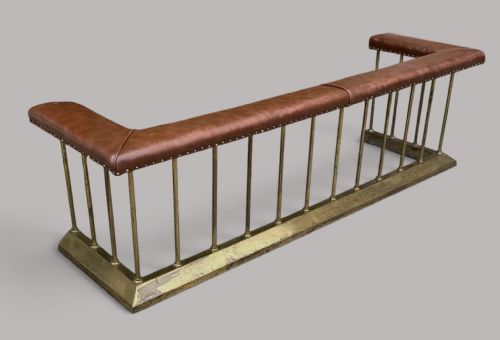
- A low hearth fender incorporating upholstered seat pads on either end. This design allowed people to sit close to the fire for warmth.
- Pierced brass
- Sheet brass perforated with decorative fretwork patterns. It lightens the visual weight of the metal whilst showing intricate designs.
- Patera
- A circular ornamental bas-relief resembling a classical libation dish. Makers frequently pressed these floral motifs into copper and brass friezes.
- Cut steel
- Small steel studs individually faceted and riveted to a backing plate to catch the firelight. This technique creates a brilliant sparkle on Georgian and Victorian hearths.
- Serpentine
- A gently curved front line flowing outward and inward in a wave shape. It offers a softer profile against straight hearths.
Fireplace Surround Curb: Frequently Asked Questions
What is a club fender?
A club fender is a hearth guard fitted with cushioned leather seats on top of the side sections. It places seats right beside the fireplace.
Victorian and Edwardian homes used these to keep household members warm in the draughty areas near the hearth.
How do extending fenders work?
Extending fenders feature a telescoping metal rail system that allows the width to adjust to different fireplace openings. They lock into place once fitted against the hearth.
This adjustability made them versatile for rooms with varying hearth dimensions during the nineteenth century.
What metal is most common?
Brass appears most frequently across Victorian and Edwardian examples, often paired with iron or steel internal frames. Copper and bronze also feature in specific decorative styles.
Art Crafts and Art Nouveau makers favoured beaten copper for its warm tone and hand-worked texture.
How do I date a fender?
Dating relies on combining the stylistic clues of the metalwork, such as Georgian cut steel or Arts and Crafts beaten copper. Construction methods like hand-riveting also point to specific eras.
Periods range from Georgian serpentine steel to late Victorian pierced brass and Edwardian heavy brass castings.