
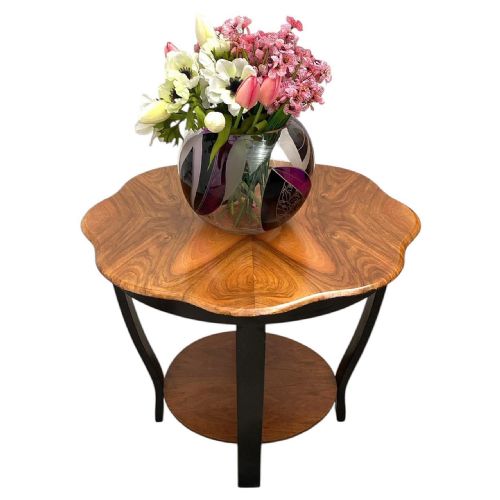
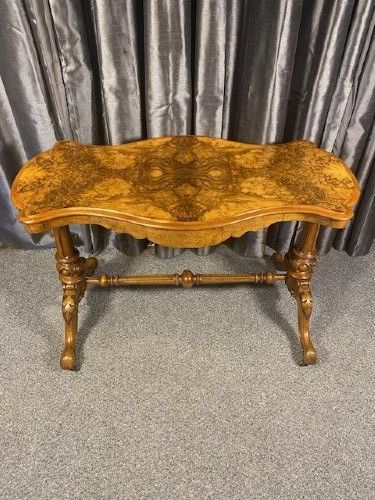
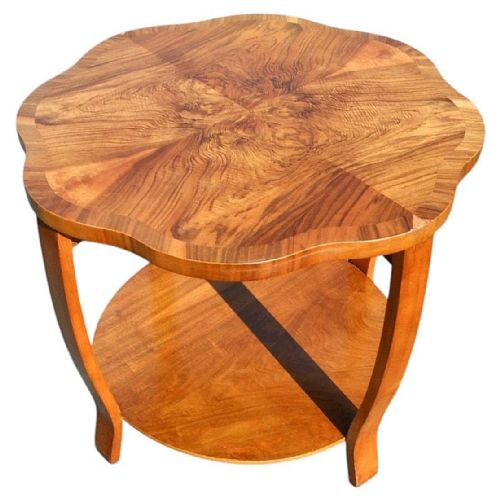
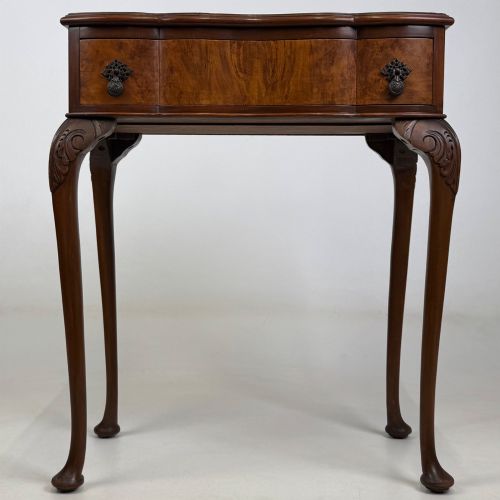



Figured Walnut Occasional Table
When you want a figured walnut occasional table, you are choosing a piece defined by striking wood grain and compact versatility.
Figured Walnut Occasional Table
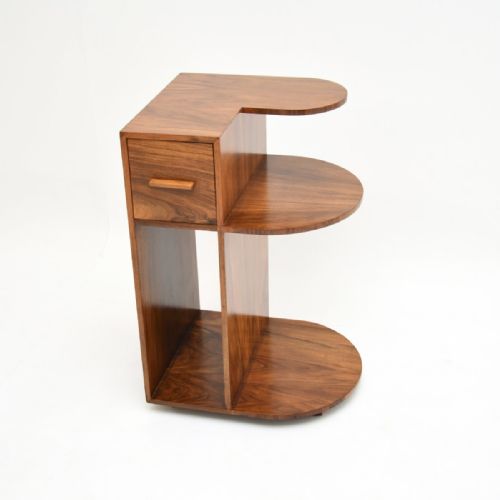
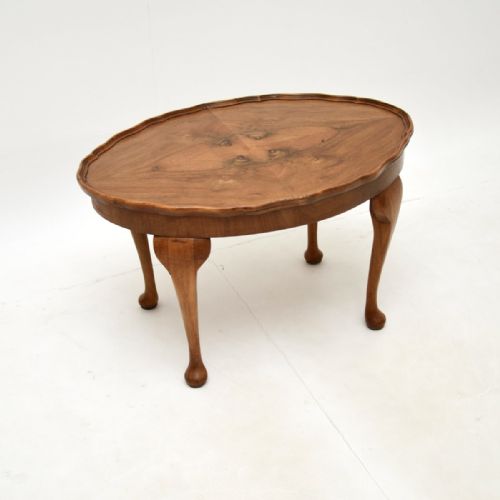
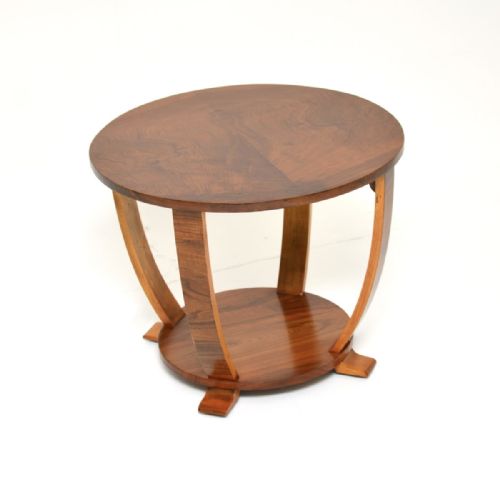
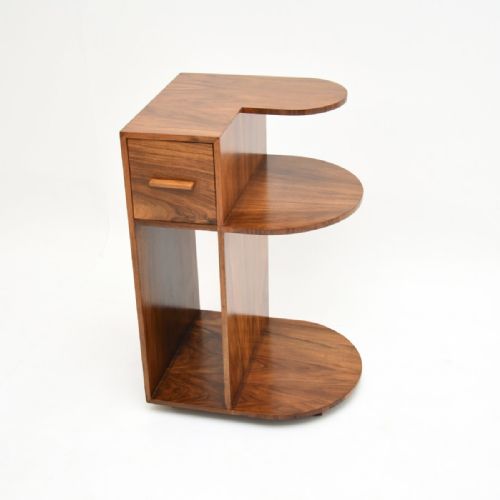
A figured walnut occasional table brings rich, swirling wood grain into smaller spaces, operating primarily as a side, coffee, or lamp table. You will frequently encounter 1930s Art Deco examples alongside 19th-century Victorian and Edwardian pieces.
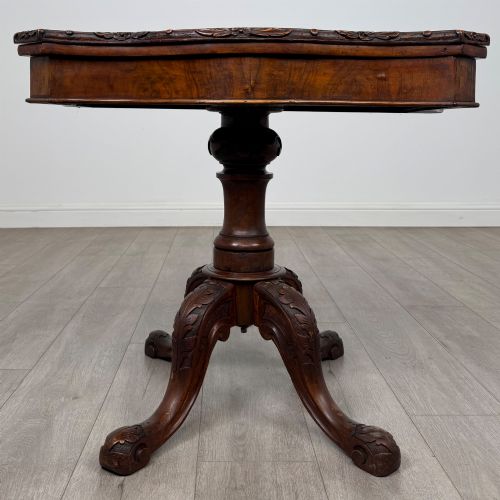
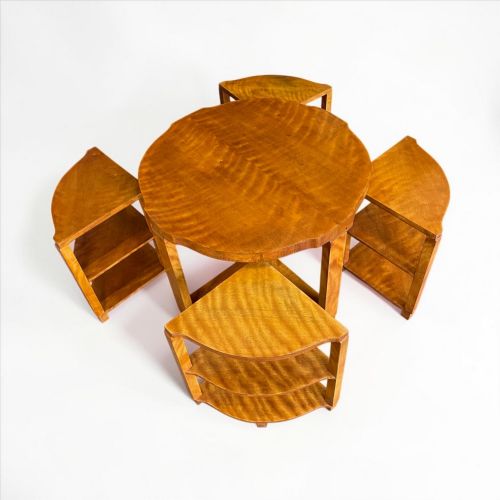
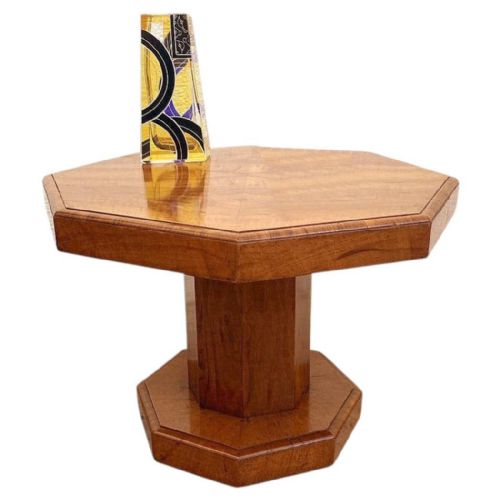
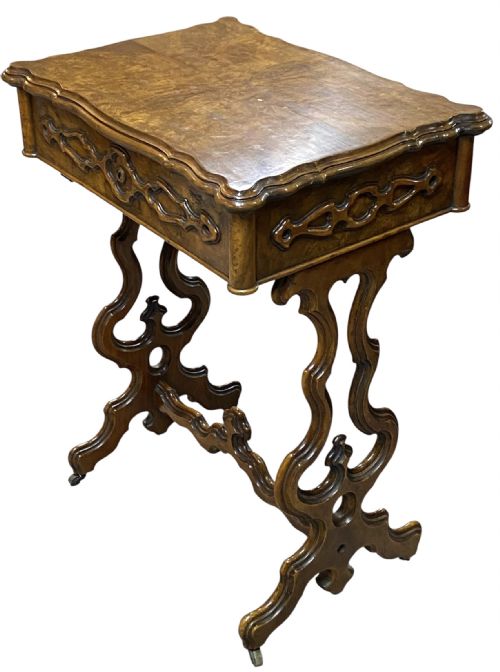
The form stretches from simple round wine tables and nests of tables to two-tier coffee tables and work tables fitted with drawers. Many examples emerge from the interwar Art Deco period or the Victorian era, showcasing distinct period proportions.
Makers such as Harry and Lou Epstein and Heal's contributed to the Art Deco selection, while earlier pieces date back through the Victorian and Edwardian decades.
What varies in quality
The visual impact of the wood grain dictates much of the distinction between pieces, with highly figured and segmented veneer layouts marking out finer examples. The complexity of the form, such as multi-tiered Art Deco designs or multi-drawer Victorian frames, also elevates the workmanship.
Origin and attribution play a role, as documented pieces from workshops like Heal's or Harry and Lou Epstein sit alongside unbranded vernacular items.
Listings span the 19th century through the 1930s, uniting Victorian styles with Art Deco designs in walnut and brass.
Harry and Lou Epstein·Heal's
The Figured Walnut Occasional Table Glossary
- Figured Walnut
- Timber featuring natural distortions and irregularities in the grain that create decorative patterns when sliced.
- Burr Walnut
- Wood harvested from the growths or burls on walnut trees, producing tightly clustered, swirling eye patterns.
- Sutherland Table
- A narrow drop-leaf table with hinged flaps that fold down nearly vertically, designed to save space.
- Gueridon
- A small French occasional table or stand, often supported by a central column or pedestal.
Figured Walnut Occasional Table: Frequently Asked Questions
What is a figured walnut occasional table used for?
These tables serve as adaptable surfaces for lamps, books, and tea, fitting easily beside sofas or chairs.
Their compact footprints made them popular across the Victorian, Edwardian, and Art Deco periods for flexible placement around a room.
How do I tell Victorian from Art Deco tables?
Victorian tables often feature turned pedestals, marquetry inlay, and oval or pie crust tops with richer, darker tones.
Art Deco pieces from the 1930s lean into geometric forms, tiered shelves, and symmetrical book-matched veneers.
What is the difference between walnut and burr walnut?
Standard walnut displays a straight or subtly wavy grain pattern with a warm, uniform brown colour.
Burr walnut comes from tree growths that create dense, swirling clusters of knots and eyes across the surface.
How do I care for a walnut veneer table?
Keep the wood away from direct sunlight and steady heat sources to prevent the thin veneers from drying or fading.
Dust gently with a dry cloth and avoid excessive moisture or silicone polishes.