




Curved Leg Walnut Table
These curved leg walnut table pieces bring warm timber and sweeping lines to a room, offering both practical surface space and historic character.
Curved Leg Walnut Table
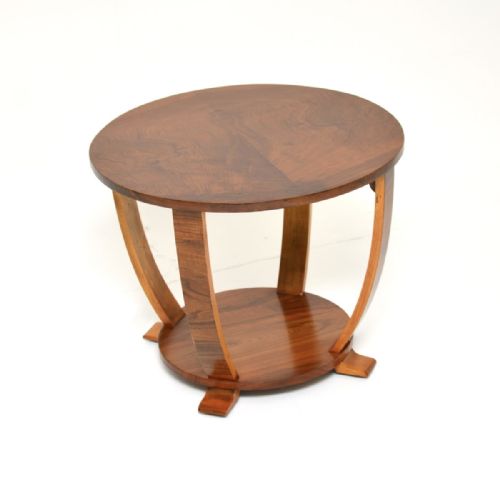
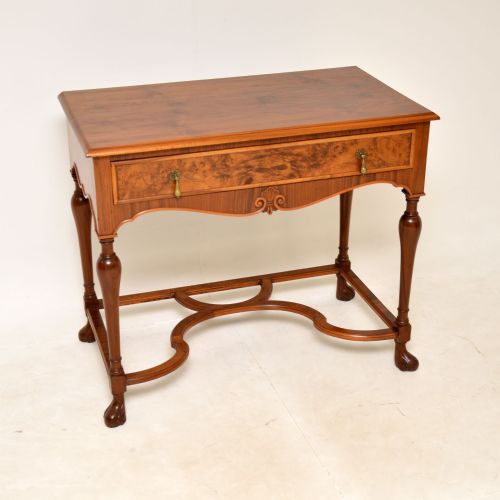
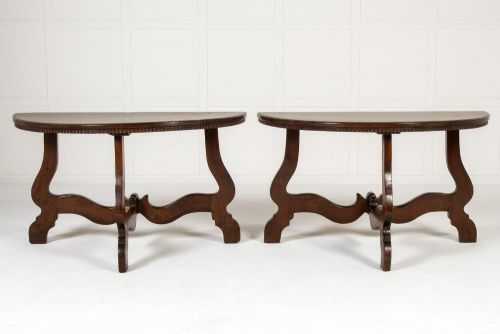
A curved leg walnut table is defined by its timber and its shaped supports, appearing in forms such as console tables, coffee tables, and occasional tables. The selection spans centuries of design, ranging from 18th century Italian demi lune consoles to 1920s and 1930s Art Deco coffee and side tables.
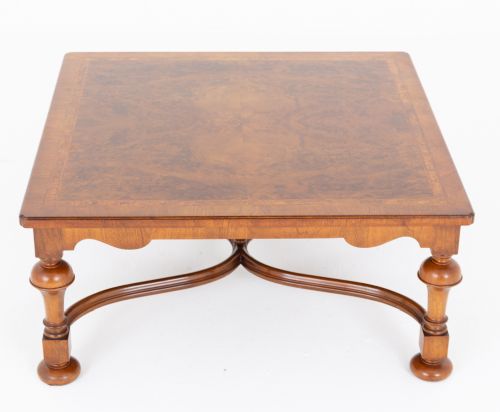
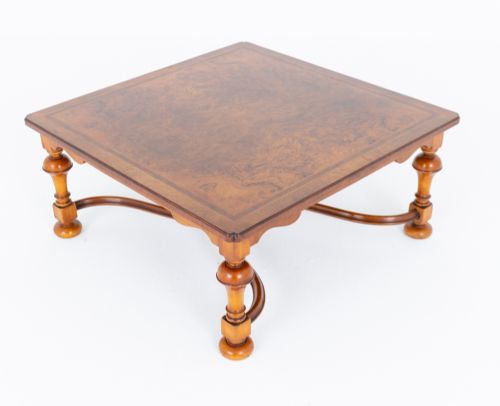
Buyers will most frequently encounter 20th century Art Deco examples alongside earlier revival styles like Queen Anne and Carolean. These tables serve multiple functions in a modern interior, working as lamp tables, desks, or prominent console pieces in a hallway.
What varies in quality
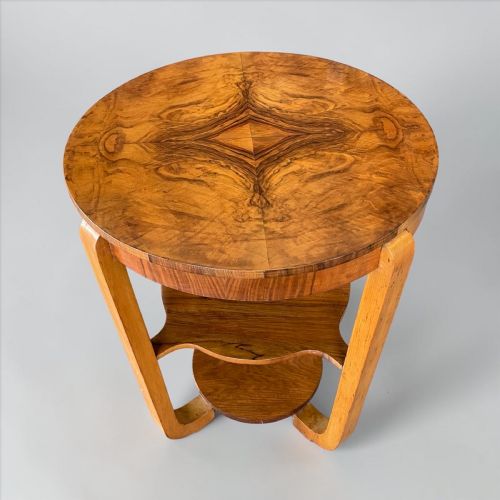
The standard of a curved leg walnut table depends upon the selection of the timber grain, particularly the depth of figure in burr walnut veneers. Superior examples display careful matching of the wood patterns across the top surface.
Execution of the curved legs and structural joints distinguishes finer workshop output from simpler production. The crispness of carved details on revival pieces or the smooth sweep of Art Deco frames dictates the overall calibre.
The listings span from the 18th century through to the 1930s, showcasing walnut, burr walnut, and marble across console, coffee, and occasional table forms.
Hille·Harry and Lou Epstein·Thonet
The Curved Leg Walnut Table Glossary
- Burr walnut
- A wood derived from the wart or burl growths of the walnut tree, prized for its swirling, highly figured grain patterns. It is sliced into thin veneers for furniture surfaces.
- Demi lune
- A half moon shape applied to tables designed to sit flush against a wall. These console tables often feature curved legs.
- Console table
- A table supported by brackets or curved legs against a wall. They frequently stand in entrance halls or reception rooms.
- Veneer
- A thin layer of superior walnut timber applied to a base wood core. This technique allows makers to display decorative grain patterns economically.
Curved Leg Walnut Table: Frequently Asked Questions
Where should I place a console table?
Console tables sit flat against a wall, making them suited for hallways, living rooms, or beneath large mirrors where surface space is needed without blocking a walkway.
Their narrow depth allows them to occupy tight spaces while providing a focal point for lamps and decorative objects.
How do I care for walnut furniture?
Walnut benefits from occasional polishing with suitable natural waxes to nourish the timber and maintain its characteristic warm tone. Direct sunlight and excessive heat should be avoided to prevent the veneer from drying out.
Using coasters and mats protects the polished surface from moisture and heat marks during daily use.
What is the difference between an occasional table and a coffee table?
Occasional tables are typically taller and designed to be moved around a room as needed for holding drinks or books. Coffee tables are lower in height and sit centrally in front of seating.
Both forms appear frequently in walnut with curved leg designs across the 20th century selection.
How do I identify Art Deco walnut tables?
Art Deco walnut pieces from the 1920s and 1930s often display geometric symmetry, highly figured burr veneers, and streamlined curves. They reject heavy historic revival carving in favour of sleek surfaces.
Maker attribution stamps or labels can sometimes be found on pieces from prominent firms of this era.