




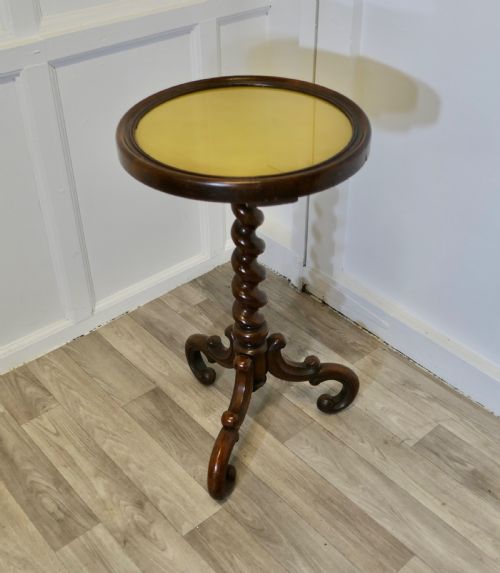


Vintage Circular End Table
These vintage circular end table selections bring compact, practical surfaces to a room, spanning Edwardian mahogany to Art Deco walnut.
Vintage Circular End Table
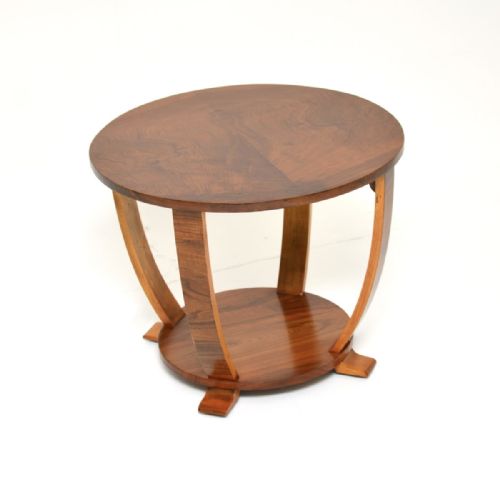
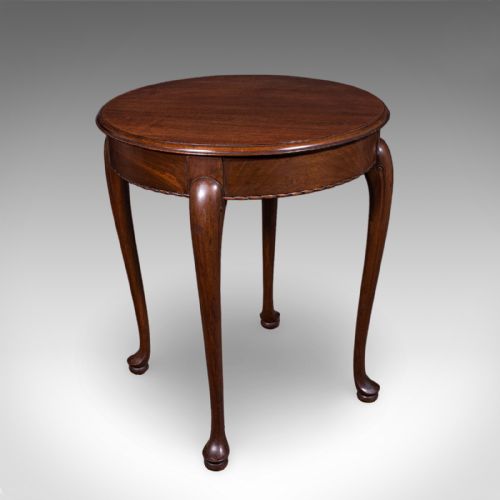
A vintage circular end table serves as a versatile small surface for a lamp or glass, appearing across periods from Victorian to 1940. The selection on this page relies heavily on Art Deco walnut and Edwardian mahogany forms.
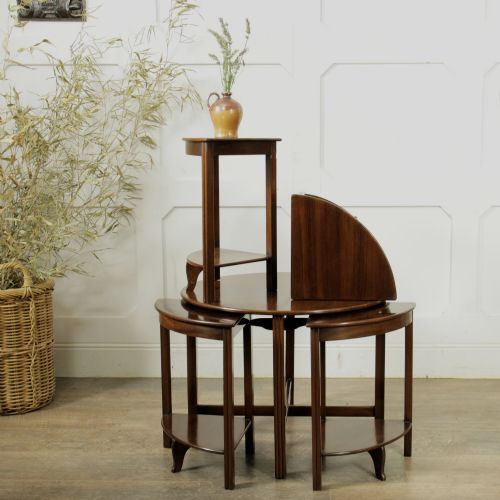
Most pieces function as side tables, occasional tables, or small gueridon tables, offering a compact round top supported by a central column or tripod base. Origins range from English workshops to continental makers.
How They Were Made
Cabinet makers utilised dense timbers such as mahogany, walnut, birds eye maple, and rosewood, often applying figured veneers to circular tops. Inlaid details and polished finishes highlight the natural grain of the wood.
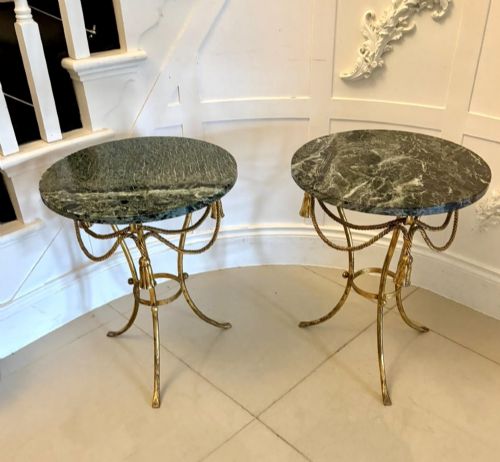
Twentieth-century pieces incorporate industrial elements like chrome and brass alongside marble tops, combining metal frames with traditional joinery. Painted wood surfaces also appear on specific regional items.
Periods represented span from the nineteenth century through Edwardian and Art Deco up to 1940.
What Varies in Quality
The choice of timber and veneer strongly influences the standard of a piece, with figured walnut and birds eye maple marking out higher grades. Superior construction shows in the crispness of inlaid details and the stability of the tripod or pedestal base.
The integration of mixed materials, such as combining chrome with glass or marble, separates standard production from high-end modern design. Maker attribution further distinguishes the upper tier of the range.
Waring And Gillow
The Vintage Circular End Table Glossary
- Gueridon
- A small French round table, typically supported by a central pillar or column. This form became popular in various styles throughout the nineteenth and twentieth centuries.
- Occasional table
- A movable small table designed for specific, intermittent use within a room. These pieces function easily beside chairs or sofas.
- Veneer
- A thin layer of decorative wood applied to a base timber to create patterned surfaces. Figured walnut and birds eye maple frequently utilise this technique.
- Tripod base
- A support structure utilising three legs extending from a central shaft. This configuration ensures stability on uneven floors.
- Inlay
- The technique of embedding contrasting materials into the wood surface to form decorative patterns. Edwardian pieces often display delicate linear work.
Vintage Circular End Table: Frequently Asked Questions
Where should I place a circular end table?
These pieces fit naturally beside armchairs, sofas, or in corners where floor space is limited. Their rounded profiles allow for easy movement around them in smaller rooms.
They also function effectively as lamp stands or bedside surfaces, holding essential items without dominating the layout.
How do I identify an Art Deco table?
Art Deco examples, largely dating from around 1930, use geometric symmetry and contrasting veneers such as walnut, maple, and rosewood. Chrome and glass combinations also signal this modernist period.
The clean lines and emphasis on functional form separate these pieces from earlier Edwardian or Victorian designs.
Are marble top tables heavy?
Marble top tables possess added weight due to the stone inset, making them sturdier than all-wood equivalents. This heavy top provides natural stability for the pedestal or tripod base underneath.
Care should be taken when moving them to support both the stone and the wooden frame securely.
What is the difference between an occasional table and a side table?
Occasional tables describe smaller movable pieces brought out as needed, while side tables typically remain stationed beside furniture. In practice, the terms overlap considerably in vintage listings.
Both types share compact circular tops suited for holding lamps, books, or drinks.