
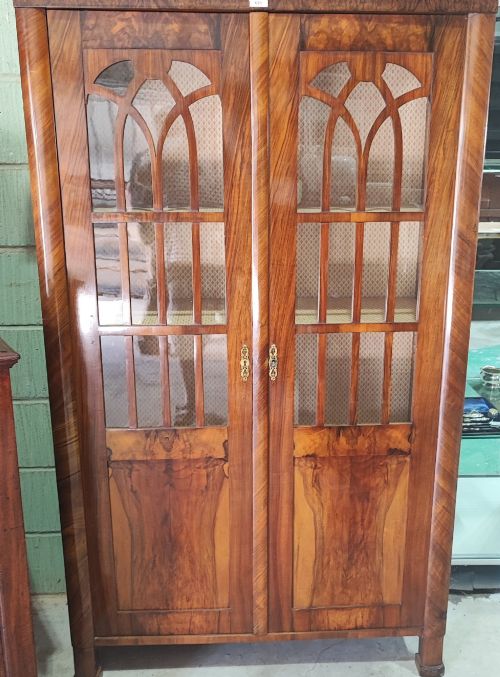
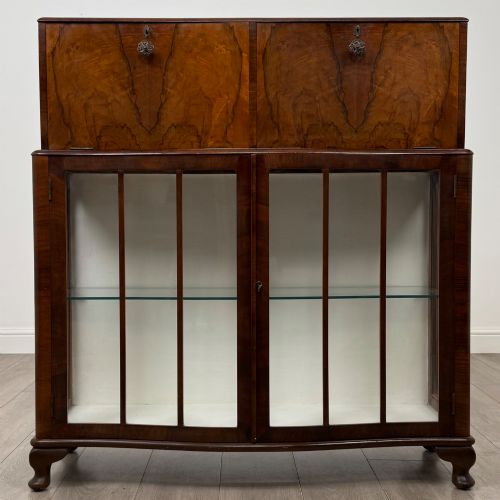
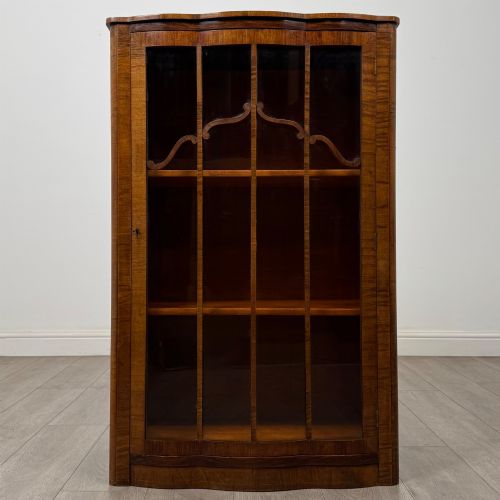
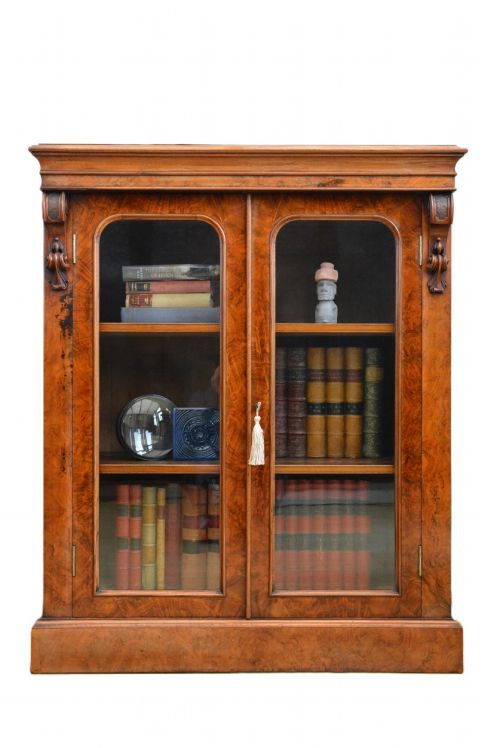


Figured Walnut Display Cabinet
A figured walnut display cabinet brings warmth and figured grain to a room while holding books, china or glassware behind glass.
Figured Walnut Display Cabinet
A figured walnut display cabinet is a piece of furniture designed to exhibit prized possessions behind glazed doors or glass panels. When you search for a figured walnut display cabinet, you encounter forms ranging from compact nineteenth-century pier cabinets and credenzas to twentieth-century Art Deco vitrines and bookcases.
The nineteenth-century examples lean heavily towards Victorian craftsmanship, often featuring marquetry inlay, satinwood banding and ormolu mounts. These sit alongside twentieth-century Art Deco iterations that embrace geometric shapes, curved glass and dramatic wood grain.
Victorian pier cabinets and credenzas dominate the earlier periods, frequently constructed as low, glazed units meant to sit against a drawing room pier wall. Later Edwardian and 1930s pieces shift towards taller library bookcases, drinks cabinets and circular or hexagonal vitrines.
How they were made
Makers utilised walnut veneers and burr walnut over secondary timber carcases to create the distinctive swirling grain patterns visible across the surfaces. This technique allowed craftsmen to showcase symmetrical, highly figured timber on the main doors and panels.
Marquetry and inlay work using boxwood, satinwood and tulipwood added contrasting botanical details into the walnut ground. Ormolu mounts, brass edging and velvet-lined interiors completed the construction of high-status examples.
Glass production played a crucial role, utilising flat panes for traditional Victorian cabinets and curved or shaped glass for later Art Deco display pieces. Glazed doors were framed closely to maximise light transmission into the interior shelves.
Materials recur across walnut, burr walnut, glass, brass, ormolu and velvet linings.
What varies in quality
The choice and matching of the veneer dictate the visual impact of the piece. Superior examples display carefully balanced, book-matched grain across the primary doors and panels, whereas lesser pieces use plainer, mismatched timber.
The intricacy of the decorative elements separates standard production from finer work. Hand-cut marquetry inlay, finely chased ormolu mounts and well-executed boxwood stringing indicate a higher level of workshop investment.
Holland and Sons
The Figured Walnut Display Cabinet Glossary
- Pier cabinet
- A low cabinet designed specifically to fit the narrow wall space between two windows. These nineteenth-century pieces typically feature a single glazed door and flat top.
- Credenza
- A sideboard or cabinet of low proportions, often fitted with glass doors and ormolu mounts. They frequently incorporate side cupboards flanking a central display section.
- Marquetry
- The art of applying decorative veneer pieces to a structure to form intricate floral or geometric patterns. It relies on contrasting wood tones like satinwood and boxwood set into walnut.
- Ormolu
- Gilded bronze ornamentation applied to the mounts, feet and borders of furniture. It provides a bright metallic contrast to the dark grain of the walnut.
- Vitrine
- A glass-fronted display cabinet used for showcasing porcelain, curiosities and fine objects. The term appears frequently in twentieth-century Art Deco contexts.
Figured Walnut Display Cabinet: Frequently Asked Questions
What is a pier cabinet?
A pier cabinet is a narrow, low-standing piece designed to occupy the wall space between windows in a Victorian drawing room.
These cabinets usually feature a single glazed door to protect delicate collections from dust while allowing maximum visibility.
How do I date a cabinet?
Dating relies on combining the overall style, such as Victorian or Art Deco, with structural details like glass type and timber preparation.
Nineteenth-century pieces often display marquetry and ormolu mounts, whereas 1930s versions favour geometric shapes and curved glass.
What is figured walnut?
Figured walnut refers to timber cut from specific parts of the walnut tree, such as burls or forks, which produce swirling, decorative grain patterns.
Cabinet makers sliced this wood into thin veneers to display the striking natural patterns across the front doors.
How should I clean the glass?
Cleaning antique glass requires mild solutions applied to a cloth rather than sprayed directly onto the surface to protect the surrounding timber.
Take care to avoid moisture contacting the walnut veneer, marquetry inlay or brass mounts during maintenance.