
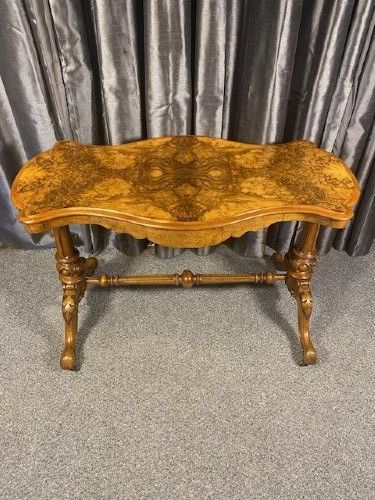
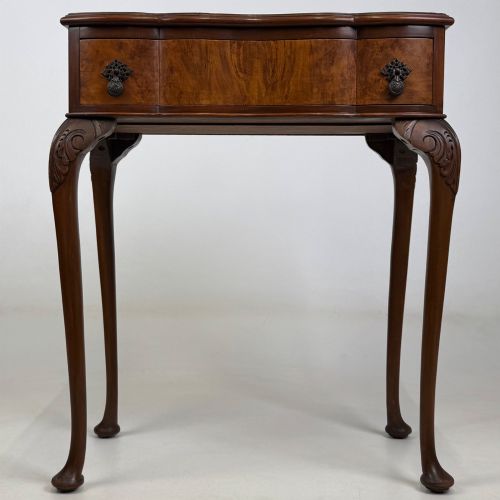


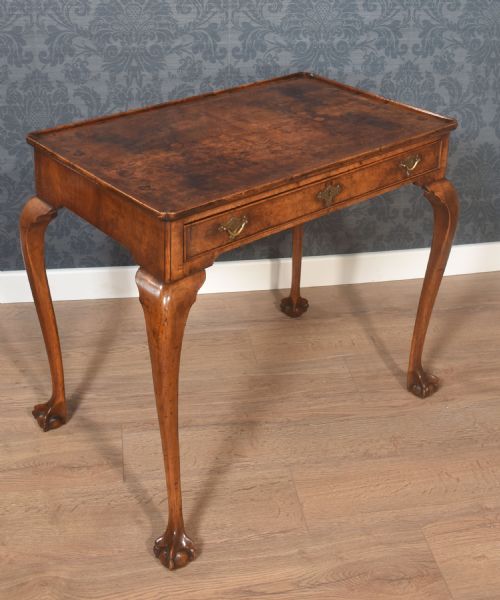


Figured Walnut Console Table
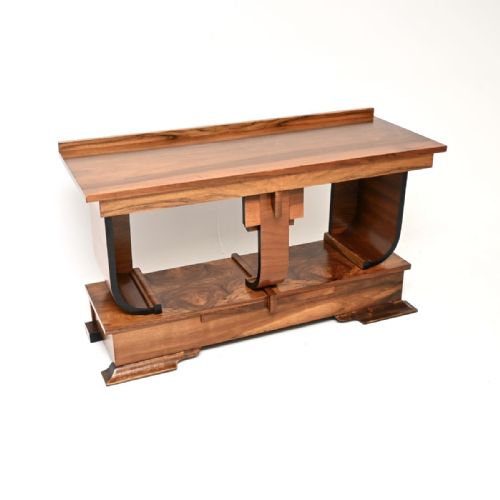
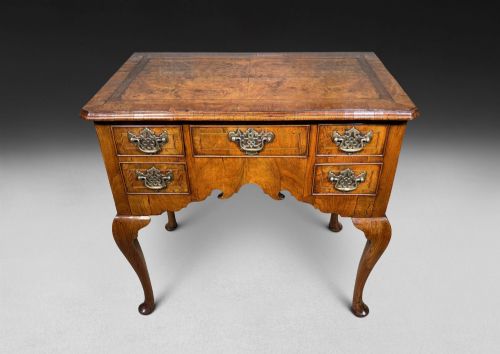
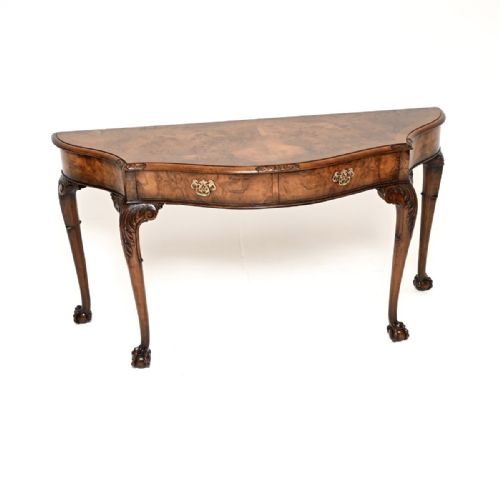
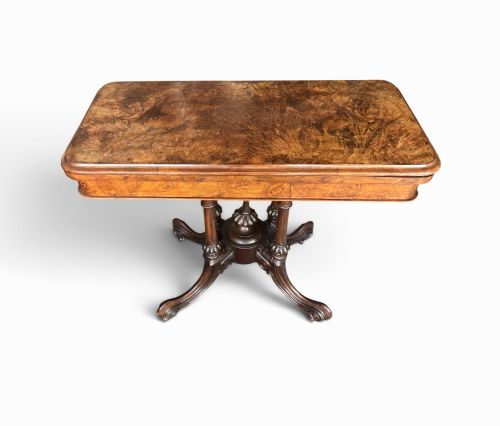
A figured walnut console table brings deep timber figuring and period form into a hallway, sitting firmly within Victorian, Georgian, and Art Deco traditions.
Figured Walnut Console Table
A figured walnut console table combines rich timber grain with practical surface space, appearing frequently in forms influenced by Queen Anne, George II, and Victorian aesthetics. These tables serve as hallway or reception room furniture designed to sit against a wall.
The inventory ranges from eighteenth-century lowboys and early Georgian side tables to Victorian folding card tables and 1930s Art Deco designs. Buyers encounter console tables, card tables, and occasional tables that utilise the distinctive figuring of walnut timber.
Origin and period vary widely, spanning French Empire and Italian carved examples alongside British pieces from the eighteenth, nineteenth, and early twentieth centuries. Each version displays the distinct proportions and stylistic markers of its specific decade or century.
Materials and Construction
Cabinet makers utilised walnut, burr walnut, and figured walnut veneer laid over secondary timbers such as oak, applying crossbanding to frame the prominent grain patterns. Ebonised wood and brass hardware often provide contrast and structural detail.
Construction techniques involve careful timber selection to display swirling grain figures across the top surface, supported by carved legs, pedestals, or folding mechanisms in card and games tables.
Listings span from the eighteenth century through Victorian and Edwardian eras to 1930s Art Deco designs, utilising walnut, burr walnut, and brass.
Evaluating Quality and Execution
The hierarchy of quality rests upon the selection and matching of the walnut veneer, where superior examples exhibit symmetrical figuring and deep chatoyancy across the top. Finely executed carving, original brass mounts, and crisp crossbanding distinguish the best pieces from simpler variants.
Execution of internal framing and the integrity of the timber movement dictate long-term stability, separating workshop pieces built with precision from standard commercial production.
Maple and Co·W.F. Greenwood and Sons York·Epstein
The Figured Walnut Console Table Glossary
- Figured walnut
- Timber exhibiting an irregular, attractive grain pattern caused by growth anomalies or specific cutting methods. This wood forms the primary visual appeal of these tables.
- Lowboy
- A small kneehole dressing table or side table with drawers, typically originating from the eighteenth century. These pieces share proportions and timber choices with console tables.
- Crossbanding
- A narrow strip of veneer laid perpendicular to the grain of the main surface, creating a decorative border. It frequently appears on Georgian and revival tables.
- Marquetry
- The art of applying pieces of veneer to a structure to form decorative patterns and pictures. Victorian examples often incorporate floral or geometric marquetry inlay.
- Fold-over table
- A table featuring a hinged top that opens to double the surface area, commonly utilised for card and games tables. The mechanism allows the console form to function also for entertainment.
Figured Walnut Console Table: Frequently Asked Questions
Where should I place a console table?
A console table works effectively in entrance halls, living rooms, or corridors where a shallow surface is required against a wall. Their decorative wood grain adds warmth to transitional spaces without blocking foot traffic.
Because many examples include folding tops or drawers, they also function as occasional writing desks or display surfaces in reception rooms.
How do I date a figured walnut table?
Dating relies on examining the structural style, leg shapes, and secondary woods such as oak beneath the veneer. Eighteenth-century pieces display different proportions compared to Victorian or 1930s Art Deco interpretations.
Maker stamps, brass hardware styles, and the specific application of burr or figured walnut veneer further clarify the exact period of production.
What is the difference between a console and a side table?
Console tables traditionally stand against a wall and were sometimes designed with brackets or legs intended to be secured for stability. Side tables are free-standing items finished on all sides for placement anywhere in a room.
In historical listings, however, the terms frequently overlap as makers adapted forms for similar domestic uses.
How do I care for walnut veneer?
Walnut veneer requires protection from direct sunlight and extreme humidity fluctuations to prevent timber movement or fading. Regular dusting with a soft cloth maintains the finish without needing heavy polishes.
Avoiding excessive moisture ensures the historic glues beneath the figured surface remain stable over time.