





Golden Walnut Centre Table
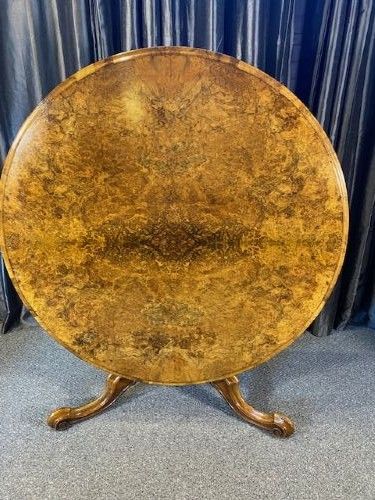
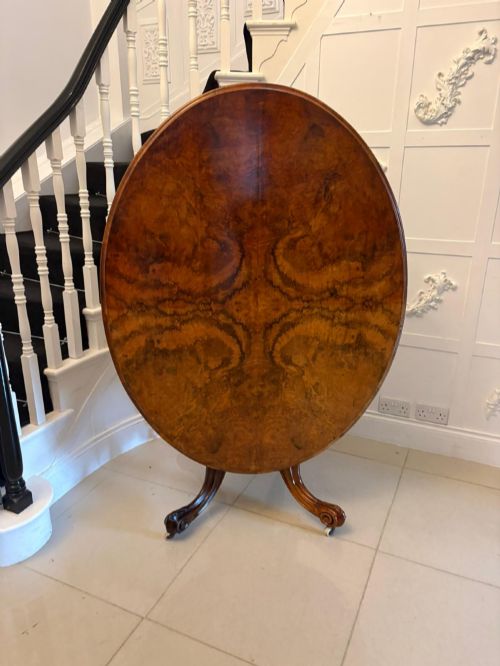
A golden walnut centre table brings rich warmth and striking burr figures to the middle of a room.
Golden Walnut Centre Table
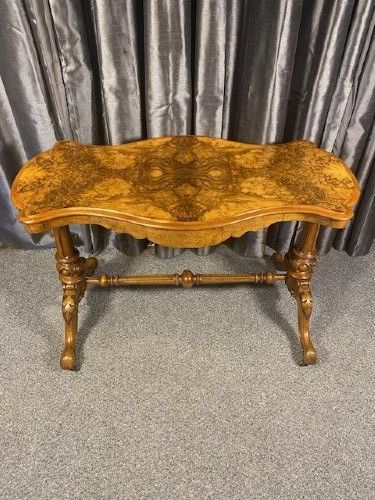
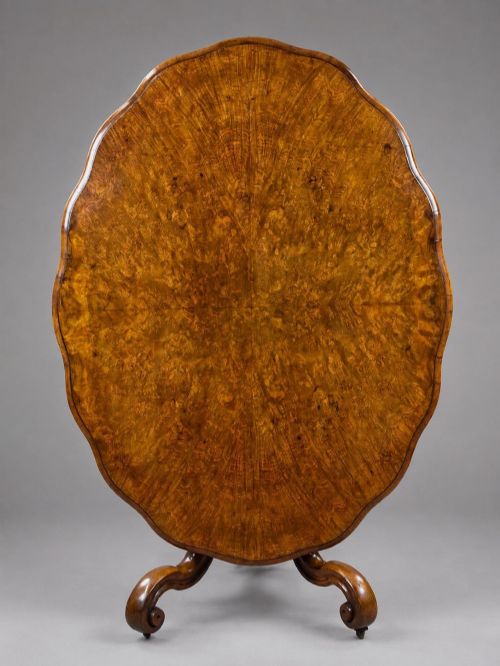
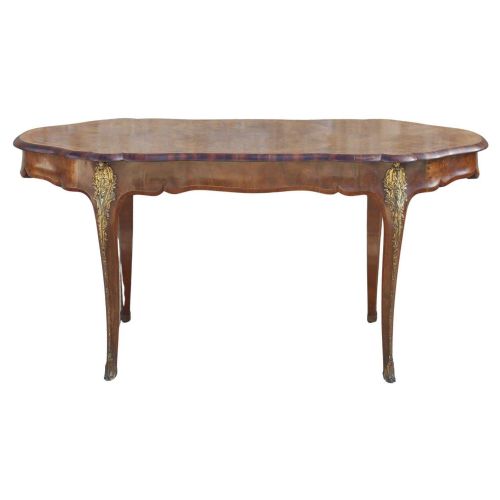
A golden walnut centre table stands independently in a room, designed to be viewed from all sides rather than pushed against a wall. The pieces found here range from Victorian pedestal loo tables and tilt-top dining tables to later Art Deco coffee tables and nineteenth-century writing desks.
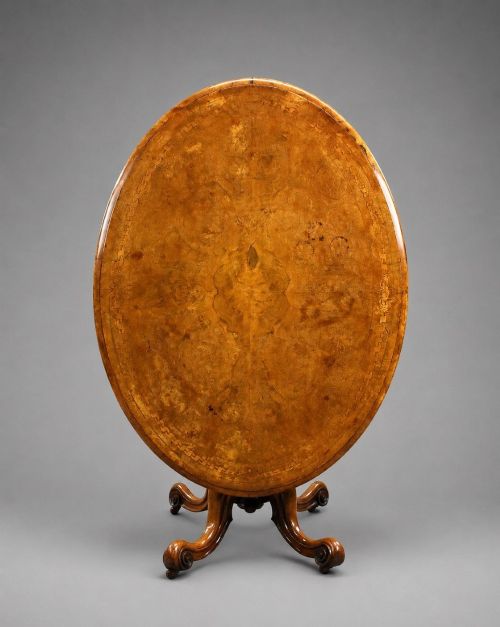
The version most commonly met on this page is the Victorian burr walnut centre table, often featuring rich figuring and occasionally inlaid boxwood or marquetry details. These tables served various domestic functions, from formal entertaining to everyday parlour use.
How they were made
Cabinet makers utilised choice burr walnut veneers laid over solid timber foundations to create striking grain patterns across the top surfaces. Marquetry and boxwood inlay were carefully set into the timber to add decorative contrast.
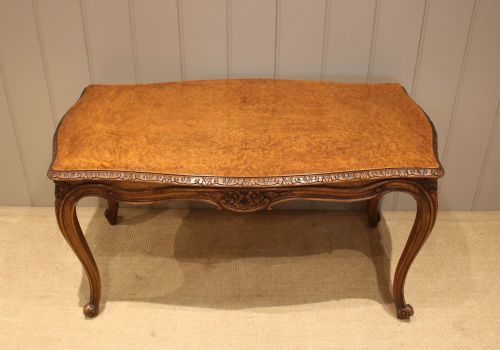
Many nineteenth-century examples incorporate brass mounts or ormolu details, while structural supports often feature carved cabriole legs or central pedestals finished with polished surfaces.
Golden Walnut Centre Table Retail Price Guide 2026
Typical asking prices for golden walnut centre table among the pieces listed under this phrase on Sellingantiques today, from the lower quarter to the upper quarter. They describe what is for sale here now, not the wider market.
Listings feature pieces spanning from the mid-nineteenth century through the Victorian era up to 1930s Art Deco designs.
What varies in quality
The richness and symmetry of the burr walnut figuring across the top surface largely define the visual appeal of each table. Highly figured veneer displays lively grain patterns that catch the light.
Execution of secondary details, such as boxwood inlay, marquetry, and cast brass or ormolu mounts, separates standard production pieces from finer cabinet work.
Holland and Sons
The Golden Walnut Centre Table Glossary
- Burr walnut
- A veneer taken from the knotted growth of a walnut tree, prized for its swirling, highly figured grain patterns. It creates a decorative surface finish on nineteenth-century furniture.
- Loo table
- A round or oval nineteenth-century table designed for the card game loo, often featuring a tilt-top mechanism. This allows the top to be stored vertically when not in use.
- Marquetry
- The art of applying small pieces of veneer to a structure to form decorative patterns or pictures. Craftsmen use various woods to achieve tonal contrast.
- Ormolu
- Gilded bronze ornamentation applied to furniture and decorative objects. It provides bright metallic highlights against dark wood surfaces.
Golden Walnut Centre Table: Frequently Asked Questions
What is a centre table?
A centre table is freestanding and finished on all sides so it can occupy the middle of a room rather than sit against a wall.
These pieces functioned as display surfaces, writing desks, or gathering points in traditional domestic interiors.
How do I care for burr walnut?
Burr walnut benefits from regular dusting with a soft, dry cloth and protection from direct sunlight and heat sources.
Applying occasional appropriate wax preserves the polished finish and prevents the delicate veneer from drying out.
How do I date a walnut table?
Dating relies on observing construction methods, timber preparation, and stylistic cues such as pedestal turning and leg shapes.
Victorian pieces often display heavier proportions and rich burr veneers, while later twentieth-century examples show cleaner lines.