
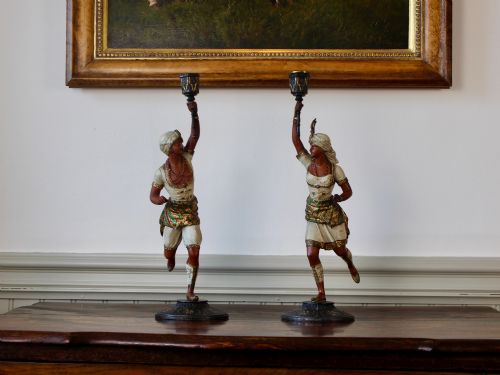


Figural Bronze Candle Holders
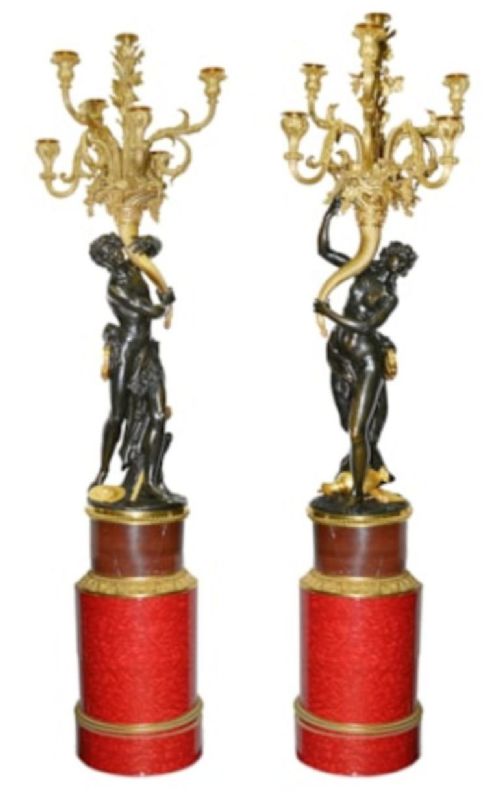
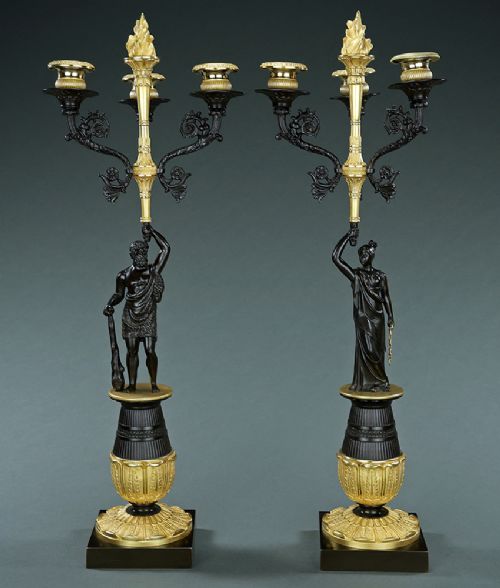
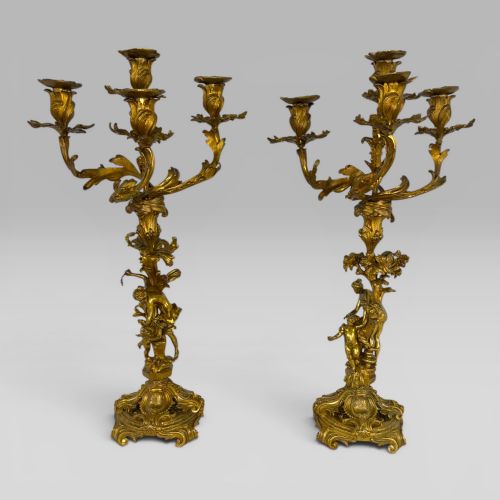
These figural bronze candle holders bring sculptural human, animal and mythological forms to domestic lighting.
Figural Bronze Candle Holders
When you search for figural bronze candle holders, you encounter sculptural works that incorporate human figures, animals or mythological subjects into lighting. The pieces on this page span the Regency period through to the early twentieth century, showing strong French and Continental influences.
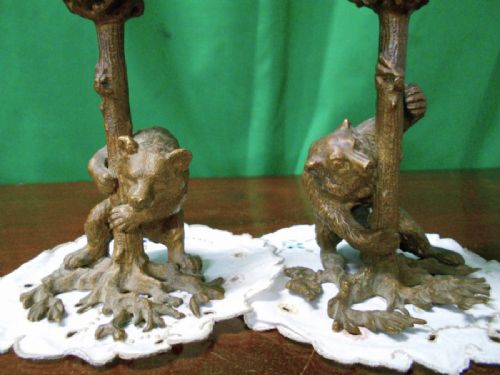
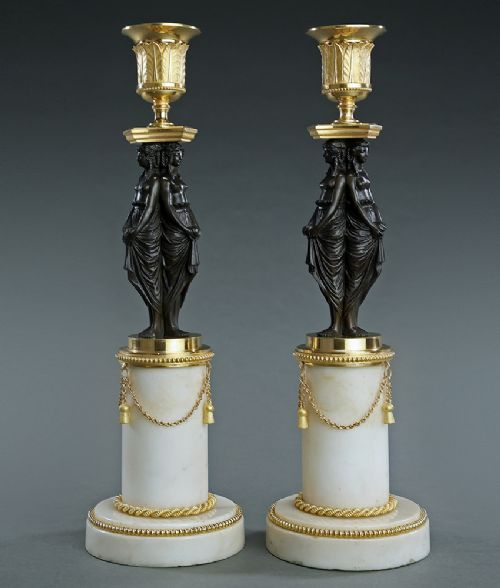
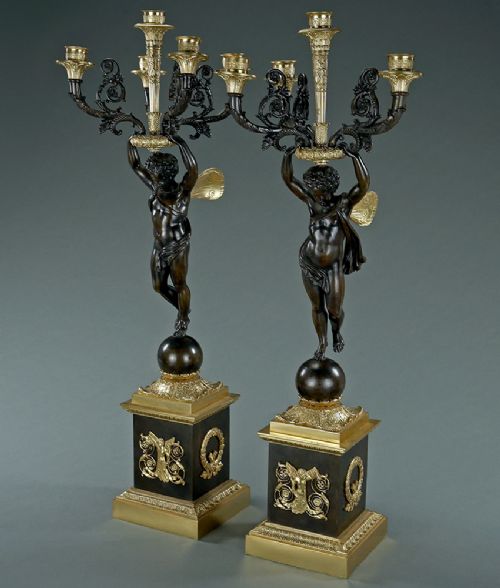
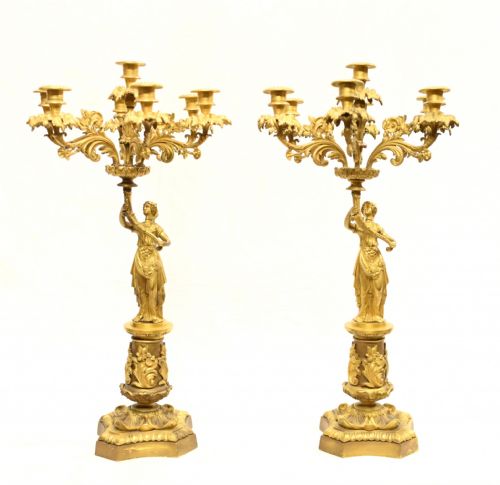
You are most likely to meet pairs of candelabra and candlesticks cast in bronze, often paired with gilt ormolu, marble and onyx bases. Subjects range from putti, cherubs and caryatids to bears, storks and classical figures drawn from Egyptian Revival, French Empire and Rococo styles.
How they were made
These objects rely principally on bronze, brass and spelter, frequently enhanced with parcel gilding, cold painting or patinated finishes. Cast metal elements are combined with stone components such as marble and onyx bases to provide stability and visual contrast.
Casting techniques capture intricate details in sculptural figures like soldiers, cavaliers and animals. Artisans applied fire gilding or ormolu to highlight specific portions of the design while leaving other areas patinated.
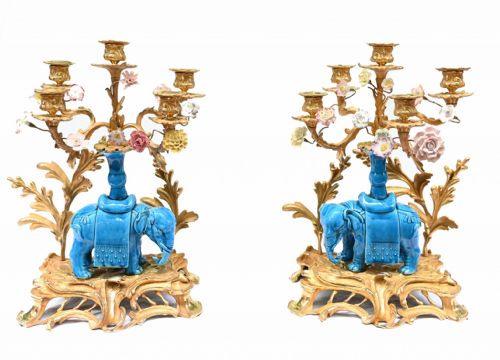
Storks, bears and elephants join the usual human figures to hold your candles.
What varies in quality
The integration of materials also defines the standard, particularly where bronze or ormolu meets marble and onyx bases. Cohesion in the patination and the precision of the assembly indicate the skill of the original workshop.
Humphrey Hopper
The Figural Bronze Candle Holders Glossary
- Ormolu
- Gilt bronze produced by applying a finely ground high-carat gold-mercury amalgam to a bronze object. This technique creates a rich golden finish characteristic of French decorative arts.
- Caryatid
- A sculpted female figure serving as an architectural support or structural element. In these pieces, the figure often forms the main shaft of the candlestick.
- Patinated bronze
- Bronze that has been treated chemically or naturally to produce a specific surface colour. This finish protects the metal and accentuates the underlying sculptural contours.
- Spelter
- A zinc alloy used as a less expensive alternative to bronze. It is frequently painted or bronzed to imitate heavier metals.
- Torchere
- A tall stand or candlestick designed to hold a light. These examples often incorporate classical figures or decorative columns.
Figural Bronze Candle Holders: Frequently Asked Questions
What periods do these figural bronze candle holders come from?
The pieces originate primarily from the nineteenth century, including Regency, Victorian and Edwardian eras. Stylistic influences span French Empire, Louis XVI, Renaissance Revival and Egyptian Revival.
Maker attribution and distinct casting methods help narrow down the production dates across this timeframe.
How were figural bronze candle holders used originally?
They served as functional lighting on mantelpieces, dining tables and sideboards in wealthy homes. The sculptural figures doubled as decorative art objects when unlit.
Candle power was multiplied in examples featuring multiple branches or candelabra arms.
What materials are used alongside bronze in these items?
Gilt ormolu, brass, spelter and cast iron appear frequently alongside the primary bronze metal. Bases are often constructed from contrasting materials such as marble or onyx.
Some pieces incorporate cold painted details or porcelain elements to enhance the visual design.
How do I distinguish between bronze and spelter items?
Bronze is heavier, colder to the touch and shows a finer grain in the cast details. Spelter is a softer zinc alloy that may exhibit lighter weight and different surface wear.
Patination on spelter can sometimes flake or reveal a greyish metal underneath.