
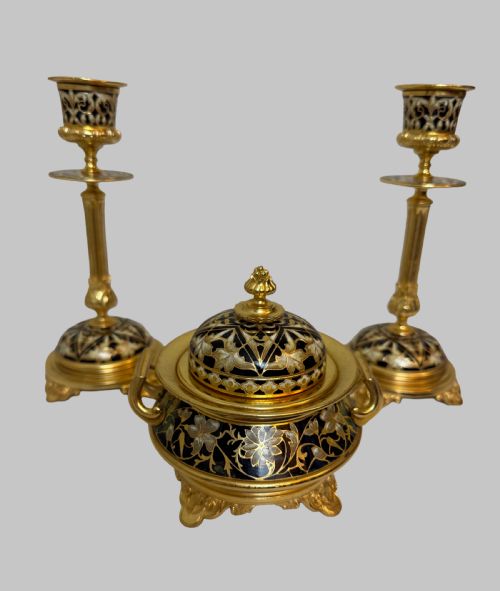


Nineteenth Century Bronze Candlesticks
Nineteenth century bronze candlesticks combine heavy cast metal with classical gilding, bringing warmth and structured light to any interior.
Nineteenth Century Bronze Candlesticks
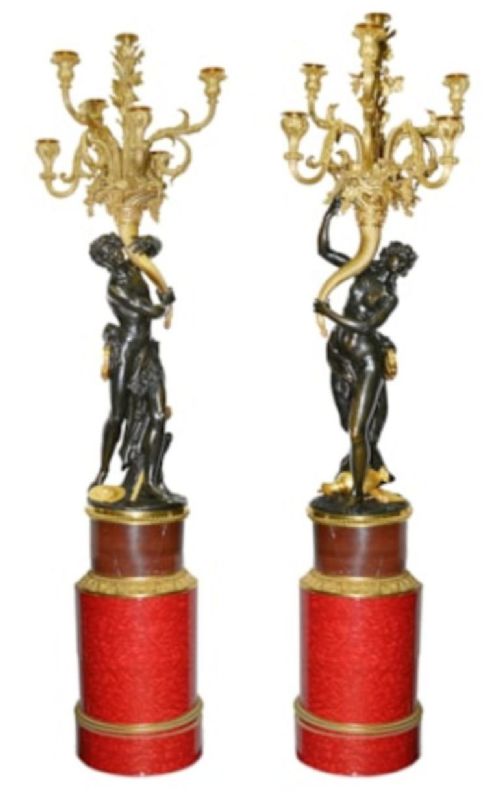
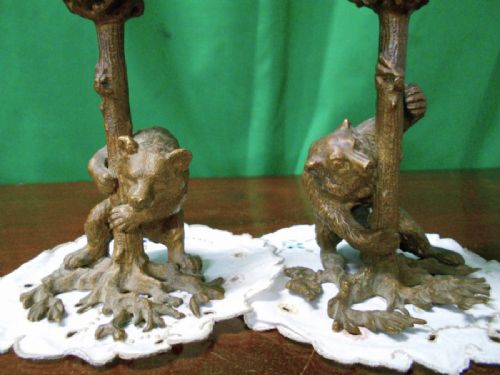
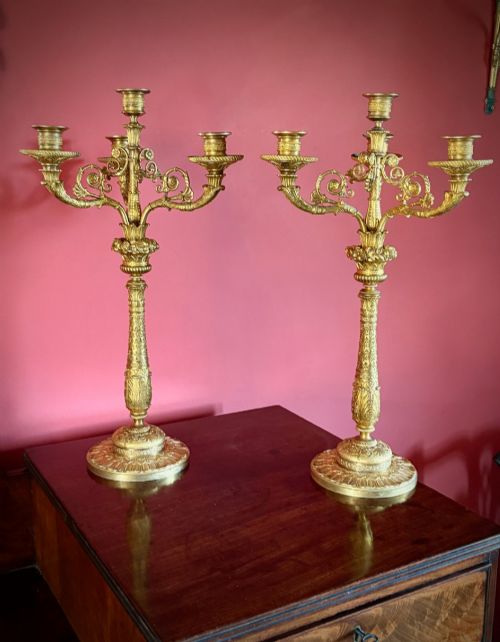
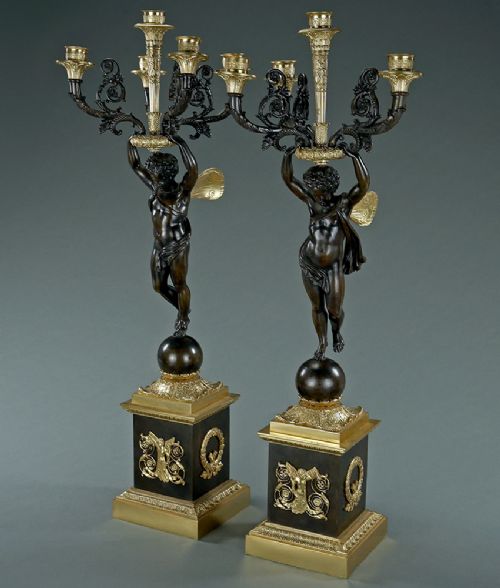
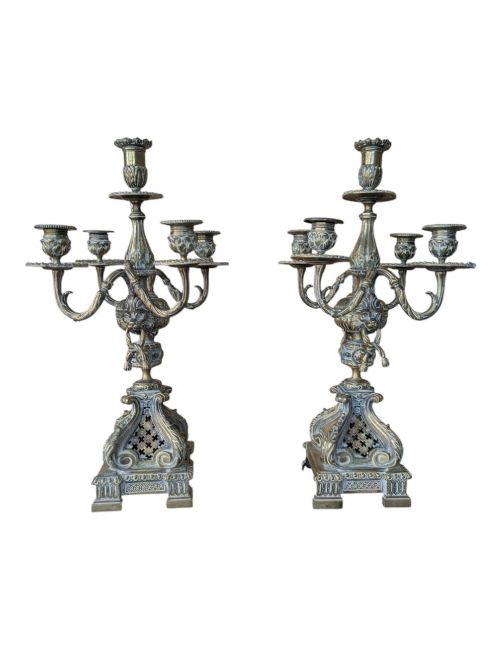
Nineteenth century bronze candlesticks span pairs of simple single-light shafts and multi-branch candelabra designed for dining tables and mantelpieces. Buyers encounter French Empire, Regency, and Victorian aesthetics most frequently on this page, often featuring figural motifs like cherubs, lions, and bears.
The objects take many forms beyond standard stick holders, including candelabra with adjustable arms, column lamps, and sets incorporating desk accessories. Most items originate from French workshops or English makers influenced by classical and Renaissance revival styles.
How They Were Made
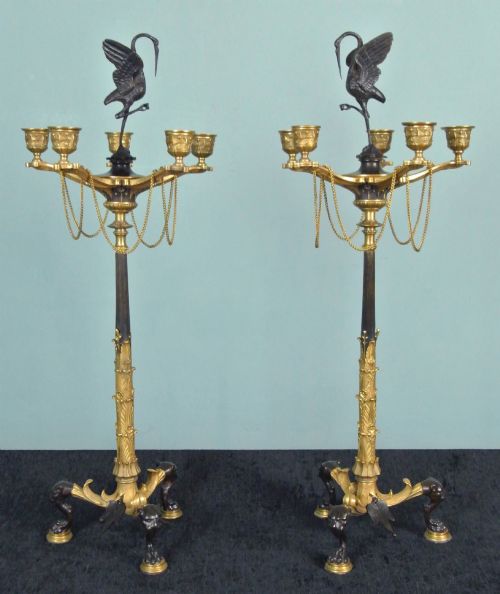
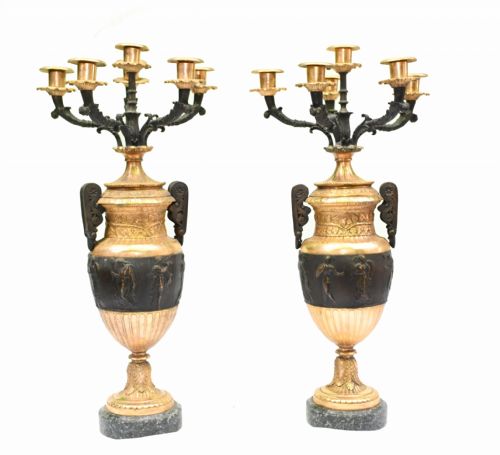
Foundries utilised traditional lost-wax casting methods to shape the bronze, often combining patinated dark bronze with polished ormolu and gilt metal for striking visual contrast. Artisans incorporated secondary materials such as marble bases, onyx, cut glass, and champlevé enamel to enrich the heavy metal structures.
Casting precision allowed for intricate figural details, from medievalist characters to classical drapery and foliate scrollwork. Many pieces combine structural bronze components with gilded highlights applied through mercury amalgamation or electrogilding.
A pair of medieval characters balanced rather precariously on stilts adds a surprisingly light-hearted touch to the heavy bronze inventory.
What Varies in Quality
Quality depends heavily on the crispness of the chasing and the depth of the casting work. Superior examples exhibit sharp, hand-finished details in the foliate motifs and figures rather than soft edges left straight from the mould.
The durability of the gilding and the integrity of the joins between components distinguish finer workshop output from standard commercial production. Balanced weight distribution and the thoughtful pairing of materials like marble or slate elevate the construction of higher-grade pairs.
Barbedienne·Thomas Hope
The Nineteenth Century Bronze Candlesticks Glossary
- Ormolu
- Gilt bronze produced by applying a mercury-gold amalgam to a bronze base and heating it. This technique creates a durable, rich golden surface typical of high-end French decorative objects.
- Patinated bronze
- Bronze that has been chemically treated to alter its surface colour, usually resulting in a dark brown or black tone. This finish contrasts sharply with bright ormolu highlights.
- Champlevé
- An enamelling technique where troughs or cells are hollowed out of the metal surface and filled with vitreous enamel before firing. It frequently appears on late nineteenth-century decorative pieces.
- Candelabra
- A branched candlestick holder designed to support multiple candles from a single base. These often feature removable arms to allow conversion between single and multi-light configurations.
Nineteenth Century Bronze Candlesticks: Frequently Asked Questions
How do I clean nineteenth century bronze candlesticks safely?
Dust the surfaces gently with a soft, dry brush to prevent dirt buildup in the crevices. Avoid using chemical metal polishes or abrasive cloths, which can strip away the original ormolu gilding or damage the delicate bronze patina.
For stubborn grime, use a slightly damp cloth with mild soap, drying the metal immediately afterwards. Preserving the natural ageing of the bronze maintains the historical character of the piece.
Were these candlesticks meant for dining tables?
Many of these pieces were created specifically for dining tables, providing elevated illumination during evening meals. Larger multi-branch candelabra typically stood on sideboards or mantelpieces when not in use for entertaining.
Pairs of heavy bronze shafts also served on desks, chests of drawers, and pier tables. Their substantial weight ensured stability when holding tall wax tapers.
How do I tell French Empire from Regency style?
French Empire pieces draw heavily on Roman and Napoleonic motifs, displaying strict symmetry, military trophies, laurel wreaths, and classical figures. The gilding is often bright and contrasts sharply with dark patinated bronze.
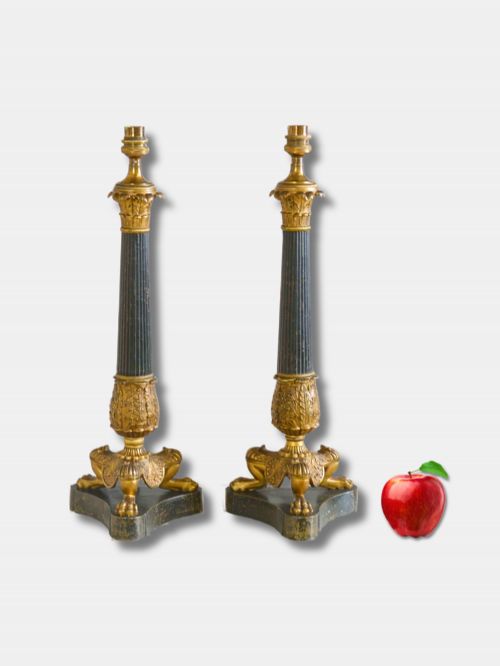
Regency examples reflect British interpretations of classical antiquity, frequently incorporating animal paw feet, reeded columns, and lighter ormolu accents. Both styles date primarily to the early part of the nineteenth century.
Can these candlesticks be converted into table lamps?
While conversion is physically possible by running a cord through the central shaft, purists generally advise against altering antique lighting. Permanent modifications can diminish the historical integrity and value of the object.
Instead, use appropriate modern candle sizes or place the unmodified candlesticks alongside separate table lamps. Many listings already include original column lamps designed specifically for wiring.