

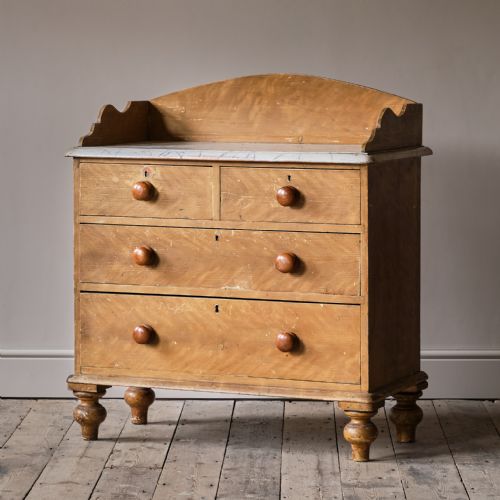
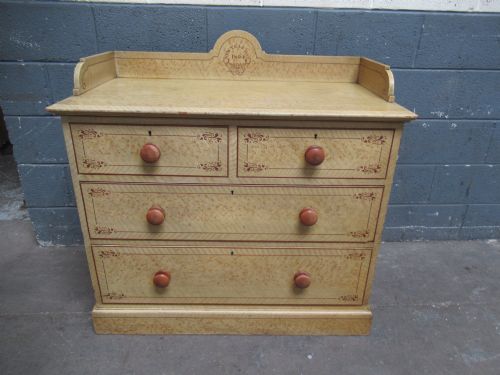
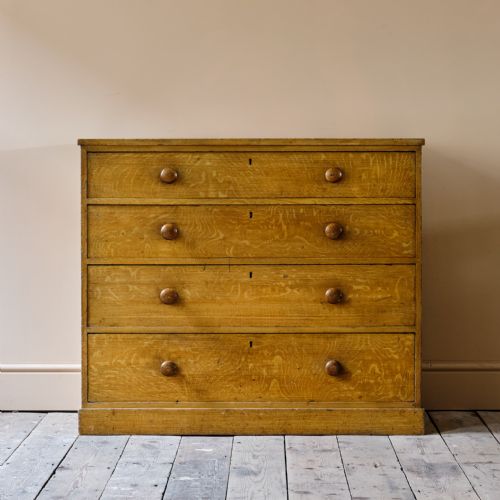


Faux Grain Painted Chest
A faux grain painted chest brings warmth and character to a room through surface finishes that imitate expensive timbers.
Faux Grain Painted Chest
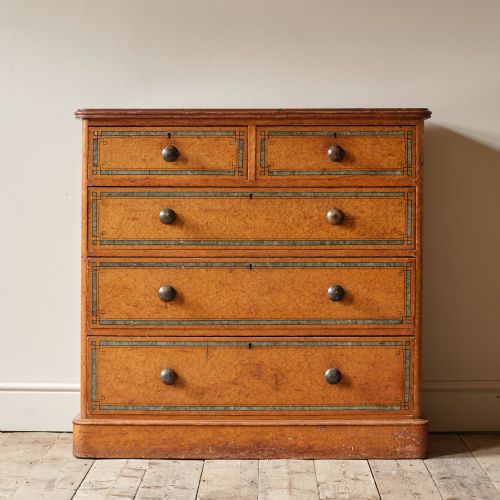
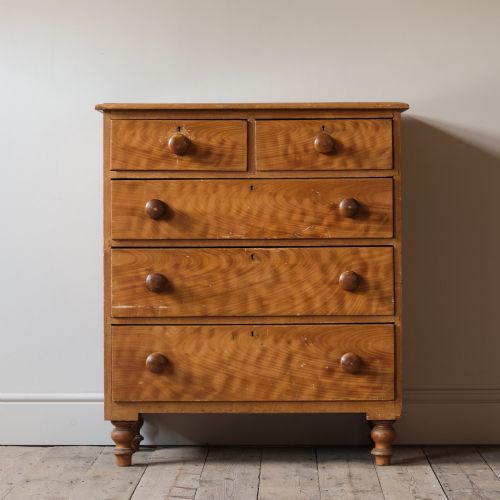
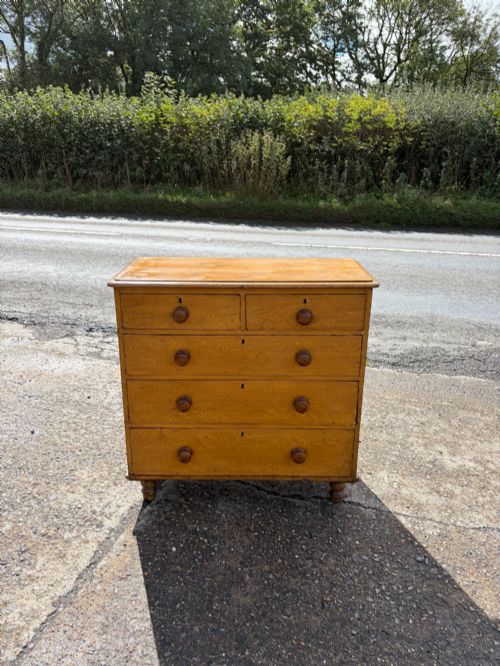
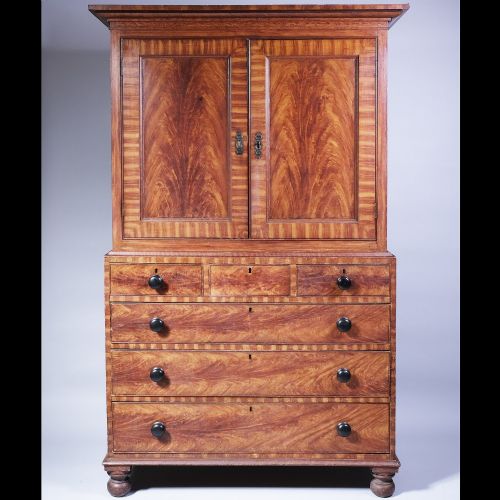
A faux grain painted chest is typically constructed from pine or softwood and treated with decorative paint to simulate richer woods. These pieces span the nineteenth century and into the early twentieth century, taking forms such as standard chests of drawers, housekeepers cupboards, mule chests, and miniature furniture. Styles lean heavily toward Victorian country, rustic, and Scandinavian country origins.
The version most commonly encountered on this page is the Victorian scumbled pine chest of drawers. These utilitarian storage items relied on decorative paint effects to elevate inexpensive woods for domestic use. Buyers choose them for their honest proportions and the tactile depth of their aged painted surfaces.
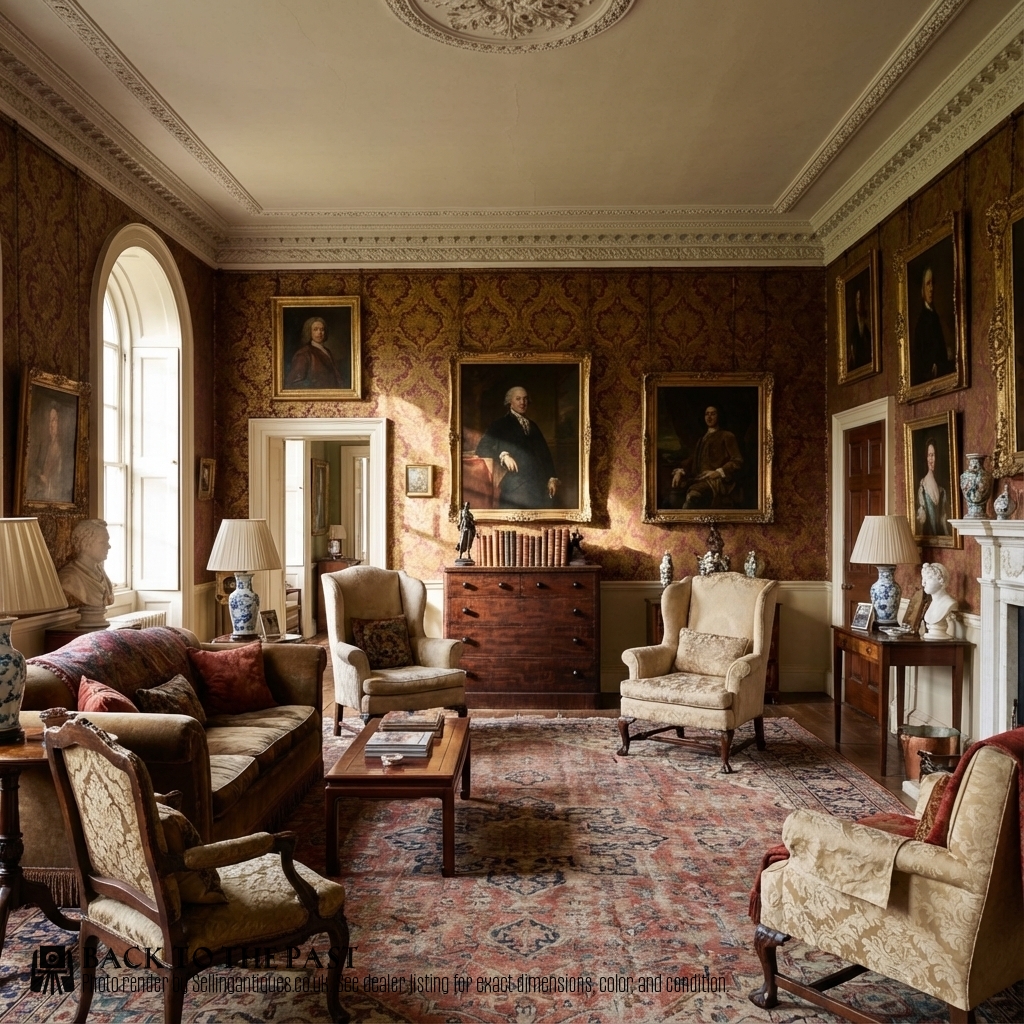
How they were made
Makers built these pieces primarily using pine and softwood, selecting timber that was readily available and easy to work with. Joinery was straightforward, intended for everyday utility rather than grand architectural display.
Painters applied glazes and pigments over a base coat, dragging, combing, or sponging the wet medium to mimic the grain patterns of oak, walnut, or exotic hardwoods. This scumble or faux bois technique transformed plain wood into a rich decorative surface using simple tools and skill.
Faux Grain Painted Chest Retail Price Guide 2026
Typical asking prices for faux grain painted chest among the pieces listed under this phrase on Sellingantiques today, from the lower quarter to the upper quarter. They describe what is for sale here now, not the wider market.
Some nineteenth-century apprentices practiced their trade on miniature chests, creating pint-sized furniture with full-scale faux grain finishes.
What varies in quality
The distinction between ordinary and exceptional examples rests in the confidence and execution of the paint surface. Skilled practitioners achieved convincing depth and movement in the faux grain, whereas lesser work appears flat or muddy.
Proportion and originality also govern value and appeal. Pieces retaining their untouched, period surface without heavy modern intervention display a visual harmony that worn or overly restored examples lack.
The Faux Grain Painted Chest Glossary
- Scumble
- A translucent dark glaze applied over a lighter opaque base coat to create decorative patterns. This technique allows painters to manipulate the wet layer into simulated wood grains.
- Faux bois
- French for false wood, describing paintwork that imitates the natural grain and growth rings of timber. Artisans used specialised combs and brushes to drag the glaze.
- Softwood
- Timber from conifers, such as pine, used extensively for everyday furniture construction. It provided a pale, absorbent ground ideal for receiving decorative paint finishes.
- Mule chest
- A storage chest featuring one or more drawers at the base beneath a hinged lid. They bridge the gap between traditional coffers and modern drawer chests.
- Housekeepers cupboard
- A large storage piece with cupboards and drawers, traditionally used for linens and provisions. These functional items often received durable painted finishes for utility rooms.
Faux Grain Painted Chest: Frequently Asked Questions
What is scumble paint?
Scumble paint involves applying a translucent glaze over a dried base coat. The top layer is manipulated with brushes or combs while wet to create decorative patterns.
This method allowed nineteenth-century painters to imitate costly timbers on accessible woods like pine.
How do I clean a painted chest?
Dust the surface regularly with a dry, soft cloth to prevent particulate buildup. Avoid modern chemical sprays or abrasive cleaners that can strip historic glazes.
Wax polish formulated for antique wood can nourish the dry paint film when applied sparingly.
Are these pieces made of solid pine?
Most pieces utilise solid pine or softwood throughout the main carcase and drawer construction. Secondary woods might appear in internal framing or drawer linings.
The use of softwood made these items lightweight and adaptable for rural and urban homes alike.
How do I date a painted chest?
Dating relies on examining construction methods, hardware like brass pulls or ceramic knobs, and the style of the timber joinery. Dovetails and backboards offer strong clues to the period of manufacture.
The patina and wear patterns within the paint layer also help establish age.