



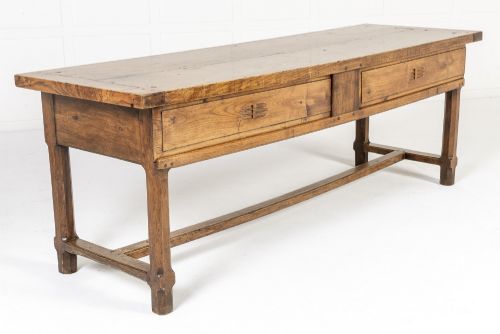


Farmhouse Wooden Console
A farmhouse wooden console brings honest utility and warmth to a room, offering practical surface space rooted in centuries of rural craft.
Farmhouse Wooden Console
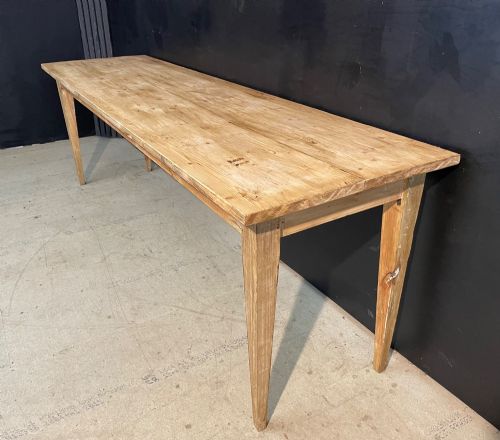
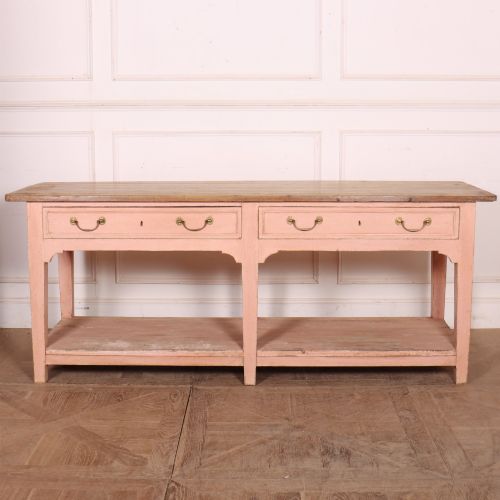
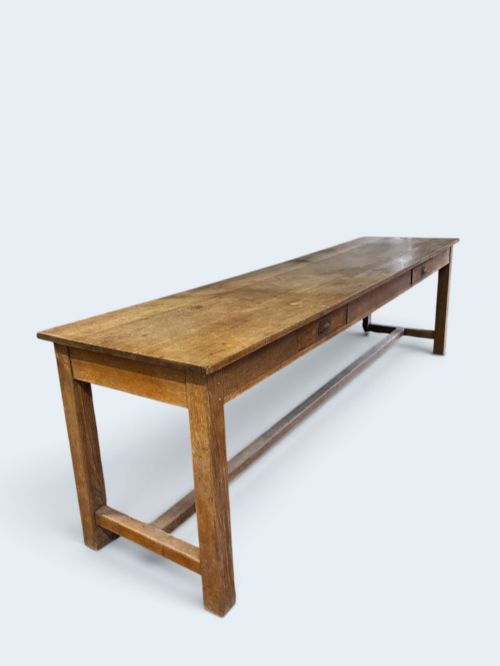
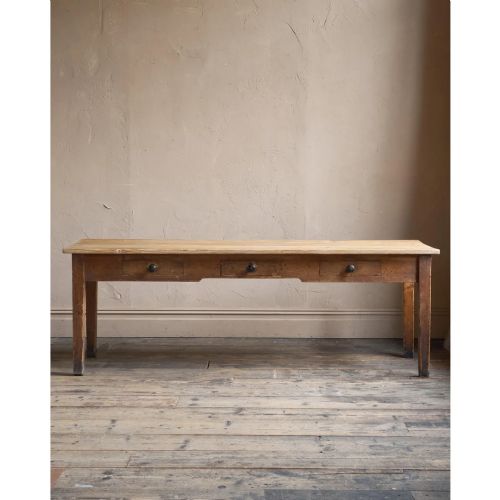
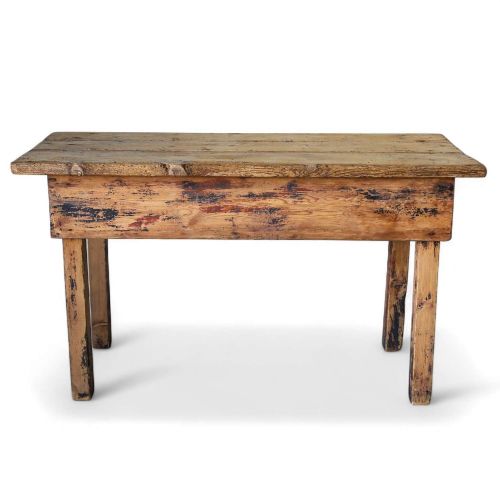
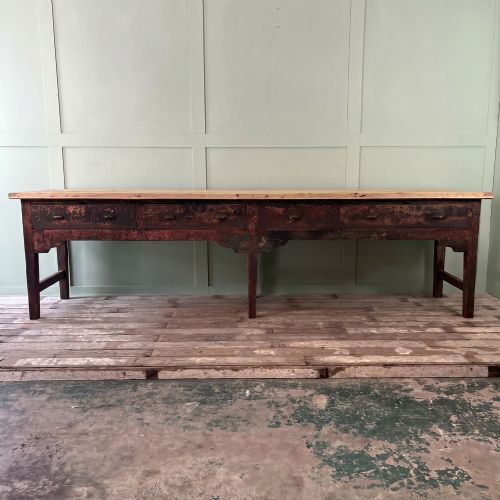
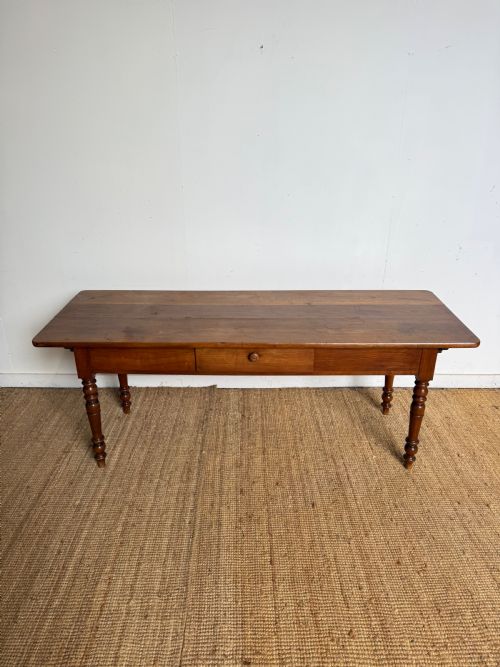
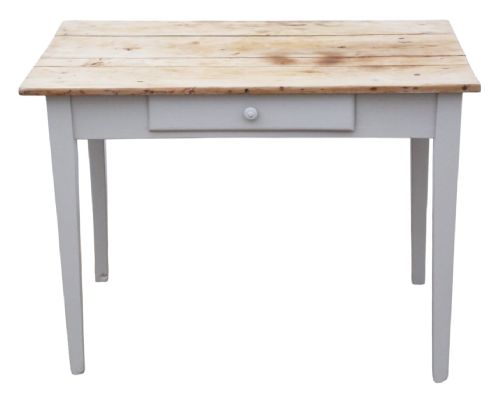
When you search for a farmhouse wooden console, you are looking at sturdy tables originating from utilitarian domestic spaces, including sculleries, kitchens, and manor houses. These pieces bridge the gap between working furniture and display surfaces, often taking the form of narrow serving tables, potboard dressers, or adapted work benches.
The selection here draws primarily from nineteenth-century examples alongside eighteenth-century origins and early twentieth-century interpretations. You will encounter forms labelled as console tables, serving tables, and trestle tables, reflecting their adaptable nature in modern interiors.
English and French provincial traditions dominate the pieces available, showing regional variations in proportion and structural layout. Whether you find a long painted pine console or a bleached oak trestle table, each item carries the marks of utilitarian daily use.
Materials and construction
Construction relies heavily on robust domestic timbers suited to heavy labour, with pine, oak, cherrywood, sycamore, elm, and poplar appearing across the inventory. Carpenters utilised solid boards for tops, sometimes scrubbed clean through generations of maintenance, supported by pegged joints and substantial legs.
Secondary elements incorporate iron, brass, and applied paint finishes, adding structural reinforcement or decorative surface treatments. Potboards, drawers, and trestle ends provide functional integrity without superfluous ornamentation.
The listings span the eighteenth, nineteenth, and early twentieth centuries, featuring pine, oak, cherrywood, and poplar in various console and trestle forms.
Assessing quality and character
Quality in these utility tables rests on structural honesty, timber selection, and the integrity of the surface patina. Pieces retaining their original proportions, untampered bases, and genuine period wear stand apart from heavily restored or altered examples.
The nuance lies in the handling of the wood, from the smooth scrubbed finish of a kitchen table top to the substantial timber density of an oak serving table. Finer examples show thoughtful joinery, such as pegged trestles and integrated potboards, executed to withstand decades of heavy domestic service.
The Farmhouse Wooden Console Glossary
- Potboard
- A lower shelf beneath a table or dresser base historically used for storing pots and pans. This platform adds structural stability and creates extra display space near the floor.
- Scrub-top
- A wooden table surface cleaned vigorously with water and a stiff brush, removing accumulated grime to leave a pale, weathered grain. This finish results from traditional maintenance in busy country kitchens.
- Trestle table
- A table comprising two or more supports connected by a horizontal beam holding a long top. This design allows for maximum legroom and robust support.
- Dresser base
- The lower section of a kitchen storage unit, usually fitted with drawers and a potboard. These sturdy units function independently as console or serving surfaces.
- Patina
- The surface sheen and colour acquired by wood through age, handling, and wax over many decades. It serves as a visual indicator of authenticity and history.
Farmhouse Wooden Console: Frequently Asked Questions
What is a farmhouse wooden console used for today?
These tables adapt easily to modern living as hallway surfaces, sideboard alternatives in dining rooms, or desk spaces in studies. Their narrow proportions and drawer storage make them practical for everyday organisation.
Historically built for food preparation or serving, their current appeal lies in bringing tactile warmth and historic character into contemporary homes without taking up excessive floor space.
How do I care for a scrubbed wood surface?
Maintain scrubbed pine and oak surfaces by dusting with a dry cloth and addressing spills promptly with mild soap and water. Avoid modern chemical varnishes that seal the breathable grain.
Applying occasional natural wax helps nourish the dry timber and protects the aged surface while preserving the authentic matte finish achieved through generations of cleaning.
How can I tell English and French tables apart?
English pieces often favour solid pine and oak with straightforward potboard configurations or scullery drawer arrangements. They tend toward utilitarian proportions designed for practical country houses.
French examples frequently utilise cherrywood, poplar, or sycamore alongside oak, sometimes presenting refined trestle bases or painted finishes. Regional traditions from areas like Bresse dictate specific heights and leg turnings.
Are these tables suitable for heavy daily use?
Built originally for demanding environments like manor kitchens and work benches, these tables possess robust structural frames designed to endure significant weight. Solid timber construction ensures lasting durability.
While historic surfaces benefit from protective pads against moisture and heat, the underlying joinery remains strong enough to function as active prep or display surfaces in a busy household.