

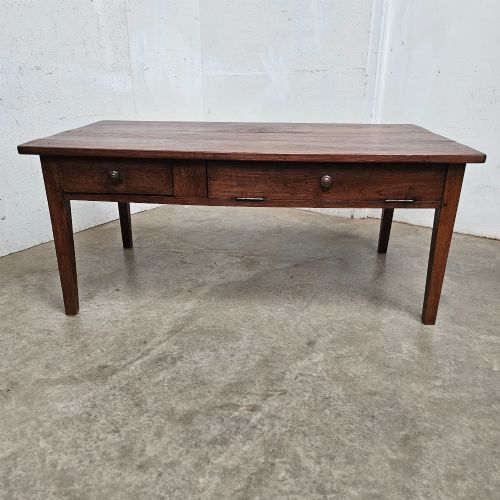
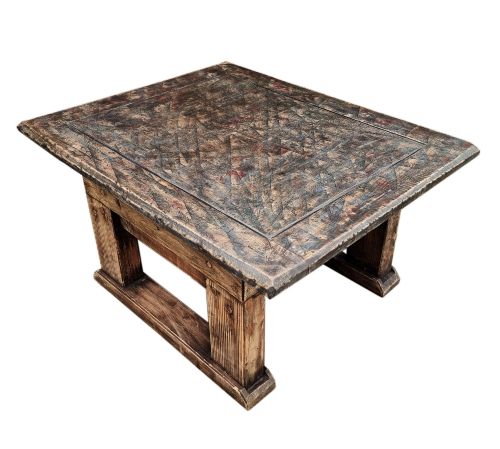
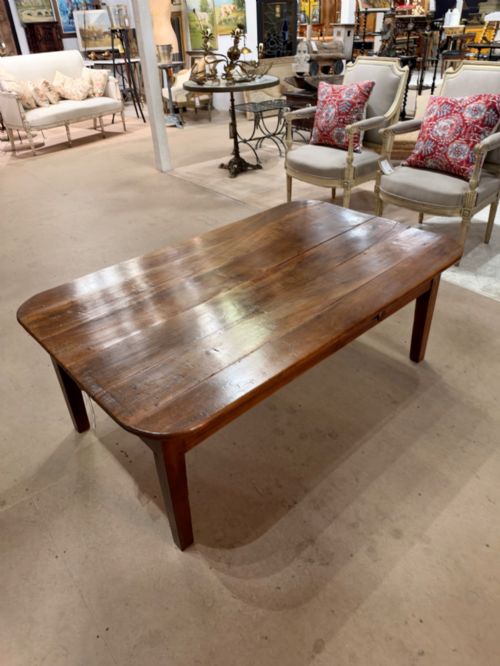
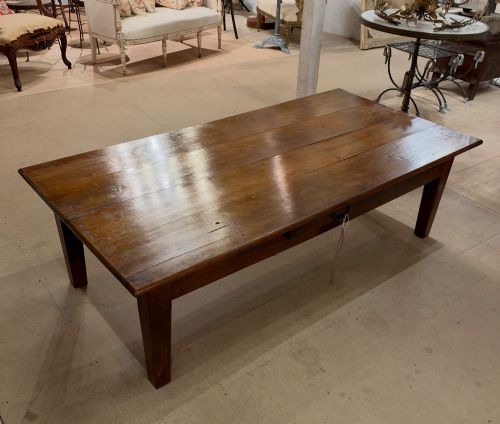

Farmhouse Coffee Table
A farmhouse coffee table grounds a room with honest timber, utilitarian design and decades of daily use.
Farmhouse Coffee Table
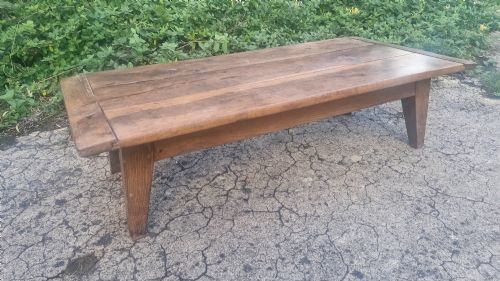
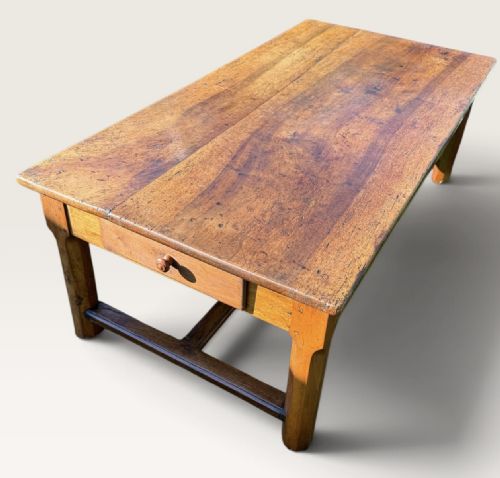
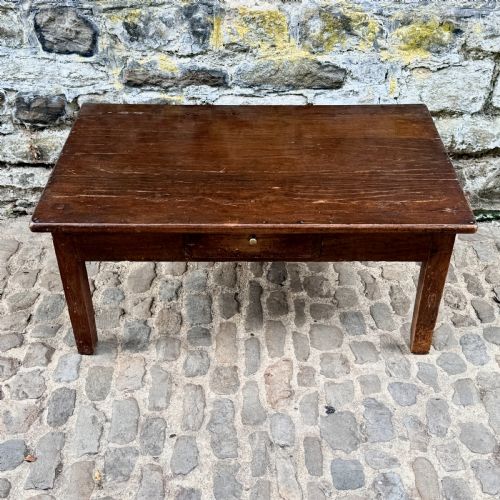
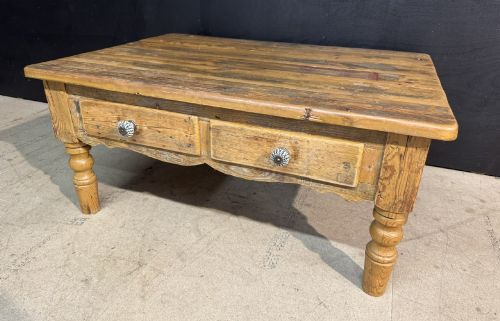
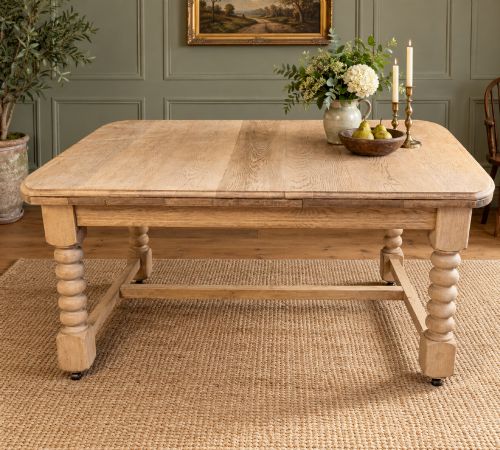
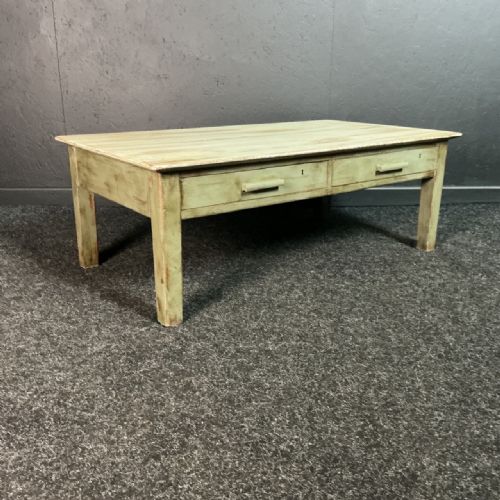
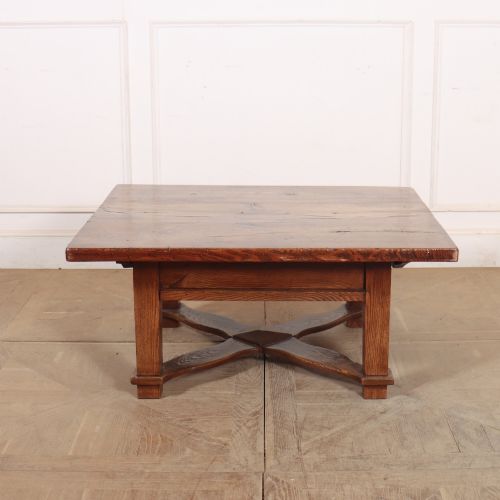
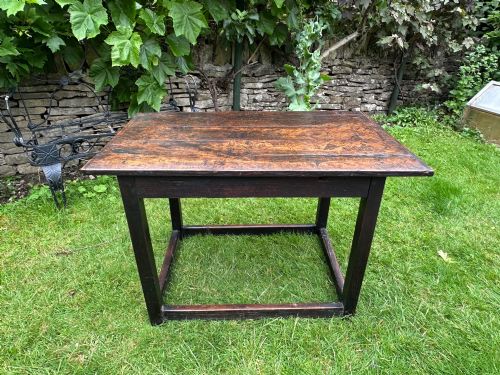
A farmhouse coffee table is a low table built from durable woods for everyday domestic utility, often adapted from older benches, work tables or dough bins. These pieces range from compact pine boards to large plank tops in oak or walnut.
The selection here draws on English, French, Austrian and Hungarian origins spanning the eighteenth, nineteenth and twentieth centuries. Buyers frequently encounter scrubbed pine, bleached oak and fruit wood examples adapted for modern living.
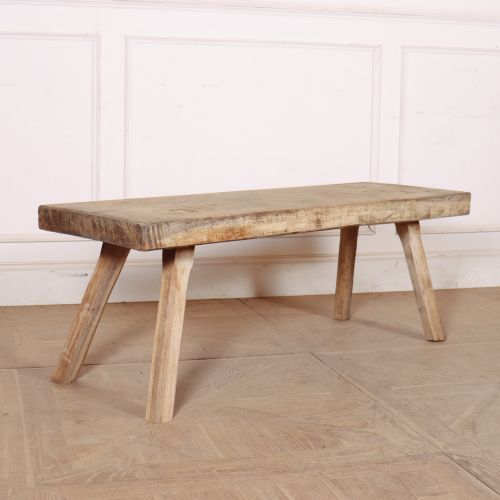
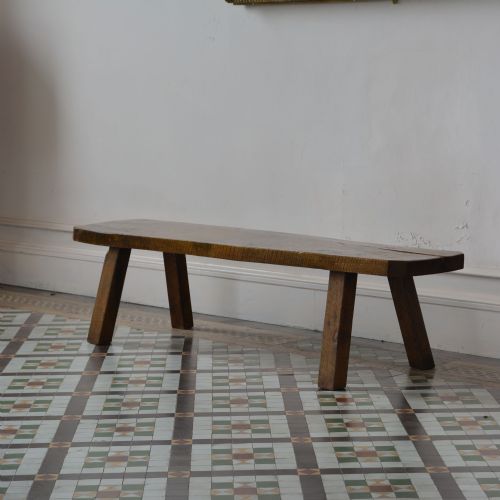
Many listings show forms originally used for other household tasks, including pig benches, cheese press tables and dough bins. These functional roots give each low table a distinct proportion and sturdy character.
Materials and construction
Makers utilised available regional hardwoods and softwoods, predominantly oak, pine, elm, sycamore, walnut and cherry wood. Timbers were selected for strength and local availability, resulting in thick plank tops and robust turned or straight legs.
Construction methods relied on traditional joinery, sturdy stretchers and pegged joints to withstand heavy domestic tasks. Surfaces were finished simply, with many historical examples now exhibiting scrubbed timber or retained traces of early paint.
Farmhouse Coffee Table Retail Price Guide 2026
Typical asking prices for farmhouse coffee table among the pieces listed under this phrase on Sellingantiques today, from the lower quarter to the upper quarter. They describe what is for sale here now, not the wider market.
Several tables began life as cheese presses or pig benches before finding a second career holding cups of tea.
What separates the grades
Quality rests in the integrity of the timber, the honesty of the conversion and the depth of the patina. Unaltered plank thickness and original surface treatments distinguish superior examples from heavily restored or later constructed items.
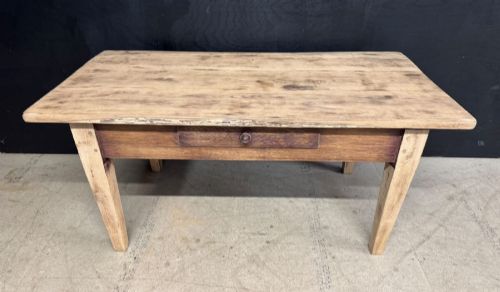
Proportion and utility dictate desirability, with well-balanced tables showing crisp wear patterns from decades of honest use. Pieces retaining original drawers, integrated stretchers or authentic regional quirks command greater interest.
The Farmhouse Coffee Table Glossary
- Pig bench
- A low wooden bench traditionally used in agricultural settings, now repurposed as a narrow coffee table due to its ideal height and plank top.
- Dough bin
- A lidded wooden box mounted on legs used for bread making, frequently converted into a low table with internal storage.
- Scrubbed
- A surface finish achieved by vigorous cleaning that removes old finishes and leaves the pale, weathered grain of the timber exposed.
- Plank top
- A table surface constructed from wide boards joined together, displaying natural grain patterns, knots and the marks of early saws.
- Trestle table
- A table design supported by two or more structural frames connected by a central beam or stretcher, offering stability without corner legs.
Farmhouse Coffee Table: Frequently Asked Questions
How do I clean a wooden coffee table?
Dust regularly with a dry cloth and clean occasionally with a damp cloth using mild soap. Avoid harsh chemical polishes that strip the historic finish.
Dry the timber thoroughly after cleaning to protect the grain and preserve the natural patina built up over decades of use.
Are these tables converted from older furniture?
Many listings include historical utility items like pig benches, dough bins and work tables lowered to coffee table height. Other examples were built as low tables or kitchen tables during the nineteenth and twentieth centuries.
Conversions allow utilitarian antiques to find a practical role in modern seating areas while retaining their original material character.
How do I date a timber table?
Examine the tool marks on the underside and legs, noting whether pieces show hand-sawn or machine-sawn characteristics. Fasteners, peg construction and timber shrinkage also offer clues to the period of manufacture.
French and English country pieces often display regional joinery traits specific to their decade or century of origin.
Will a pine table withstand daily use?
Pine is a softer wood that naturally accumulates dents and marks over time, which adds to the rustic character of a country interior. Using coasters and protective mats helps prevent heavy staining from drinks.
Unfinished or scrubbed pine surfaces benefit from occasional waxing to nourish the timber and guard against moisture.