



Famille Rose Pottery
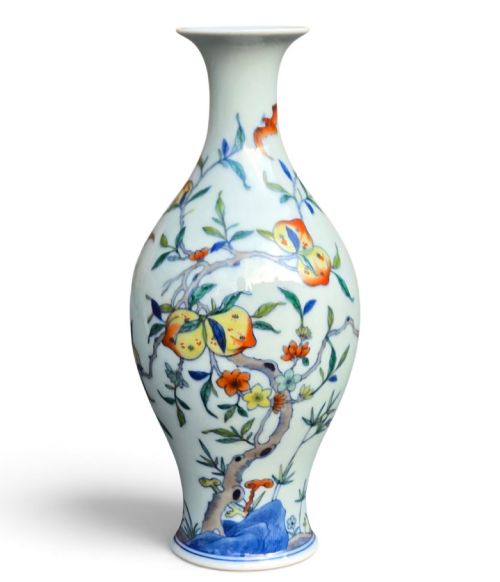
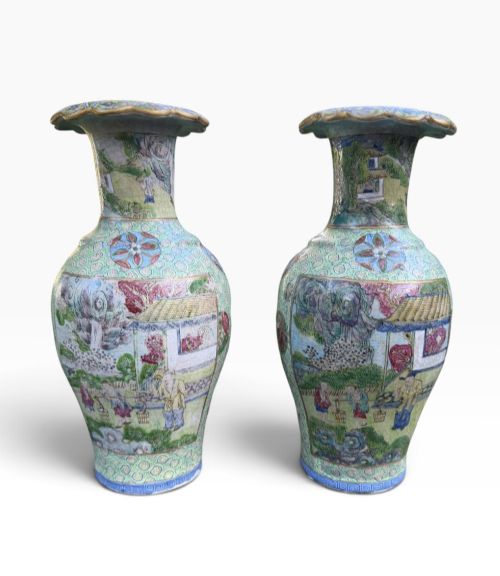
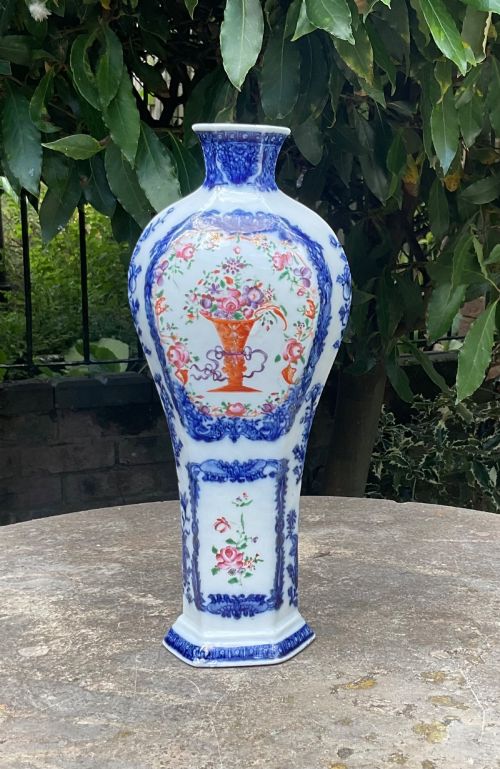
Famille rose pottery offers distinctive pink-enamelled wares, bringing vibrant floral and figural palettes into interior schemes.
Famille Rose Pottery
Famille rose pottery comprises pieces created across the eighteenth, nineteenth, and twentieth centuries, spanning periods such as the Qing Dynasty, the Victorian era, and the Republic Period. Buyers searching for famille rose pottery will encounter various forms including vases, incense holders, and table lamps.
The objects frequently display traditional Chinese motifs, Chinese export designs, and Chinoiserie styles. Nineteenth-century examples dominate the selection, alongside earlier eighteenth-century vessels and pieces from the nineteen-thirties.
Makers and artists utilised specific ceramic bases, combining porcelain, earthenware, and Yixing stoneware with intricate decorative programmes. These items function historically as decorative vessels and centrepieces within domestic interiors.
Materials and Construction
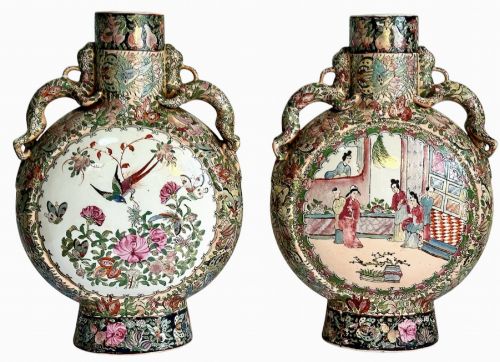
Potters shaped porcelain, earthenware, and Yixing stoneware into vessels such as garlic-head vases, moon flasks, and ginger jars. These clay and ceramic bodies provided the structural foundation for subsequent surface decoration.
Craftsmen applied overglaze enamels, enamel glazes, and rose-verte biscuit enamel to achieve the characteristic polychrome palette. Gold leaf and gilt details were integrated into the designs to accent specific motifs.
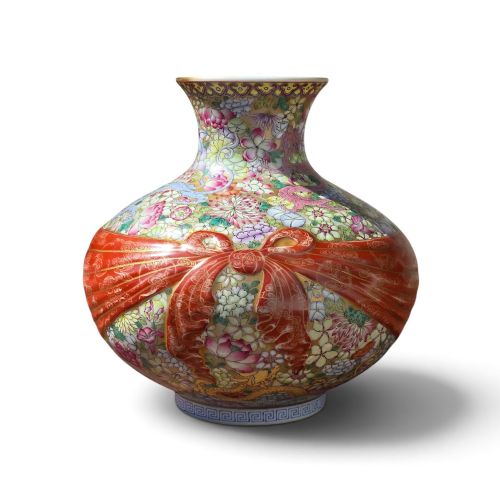
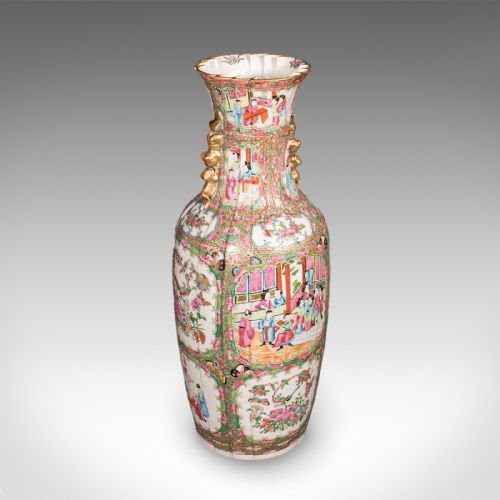
Firing techniques fixed the enamels to the ceramic surface, allowing complex scenes involving figures, peaches, bats, and floral millefleurs patterns to endure.
Famille Rose Pottery Retail Price Guide 2026
Typical asking prices for famille rose pottery among the pieces listed under this phrase on Sellingantiques today, from the lower quarter to the upper quarter. They describe what is for sale here now, not the wider market.
Materials represented across the selection include porcelain, earthenware, Yixing stoneware, overglaze enamel, and gold leaf.
Distinctions in Quality
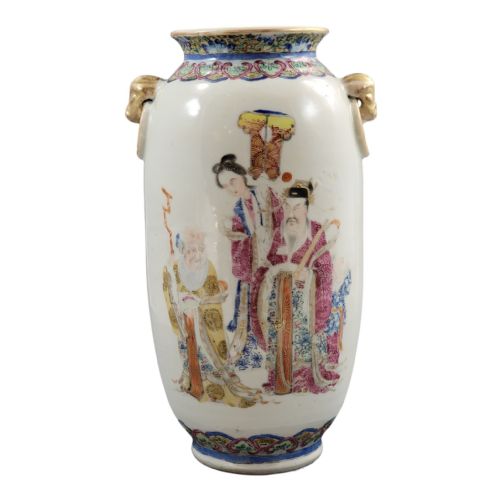
The refinement of the overglaze enamels and the precision of the hand-painted details distinguish finer pieces from standard production. Artisans who executed complex figural scenes, such as Immortals or Magu and Shoulao, demonstrated a higher level of draughtsmanship.
The choice of base material and the integration of gilt or gold leaf affect the visual depth of the object. Superior vessels exhibit balanced composition across difficult forms like cong vases and moon flasks.
Gao Hengsheng
The Famille Rose Pottery Glossary
- Famille Rose
- A palette of opaque rose-pink and other enamels introduced to Chinese ceramics during the Qing Dynasty. It allows for nuanced shading and detailed polychrome painting.
- Yixing Clay
- A type of stoneware originating from the city of Yixing, known for its natural unglazed textures. It provides a dense, durable body for specialised vessels.
- Millefleurs
- A dense pattern covering the surface with a multitude of painted flowers. This style requires immense patience and steady brushwork from the decorator.
- Moon Flask
- A flattened circular flask with a short neck and two loop handles, derived from ancient nomadic leather prototypes. It presents a wide planar surface suited for pictorial enamel scenes.
- Republic Period
- The era following the fall of the Qing Dynasty, spanning from nineteen-twelve onward. Workshops during this time produced innovative ceramic designs and signed art pieces.
Famille Rose Pottery: Frequently Asked Questions
What is famille rose pottery?
Famille rose pottery refers to ceramic pieces decorated with a dominant opaque pink enamel alongside a broader polychrome palette. These items were produced primarily in China across multiple centuries for both domestic use and export.
They encompass practical forms and decorative vessels, including vases, ginger jars, and incense holders. The style evolved through various dynastic and republican periods, maintaining distinct floral and figural iconography.
How are these pieces dated?
Dating relies on stylistic markers, historical periods such as the Qing Dynasty or the Republic Period, and specific manufacturing techniques. Enamel composition and decorative themes often align with particular centuries.
Pottery from the eighteenth century exhibits different aesthetic traits compared to nineteenth-century Victorian imports or nineteen-thirties productions. Signed works can also point towards specific artists active in known eras.
Where were these objects made?
Many of these ceramics originated in Chinese kilns, notably at Jingdezhen, which served as the primary centre for imperial and export porcelain production. Yixing stoneware pieces came from regional kilns specialising in unglazed or specialised clay bodies.
Export wares were tailored for Western markets, leading to the creation of Chinoiserie styles and forms that suited European domestic interiors, such as table lamps and centrepieces.
How do I care for famille rose pottery?
These ceramic items require gentle handling to preserve the delicate overglaze enamels and gilt highlights. Dusting with a soft, dry cloth prevents the accumulation of particles without risking the painted surfaces.
Displaying pieces away from direct sunlight and extreme temperature fluctuations protects the enamel glaze and ceramic body over time. Avoid using abrasive cleaning agents or immersing decorated surfaces in water.