

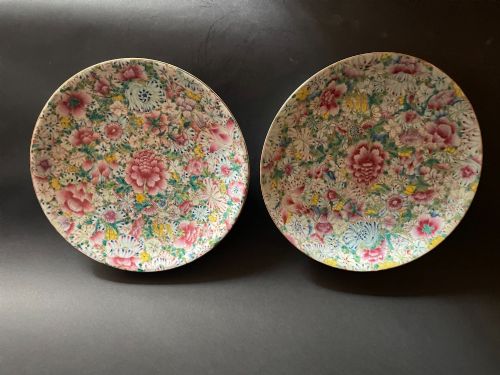
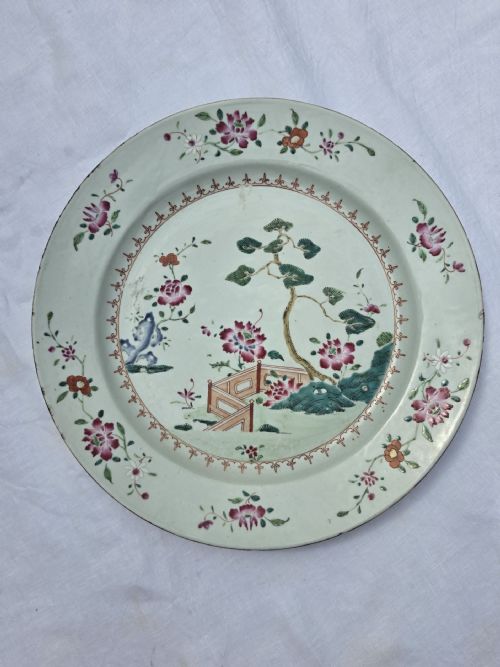


Famille Rose Dish
A famille rose dish brings vibrant enamel palettes and intricate floral or figural scenes into an interior.
Famille Rose Dish
A famille rose dish is a porcelain vessel decorated with an opaque pink enamel alongside a broader palette of overglaze colours. The pieces catalogued here span from the eighteenth century into the twentieth century, taking the form of plates, saucers, chargers, and serving dishes.
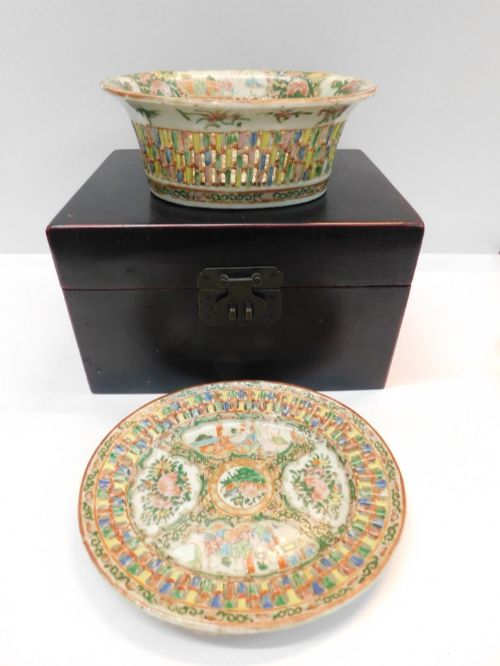
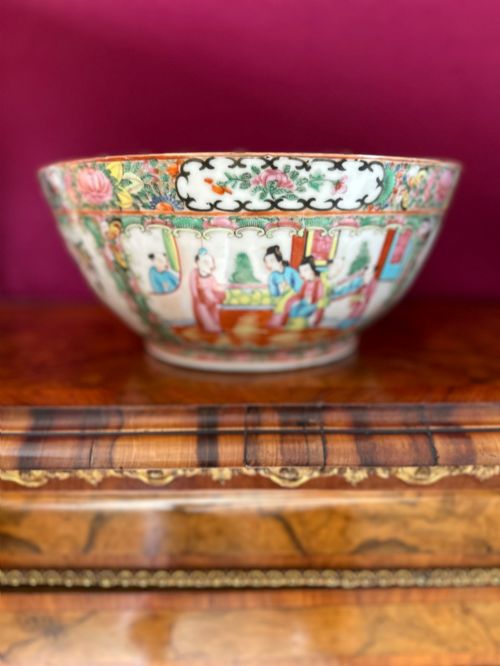
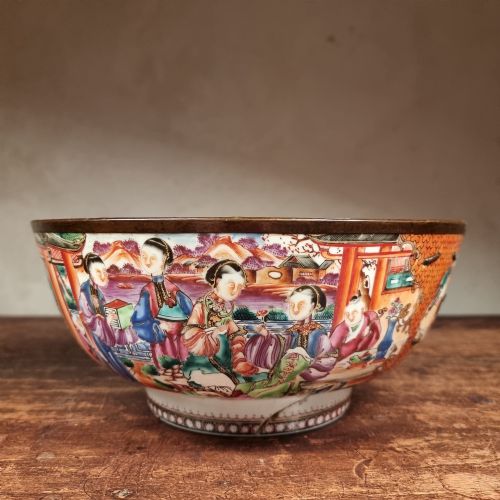
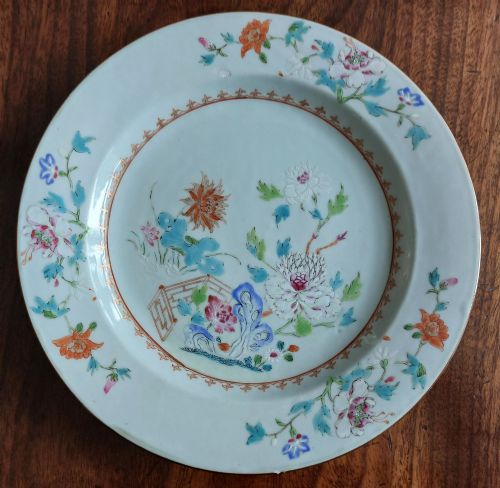
The version most commonly met on this page is the nineteenth century Chinese Canton dish, often decorated with bustling figural scenes, birds, and botanical motifs. Eighteenth century examples from the Qianlong period appear frequently, demonstrating finer brushwork and armorial or garden designs.
Forms range from standard circular plates to lobbed rectangular trays, shell-shaped vessels, and reticulated chestnut baskets with matching stands. These objects originate primarily from Chinese export kilns destined for Western markets.
How they were made
Potters shaped hard-paste porcelain before applying underglaze blue elements where required, followed by firing at high temperatures. Artisans then hand-painted the surfaces using overglaze enamels, incorporating gold leaf or gilding to highlight specific details.
The introduction of the opaque pink enamel, derived from colloidal gold, defined the palette during the Qing dynasty. Subsequent low-temperature firings fixed these polychrome enamels and gilding securely to the white porcelain body.
Some nineteenth century Canton dishes arrived shaped precisely like a shamrock, proving that even historic kilns enjoyed a bit of botanical whimsy.
What varies in quality
The precision and density of the hand-painted brushwork separate ordinary production from exceptional examples, particularly in the rendering of facial expressions on figural scenes and intricate bird and floral designs. Superior pieces display crisp enamel application that sits cleanly on the porcelain without blurring or heavy pooling.
The complexity of the form also dictates standard, as lobbed, trefoil, or reticulated chestnut baskets demand greater technical skill from the potter than a standard circular dish. Rarity of subject matter, such as armorial insignia or specific Jesuit designs, elevates the interest of a piece considerably.
The Famille Rose Dish Glossary
- Famille rose
- A French term describing Chinese porcelain decorated with a dominant opaque pink enamel. It developed during the Qing dynasty as part of a wider classification of colour families.
- Overglaze enamel
- Coloured glass powder mixed with an oily medium and painted over a fired, glazed porcelain surface. A subsequent lower-temperature kiln firing fuses the design to the glaze.
- Chinese export
- Porcelain manufactured in China specifically for overseas markets in Europe and the Americas. These wares often adapted Western shapes and incorporated armorial designs.
- Qianlong
- The reign period lasting from 1736 to 1795 associated with technical refinement and artistic innovation in porcelain production. Pieces from this era are frequently marked accordingly.
- Reticulated
- Pierced or openwork decoration cut into the clay body before firing. This technique appears on decorative chestnut baskets and stands.
Famille Rose Dish: Frequently Asked Questions
How do I date a famille rose dish?
Dating relies on combining stylistic evidence, such as the palette and painting style, with any reign marks found on the base. Eighteenth century Qianlong pieces typically show refined botanical and figural work, whereas nineteenth century Canton items feature busier, brightly coloured medallion designs.
Material characteristics also help determine age, as earlier hard-paste porcelain differs slightly in weight and glaze texture from later nineteenth century manufacturing methods. Comparing specific motifs against documented pieces in archives provides further clarity.
Were these dishes meant for dining?
Many eighteenth century export pieces formed part of large dinner or tea services intended for functional use by wealthy households. Over time, handling shifted toward display, particularly for fragile plates, chargers, and reticulated baskets.
Heavily decorated nineteenth century Canton dishes often served as decorative platters or centrepieces rather than everyday tableware. Their surviving condition frequently reflects whether they spent their lives on display or in active service.
How should I display a dish safely?
Wall mounting requires specialised plate hangers with coated prongs that distribute weight evenly without putting pressure on the rim. Alternatively, stable wire or acrylic display stands hold chargers and bowls securely on flat surfaces.
Keeping pieces away from direct sunlight prevents the overglaze enamels and gold leaf from fading over decades. Placement should also avoid areas subject to vibrations or heavy foot traffic that might dislodge the porcelain.
What is the difference between Canton and Qianlong styles?
Qianlong period pieces, dating from the eighteenth century, generally feature restrained compositions with delicate floral sprays, animals, or armorial crests set against clean white porcelain. The brushwork is precise and controlled.
Canton wares, predominantly from the nineteenth century, are known for busier rose medallion patterns filled with alternating panels of figures, birds, and butterflies. The palette on Canton pieces is often denser and more saturated.