
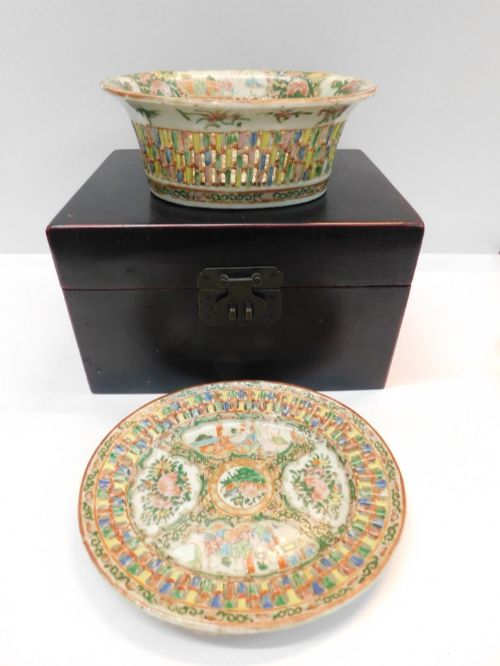
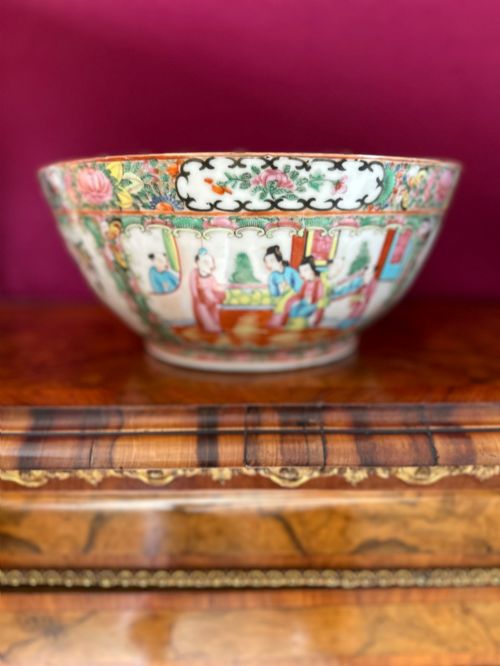
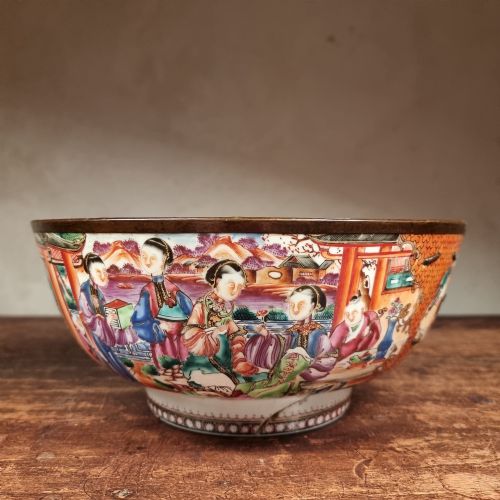


Famille Rose Bowl Dish
These famille rose bowl dish pieces offer vibrant palettes and intricate hand-painted detail, bringing centuries of Chinese export craftsmanship directly to your table.
Famille Rose Bowl Dish
A famille rose bowl dish encompasses a variety of antique forms, including large Canton bowls, pedestal dishes, tea bowls, and pierced chestnut baskets with stands. These objects originate primarily from the 18th and 19th centuries during the Qing Dynasty, reflecting traditional Chinese export production and domestic wares.
Buyers browsing this selection will most frequently encounter nineteenth-century pieces, particularly Canton bowls and decorative dishes from the Victorian era. Earlier examples from the eighteenth century, including Qianlong period wares and tea bowls with saucer sets, appear alongside later nineteenth-century adaptations.
How they were made
Potters shaped these objects from white porcelain before applying detailed overglaze enamel decoration by hand. The distinctive pink enamel palette, along with coral-orange ground work, defines the visual character of the wares.
Many items incorporate additional decorative elements such as gold leaf, gilding, and gilt accents. Certain functional forms, like reticulated chestnut baskets, also feature pierced lattice work and matching stands.
Listings span the eighteenth and nineteenth centuries, featuring porcelain, enamel, and gold leaf across forms like decorative bowls, pedestals, and pierced chestnut baskets.
What varies in quality
The sophistication of the hand-painted brushwork distinguishes superior examples from simpler production pieces. Mandarin palette scenes with complex figural groups require greater skill than standard floral motifs.
The precision of the overglaze enamel application and the preservation of original gilding or gold leaf contribute significantly to the visual impact of an antique dish.
The Famille Rose Bowl Dish Glossary
- Famille Rose
- A major palette of Chinese ceramic glazes introduced in the eighteenth century, defined by its opaque pink enamel derived from colloidal gold. This colour scheme allowed for subtle tonal gradations in painted floral and figural scenes.
- Canton
- A major production and export centre in southern China responsible for dense, colourful porcelain decoration during the nineteenth century. Wares from this region often feature abundant panels of figures and birds.
- Qing Dynasty
- The final imperial dynasty of China, spanning from sixteen forty-four to nineteen twelve. Most porcelain in this category dates to the eighteenth or nineteenth centuries under this dynastic rule.
- Overglaze Enamel
- Colour pigments applied over a fired and glazed porcelain surface before undergoing a second, lower-temperature firing to fix the design. This technique permits a wide spectrum of bright decorative colours.
- Reticulated
- Pierced or openwork ceramic or basketry construction designed to create decorative lattice patterns. This method appears on specialised serving vessels like chestnut baskets.
Famille Rose Bowl Dish: Frequently Asked Questions
How do I date a famille rose bowl?
Dating relies on stylistic clues, potting characteristics, and specific reign marks where present. Eighteenth-century pieces often display thinner bodies and refined Qianlong period palettes, while nineteenth-century Canton wares tend toward heavier porcelain and dense decoration.
Examining the foot ring, the quality of the overglaze enamel, and the specific floral or Mandarin motifs helps narrow down the decade of production.
Were these bowls used for food?
Many export pieces served functional roles in dining and tea service during the eighteenth and nineteenth centuries. Tea bowls, saucers, and large serving vessels were made for daily use in European and Asian households.
Today, collectors generally display them as decorative objects rather than utilising them for active dining.
What is the Mandarin palette?
The Mandarin palette refers to a specific style of Chinese export porcelain decoration featuring detailed figural scenes within framed panels. These depictions typically illustrate court life, scholarly pursuits, or traditional domestic narratives.
Surrounding areas are frequently filled with butterflies, birds, and floral motifs in bright enamels.
How should I clean my antique bowl?
Careful dusting with a soft, dry cloth is usually sufficient for routine maintenance. Avoid harsh chemical cleaners, abrasive sponges, or immersion in hot water, which can damage delicate overglaze enamels and gold leaf.
If washing is necessary, use lukewarm water and mild soap with a very gentle sponge, then dry immediately.