


Fall Front Secretaire
A fall front secretaire combines a hidden writing surface with fitted interior drawers behind a drop-down panel, offering discreet storage for correspondence and documents.
Fall Front Secretaire
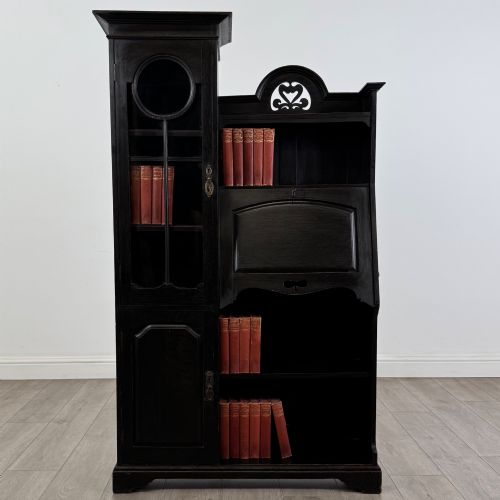
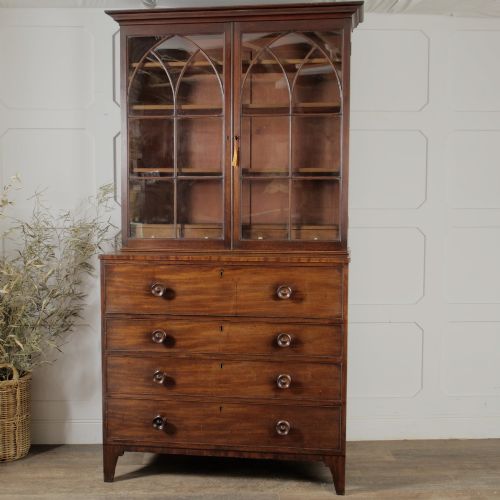
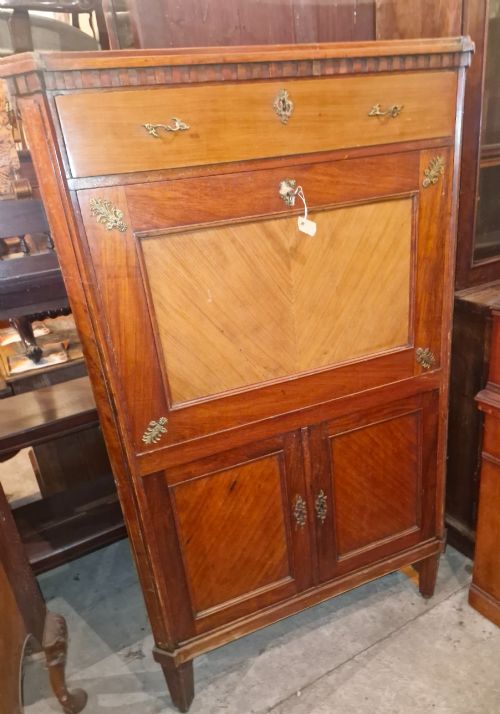
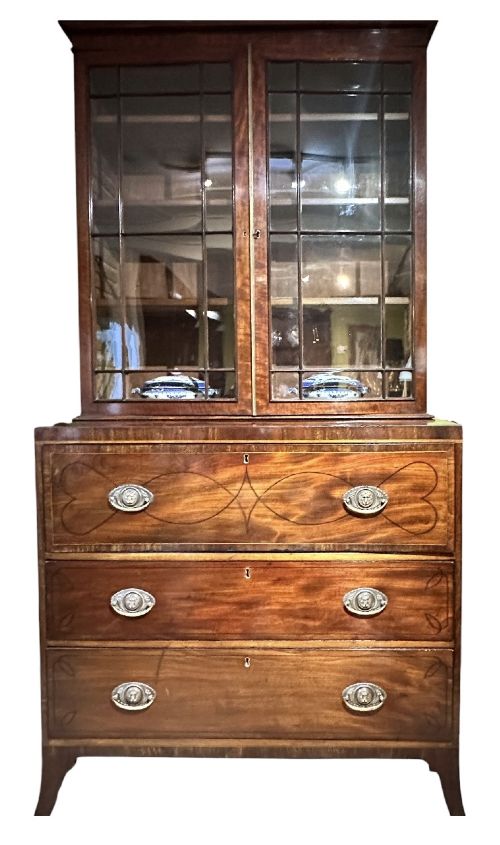
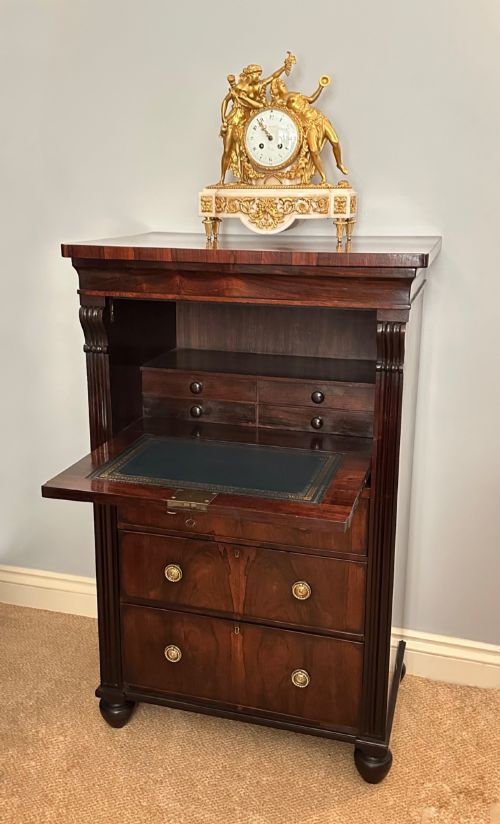
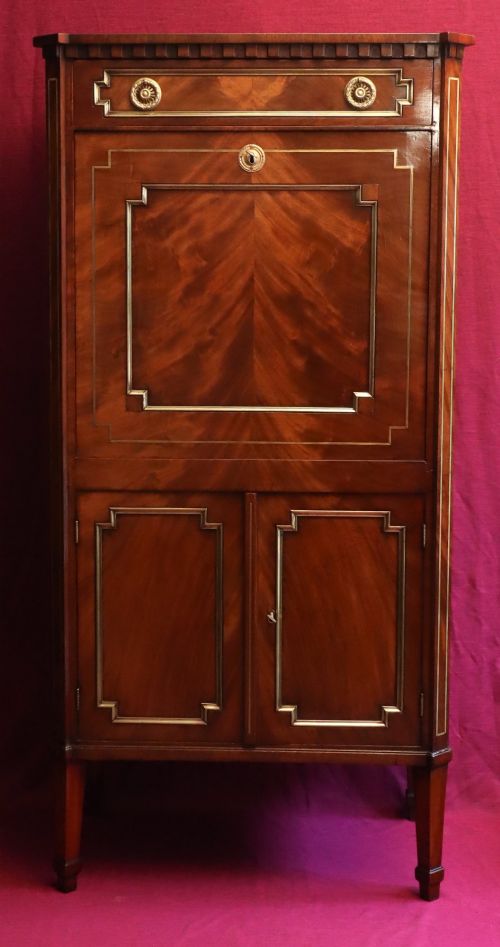
A fall front secretaire is a writing cabinet featuring a vertical drop-down panel that conceals a fitted interior of small drawers and pigeonholes. This category includes upright secretaire abattant cabinets, bureau bookcases, and escritoires spanning from the eighteenth century through the Victorian and Edwardian eras.
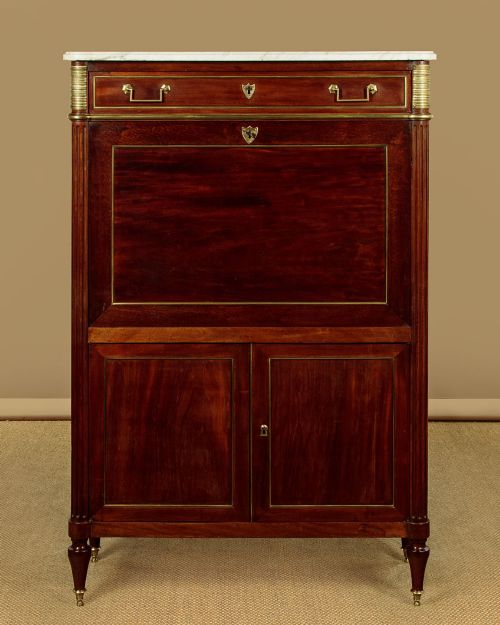
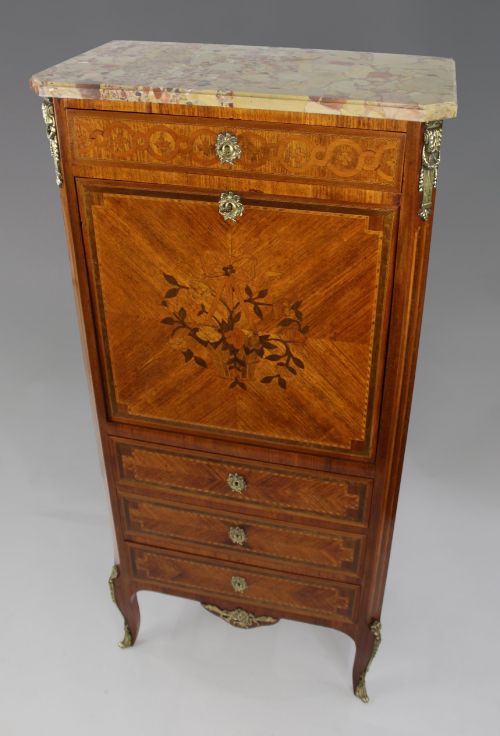
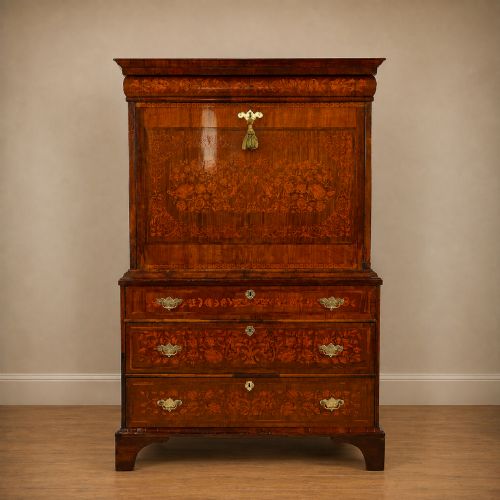
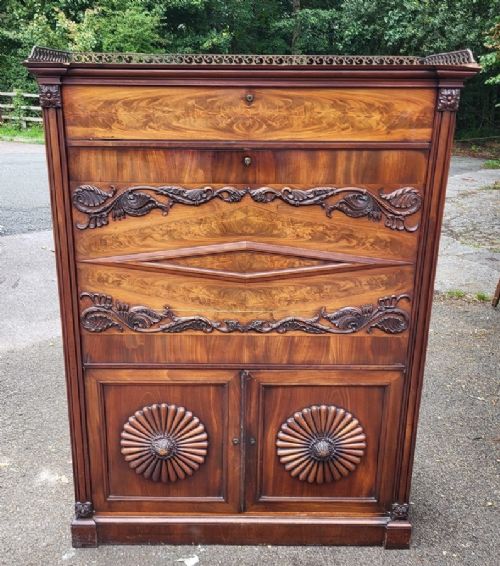
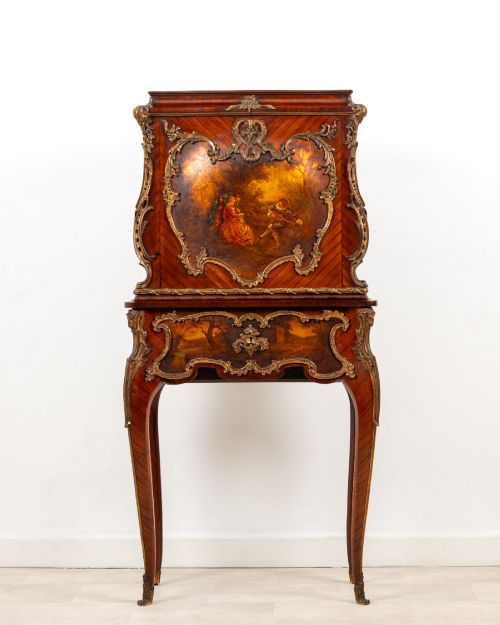
The pieces appearing here range from compact oak and mahogany forms to heavily mounted French walnut, kingwood, and marquetry cabinets topped with marble. Buyers encounter both restrained Georgian iterations and ornate continental revival styles.
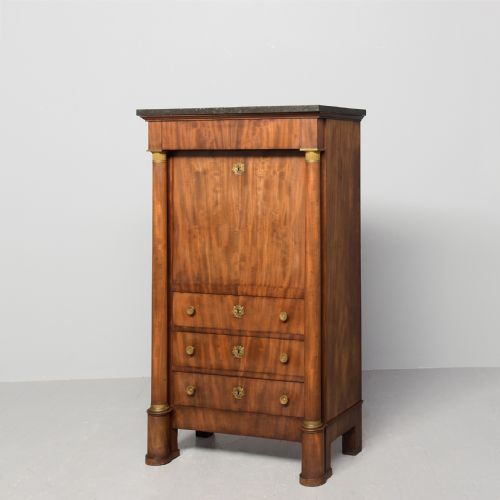
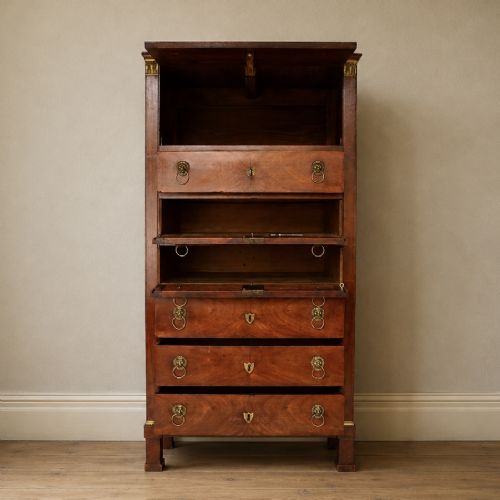
Early eighteenth-century walnut examples sit alongside nineteenth-century French Empire, Biedermeier, and later twentieth-century Art Deco desks, demonstrating how cabinetmakers adapted the drop-down writing surface across successive design movements.
Craftsmanship and Proportion
Quality reveals itself in the selection of timber veneers and the precision of the marquetry or parquetry patterns across the fall front panel. Superior pieces align grain continuity carefully when the drop-down desk is closed.
Interior architecture distinguishes standard production from finer cabinetwork, particularly in the complexity of secret compartments, small drawers, and pigeonholes fitted behind the fall front. The integration of cast ormolu mounts and heavy marble tops also marks the distinction between workshop tiers.
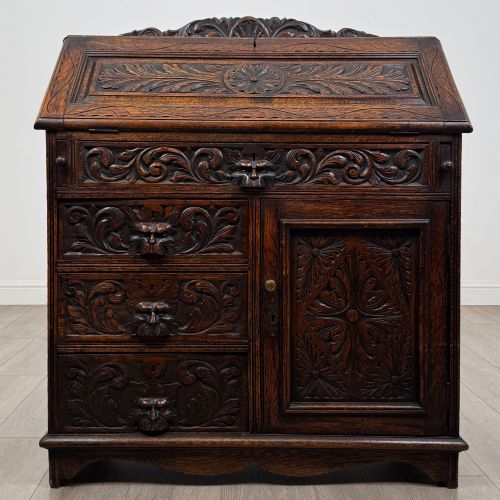
Green Men peer unexpectedly from Victorian oak panels.
Blake
The Fall Front Secretaire Glossary
- Secretaire abattant
- A tall, upright desk featuring a hinged fall front panel that drops to form a writing surface. This continental form frequently incorporates a marble top and concealed upper drawers.
- Escritoire
- A writing cabinet or desk used for correspondence. The term often describes pieces with a fall-down writing flap.
- Marquetry
- Decorative inlay work using various coloured woods, veneers, and sometimes bone or ivory to create pictorial or floral patterns. Master craftsmen arranged these veneers to produce elaborate surface designs.
- Ormolu
- Gilded bronze ornamentation applied to furniture mounts and decorative hardware. It provides a bright metallic contrast against dark woods like mahogany and kingwood.
- Parquetry
- Geometric mosaic woodwork formed by small pieces of veneer arranged in patterns such as cubes or chequers. This technique decorates the exterior surfaces of many continental writing cabinets.
Fall Front Secretaire: Frequently Asked Questions
What is a fall front secretaire?
A fall front secretaire is a cabinet with a hinged writing flap that opens outward to provide a horizontal desk surface. Behind this panel lie small drawers and compartments designed for stationery and documents.
These pieces served as private writing desks in bedrooms, libraries, and parlours. The drop-down front allowed owners to conceal their correspondence and writing materials when not in use.
How do I date a secretaire?
Dating relies on identifying the primary wood timbers, construction techniques, and stylistic markers. Eighteenth-century examples often feature figured walnut or mahogany with brass hardware, while nineteenth-century pieces embrace French Empire, Biedermeier, or Victorian revival aesthetics.
Examining secondary woods inside the drawers and the style of the dovetail joints helps confirm the period. Ormolu mounts and marble tops typically indicate continental European manufacture during the nineteenth century.
Where should I place one?
These upright writing cabinets suit home offices, living rooms, and bedrooms because their vertical profile occupies minimal floor space. The enclosed desk compartment keeps stationery and laptops out of sight when the room is used for relaxing.
Ensure the room maintains stable humidity levels, particularly for veneered and marquetry surfaces. Placing the cabinet away from direct sunlight protects polished wood finishes from fading over time.
How do I maintain the wood?
Routine maintenance involves dusting with a soft, dry cloth to prevent particulate buildup on polished timber surfaces. Applying appropriate wax periodically nourishes mahogany, walnut, and rosewood veneers without damaging the finish.
Avoid using modern liquid polishes or silicone sprays, which can penetrate porous historic timbers and degrade the patina. Keeping the cabinet away from direct heat sources prevents the wood and veneer from drying and splitting.