





Bombe Writing Desk
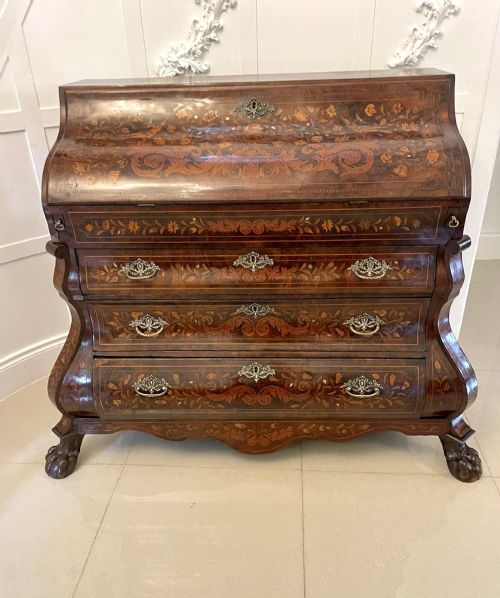
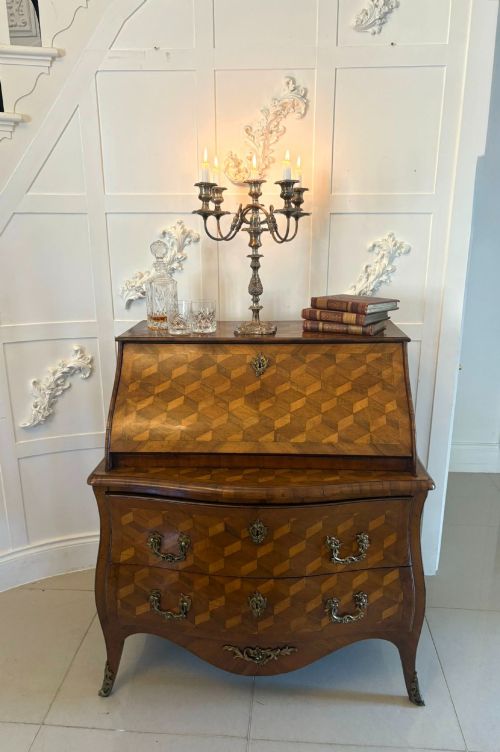
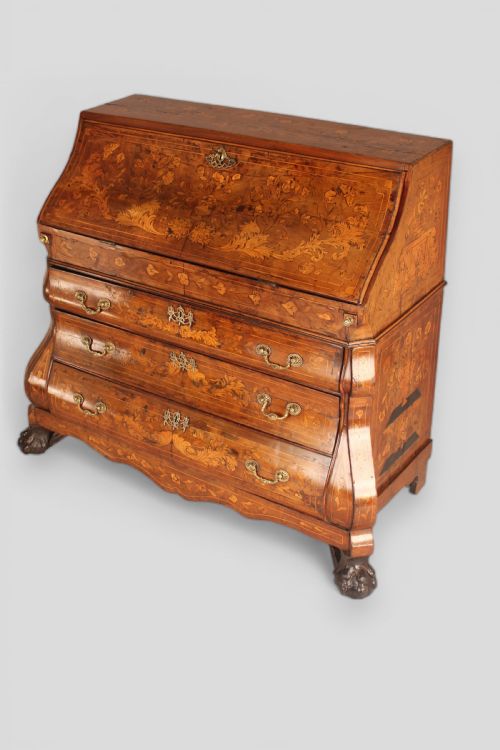
These bombe writing desk pieces bring sweeping curves and intricate marquetry into a room, offering both a practical workspace and a grand focal point.
Bombe Writing Desk
A bombe writing desk delivers an outward-swelling profile that defines its sculptural presence. You encounter these primarily in forms like bureaus, bureau bookcases, and secretaire a abattant desks.
The material palette leans heavily towards walnut and burr walnut, often enriched with floral marquetry and fruitwood inlay. Pieces originate predominantly from eighteenth-century and nineteenth-century periods, capturing Dutch Baroque, Rococo, and Georgian styles.
Many examples combine the sloped writing flap with tall bookcase superstructures or fitted interior compartments. Their distinctive swelling fronts set them apart from standard flat-fronted antique desks.
What varies in quality
The refinement of the marquetry and the choice of burr veneer set superior examples apart from simpler iterations. Crisp execution in the swelling wood curves demonstrates the skill of the original cabinetmaker.
Proportion and the integration of the upper bookcase section relative to the bulbous lower base dictate visual balance. Finer pieces maintain tight joints and sophisticated interior compartments behind the writing flap.
Some bureau interiors hide tiny secret compartments designed for stashing love letters and small valuables.
Morison of Edinburgh
The Bombe Writing Desk Glossary
- Bombe
- A bulging or swelling contour found on the front and sides of furniture. This undulating form requires advanced woodworking skill to shape accurately from solid timber and veneer.
- Marquetry
- Decorative patterns formed by fitting together thin slices of wood, shell, or ivory into a veneer. Artisans use fruitwoods to create intricate floral designs across drawer fronts and writing flaps.
- Bureau
- A desk featuring a sloping hinged lid that opens to reveal a fitted writing surface and small pigeonholes. It often sits atop a chest of drawers.
- Parquetry
- Geometric mosaic woodwork used for floors and furniture surfaces. It relies on repeating angular shapes rather than the curved pictorial designs of marquetry.
- Escutcheon
- A flat plate of brass surrounding a keyhole. It protects the surrounding wood from wear and adds a decorative metallic accent.
Bombe Writing Desk: Frequently Asked Questions
How do I use a bombe writing desk?
Lower the hinged writing flap to reveal the interior pigeonholes and small drawers, creating a stable surface for correspondence or reading.
The enclosed compartments keep stationery and small items neatly organised when the desk is closed up after use.
Where should I place a bureau bookcase?
Position the taller bureau bookcase variants against a sturdy wall where their height and swelling profile can anchor the room. Ensure adequate clearance for the drop-front writing surface to open fully.
Keep them away from direct sunlight and heat sources to protect the delicate burr walnut veneers and marquetry work.
What styles are common?
Dutch Baroque and Dutch Rococo dominate the selection, characterised by rich floral marquetry and dramatic swelling curves. Georgian and Rococo Revival styles also appear frequently among these desk forms.
The aesthetic leans towards ornate, sculptural woodwork with contrasting fruitwood inlay.
How do I clean the wood?
Dust the surfaces regularly with a soft, dry cloth to prevent dirt buildup in the intricate marquetry crevices. Avoid modern chemical sprays that can strip or damage antique polishes.
Apply a quality furniture wax sparingly when the timber appears dry, buffing gently to maintain a soft natural sheen.