

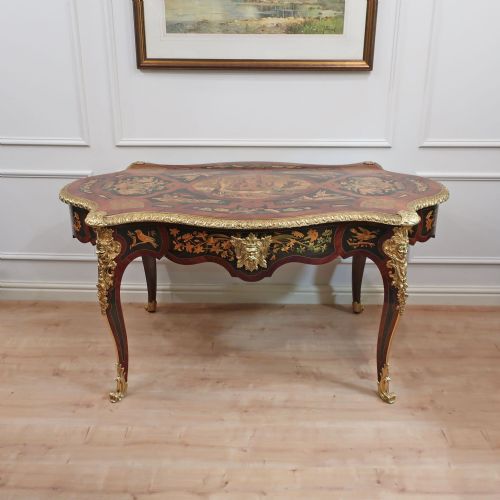
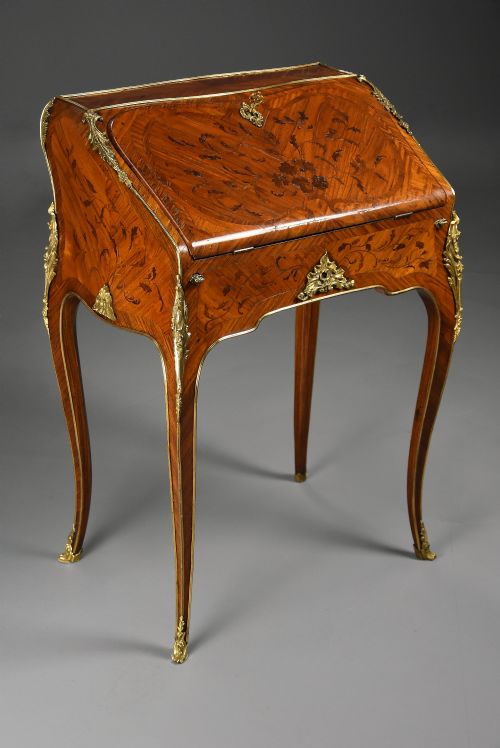


French Floral Marquetry Desk
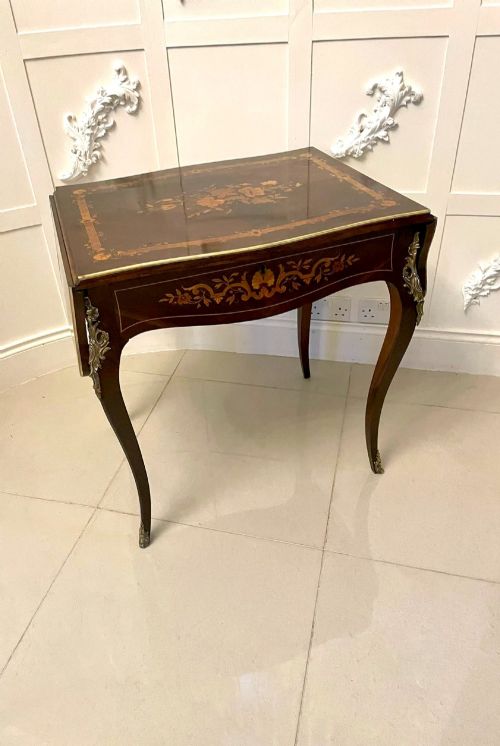
A french floral marquetry desk brings botanical veneers and serpentine forms together, offering an elegant surface for correspondence.
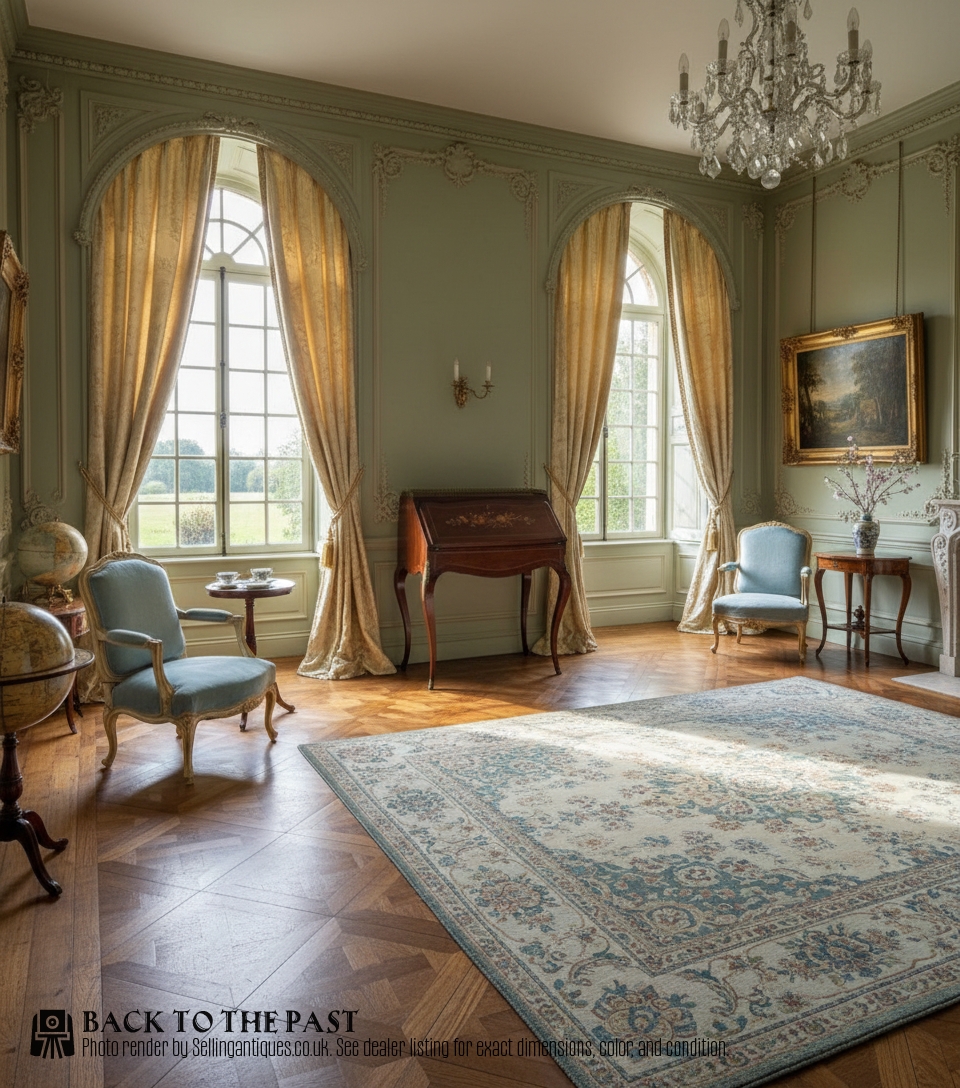
French Floral Marquetry Desk
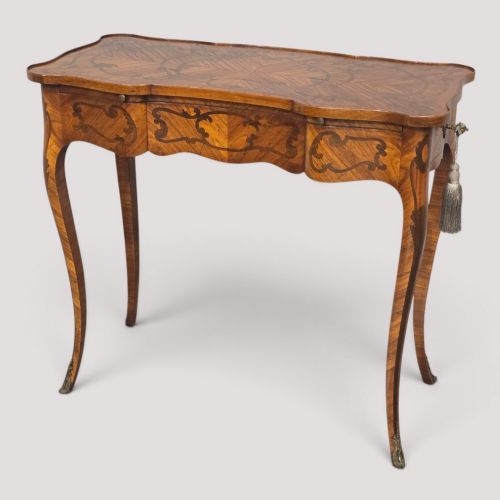
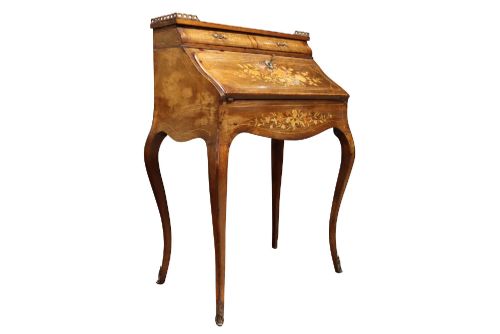
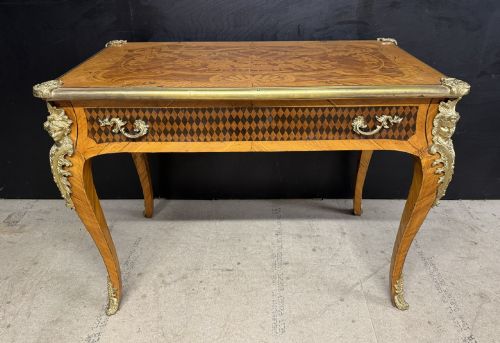
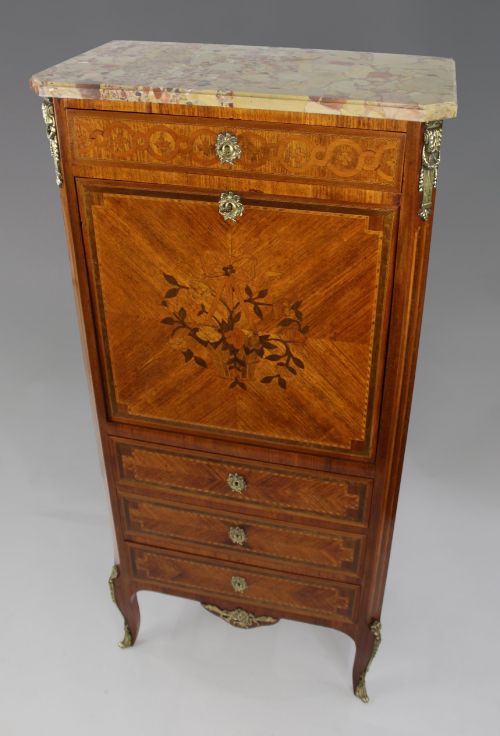
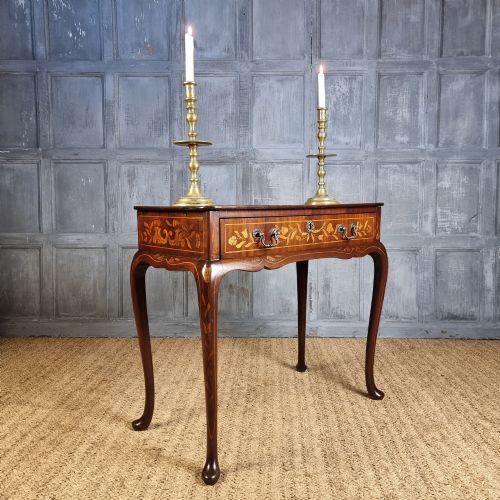
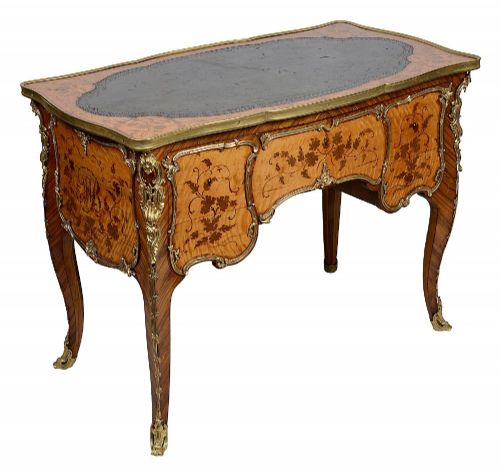
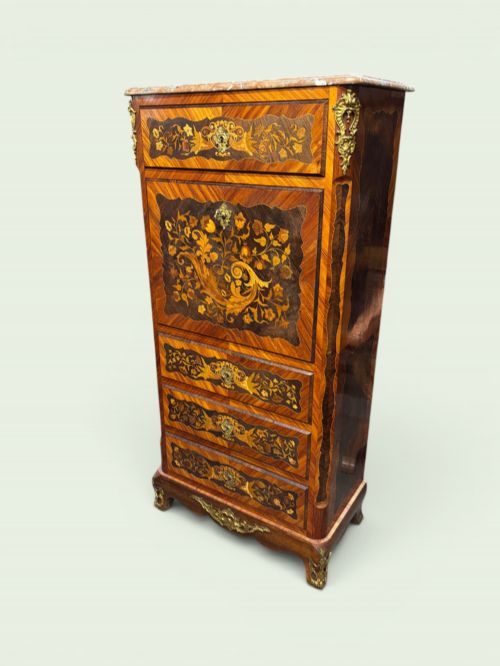
A french floral marquetry desk appears across several distinct forms in the listings, including bureau plat writing tables, slope-front bureau de dame writing desks, and vertical escritoire cabinets. These pieces span the nineteenth century and the early twentieth century, drawing heavily on Louis XV and Louis XVI revivals as well as Napoleon III aesthetics.
The version most commonly met on this page is the compact bureau de dame or the freestanding centre table, often constructed with delicate cabriole legs. Makers during these later periods frequently adopted eighteenth-century motifs, translating earlier court furniture into smaller domestic writing furniture.
Quality and execution
The distinction between tiers of quality rests upon the precision of the veneer cutting and the depth of the floral detailing. Finer examples display intricate shading within the petals and leaves, achieved by scorching veneer edges in hot sand before placement.
Hardware also signals the level of manufacture, as heavy, crisply chased ormolu mounts indicate superior workshop standards compared to lighter, uniform brass stampings.
Listings demonstrate a frequent use of rosewood and kingwood veneers paired with ormolu mounts across nineteenth-century revival writing furniture.
The French Floral Marquetry Desk Glossary
- Marquetry
- The art of forming decorative patterns by fitting together small pieces of wood veneer. This technique differs from inlay by assembling the entire design on a backing before applying it to the furniture surface.
- Ormolu
- Gilded bronze mounts applied to the angles and feet of furniture. The term derives from the French for ground gold.
- Bureau de Dame
- A small lady's writing desk, often featuring a sloping lid or a fitted interior with small drawers and pigeonholes. These are typically supported on slender cabriole legs.
- Secrétaire Abattant
- A tall vertical cabinet with a drop-down writing flap that conceals an internal arrangement of compartments. It presents a flat architectural front ideal for displaying larger marquetry panels.
French Floral Marquetry Desk: Frequently Asked Questions
What is a bureau plat?
A bureau plat is a flat-topped writing table designed to stand free in the middle of a room rather than against a wall. These tables typically feature three frieze drawers and a leather-lined writing surface.
In period interiors, they served as principal desks for correspondence and administration, offering finished decoration on all four sides.
How do I identify Louis XV style?
Louis XV style furniture is defined by asymmetrical curves, serpentine lines, and the absence of straight architectural members. Cabriole legs ending in scroll feet and floral marquetry motifs are prominent characteristics.
This aesthetic experienced a major revival during the nineteenth century, which accounts for many pieces produced in this manner.
What woods were used?
Cabinetmakers employed exotic and domestic hardwoods including rosewood, kingwood, walnut, satinwood, and fruitwood. These timbers provided the natural colour variations required to shade floral marquetry panels.
Carcass frames beneath the veneers were commonly constructed from sturdier secondary timbers like oak.