


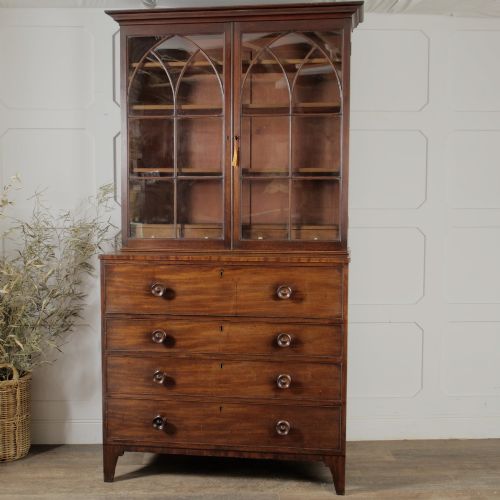
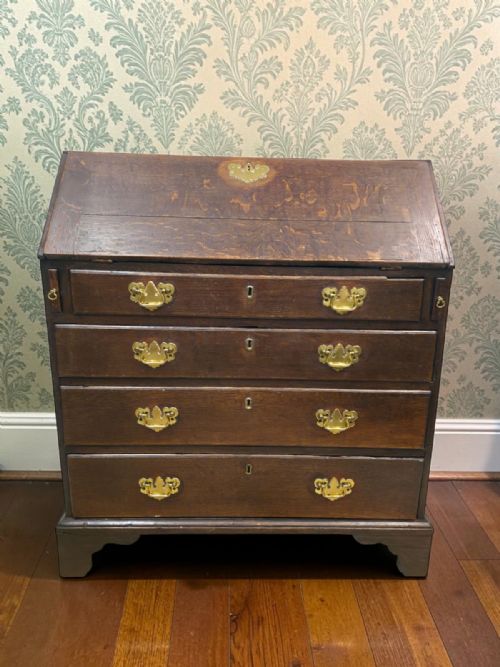
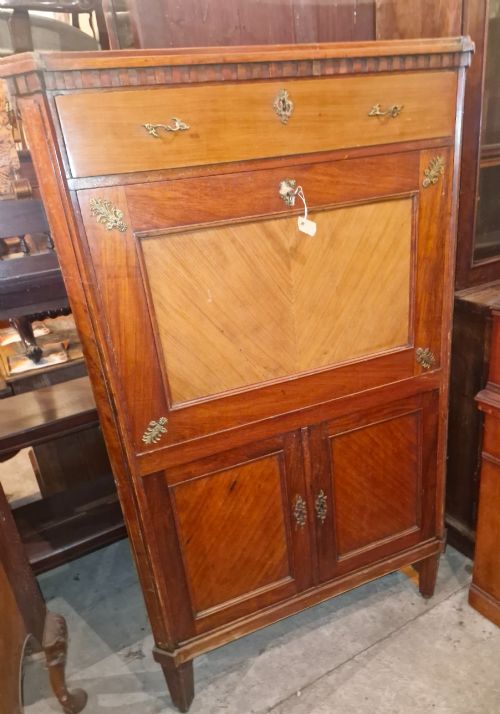
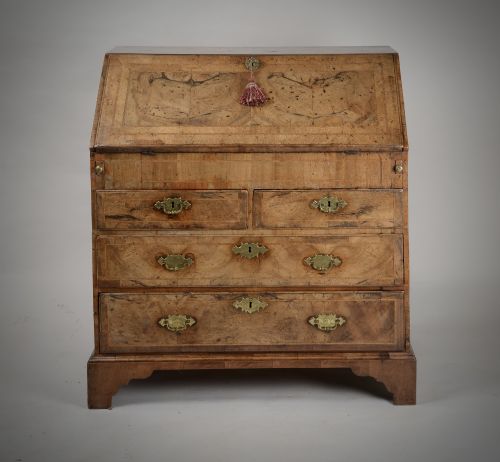
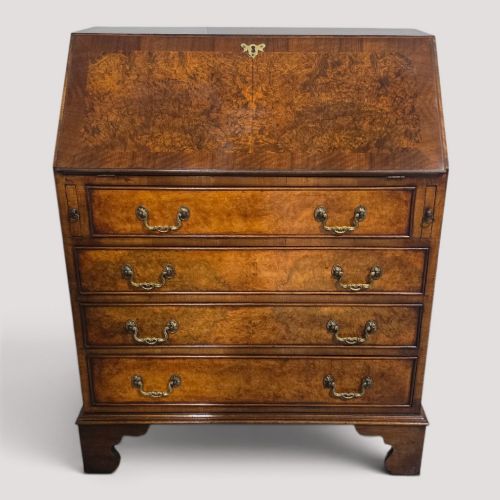
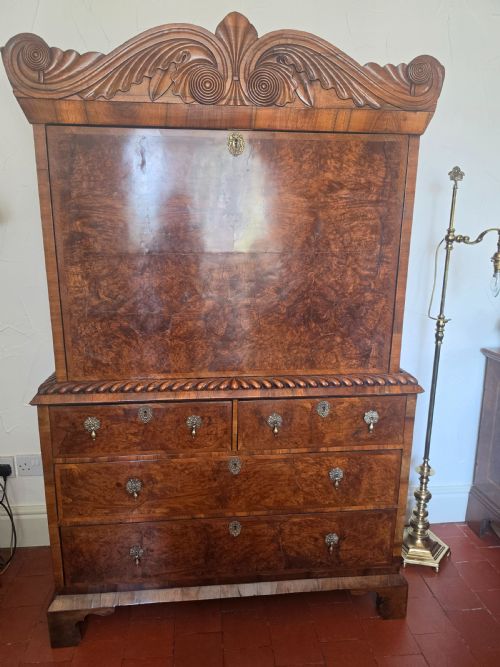
Fall Front Desk Chest
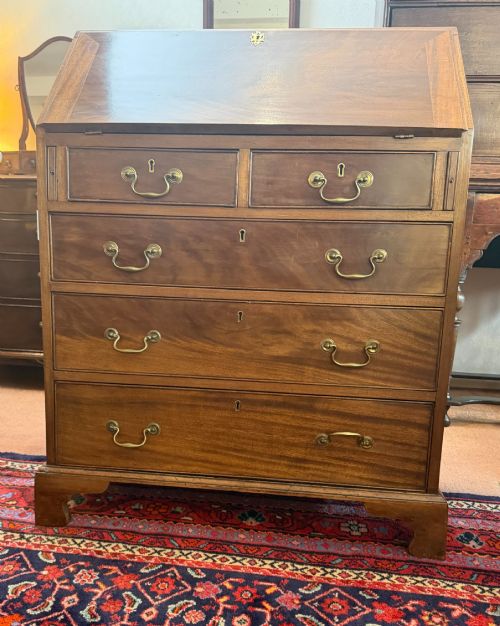
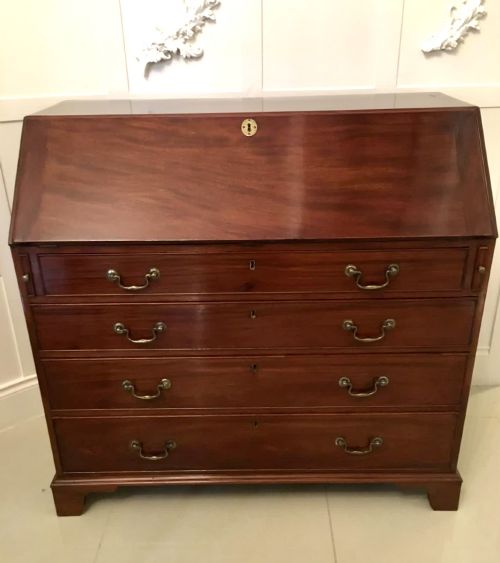
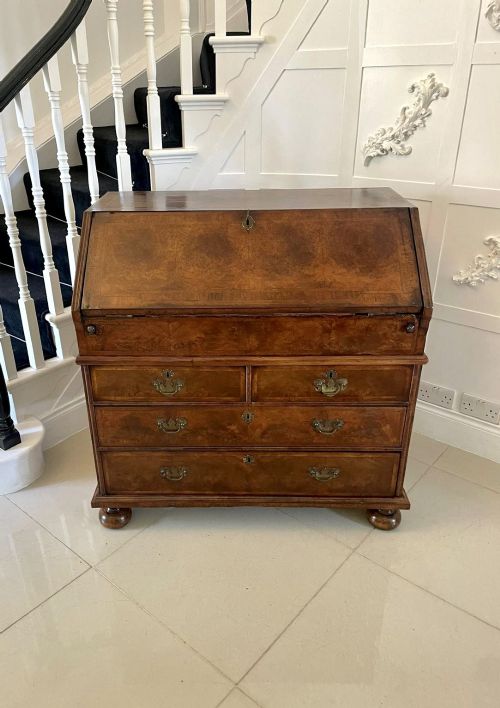
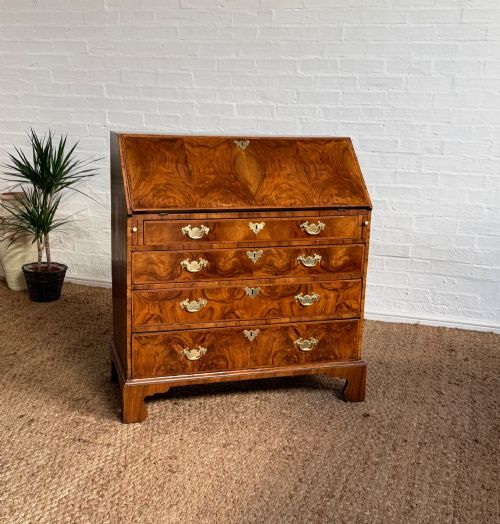
A fall front desk chest provides a sloping writing flap that drops down to reveal fitted internal compartments above rows of drawers.
Fall Front Desk Chest
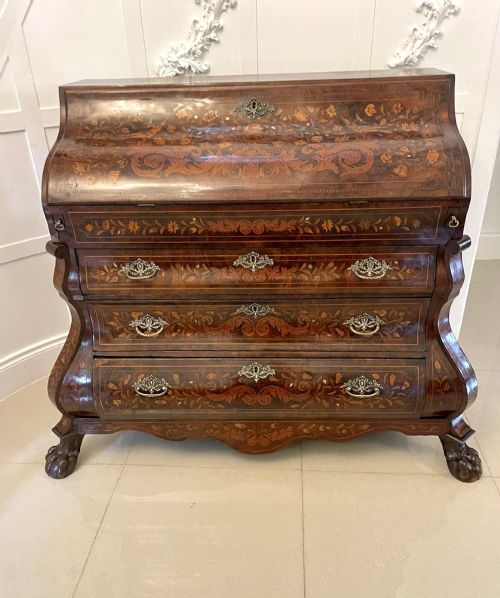
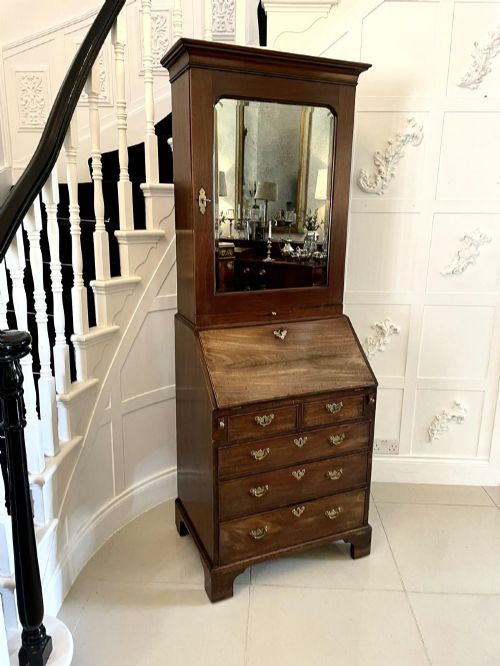
When buyers search for a fall front desk chest, they encounter a variety of forms designed primarily for correspondence and storage. The listings encompass pieces designated as bureaux, writing cabinets, escritoires, and bureau bookcases spanning several centuries.
The most common examples on this page date from the Georgian and eighteenth-century periods, constructed in timber with hinged writing flaps. These items integrate desks with drawer chests, serving as practical household furniture since earlier eras.
Materials and construction
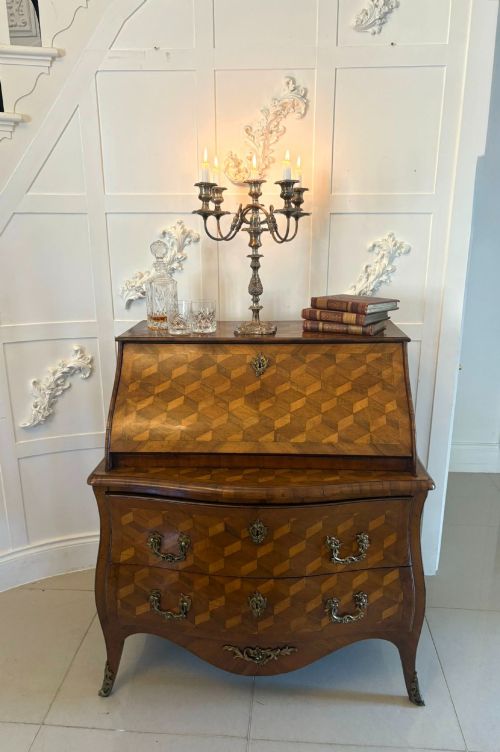
Cabinet makers utilised solid woods and veneers including walnut, mahogany, oak, and fruitwood over structural carcases. Marquetry, parquetry, and herringbone inlay feature across continental and English examples.
Fittings incorporate brass hardware, ironwork, and leather writing surfaces inset into the fall front flap. Glass panels appear in the upper sections of bookcase variations.
Materials span walnut, mahogany, oak, rosewood, satinwood, glass, leather, and brass.
Judging quality in fall front desk chests
The sophistication of the timber figure and the precision of the marquetry inlay determine the visual merit of each piece. Figured walnut and flame mahogany examples display careful grain selection across the fall front and drawer fronts.
Internal configuration complexity influences standing, particularly where small drawers, pigeonholes, and secret compartments remain intact. The presence of original ironwork or brass hardware contributes to authenticity.
The Fall Front Desk Chest Glossary
- Bureau
- A desk with a sloping hinged writing lid that covers internal pigeonholes and small drawers.
- Escritoire
- A writing cabinet or fall front desk, often raised on a stand or built above a chest of drawers.
- Bargueño
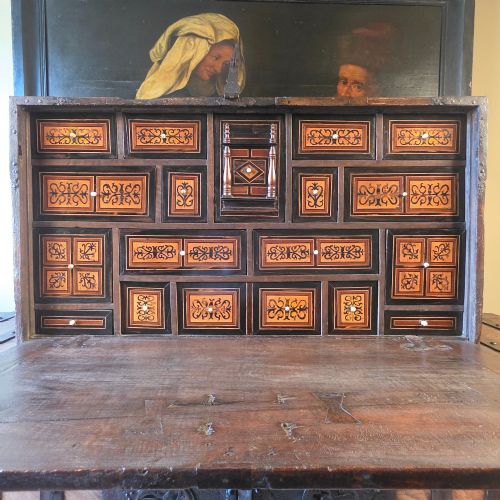
- A Spanish cabinet with a fall front enclosing numerous small drawers and compartments, originating in the sixteenth and seventeenth centuries.
- Bombe
- A swelling or convex outward shape characteristic of continental furniture from the baroque and rococo periods.
- Secretaire
- A piece of furniture containing a drawer or compartment that pulls out or folds down for writing.
Fall Front Desk Chest: Frequently Asked Questions
What is a fall front desk chest?
A fall front desk chest combines a writing surface with drawer storage by incorporating a hinged flap that pulls down for correspondence.
Inside the drop-down flap, makers constructed nested arrangements of small drawers and pigeonholes for stationery.
How do I date an antique bureau?
Dating relies on examining the construction methods, timber species, and decorative styles visible across the piece.
Earlier examples from the seventeenth and early eighteenth centuries frequently employ walnut and marquetry, whereas later Georgian periods favour mahogany.
What timber was used for these desks?
Cabinet makers predominantly selected hardwood timbers such as walnut, mahogany, and oak for stability and appearance.
Finer examples incorporate burr walnut, rosewood, satinwood, or fruitwood veneers arranged in geometric patterns.
Where were fall front desks placed?
These pieces functioned as private writing stations and storage chests within principal rooms of domestic residences.
Escritoires and bureau bookcases often stood in studies, libraries, or parlours where correspondence took place.