


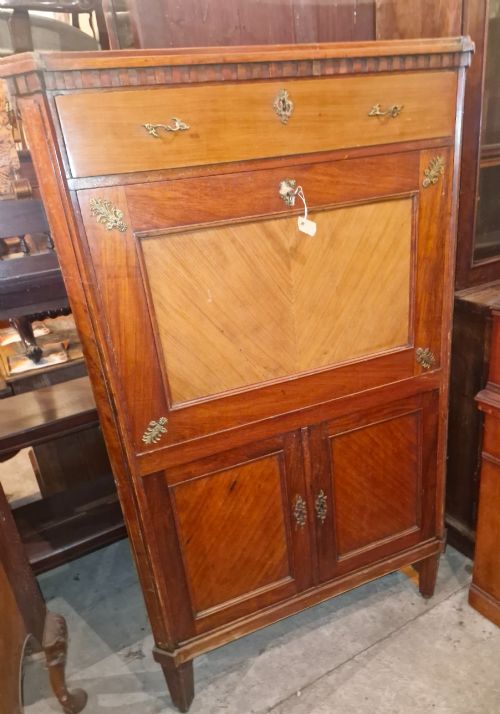
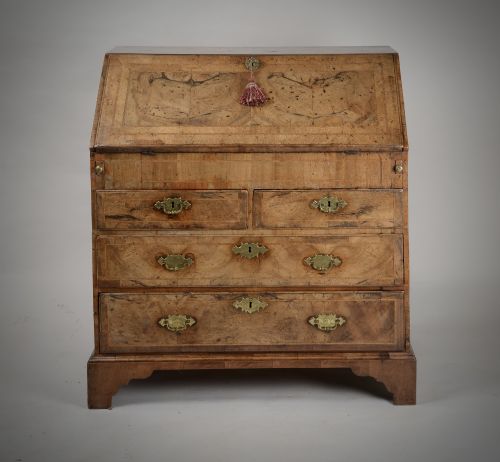
Fall Front Chest
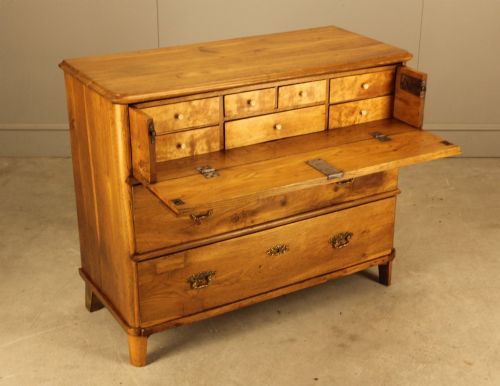
When you search for fall front chest, you are looking at practical writing furniture where a hinged writing flap conceals internal compartments.
Fall Front Chest
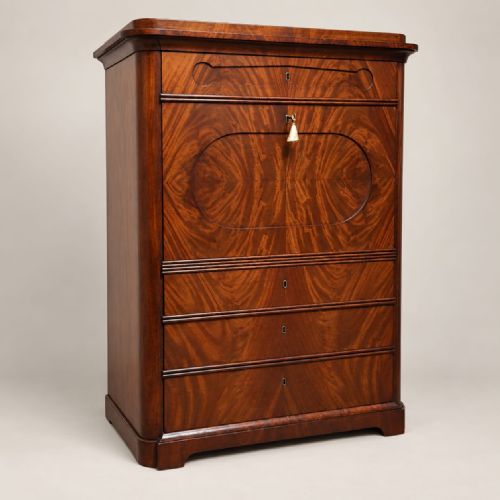
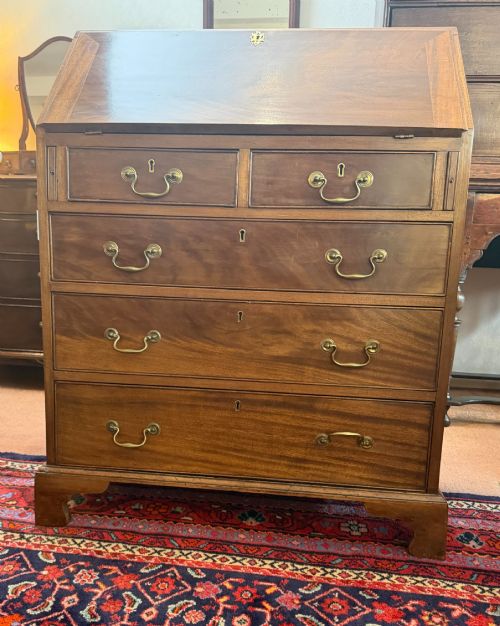
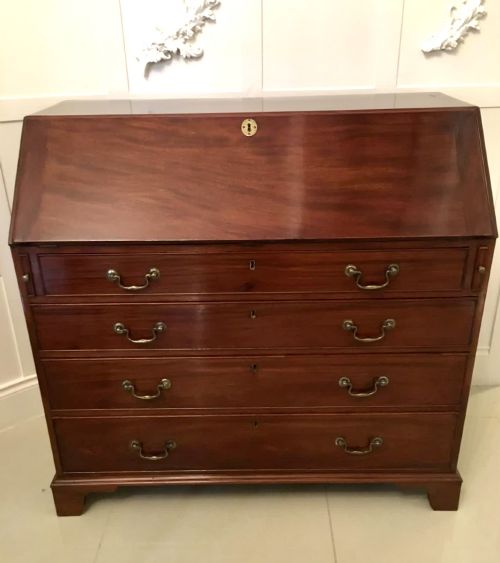
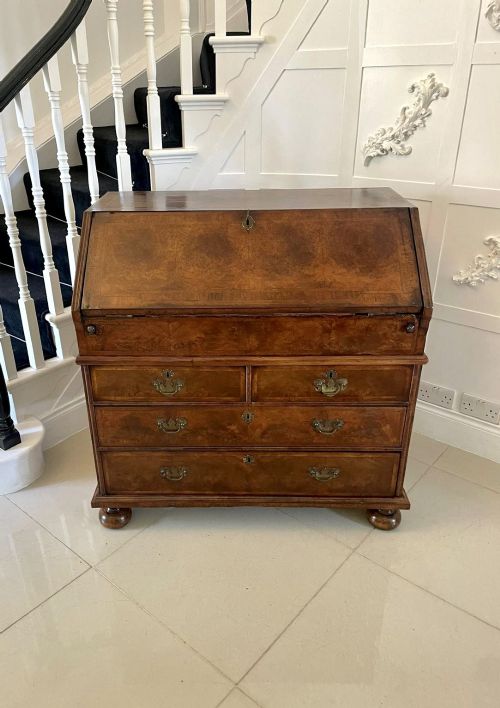
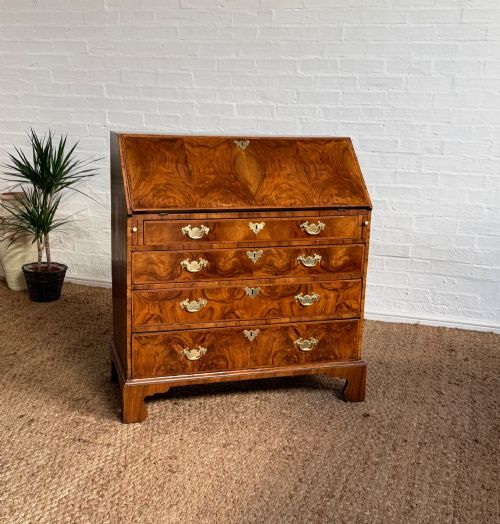
A fall front chest provides a concealed writing surface by dropping down a hinged panel at the front of the piece. The pieces matching this search phrase include walnut and mahogany bureaux, escritoires, and cabinet forms dating from the seventeenth century through to the twentieth century.
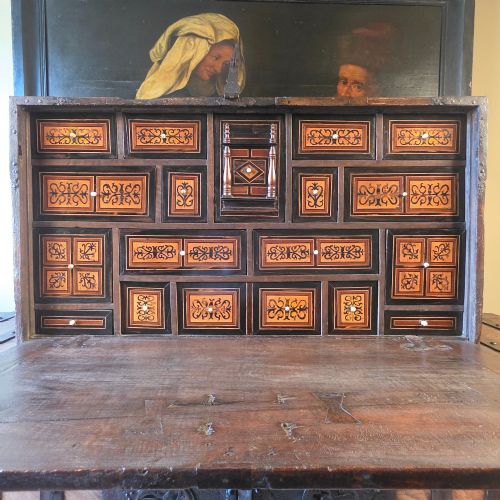
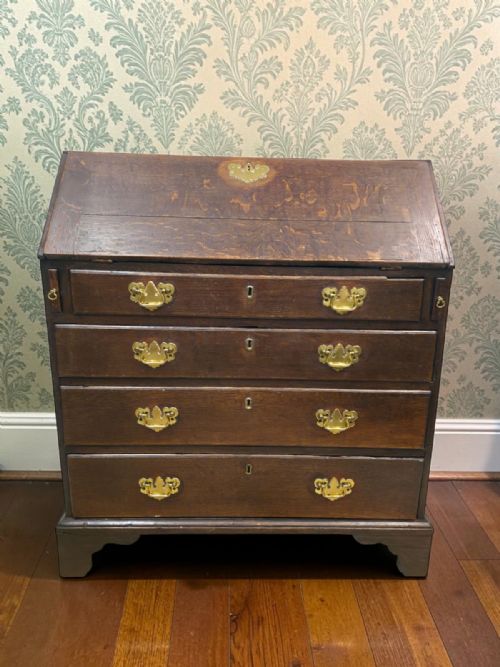
The versions most commonly met on this page are Georgian and eighteenth-century oak and mahogany bureaux alongside walnut escritoires. These examples often feature fitted interiors with small drawers and pigeonholes designed for correspondence.
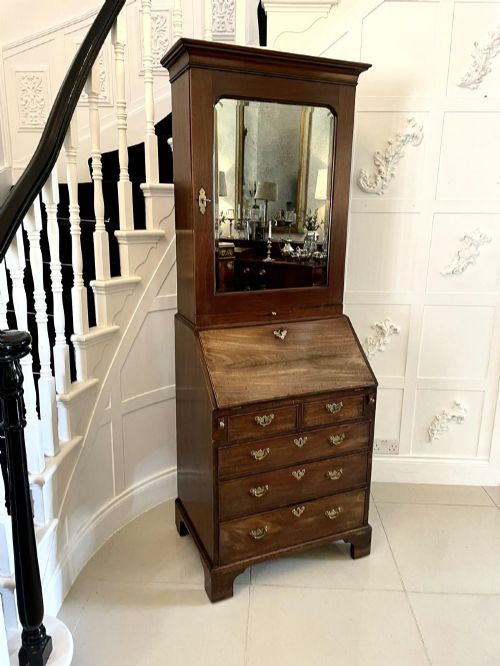
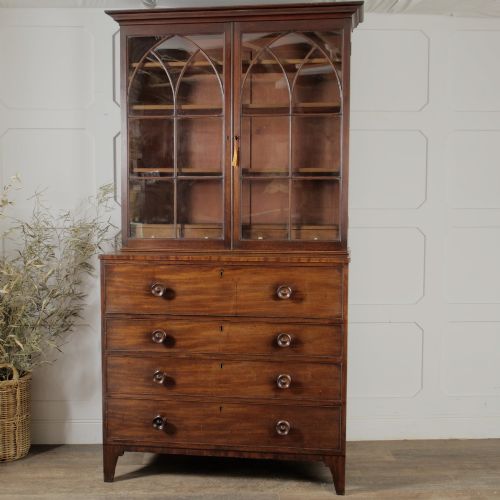
Buyers also encounter taller variations such as bureau bookcases and secretaire chests on chest, which combine the drop-front writing compartment with upper shelving or additional lower drawers.
Construction and Materials
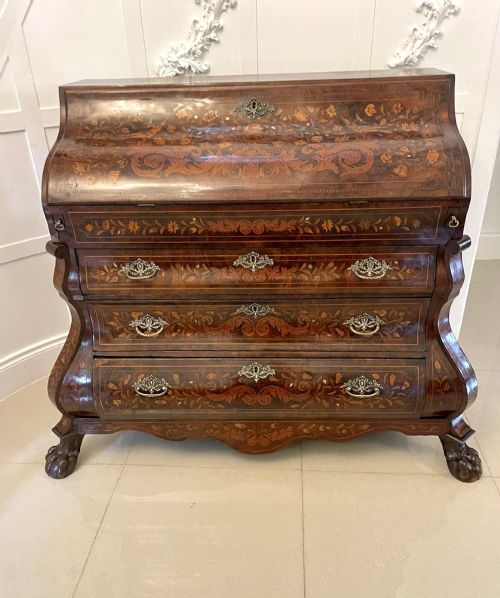
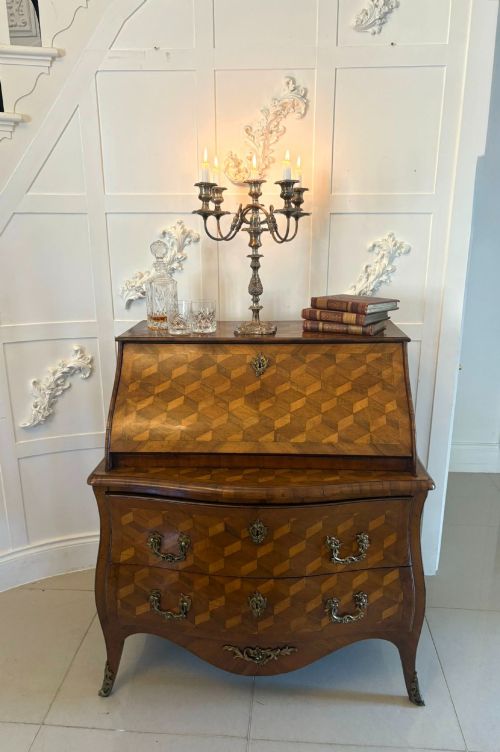
Cabinetmakers constructed these pieces using solid timbers such as oak, walnut, and mahogany, frequently applying figured veneer and marquetry decoration to the primary exterior surfaces. Crossbanding and herringbone inlay appear on walnut surfaces to create geometric borders.
Internal components incorporate secondary softwoods and hardwoods, whilst brass hardware including drop handles and escutcheons secures the drawers and fall front flap. Leather inserts occasionally line the drop-down writing surface.
The listings span multiple centuries, ranging from seventeenth-century walnut cabinets to twentieth-century oak and mahogany desks.
Judging Quality
Quality rests in the selection of wood grain, such as figured walnut or flame mahogany, and the precision of the cabinetwork in the internal drawers. Well-executed marquetry and parquetry patterns demonstrate high craftsmanship.
The integrity of the original hinges, operational smoothness of the fall-front support brackets, and preservation of the internal fittings separate superior examples from altered pieces.
The Fall Front Chest Glossary
- Bureau
- A writing cabinet featuring a sloping or vertical fall front that opens to reveal compartments for papers and writing materials.
- Escritoire
- A tall writing cabinet or desk, originating in the seventeenth century, equipped with a fall-front writing flap and internal drawers.
- Marquetry
- Decorative veneer work using various coloured woods arranged in floral or geometric patterns across the surface.
- Secretaire
- A piece of furniture containing a drawer or cabinet section with a drop-down front designed for writing.
- Bargueño
- An ornate Spanish cabinet featuring a fall-front writing flap and numerous internal drawers, typically resting on a stand.
Fall Front Chest: Frequently Asked Questions
What is a fall front chest?
A fall front chest is a piece of furniture featuring a hinged panel that folds down to create a writing surface. Behind this flap lie small drawers and compartments for letters.
These pieces combine storage drawers below with a compact desk space above, making them suitable for domestic writing use.
How do I date an antique bureau?
Dating relies on timber choices, construction methods, and hardware styles. Early seventeenth and eighteenth-century examples frequently use walnut and oak with hand-cut dovetails.
Later nineteenth-century pieces often incorporate mahogany or rosewood alongside machine-sawn components and different internal configurations.
Where should I place a fall front chest?
These pieces suit living rooms, studies, or bedrooms where their compact writing surface functions effectively. Adequate clearance must be provided in front for the flap to lower fully.
Keeping them away from direct sunlight and heat sources protects the timber veneers and leather inserts from drying out.