

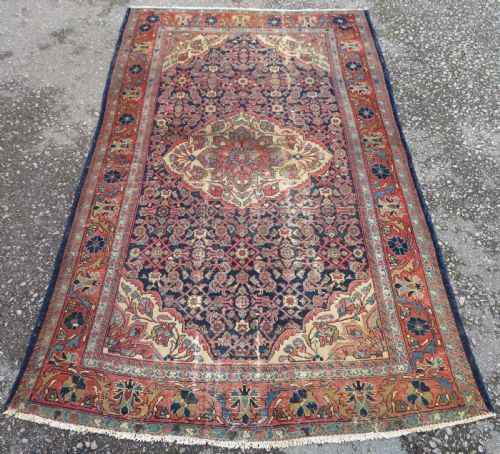
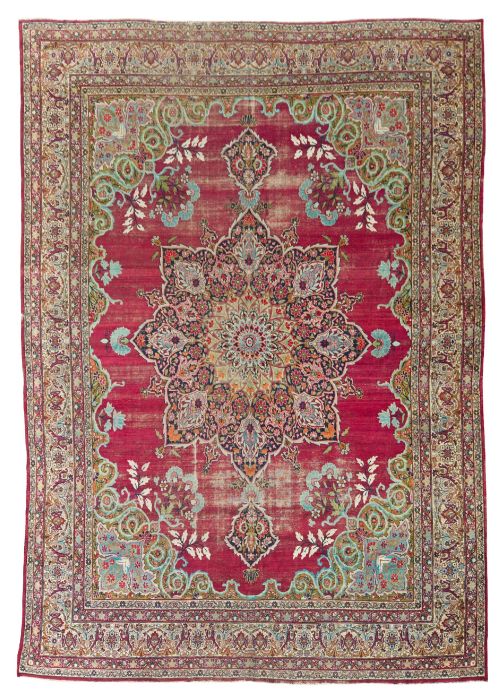


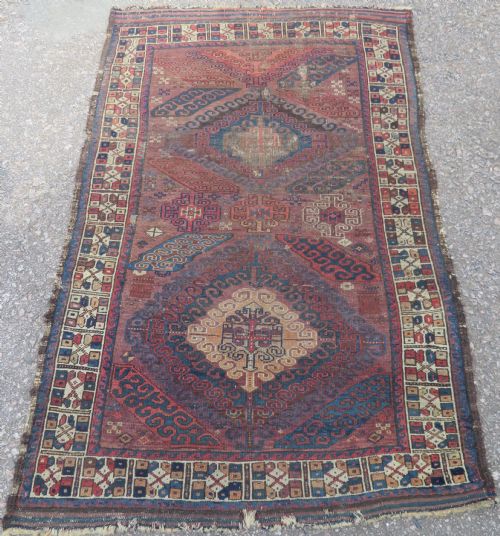

Faded Persian Area Carpet
A faded Persian area carpet brings centuries of nomadic and court weaving traditions into a modern room with a softened, muted palette.
Faded Persian Area Carpet
When you search for a faded Persian area carpet, you encounter floor coverings originating from workshops and tribal regions across Iran, dating from the late nineteenth century into the early decades of the twentieth century. These pieces carry traditional motifs and medallion designs that have weathered decades of sunlight and use, resulting in the muted tones prized in contemporary interiors.
The selections available here showcase distinct regional styles such as Kirman, Tabriz, Ziegler, Sarouk, Ushak, Khamseh, and Qashqai. These vary in scale from intimate scatter sizes to large room dimensions, accommodating different architectural spaces while retaining their historical character.
How they were made
The construction of these floor coverings relies on durable natural foundations, utilising wool for the pile and cotton for the warp and weft threads. Weavers knotted the wool pile by hand onto the cotton base, creating resilient structures designed to withstand generations of daily wear.
Dye techniques combined natural substances to produce deep saturated colours that soften gradually over time rather than fading harshly. The resulting textiles display tonal shifts across the pile, influenced by exposure and the organic nature of early dye batches.
Faded Persian Area Carpet Retail Price Guide 2026
Typical asking prices for faded persian area carpet among the pieces listed under this phrase on Sellingantiques today, from the lower quarter to the upper quarter. They describe what is for sale here now, not the wider market.
The listings feature pieces spanning from the late nineteenth century to the early twentieth century, constructed from wool and cotton.
What varies in quality
Quality in these woven works rests upon knot density, the precision of the drawing within the medallion or all-over field, and the integrity of the foundation. Finer knotting permits more intricate curvilinear patterns to hold their definition even as the pile wears thin.
The balance of the composition and the harmony of the secondary colours during the ageing process also distinguish exceptional examples. Even when distressed, a superior piece maintains structural soundness in the cotton foundation and selvedges.
The Faded Persian Area Carpet Glossary
- Medallion
- A central ornamental motif placed in the middle of the carpet field. This design element often anchors symmetrical floral or geometric schemes.
- Warp
- The stationary vertical threads stretched lengthwise on the loom that carry the weight of the rug. Cotton warps provide stability and straight edges.
- Weft
- The horizontal threads passed alternately over and under the warp threads between rows of knots. They bind the knotted rows firmly together.
- Pile
- The upright cut ends of the knotted yarn that form the usable surface of the carpet. Its thickness and material determine the texture underfoot.
- Selvedge
- The reinforced side edges of a carpet formed by wrapping the outermost warp threads. This finishing prevents the sides from fraying.
Faded Persian Area Carpet: Frequently Asked Questions
How do I clean an antique Persian rug?
Maintenance requires gentle vacuuming without a rotating brush bar to protect the aged pile. Professional specialist cleaning remains essential for removing deep dust without damaging the cotton foundation or antique dyes.
Water exposure should stay strictly limited, and chemical spot cleaners must be avoided entirely. Prompt action by a textile conservator prevents permanent staining from accidental spills.
Will a faded carpet shed its wool?
Initial light shedding can occur with older wool pile as loose fibres work their way to the surface. This process diminishes naturally with careful regular maintenance.
Excessive shedding indicates brittle or compromised wool fibres resulting from age and wear. Assessing the remaining pile helps determine if conservation steps are necessary.
Can I place these rugs in bright rooms?
Sunlight exposure contributes to the faded aesthetic that defines these textiles, softening the original madder reds and indigo blues. Placing them in bright areas continues this natural ageing process gradually.
Rotating the rug periodically ensures even exposure to light and foot traffic across the field. Heavy direct sun may accelerate wear on particularly thin sections of the pile.
How do I identify different regional styles?
Regional attribution relies on examining the specific knotting structure, palette choices, and drawing characteristics within the field. Workshops in towns like Tabriz or Kirman display refined curvilinear floral patterns, while tribal groups such as the Qashqai favour geometric and angular motifs.
The choice of foundation materials and edge finishes also provides clues to geographic origins. Comparing border guards and secondary motifs helps separate city workshop pieces from village productions.