

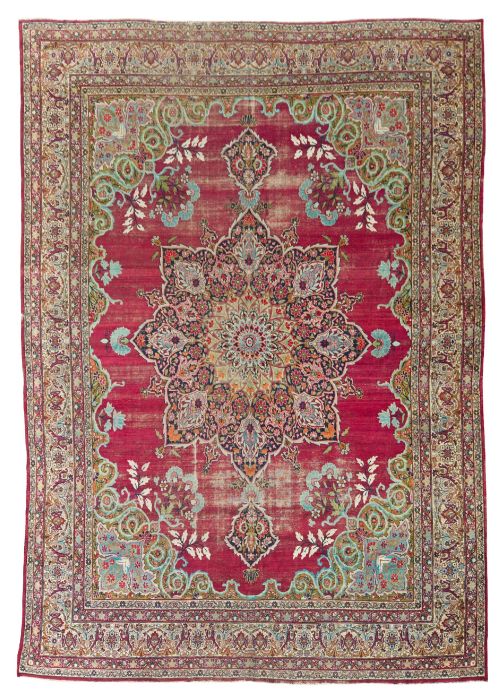
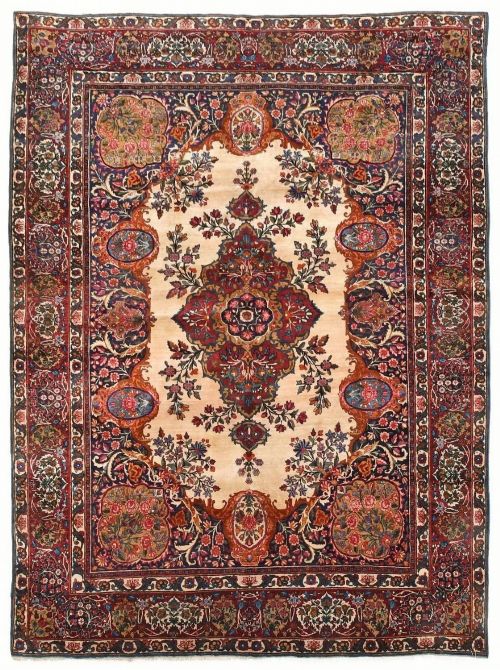
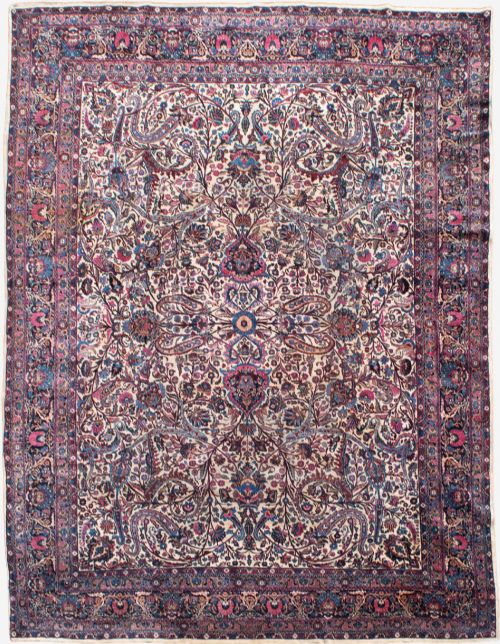


Antique Kirman Medallion Rug
An antique kirman medallion rug brings Persian knotwork into a room, offering the large-scale floral patterns and room-filling presence that collectors prize.
Antique Kirman Medallion Rug
An antique kirman medallion rug represents the traditional weaving output of south-central Persia, appearing here in formats ranging from modest area sizes to room-scale carpets. These floor coverings emerged across several decades spanning the late nineteenth century into the mid-twentieth century, recording the shifts in workshop production from 1870 through to 1940.
The pieces listed on this page run from substantial room-size carpets down to runners and smaller rugs, carrying the distinct regional aesthetic of Kirman. Buyers meeting these examples will encounter traditional Persian formats designed primarily for domestic ground cover.
The geographical attribution points directly to Persian provenance, with specific variants like Lavar Kirman appearing among the larger formats. These carpets demonstrate the enduring output of master weavers working within established regional traditions.
Materials and construction
The physical structure relies upon natural textiles, combining wool pile with cotton foundations to achieve the required drape and durability. Weavers knotted the wool pile onto sturdy cotton warps and wefts, creating a dense surface capable of absorbing rich dye work.
These floor coverings utilise time-honoured Persian techniques executed on vertical looms, allowing workshops to produce everything from compact runners to massive room-size dimensions exceeding four metres in length.
Antique Kirman Medallion Rug Retail Price Guide 2026
Typical asking prices for kirman medallion rug among the pieces listed under this phrase on Sellingantiques today, from the lower quarter to the upper quarter. They describe what is for sale here now, not the wider market.
The inventory records pieces spanning from 1870 to 1940, constructed entirely from wool and cotton across diverse dimensions.
Qualities of distinction
The upper tier of these textiles displays greater crispness in the central medallion and surrounding floral motifs, reflecting finer knot density and superior preparation of the wool. Patination tells a story of age, but the degree of wear distinguishes a well-preserved piece from one that has lost its structural integrity.
Proportions also dictate the character of the piece, with exceptionally long narrow runners requiring specific architectural settings compared to square room-size carpets. The handling of the wool and the clarity of the underlying cotton foundation separate standard commercial weaving from superior workshop production.
The Antique Kirman Medallion Rug Glossary
- Medallion
- A central ornamental motif forming the focal point of the carpet design. This prominent geometric or floral ornament anchors the entire compositional layout.
- Pile
- The upright yarn loops that form the usable surface of the rug. This wool layer dictates the texture and comfort underfoot.
- Warp
- The longitudinal threads stretched tightly on the loom before weaving begins. Cotton warps provide the foundational skeleton for these Persian carpets.
- Weft
- The transverse threads passed horizontally through the warps to bind the knots in place. These horizontal elements secure the structural grid of the weave.
- Runner
- A long, narrow carpet format intended for hallways and corridors. Such pieces depart from standard room-size proportions to fit specific architectural spaces.
Antique Kirman Medallion Rug: Frequently Asked Questions
How do I place a large antique kirman carpet?
Room-size examples anchor sitting rooms or dining spaces, where their substantial dimensions allow furniture to sit comfortably upon the field. Ensure the central medallion aligns with the main axis of the room to maintain visual balance.
Smaller formats and runners suit hallways or secondary spaces, providing durable floor cover without overwhelming the surrounding interior architecture.
What defines a lavar kirman?
The term points to specific production associated with the Kirman region, traditionally noted for exceptionally fine knotting and refined wool quality. These pieces often display intricate floral compositions executed with notable precision.
Examples carrying this designation represent the higher echelons of nineteenth-century Persian workshop output.
How should I care for wool pile?
Vacuum gently using a suction-only attachment without the rotating brush bar, which can catch the wool fibres. Keep the carpet out of direct, prolonged sunlight to protect the natural dyes from fading.
Professional cleaning suited to antique textiles ensures the cotton foundation remains stable over decades of domestic use.
How can I tell the age of these rugs?
Dating relies upon structural characteristics, material handling, and stylistic indicators rather than a single definitive marker. Pieces from the late nineteenth century often display different dye chemistry and wear patterns compared to those produced in the nineteen-thirties or forties.
Examining the tightness of the weave and the preparation of the cotton foundation offers clues to the era of production.