
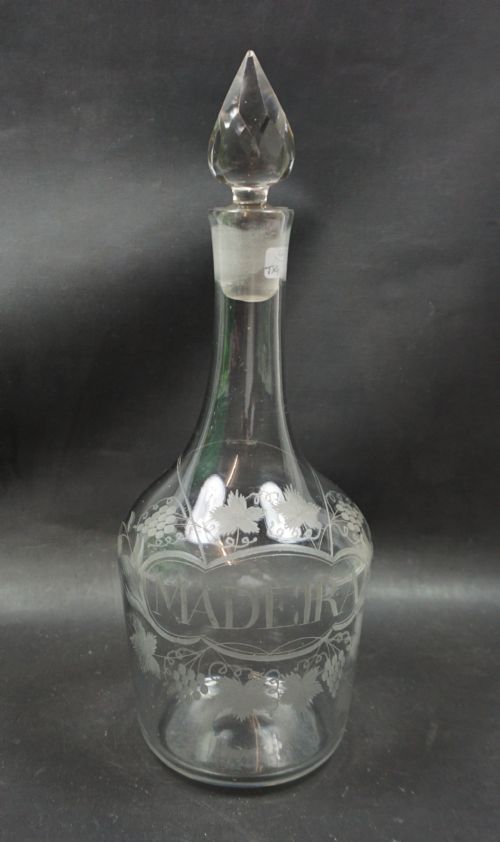

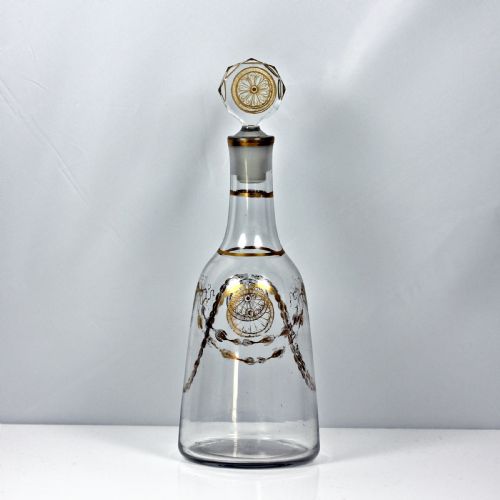


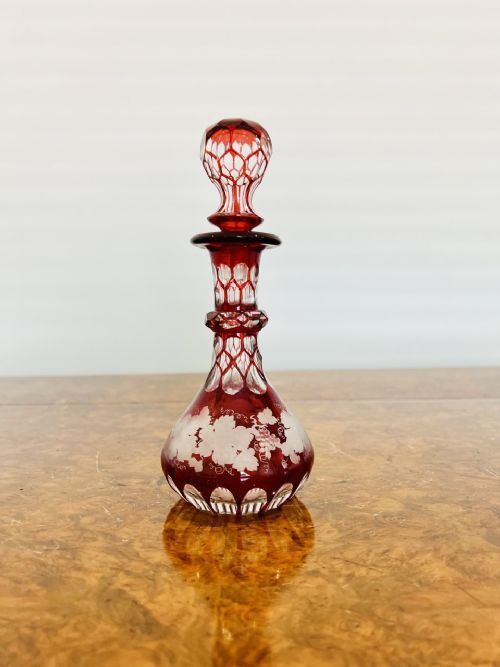


Faceted Glass Stopper
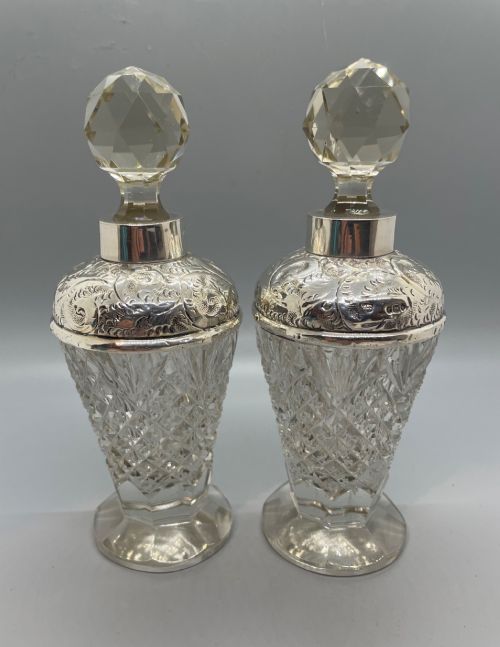
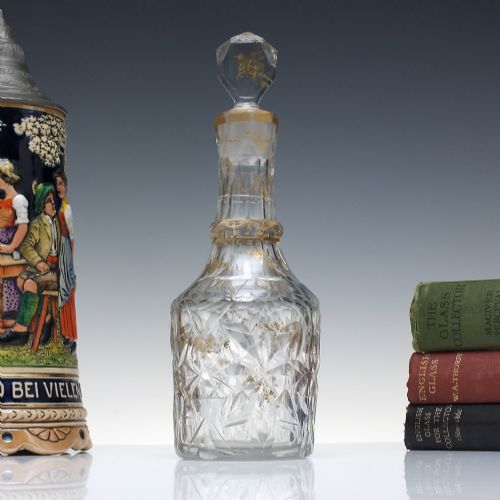
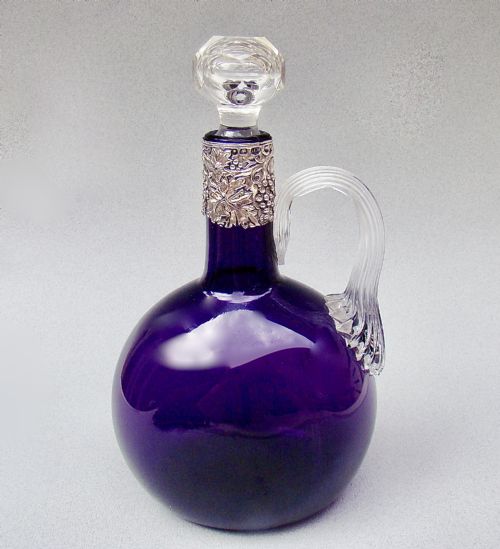
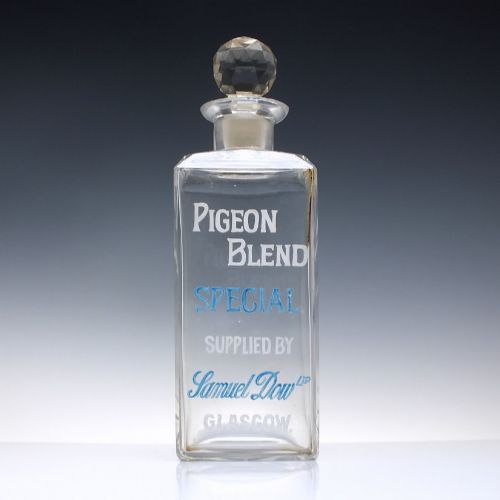
These faceted glass stopper examples are the brilliant closures that crown Georgian, Victorian, and Edwardian decanters and scent bottles.
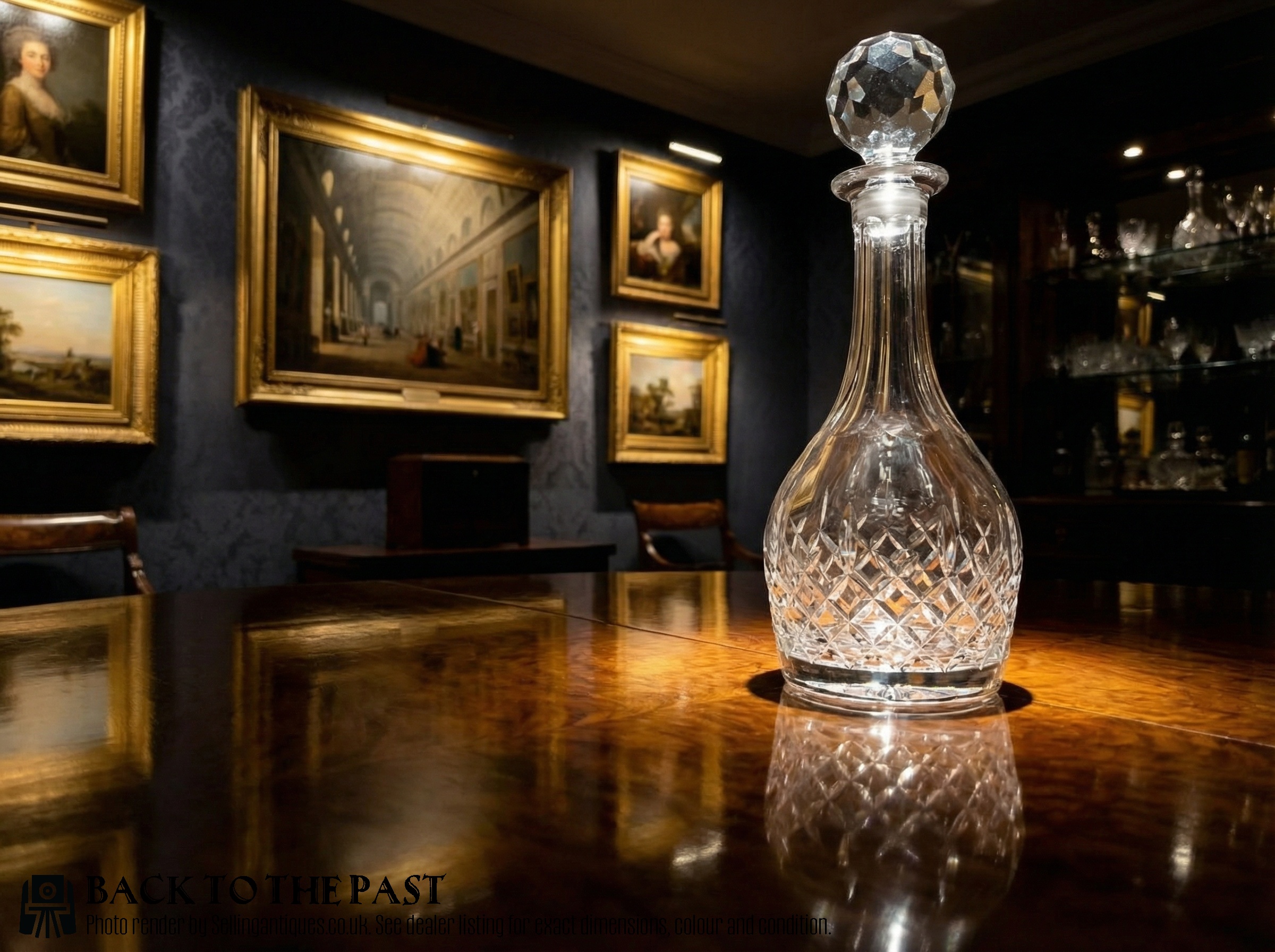
Faceted Glass Stopper
A faceted glass stopper serves as the crowning closure for antique decanters, ewers, and scent bottles spanning the Georgian period through to the 1930s. When you examine a faceted glass stopper, you look at a precision-cut piece designed to seal spirits, wine, and perfume inside glass and crystal vessels. The most frequent examples encountered on this page belong to the Victorian and Edwardian eras, often paired with heavy cut crystal or clear glass bodies.
Makers shaped these stoppers to match the geometric cutting of the vessels below, creating unified profiles from the 18th century onward. Pieces range from large sugarloaf spirit decanter closures down to tiny perfume bottle stoppers fitted with sterling silver collars. Many incorporate materials such as lead crystal, while others accompany silver-mounted whisky decanters and enamel-decorated scent bottles.
Materials and Cutting Techniques
Glassmakers utilised clear glass, crystal, and heavy lead crystal, shaping the material by hand before applying wheel-cut facets. The raw glass was blown or moulded into a blank form, after which artisans ground and polished individual flat planes to catch the light. This cutting process required immense steadiness to ensure the facets met at sharp, clean angles.
For superior pieces, particularly those from the Georgian and Victorian periods, the base of the stopper was hand-ground to fit the specific neck of the decanter. Silver mounts, sterling collars, and enamel details were occasionally added by silversmiths to complement the glass work, as seen in works associated with makers like Henry Matthews or Karl Palda.
One locking decanter design by Betjemann Brothers required a silver key just to reach the spirits.
Assessing Craftsmanship
Quality rests in the crispness of the facet edges and the clarity of the metal or crystal. Finer examples display deep, sharp geometric cutting that refracts light cleanly, whereas lower tiers show softer, more rounded edges from hurried production or excessive polishing. The weight of the glass and the absence of cloudiness also separate standard utilitarian items from exceptional pieces.
Proportion dictates the visual success of the stopper relative to the decanter body. Superior specimens maintain a strict harmony in scale and silhouette, utilising heavy lead crystal that feels substantial in the hand and sits snugly within the ground neck.
James Giles·Henry Matthews·Karl Palda·Betjemann Brothers
The Faceted Glass Stopper Glossary
- Faceting
- The grinding of flat geometric planes into the surface of glass to create reflective angles. This technique enhances the brilliance of clear crystal.
- Lead crystal
- Glass containing metal oxides that increase weight, refractive index, and clarity. It allows for deeper and sharper cutting on stoppers and decanters.
- Sugarloaf
- A tall, conical decanter shape resembling traditional refined sugar blocks. Stoppers made for these vessels often share the same steep, triangular profile.
- Sterling silver collar
- A metal band fitted around the neck of a bottle or decanter to secure the stopper assembly. It frequently bears hallmarks indicating the assay office and date.
Faceted Glass Stopper: Frequently Asked Questions
How do I know if a stopper is original to the decanter?
Original stoppers share the same degree of wear, glass tint, and cutting style as the vessel body. Ground-in shanks often bear matching numbers or identical grinding marks.
Inspect the interior of the decanter neck and the stopper base for corresponding hand-ground mating surfaces. Minor discrepancies in clarity suggest a replacement gathered from another piece.
What caused the cloudy residue inside old decanters?
Decanter haze results from moisture and alcohol reacting with the interior glass over decades of holding spirits or wine. This mineral deposit etches the surface permanently.
Prevent further damage by storing vessels dry and avoiding harsh chemical cleaners. Professional cleaning can reduce the cloudiness without harming the exterior facets.
Are these stoppers safe to use for storing modern spirits?
Most antique glass and crystal vessels remain suitable for holding wine or whisky for short periods. Ensure the ground glass fit remains secure before pouring.
Avoid storing liquids in lead crystal for extended durations if the vessel shows interior wear. Modern consumption standards recommend caution with antique lead content.