


Fabric Daybed
These fabric antique daybed examples offer long-form lounging, stretching from Regency elegance down to Edwardian simplicity.
Fabric Daybed
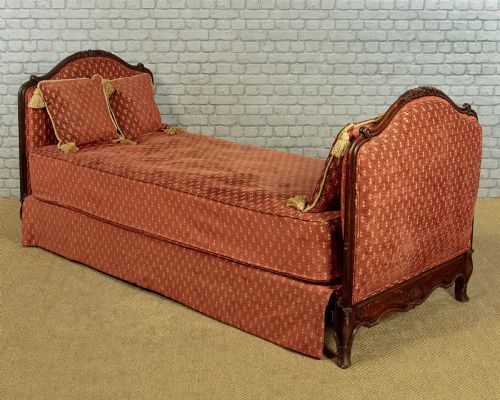
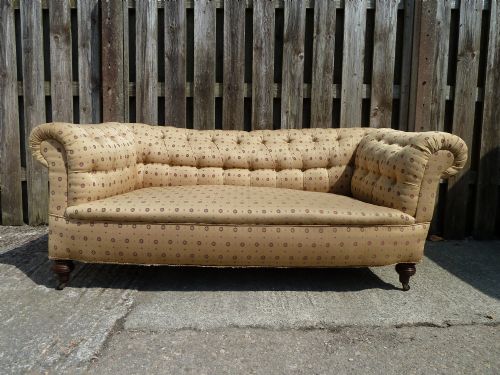
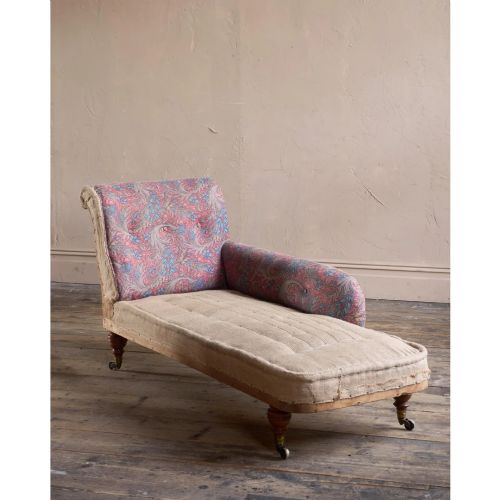
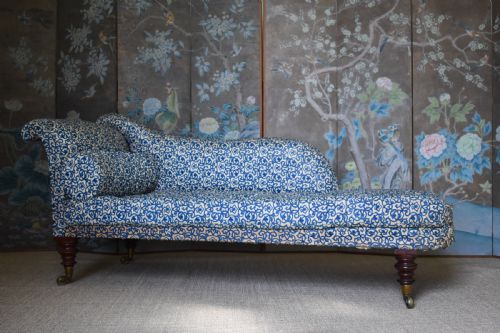
A fabric antique daybed brings together nineteenth-century seating and reclining forms, often appearing as a chaise longue, salon sofa, or day bed. These pieces serve for daytime resting and formal sitting, combining timber frames with upholstered surfaces.
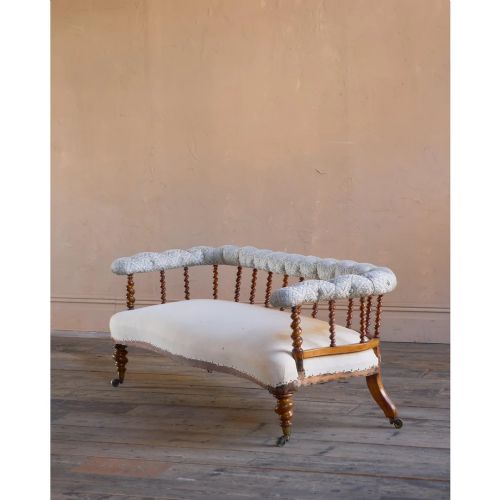
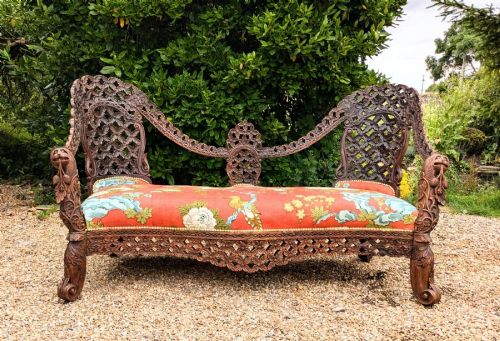
The selection on this page leans heavily into Victorian and nineteenth-century pieces, alongside Regency, William IV, and Edwardian examples. Forms range from spindle backs and scroll arms to country house hall sofas and French decorative daybeds.
Makers such as C. Hindley & Sons and Howard and Sons appear among the nineteenth-century pieces, showing the shift from formal reception rooms to relaxed domestic spaces. Buyers encounter variations spanning walnut, mahogany, oak, and brass frames.
Judging quality and execution
Quality rests upon the timber selection and the integrity of the frame construction, where dense mahogany or walnut indicates a higher grade of manufacture. Carved ornament and the precision of scroll arms distinguish standard workshop output from more ambitious commissions.
Attribution to documented makers elevates a piece, as seen with works linked to Howard and Sons or C. Hindley & Sons. The preservation of original elements, including turned legs and castors, shapes the standing of each item.
Listings feature mahogany, walnut, and oak frames paired with upholstery fabric, damask, and hessian across nineteenth-century forms.
C. Hindley & Sons·Howard and Sons
The Fabric Daybed Glossary
- Chaise longue
- An upholstered couch shaped like a chair with a long seat for reclining. It provides half-sitting and half-lying positions.
- Mahogany
- A durable tropical hardwood prized for its deep reddish-brown tone and strength. Makers utilised it extensively across nineteenth-century seating.
- Damask
- A reversible figured fabric woven on a jacquard loom with patterns visible on both sides. It frequently appears on period upholstery.
- Castor
- A small wheel mounted on a swivel attached to the legs of heavy furniture. This allows for easier movement across rooms.
- Hessian
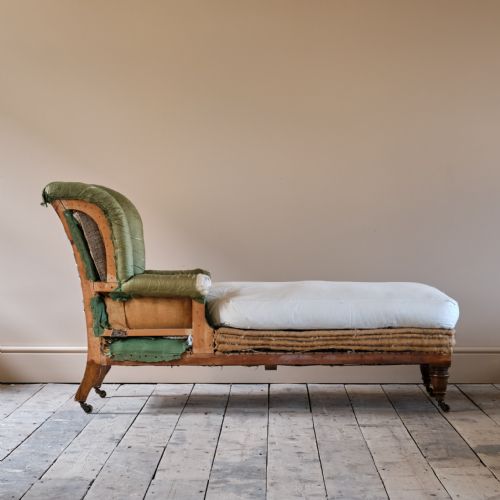
- A coarse woven fabric typically utilised as a foundational layer in traditional upholstery. It conceals internal stuffing and supports outer covers.
Fabric Daybed: Frequently Asked Questions
What is a fabric antique daybed?
A fabric antique daybed is a nineteenth-century or early twentieth-century reclining seat designed for daytime rest. These pieces combine wooden frames with upholstered surfaces in forms such as chaises longues and salon sofas.
Makers built them in styles ranging from Regency scroll arms to Victorian turned legs. They served in parlours, bedrooms, and grand reception spaces.
Where were daybeds placed?
Historical daybeds found homes in formal drawing rooms, private boudoirs, and country house halls. They accommodated reclining guests or served as window seats for reading and quiet relaxation.
Their placement depended on the domestic architecture of the period, moving between public reception areas and private living quarters as social habits shifted.
How do I care for antique upholstery?
Caring for antique fabric involves gentle surface cleaning and protection from direct sunlight to prevent fading. Traditional textiles like damask require careful maintenance to preserve the woven pattern.
Checking internal padding and frame stability ensures the piece remains sound during everyday use. Professional conservation helps maintain fragile historical fabrics.