


Victorian Day Couch
A victorian day couch is a traditional reclining seat built for resting, combining the form of a settee with the length of a bed.
Victorian Day Couch
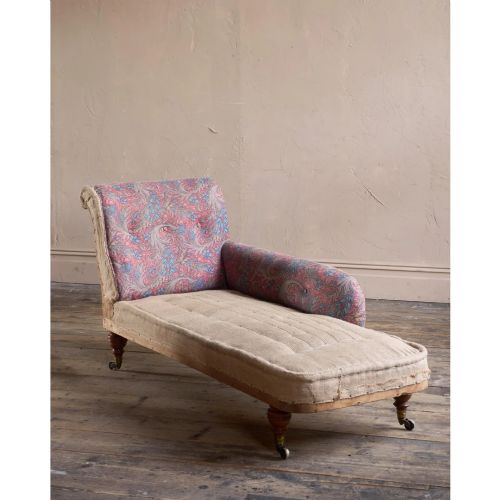
A victorian day couch spans nineteenth-century forms designed for daytime reclining, appearing under various historical names such as chaise longues, daybeds, and long stools. These pieces serve as elongated seats intended for half-sitting and half-lying postures in reception rooms and private chambers.
The pieces on this page originate predominantly from the nineteenth century, including specific dates like eighteen-sixty alongside broader Victorian periods. Buyers encounter frames influenced by earlier Regency, Grand Regency, and William IV styles, reflecting a continuity of aesthetic preferences across the era.
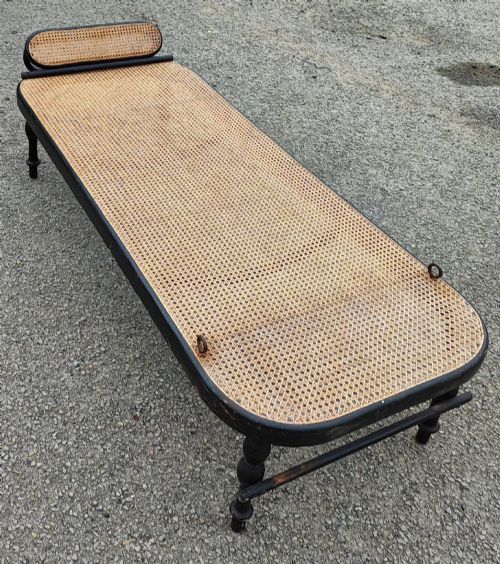
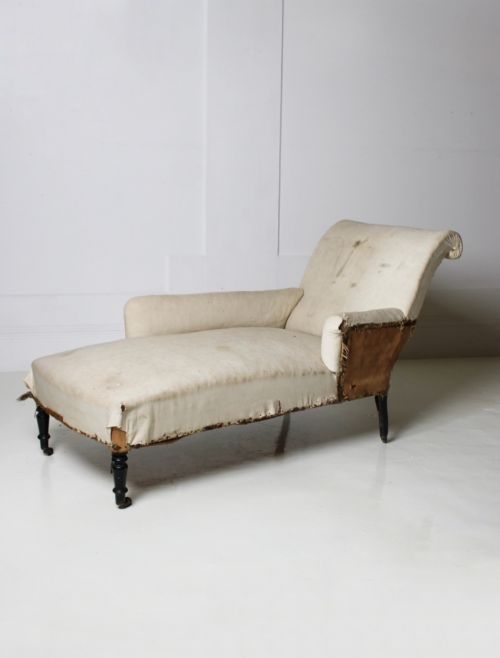
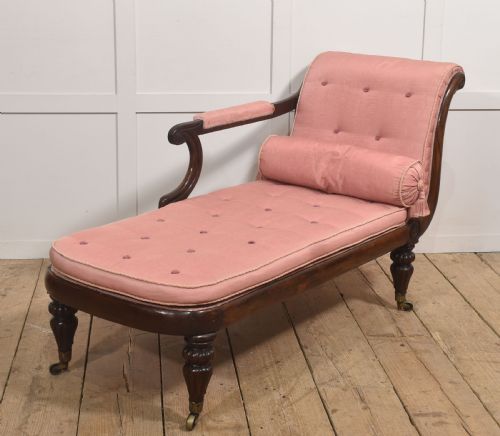
Form variations range from open-framed cane seating to fully upholstered settees with single raised ends. Makers construct these items using timber frames that support padded surfaces or woven cane panels for daily domestic use.
Construction and materials
Cabinet makers utilise dense hardwoods such as rosewood, walnut, mahogany, and ebonised wood to build the structural frames of a victorian day couch. Certain examples incorporate structural brass elements alongside turned wooden legs fitted with original castors for mobility.
Upholstery techniques involve traditional stuffing secured over webbing, finished with textiles including velvet, linen, fabric, and hessian. Alternative versions feature woven cane seating panels inset into rosewood or ebonised wooden frames.
Listings feature nineteenth-century day beds constructed from rosewood, walnut, and ebonised wood, alongside upholstered velvet and cane seating.
Distinctions in quality
Quality in a victorian day couch rests upon the selection of primary timbers, visible in solid rio rosewood or finely ebonised surfaces rather than secondary woods. The integrity of the frame construction, whether carved with Regency restraint or built as a substantial country house piece, dictates the physical stability of the seating.
The standard of execution extends to secondary materials, such as the tightness of cane work or the fidelity of turned wooden feet and original brass castors. Pieces bearing maker stamps or attribution to established firms demonstrate workshop pedigree that distinguishes standard production from high-grade commissions.
Howard and Sons·H. Goodall and Sons·Miles and Edwards
The Victorian Day Couch Glossary
- Chaise longue
- An upholstered sofa in the form of a chair combined with a long seat. This French term translates to long chair and describes pieces meant for reclining.
- Day bed
- A couch that can be used as a seat by day and a bed by night. These items provide a hybrid form for resting without the full scale of a bedstead.
- Ebonised wood
- Timber treated with a dark finish to resemble ebony. Makers applied this treatment to create a high-contrast black surface popular in nineteenth-century furniture.
- Rio rosewood
- A dense, heavily figured Brazilian timber utilised for high-end nineteenth-century cabinet work. The grain displays deep brown and black figuring.
- Castor
- A small wheel mounted on a swivel assembly attached to furniture legs. These devices allowed heavy day beds to move across carpeted floors.
Victorian Day Couch: Frequently Asked Questions
Where were day couches placed?
A victorian day couch belonged primarily in drawing rooms, morning rooms, and large country house bedrooms where occupants rested during daytime hours without retiring to bed.
These pieces sat against walls or served to divide large spaces, offering a comfortable place for reading or recovering from illness.
How do I identify a Victorian piece?
Dating relies on timber selection, such as solid rosewood or walnut, combined with specific leg turnings and upholstery methods characteristic of the nineteenth century.
Makers marks stamped into the wooden frame or on brass castors provide definitive evidence of origin and period.
Are these couches comfortable for sleeping?
Nineteenth-century day couches were designed for resting and reclining rather than full overnight sleeping, featuring firm horsehair or sprung upholstery beneath top covers.
Their length accommodates a reclining adult, though the raised ends restrict full horizontal extension.