


Antique Recliner Sofa
These antique recliner sofa pieces offer wonderful Victorian lounging comfort, bringing rich mahogany frames and deep buttoned upholstery into your home.
Antique Recliner Sofa
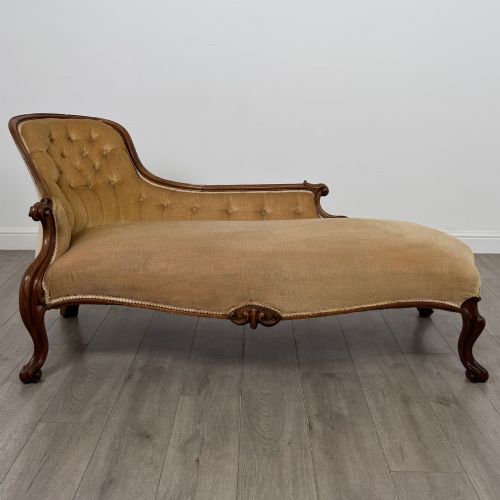
When you search for an antique recliner sofa, you are looking at nineteenth-century day beds, settees, and chaise longues designed for reclining. These pieces mostly date from the Victorian era, spanning the mid to late nineteenth century around eighteen sixty to nineteen hundred.
The versions you are most likely to meet on this page take the form of chaise longues and day beds with timber frames. They combine extended seating surfaces with raised ends intended for resting while seated or lying down.
Makers and workshops of the period produced these forms in styles such as Victorian and Edwardian, utilising timber structures paired with sprung and upholstered lounging decks.
How they were made
Cabinet makers constructed the foundational frames using solid timbers such as mahogany and walnut, ensuring structural stability for the long reclining decks. Woodworkers shaped and polished these exposed wooden rails, legs, and scrolled head ends by hand.
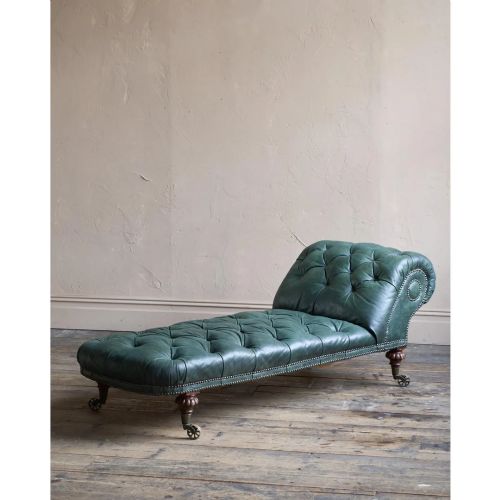
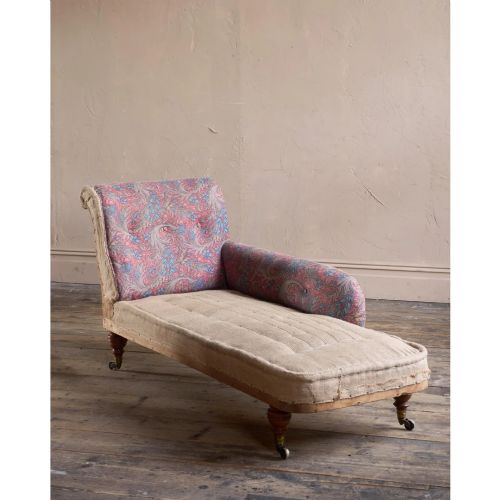
Upholsterers built up the seating areas using traditional stuffing and tensioned springing beneath top covers of velvet, leather, fabric, and damask. They often finished the upholstery with deep buttoning and secured the edges using brass tacks or hessian webbing underneath.
Listings span the nineteenth century, featuring Victorian and Edwardian periods with materials including mahogany, walnut, brass, leather, and velvet.
What varies in quality
The distinction between standard pieces and the finest work lies in the pedigree of the maker and the refinement of the timber frame. Workshops such as Howard and Sons and Jas Shoolbred applied superior joinery and sophisticated internal springing that elevated their day beds above ordinary production.
Upholstery materials and execution also determine the grade of a piece, where thick supple leather or rich velvet combined with precise buttoning separates simpler utilitarian couches from luxury drawing room furniture.
Howard and Sons·Jas Shoolbred·Hampton and Sons Pall Mall
The Antique Recliner Sofa Glossary
- Chaise Longue
- A long upholstered chair or day bed allowing the sitter to recline with legs extended. This French term translates to long chair and describes the primary seating form found in nineteenth-century parlours.
- Day Bed
- An elongated piece of furniture serving as both a seat and a bed for resting during the day. These items often feature a single raised end for the head.
- Mahogany
- A durable tropical hardwood prized for its reddish-brown colour and fine grain. Cabinet makers utilised this timber extensively for Victorian frame structures.
- Buttoned
- An upholstery technique where twine pulls the fabric deep into the stuffing to secure tufts in a geometric pattern. This method adds firmness and visual texture to the backrests.
- Hessian
- A coarse woven fabric typically made from jute fibres. Upholsterers employed this material as a sturdy foundation beneath the top covers and springs.
Antique Recliner Sofa: Frequently Asked Questions
What is an antique recliner sofa?
An antique recliner sofa refers to nineteenth-century day beds and chaise longues designed for resting. These pieces combine timber frames with upholstered lounging surfaces.
They originate from the Victorian period and provide an extended seat with a raised head end for reclining.
How were these day beds used?
Victorian households utilised these pieces in drawing rooms and parlours for daytime resting and reading. They offered a comfortable half-sitting posture without requiring a full bed.
Ladies and gentlemen used them to relax in domestic spaces while maintaining an elegant appearance.
How do I date a Victorian chaise longue?
Dating relies on stylistic shifts in the timber frames and upholstery techniques across the nineteenth century. Pieces from around eighteen sixty often show crisp mahogany carving, while later examples approach nineteen hundred.
Maker stamps on the wood or webbing can also provide precise chronological placement.
What materials are typical for these frames?
The structural elements consist primarily of hardwoods such as mahogany and walnut. Upholstery covers range from green leather and velvet to patterned fabric and blue damask.
Internal construction incorporates brass elements and hessian support webbing beneath the springs.