


Extending Pedestal Dining Table
When choosing an extending pedestal dining table, you select a piece engineered for versatile scale and formal hospitality.
Extending Pedestal Dining Table
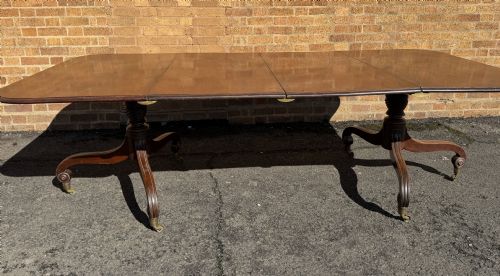
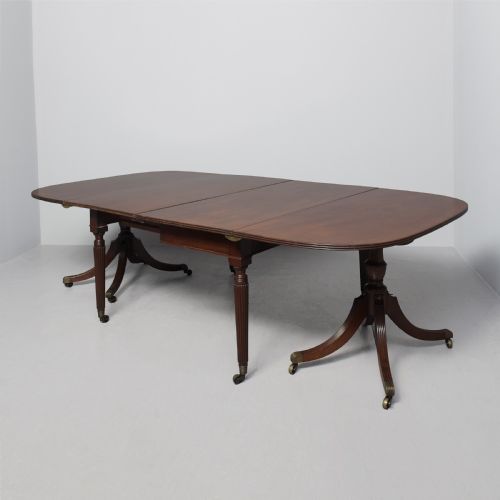
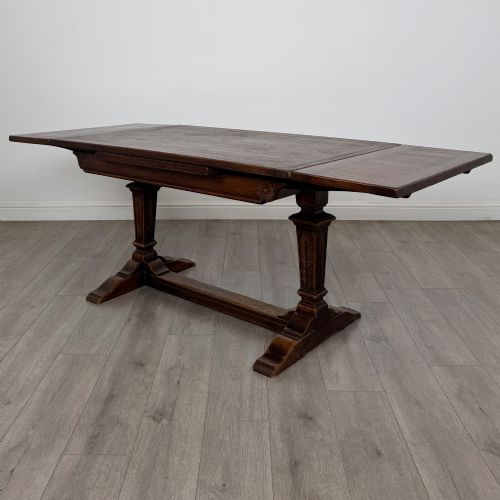
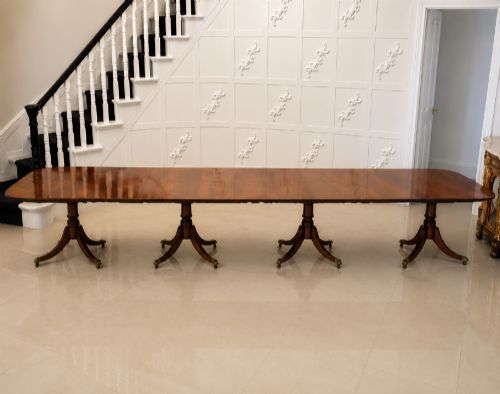
An extending pedestal dining table combines central column supports with drop-in leaves to alter surface length for varying numbers of guests.
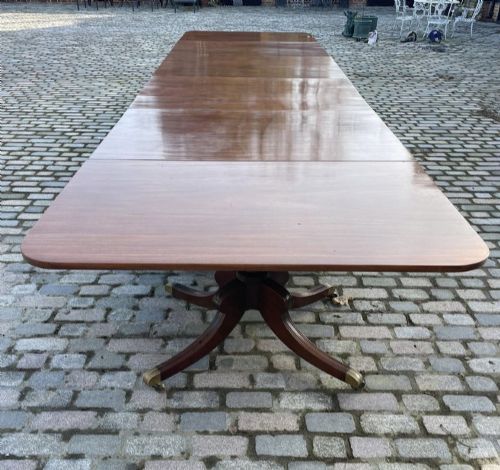
Buyers encounter examples ranging from compact seating for eight up to extensive banquet tables accommodating over twenty diners.
How They Were Made
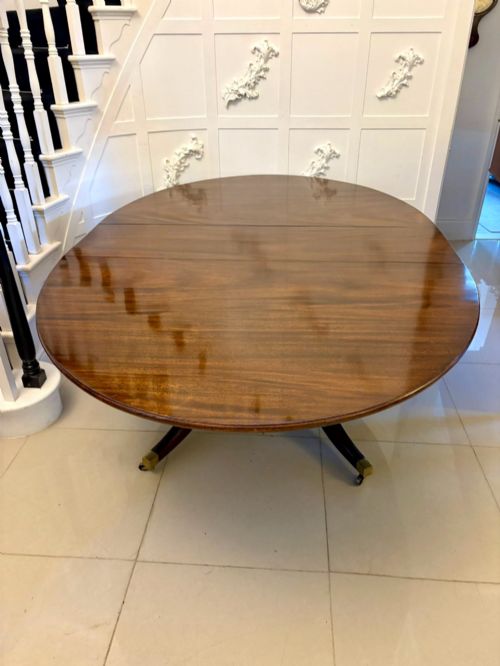
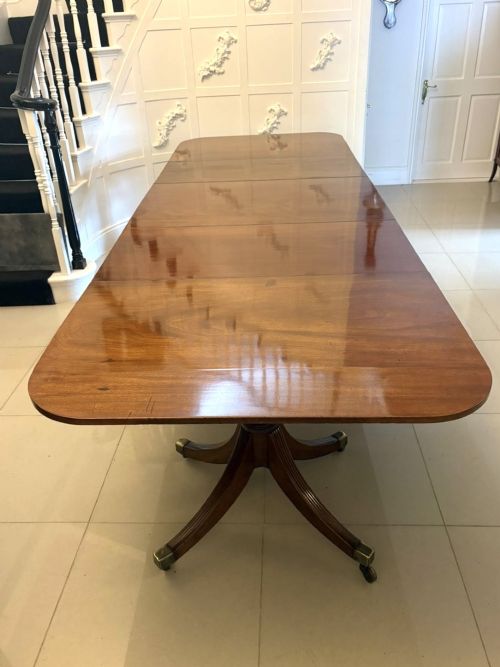
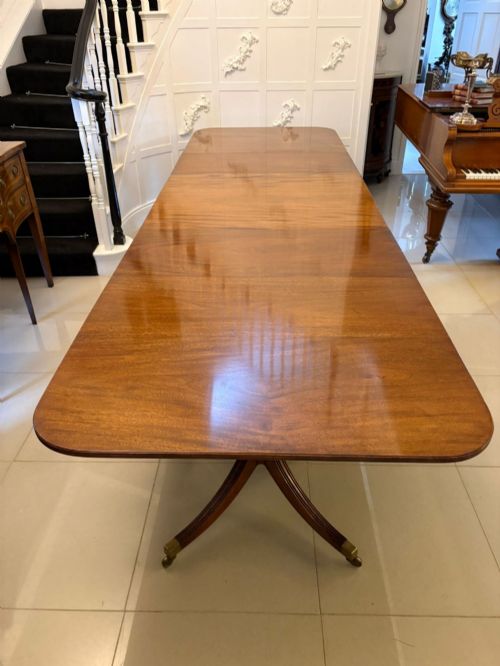
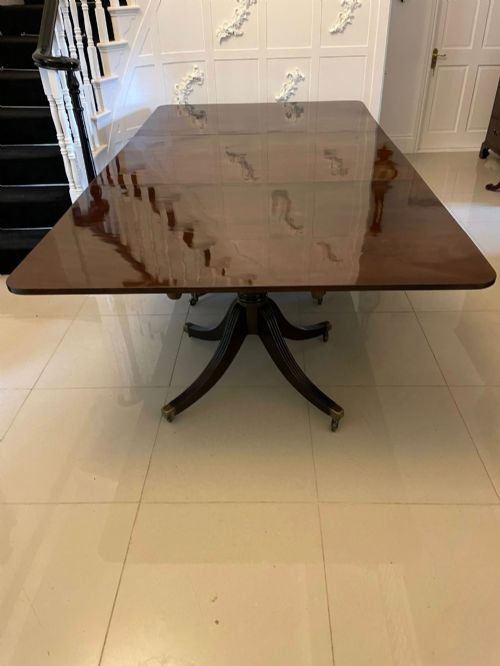
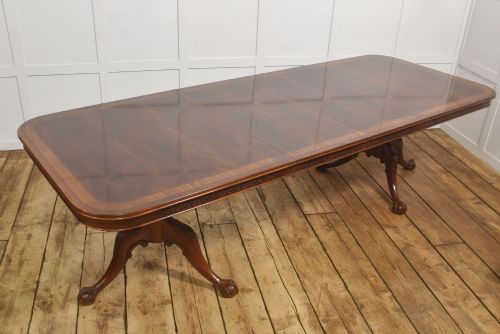
Cabinet makers utilised dense timbers such as mahogany, burr walnut, and rosewood, frequently selecting figured grain for prominent surface display.
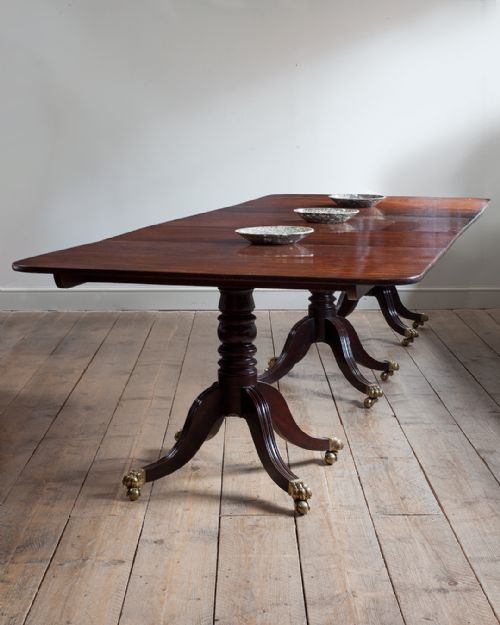
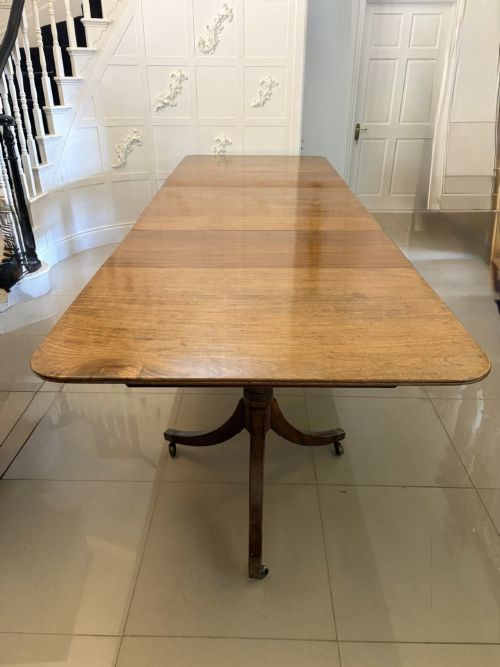
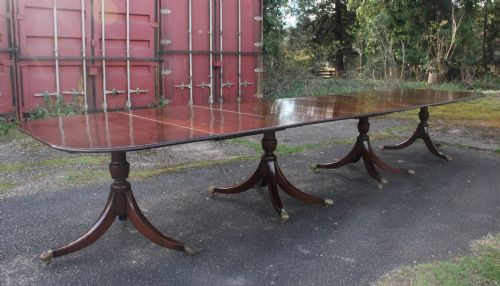
Pedestal columns often terminate in brass castors and reeded or splayed legs, while internal mechanical tracks manage the insertion of extra leaves.
Several tables stretch past six metres, requiring a dedicated crew just to navigate the dining room.
What Varies in Quality
Quality rests upon the selection of timber figures, the stability and weight of the central pillars, and the precision of the extending mechanism.
Fine examples display disciplined proportions, seamless matching of grain across added leaves, and robust brass fittings that withstand regular adjustment.
Gillows of Lancaster·Thomas Butler of London·Wylie & Lochead Glasgow·Whytock & Reid
The Extending Pedestal Dining Table Glossary
- Twin-pillar
- A table design supported by two central column bases connected to stability legs. This configuration typically accommodates medium lengths and multiple leaves.
- Triple-pillar
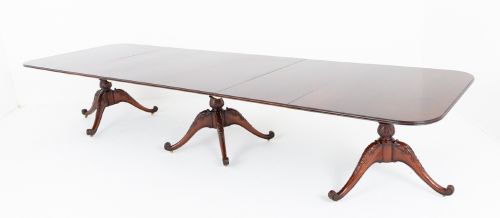
- A larger framework utilising three distinct pedestal columns to support extended banquet lengths. It provides necessary mid-section stability for heavy loads.
- Wind-out mechanism
- An internal screw gearing system operated by a crank handle that smoothly pulls table sections apart to receive leaves. It represents nineteenth-century engineering refinement.
- D-end
- A semi-circular table end section resembling the capital letter D. These sections often detach or form the rounded ends of modular dining sets.
- Reeded leg
- A carved decorative moulding featuring parallel convex lines running along the vertical axis of a support pillar or leg.
Extending Pedestal Dining Table: Frequently Asked Questions
How do twin-pillar and triple-pillar tables differ?
Twin-pillar tables use two central columns and suit medium lengths, whereas triple-pillar versions employ three supports to maintain structural integrity across longer banqueting formats.
Selecting between them depends entirely on the scale of the room and the maximum number of guests needing seats.
How do extra leaves operate?
Additional timber leaves drop into the centre of the table when the pillars are pulled apart, secured by wooden alignment pins or internal brass clips.
Wind-out mechanisms utilise a handle-operated screw system to separate the framework smoothly before insertion.
What periods do these tables represent?
The inventory spans eighteenth-century Georgian origins, nineteenth-century Regency and Victorian periods, alongside later twentieth-century revivals.
Each era brings distinct leg carvings, timber selections, and edge profiles while maintaining the core pedestal format.
How should I care for mahogany surfaces?
Maintain timber surfaces by dusting with a dry cloth and avoiding placement near direct heat sources or strong sunlight that alters colour.
Occasional waxing preserves the polished grain without sealing the timber permanently.