

Extended Wooden Dining Table
An extended wooden dining table brings people together for meals, offering generous proportions and practical adaptability for hosting gatherings large and small.
Extended Wooden Dining Table
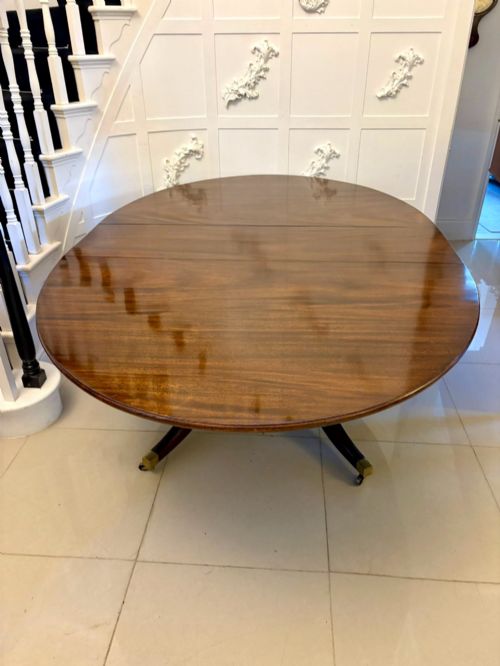
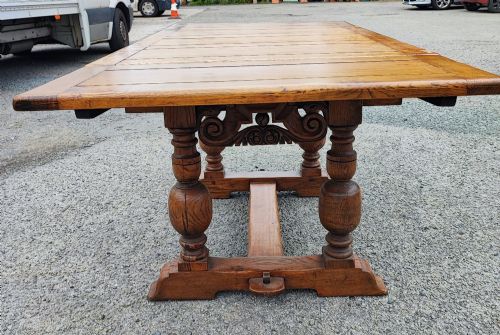
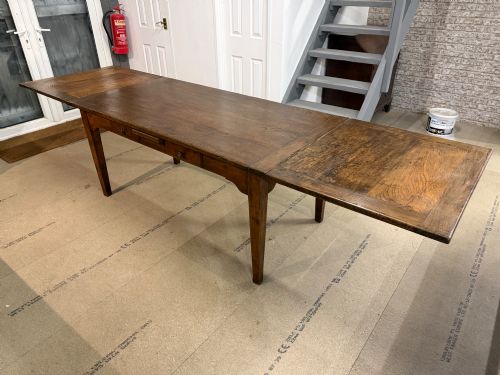
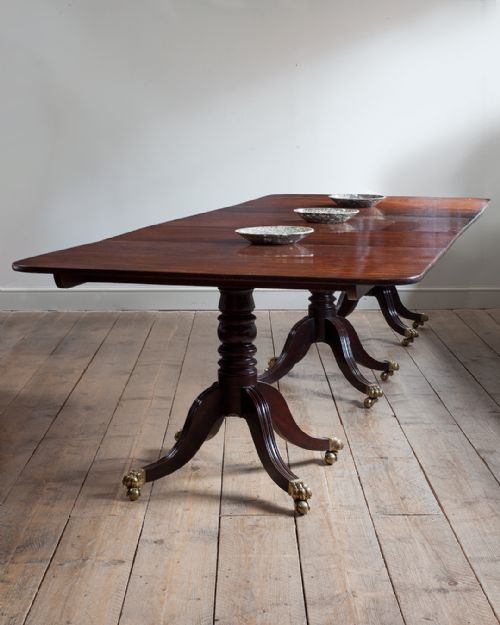
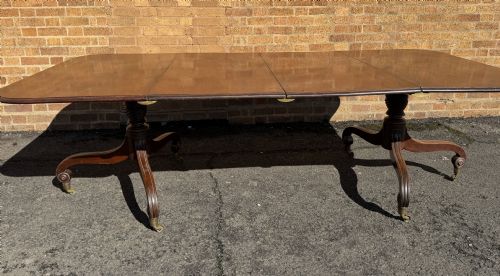
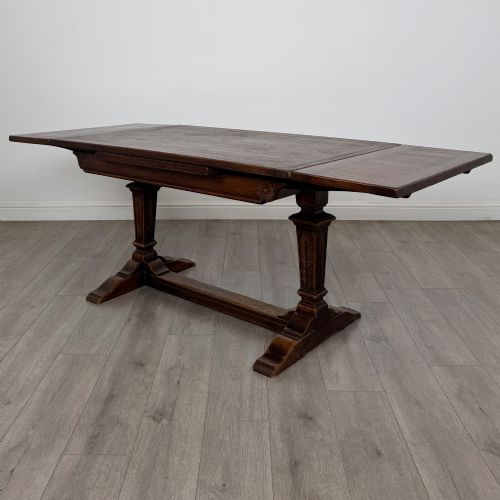
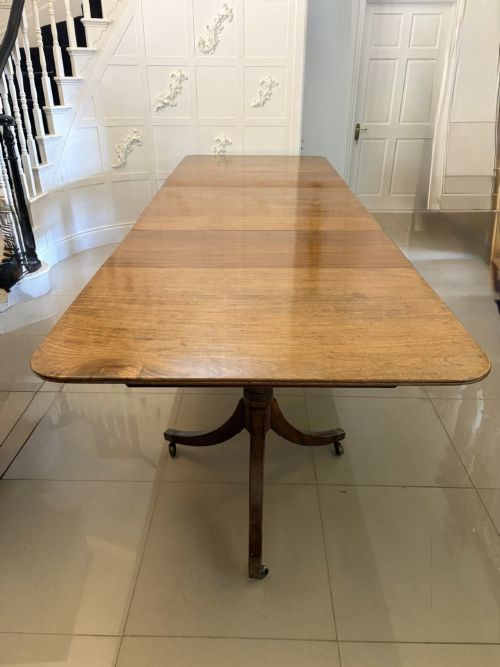
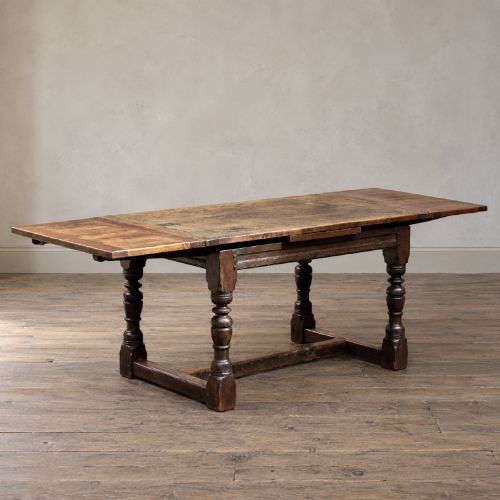
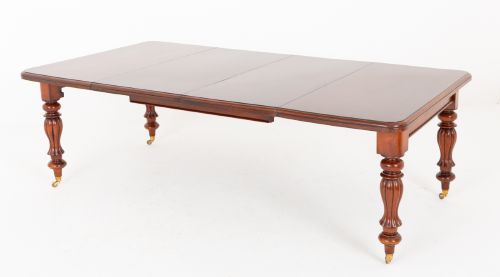
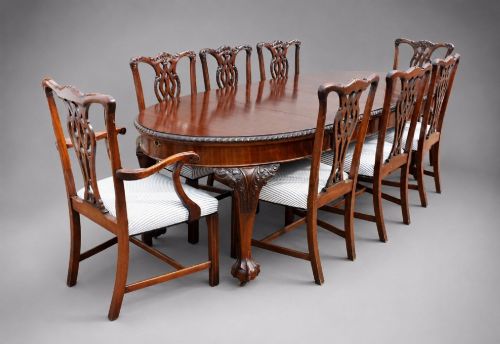
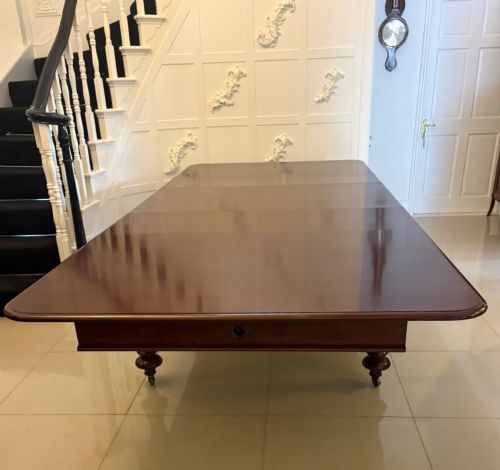
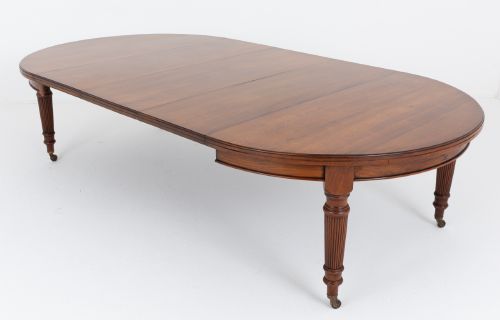
An extended wooden dining table provides the surface and capacity needed for hosting, adapting from daily meals to large gatherings. When searching for an extended wooden dining table, buyers encounter a variety of periods ranging from the eighteenth century through to the twentieth century, including Georgian, Regency, Victorian, and Edwardian examples. Forms vary from pillar tables with additional leaves to draw leaf designs and refectory styles.
The materials span mahogany, oak, walnut, fruitwood, and satinwood, sometimes paired with brass details or fabric upholstery. Makers such as Maple & Co and Whytock & Reid appear among the listings, alongside pieces attributed to F & J Smith. Buyers most frequently meet mahogany and oak versions equipped with mechanisms for extension, offering either multi-pillar supports or sliding leaves.
Materials and construction
Makers utilised solid timbers such as oak, walnut, and fruitwood alongside highly figured mahogany veneers applied to secondary woods. Construction methods included draw leaf mechanisms, drop leaf hinges, and multi-pillar pedestal bases designed to support heavy tabletops when extended.
Joinery techniques relied on traditional methods like mortise and tenon joints for refectory frames, combined with brass castor fittings and sliding runners for multi-leaf tables. Surfaces were finished with polishes that highlighted the natural grain patterns of cherry, satinwood, and walnut.
Listings span periods from the 17th century through to the 1930s, featuring oak, mahogany, walnut, fruitwood, and satinwood.
Distinctions in quality
Quality depends upon the selection of timber, the precision of the extension mechanism, and the integrity of the cabinetmaker's construction. Superior examples display finely figured mahogany or burr walnut veneers, stable pedestals, and smooth leaf-insertion tracks that operate without binding.
Lesser pieces may show uneven fading across added leaves, loose pillar joints, or replacement hardware that disrupts the period balance. The presence of maker marks, such as those from established cabinetmakers, adds tangible proof of workshop standards.
Maple & Co·Whytock & Reid·F & J Smith
The Extended Wooden Dining Table Glossary
- Draw leaf
- A table design featuring leaves stored beneath the main top that pull out from each end to extend the surface.
- Pedestal
- A central column support, often numbering two or three on larger tables, which carries the weight of the top and allows legroom.
- Drop leaf
- A table with hinged flaps on the sides that fold down when not in use to save space.
- Refectory
- A long, narrow table style traditionally used in communal dining halls, often constructed in oak with sturdy stretcher bases.
- Parquetry
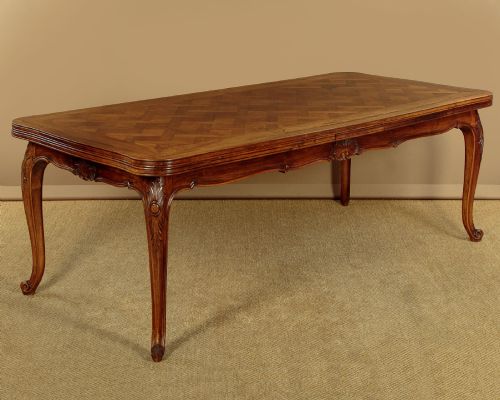
- Geometric wood inlay work arranged in patterns, seen on decorative table tops from the twentieth century.
Extended Wooden Dining Table: Frequently Asked Questions
How do draw leaf tables work?
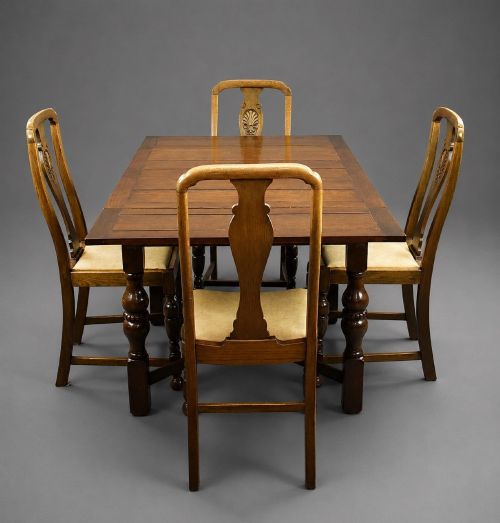
Draw leaf tables utilise self-contained panels hidden directly beneath the main surface. These leaves slide out smoothly from either end when extra seating is required.
This mechanism allows the table to lengthen quickly without the need to store separate loose leaves elsewhere in the home.
What is a pedestal dining table?
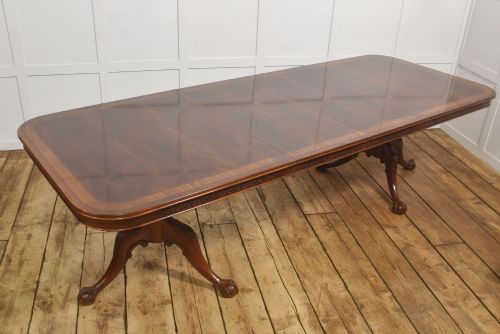
A pedestal dining table rests on one or more central columns rather than standard corner legs. This configuration provides maximum legroom and flexibility for positioning chairs.
Triple pedestal versions are particularly common on larger Victorian and Edwardian examples designed to seat ten or more guests.
How do I care for wooden tables?
Wooden dining surfaces benefit from regular dusting with a soft cloth and protection from direct sunlight and excessive heat sources. Using placemats and coasters prevents moisture rings and surface scratches.
Applying appropriate wax periodically helps maintain the lustre and nourishment of mahogany, oak, and walnut finishes.
How can I date my dining table?
Dating relies on examining the timber species, construction techniques, hardware, and stylistic details such as leg shapes and edge profiles. Georgian and Regency pieces often feature distinct pillar turnings and mahogany stock, while Edwardian versions frequently utilise oak draw leaf systems.
Maker stamps or labels provide definitive clues when present on the underside of the framework.