
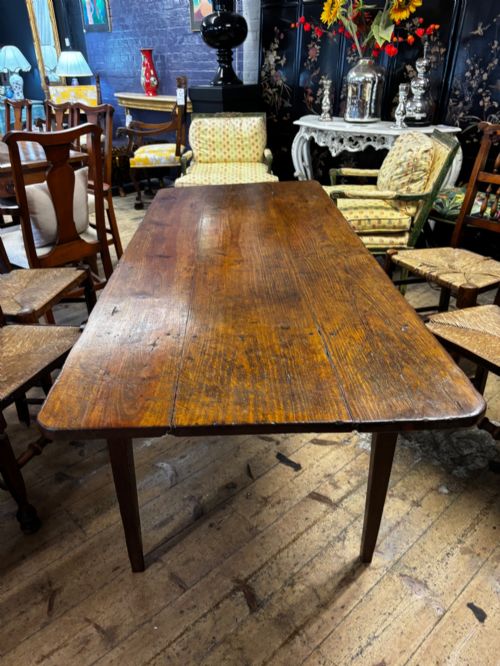
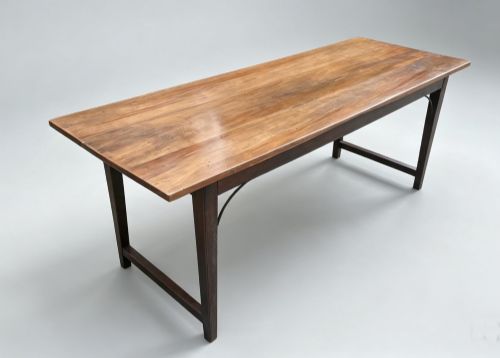
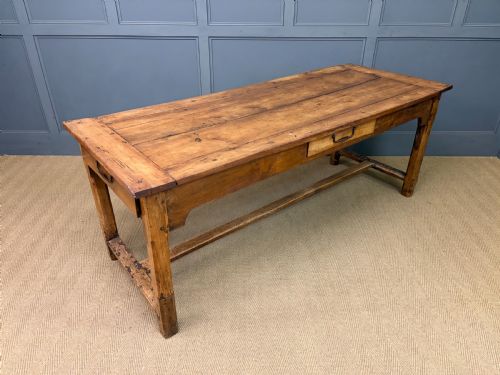
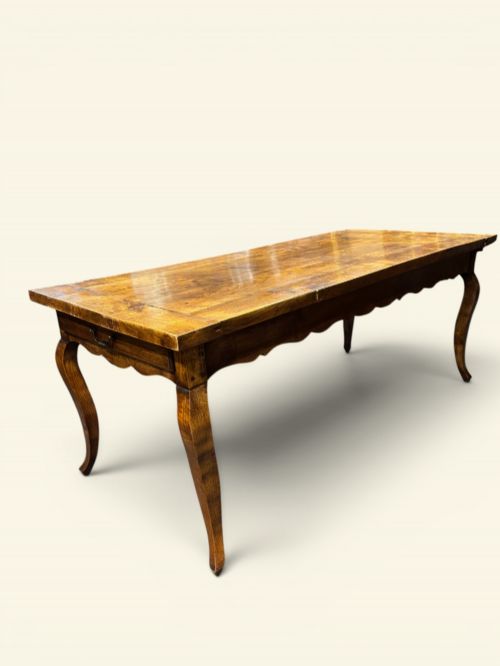
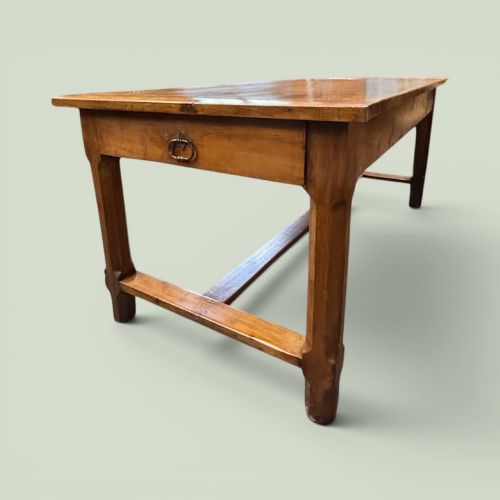
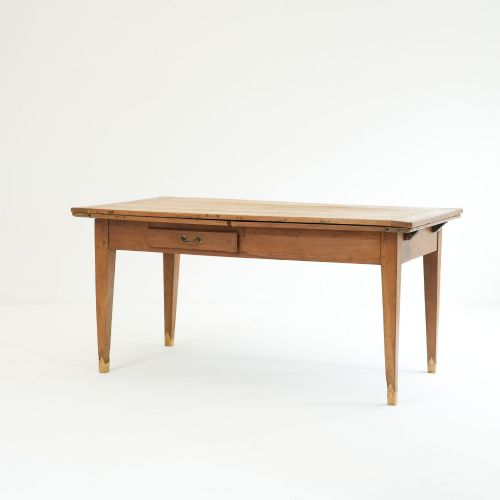
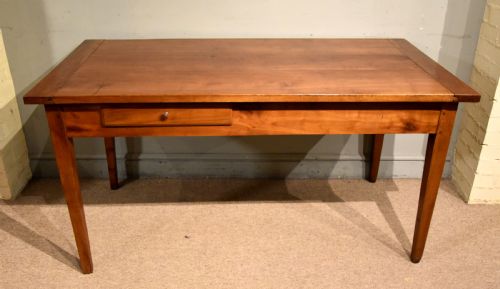


Rustic Fruitwood Refectory Table
A rustic fruitwood refectory table brings warmth and simple utility to a room through honest timber and generous proportions.
Rustic Fruitwood Refectory Table
A rustic fruitwood refectory table serves as a robust dining or kitchen surface rooted in provincial traditions. These large dining boards provide ample space for daily meals and gatherings.
Most examples found here date from the nineteenth century, including Georgian and Victorian periods. French provincial and farmhouse styles dominate the selection, often featuring practical elements like drawers or extension leaves.
The form prioritises utility and durability above ornamentation. Buyers encounter trestle designs, draw leaf systems, and D-end configurations built for heavy domestic use.
How they were made
Cabinet makers relied primarily on solid fruitwood, cherrywood, and oak for the main tops and structural frames. Secondary timbers such as pine occasionally appear in internal components or lesser-seen structural parts.
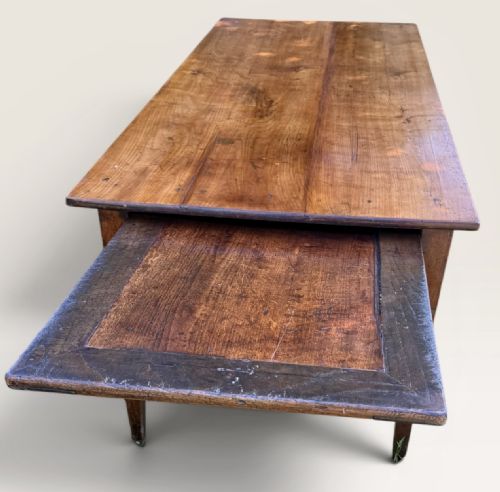
Joinery techniques relied on traditional pegged mortise and tenon construction to withstand decades of daily wear. Iron, brass, and timber fittings support mechanisms like bread slides and extending leaves.
What varies in quality
The character of the timber grain and the depth of the natural patina dictate the visual appeal of each board. Tables retain varying degrees of historical wear that reflect their working past.
Complexity of construction separates standard boards from exceptional examples. Items incorporating operational mechanics like bread slides or draw leaves demonstrate greater joinery skill.
The Rustic Fruitwood Refectory Table Glossary
- Refectory table
- A long dining table traditionally used in communal dining halls. These pieces have evolved into central fixtures for large kitchens and dining rooms.
- Fruitwood
- Timber sourced from fruit-bearing trees such as cherry or pear. This wood is prized for its warm tone and fine grain.
- Bread slide
- A pull-out shelf positioned beneath the main table top. Historically, this feature provided extra surface space for cooling baked goods or food preparation.
- Draw leaf
- An extension mechanism where two leaves tuck beneath the main top and pull out to lengthen the table. This system allows the surface size to adapt easily.
- Parquetry
- Geometric patterns formed of fitted wood pieces applied to a surface. This technique showcases decorative woodworking skill on top boards.
Rustic Fruitwood Refectory Table: Frequently Asked Questions
How do I clean a fruitwood table?
Wipe surfaces gently using a slightly damp cloth to remove everyday dust and debris. Avoid harsh chemical cleaners that strip the historic finish.
Apply natural beeswax occasionally to nourish the timber and maintain a soft lustre. Buff the wood gently after application to protect the grain from moisture.
Can I use these daily?
These tables were built for heavy kitchen and dining use, making them ideal for everyday life. Their robust construction handles routine family meals and gatherings with ease.
Use protective mats under hot dishes and liquids to prevent surface marks. Embracing minor wear ensures the table retains its authentic character over time.
What is a bread slide?
A bread slide is a pull-out wooden board integrated beneath the main surface. Bakers used these shelves to prepare dough or cool loaves.
In modern homes, this feature provides convenient extra space for serving food. It remains a hallmark of traditional farmhouse table design.
How do I date a table?
Examine the construction methods and tool marks visible on the underside and frame. Hand-cut joints and timber shrinkage indicate nineteenth-century or earlier origins.
Compare the style and secondary woods against known provincial furniture eras. Hardware choices like brass or iron fittings also offer clues to the period.