

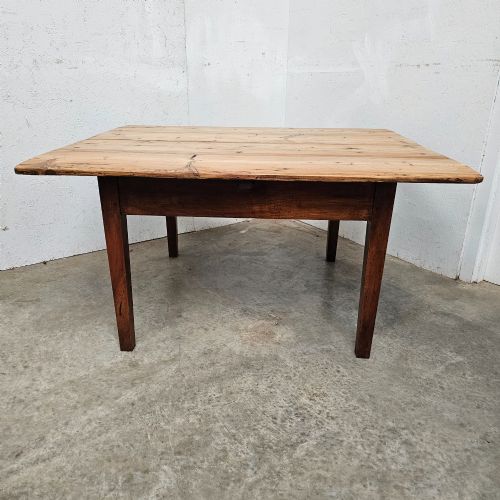
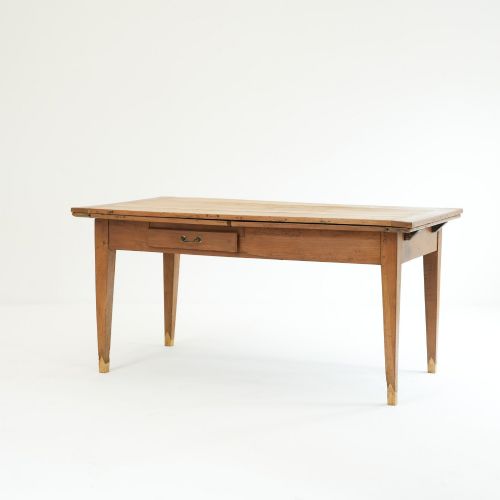
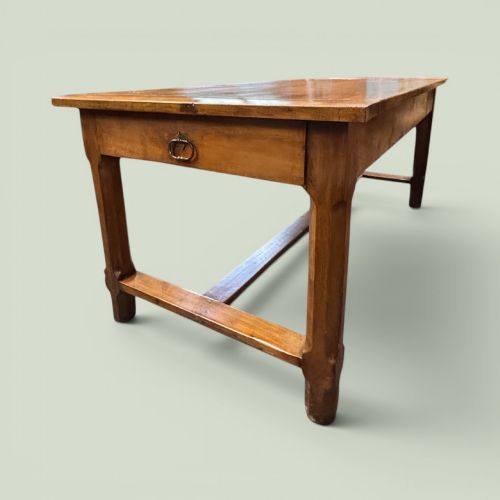
Rustic Fruitwood Kitchen Table
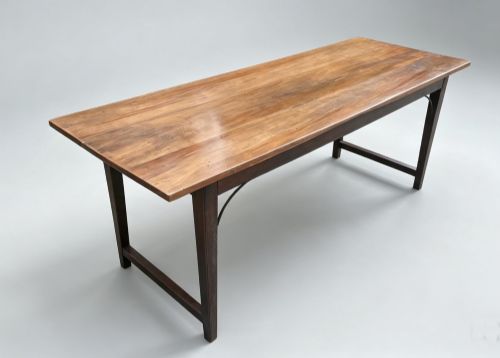
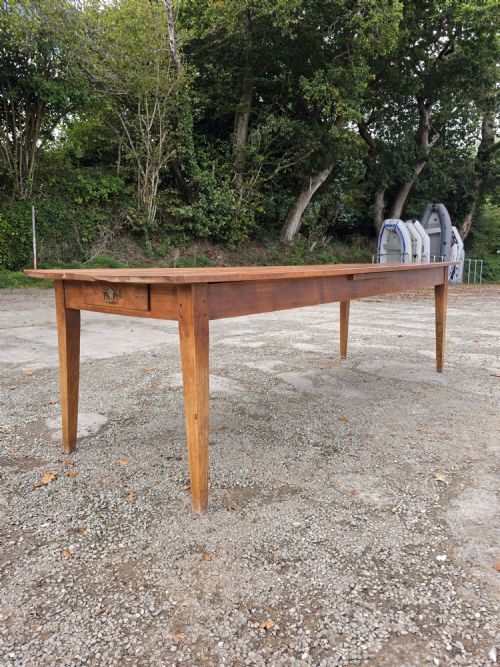
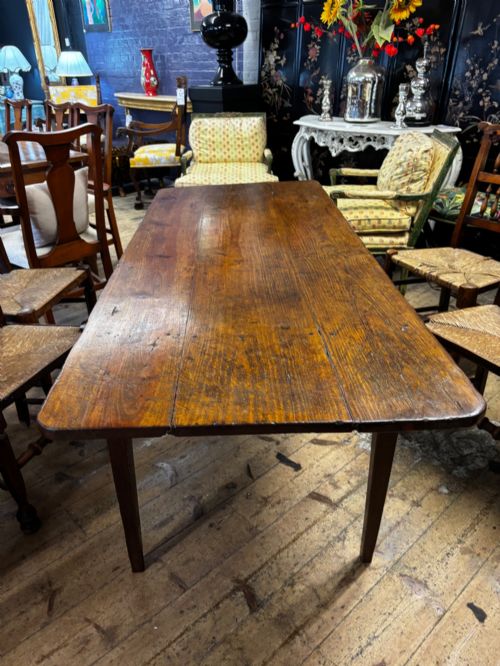
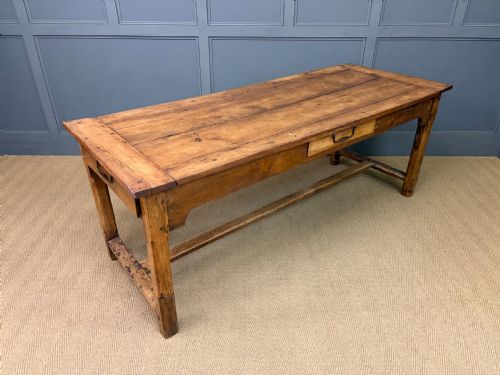
A rustic fruitwood kitchen table brings warmth to a home through timber with deep grain and decades of daily use.
Rustic Fruitwood Kitchen Table
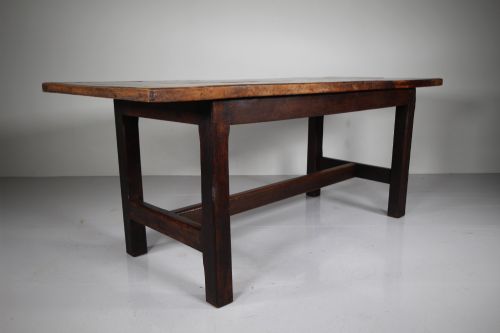
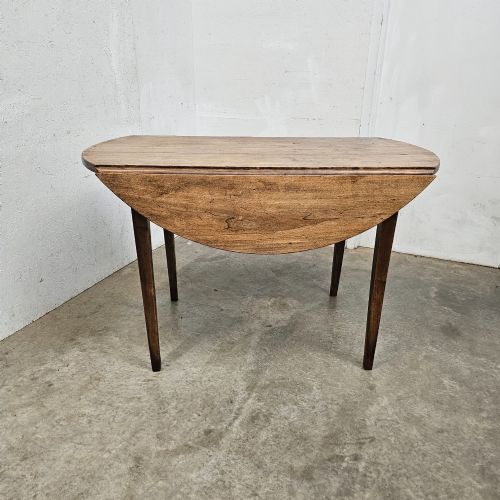
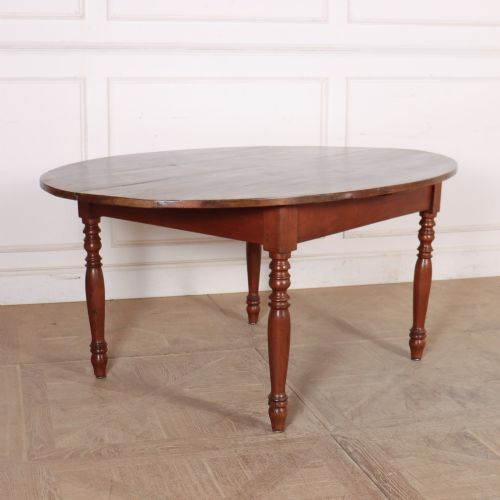
A rustic fruitwood kitchen table represents a functional dining surface shaped by provincial traditions, predominantly from France and Italy. Buyers looking for a rustic fruitwood kitchen table will encounter substantial refectory forms, harvest serving tables, and traditional farmhouse designs built for heavy domestic service. The selection spans the eighteenth century through to the early twentieth century, taking in Georgian periods and Victorian examples alongside continental provincial pieces.
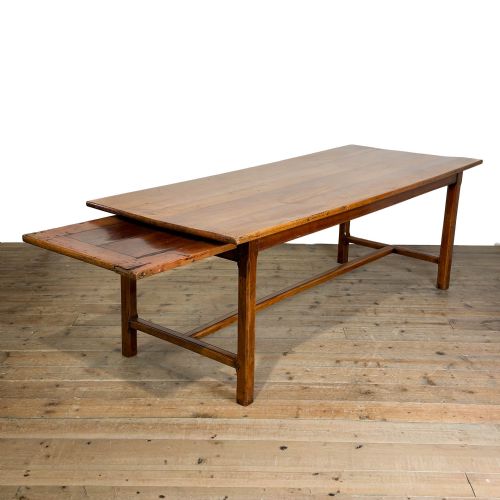
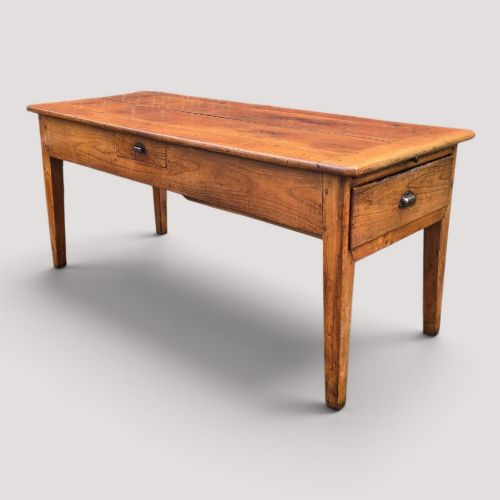
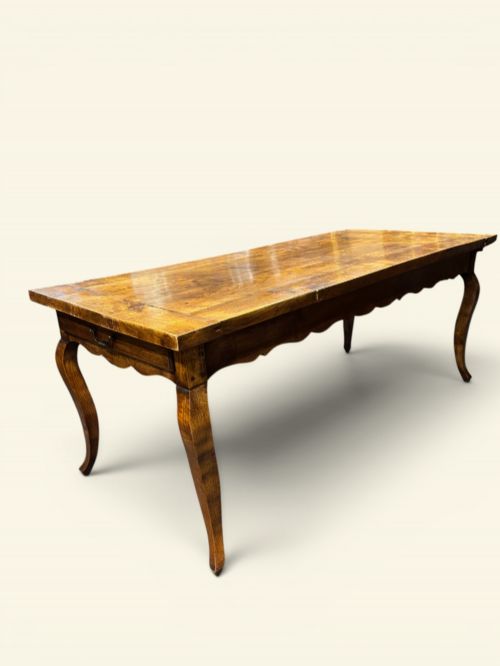
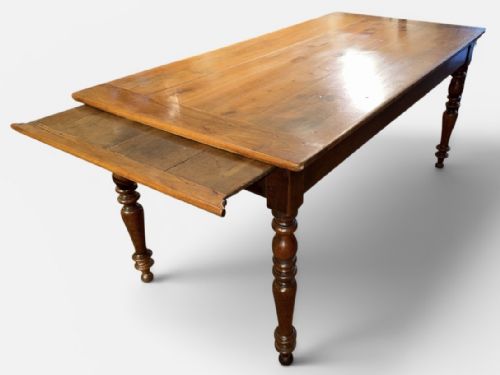
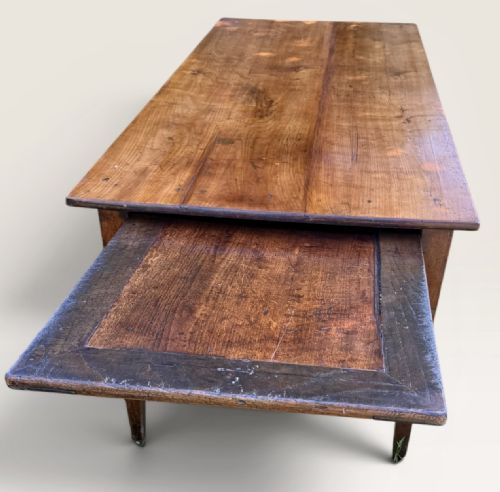
Most pieces on this page appear as large farmhouse dining tables constructed in cherry wood, fruitwood, and mixed timbers. Many retain practical period alterations or additions, including bread slides, storage drawers, and extending mechanisms designed for daily culinary work. Forms range from simple trestle supports to substantial four-legged refectory styles with scrubbed tops or parquetry surfaces.
Materials and Construction
Construction relies upon dense timbers, combining fruitwood, cherry wood, and oak for structural strength alongside secondary woods like pine. Tables often pair thick fruitwood top boards with robust timber frames, sometimes joined by iron or brass hardware for stability. The natural grain of the wood provides the primary decorative surface, developed through centuries of friction, washing, and use.
Joinery methods reflect traditional provincial carpentry, utilising pegging and tenons to withstand the demands of farmhouse life. Surfaces show the marks of hand-planing and daily wear rather than factory finish, resulting in varied patinas across the fruitwood and cherry panels.
Rustic Fruitwood Kitchen Table Retail Price Guide 2026
Typical asking prices for rustic fruitwood kitchen table among the pieces listed under this phrase on Sellingantiques today, from the lower quarter to the upper quarter. They describe what is for sale here now, not the wider market.
The listings show tables spanning from the 18th century to 1910, utilising fruitwood, cherry wood, oak, pine, and iron.
Judging Quality and Character
Quality rests in the integrity of the timber and the depth of the natural patina accumulated across the fruitwood surface. Superior examples display mature cherry or fruitwood boards with minimal intervention, retaining their original proportions and sturdy structural framework.
The presence of functional period elements, such as working bread slides, integrated drawers, or draw-leaf extensions, elevates the utility and interest of a piece. Lesser quality often appears in unsympathetic timber replacements or surfaces stripped of their historical character.
The Rustic Fruitwood Kitchen Table Glossary
- Fruitwood
- Timber derived from fruit-bearing trees such as cherry, pear, or apple. It offers a dense grain and rich tone that deepens significantly with age.
- Refectory table
- A long, narrow dining table traditionally built for communal dining halls. These tables use sturdy underframes to maintain stability across large spans.
- Bread slide
- A pull-out wooden shelf mounted beneath the tabletop. Bakers historically used this surface to cool loaves or prepare dough.
- Parquetry
- A geometric mosaic of wood pieces used for decorative surfacing on tabletops. This technique showcases contrasting grain patterns within the timber.
- Draw-leaf table
- An extending dining table featuring two leaves stored beneath the main top. These leaves pull out from the ends to enlarge the surface area.
Rustic Fruitwood Kitchen Table: Frequently Asked Questions
How do I clean a fruitwood table?
Clean the surface using a soft, damp cloth and mild soap. Avoid harsh chemical cleaners that strip the historic patina from the timber.
Dry the wood thoroughly immediately after wiping to prevent moisture marks on the fruitwood or cherry surface.
Can I use these tables daily?
These tables were built for heavy kitchen and farmhouse work. They handle regular dining and daily activity easily.
Use coasters and placemats to protect the historic timber from excessive heat and moisture.
What is a bread slide?
A bread slide is a pull-out shelf located just beneath the main tabletop. It provided extra workspace for food preparation in past centuries.
Today, it serves as a practical detail that demonstrates the original domestic function of the table.