


Extended Banquet Table
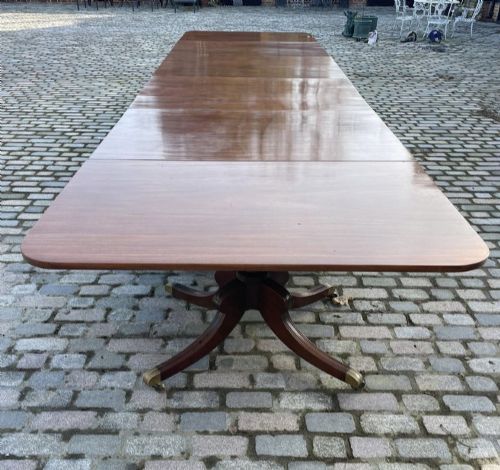
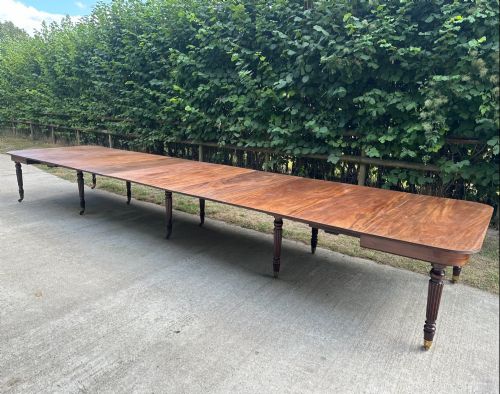
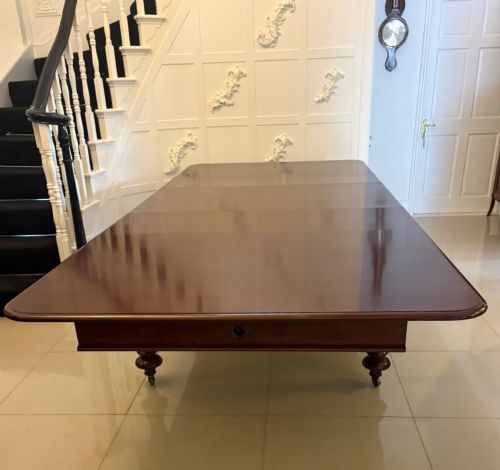
An extended banquet table brings scale and presence to large rooms, offering a substantial platform for hosting gatherings across multiple pillars and leaves.
Extended Banquet Table
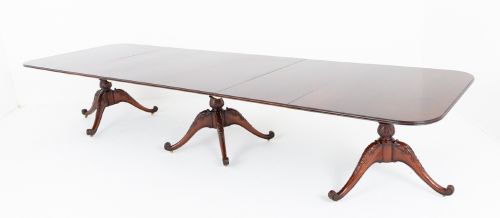
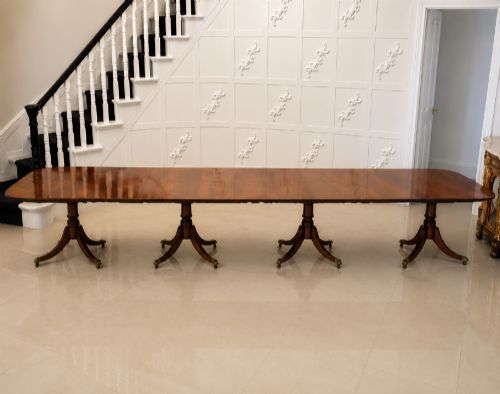
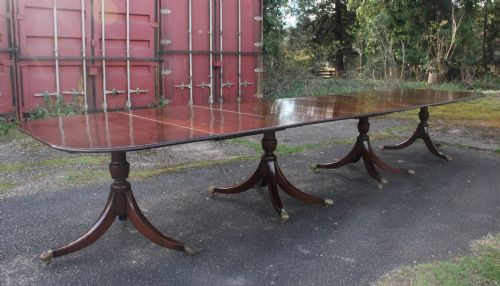
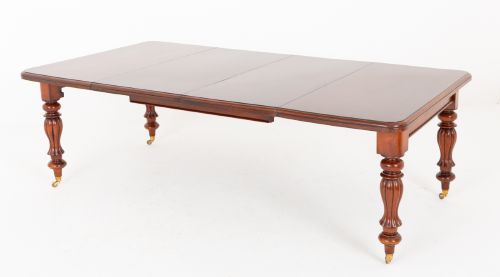
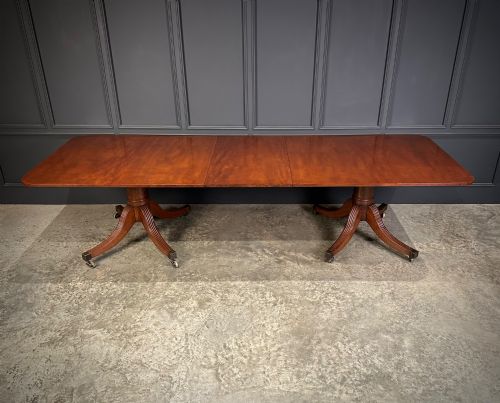
An extended banquet table provides substantial seating capacity for large dining rooms through the use of multiple pedestals and removable leaves. When searching for an extended banquet table, buyers encounter formats ranging from twin pillar layouts seating ten guests to massive multi-pillar configurations accommodating twenty-eight people.
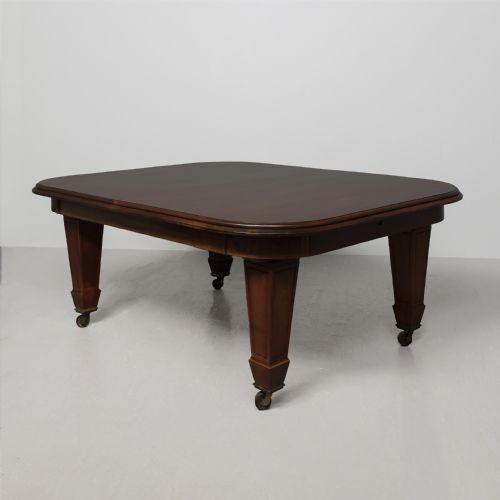
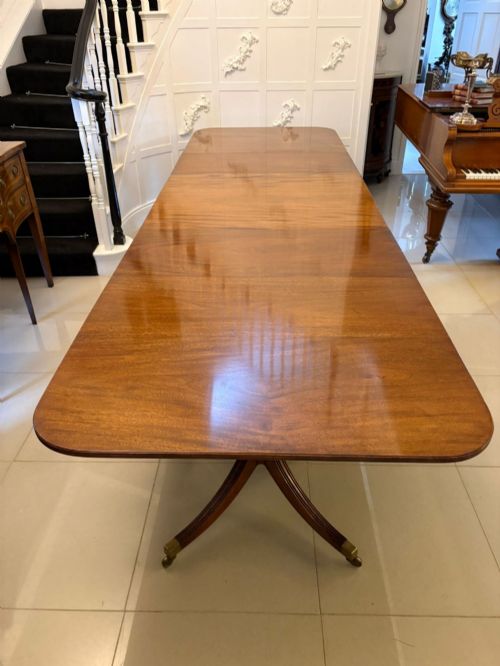
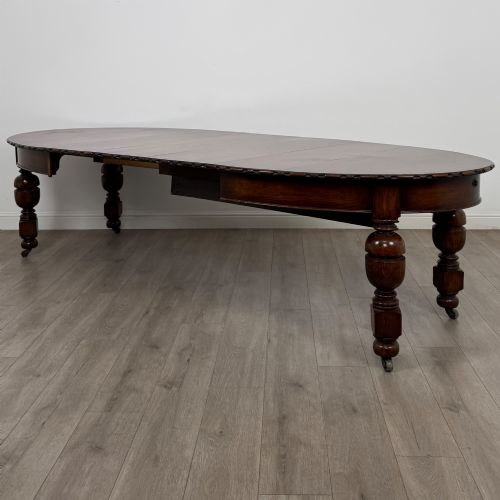
The prevailing examples on this page are constructed from mahogany, often featuring figured grain patterns, with alternative options appearing in oak and burr walnut. These pieces span periods from Georgian and Regency eras through Victorian, Edwardian, and later revival styles.
Makers such as Gillows, Wylie & Lochead, and Whytock & Reid occasionally surface, alongside tables attributed to specific design manners or produced during the nineteenth and early twentieth centuries.
How they were made
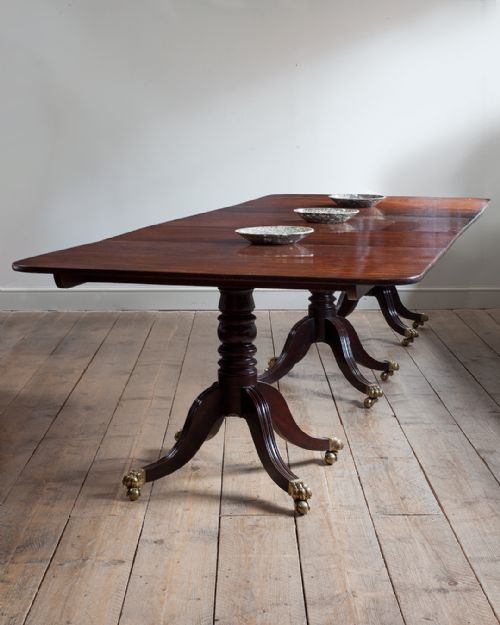
Cabinet makers constructed these large tables using solid and veneered timbers, predominantly employing mahogany alongside structural oak and decorative burr walnut. Metal components such as brass castors support the pedestals, while steel mechanisms and wooden leaf-insertion systems facilitate the extension of the top.
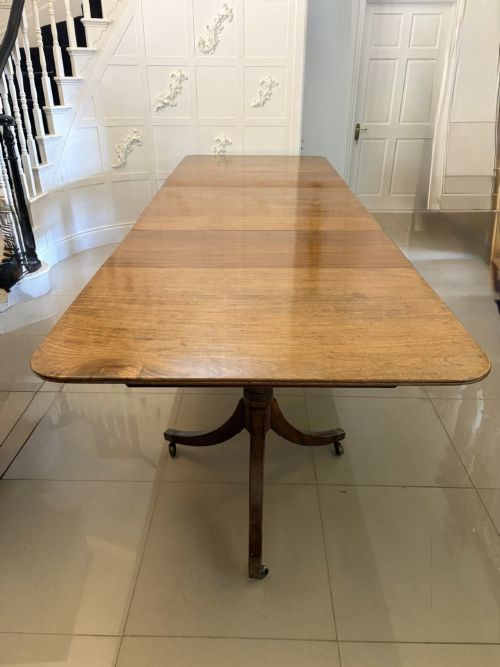
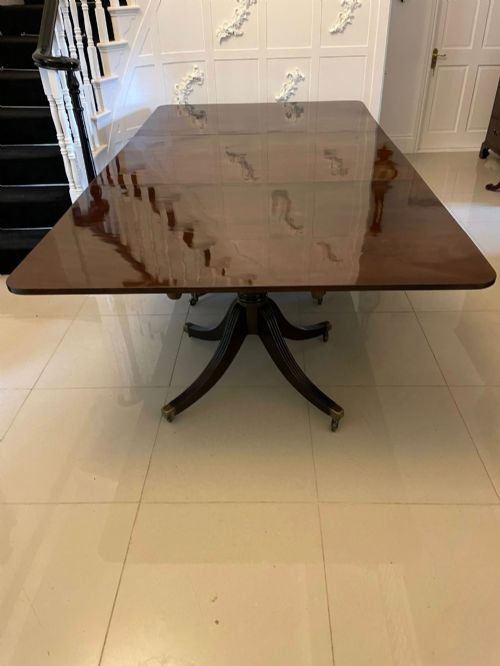
Pedestal bases frequently incorporate multiple turned or reeded pillars resting on splayed legs, providing stability for heavy tops spanning several metres. Surface enrichment includes gold leaf detailing and inlaid borders, finished with polished wooden surfaces that highlight the natural grain.
Some twenty-eight seater tables require six separate pillars just to stop the middle from trying to tell secrets.
What varies in quality
The distinction between tiers of quality rests upon the selection of timber, the precision of the pillar turning, and the integration of the extension mechanism. Superior examples utilise dense figured mahogany with matched leaves that maintain consistent grain continuity across the entire surface when fully extended.
Heavier multi-pillar formats demonstrate greater architectural ambition through carved reeded legs, solid brass hardware, and maker attributions. Lesser examples rely on plainer secondary timbers or later revival construction methods where the proportion between the pillars and the length of the top requires careful structural support.
Gillows·Wylie & Lochead·Whytock & Reid·Robert Adam·William and Gibton·Maple & Co
The Extended Banquet Table Glossary
- Pedestal
- A central support column, typically numbering two to six on these large tables, which holds the weight of the top and divides to accommodate extra leaves.
- D-End
- A table end shaped in the semi-circular profile of a capital letter D, allowing multiple sections to join together to form a complete banquet surface.
- Reeded
- A decorative moulding comprising parallel convex rounded strips carved directly into wooden legs or pillars.
- Leaf
- A removable section of timber inserted into the centre of the table to increase its overall length for larger dining capacities.
Extended Banquet Table: Frequently Asked Questions
How do I measure for an extended banquet table?
Calculate the room dimensions by leaving ample clearance around the perimeter for chairs to pull out fully when the table reaches its maximum length.
Account for the storage of spare leaves when the table is closed down for everyday use.
Can I seat twenty people comfortably?
Many multi-pillar models accommodate between sixteen and twenty-eight diners depending on the number of original leaves.
Check the placement of the pedestal bases underneath to ensure chair placement remains unobstructed along the sides.
How do the extension leaves operate?
The top pulls apart along runners, allowing separate wooden leaves to drop into the centre and lock securely into alignment.
Brass clips or wooden pegs underneath help stabilise the joins between the primary table ends and the inserted leaves.
What periods do these dining tables cover?
The selection spans Georgian, Regency, and William IV eras, alongside Victorian examples and early twentieth-century Edwardian or revival pieces.
Earlier formats often display handcrafted joinery and specific regional cabinet-making traditions.