

Extendable Wooden Table
An extendable wooden table gives you the daily compactness you need with the capacity to seat a gathering.
Extendable Wooden Table
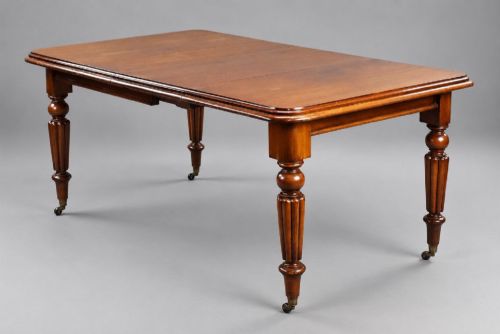
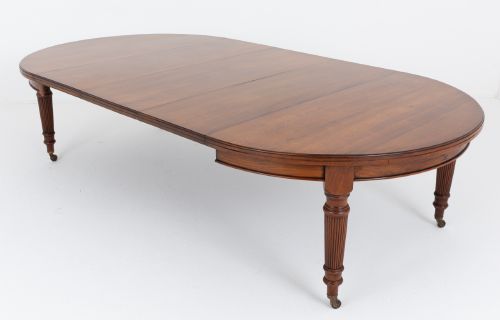
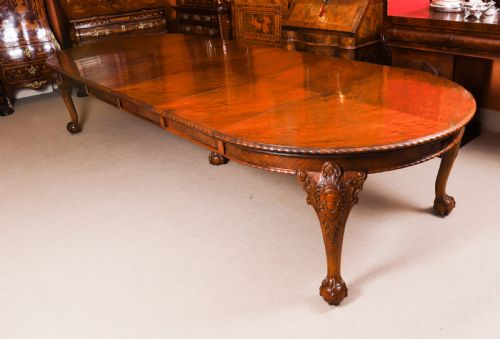
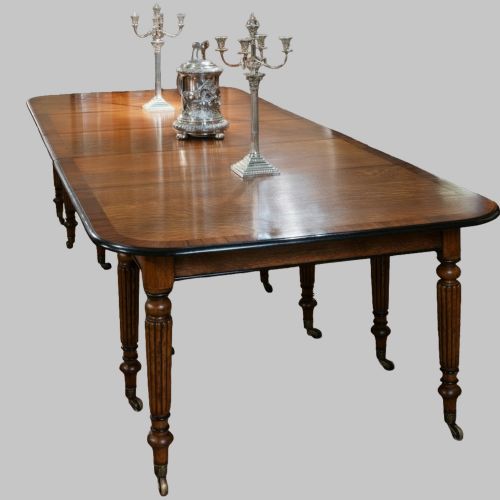
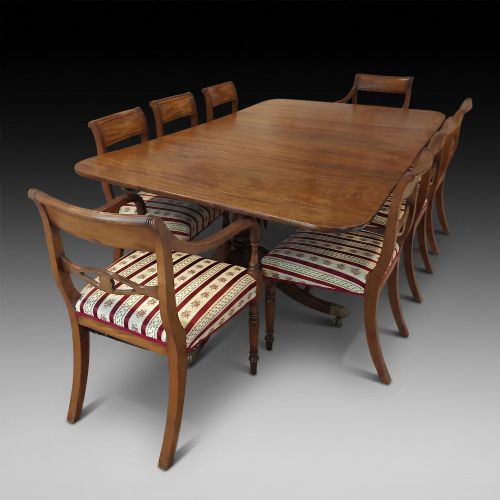
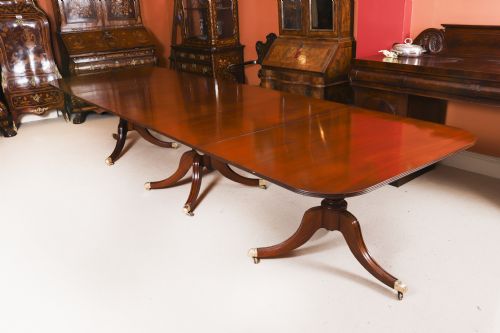
When you search for an extendable wooden table, you are looking at practical dining furniture designed to alter in length for guests. The most common form on this page is the nineteenth century mahogany dining table fitted with extra leaves or a wind out mechanism.
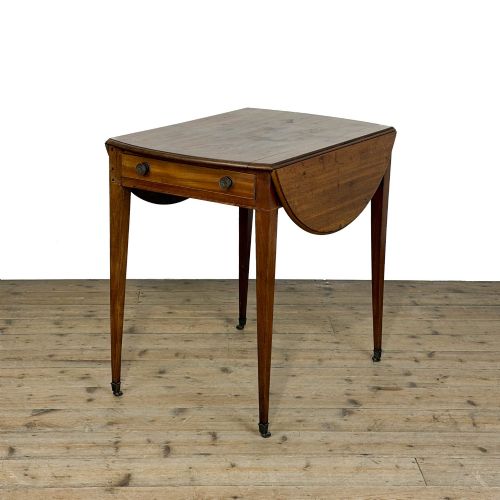
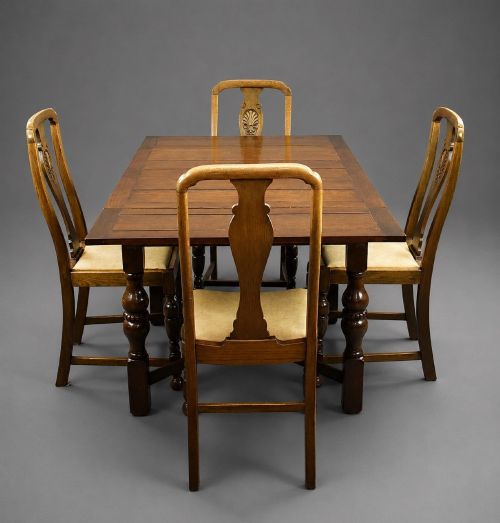
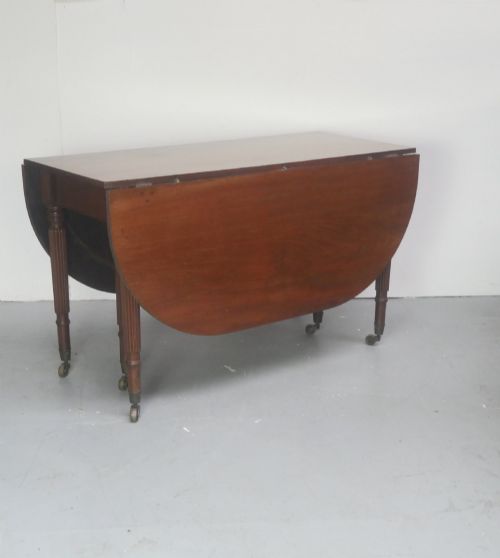
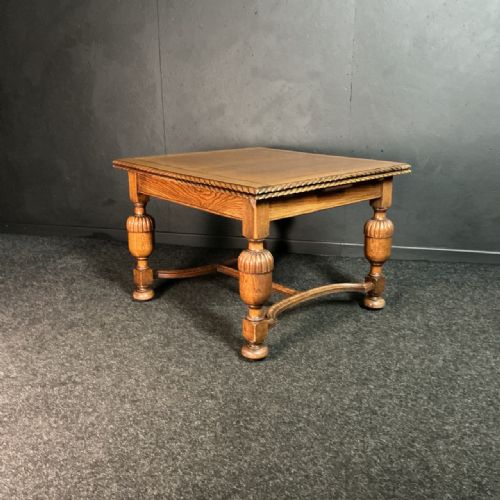
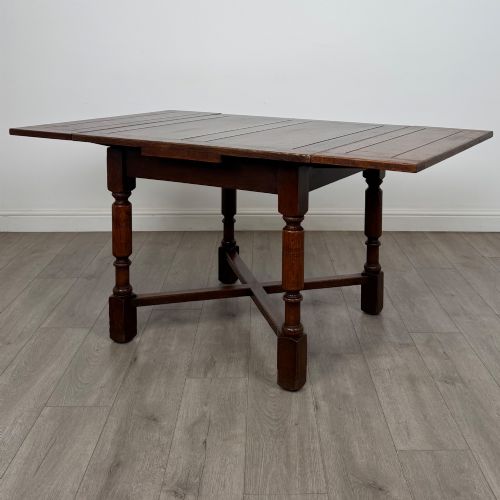
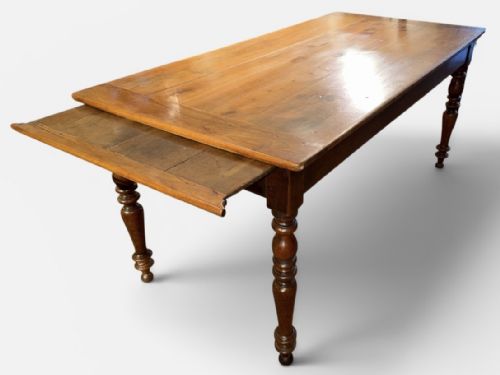
You will also find drop leaf and gateleg designs from the Georgian and Victorian eras, alongside draw leaf tables in oak from the early twentieth century. These pieces bridge the gap between everyday family meals and large dinner parties without taking up permanent floor space.
How they were made
Cabinet makers relied primarily on mahogany, walnut, and oak, often selecting figured timbers or flame mahogany for the main top surfaces. Brass featured heavily in internal winding mechanisms, castors, and subtle inlay work.
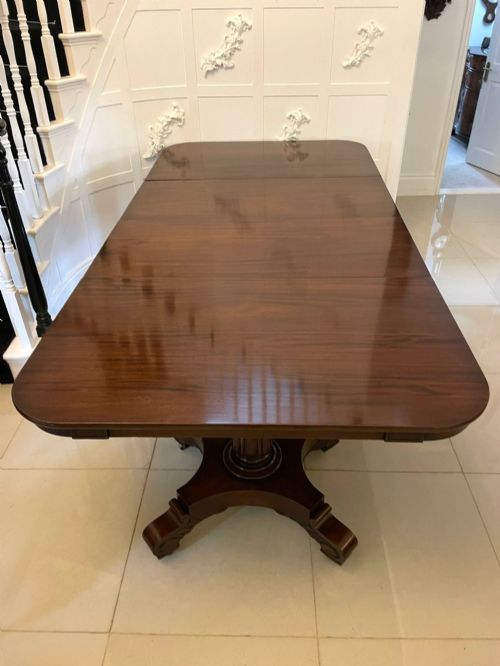
Tables were constructed using drop leaves, draw leaf frames, or screw expanders operated by handles to insert extra leaves. Frames rested on pedestals, pillar supports, or legs carved with details such as claw and ball feet.
Listings feature woods like mahogany, walnut, oak, and fruitwood across periods from the seventeenth to the twentieth century.
What varies in quality
The distinction between ordinary and exceptional pieces lies in the selection of timber, such as Cuban flame mahogany or burr walnut, and the precision of the extending mechanism. Smooth operation of the leaves and solid timber thickness define superior examples.
Carving detail on the legs and pedestals, along with the retention of original brass castors and matching extra leaves, elevates the craftsmanship. Maker attribution also plays a role in establishing the standing of a piece.
Maple & Co·Whytock & Reid·F & J Smith
The Extendable Wooden Table Glossary
- Wind-out table
- A dining table that expands using a metal screw mechanism operated by a crank handle to separate the halves and insert leaves. This system became popular during the nineteenth century.
- Draw leaf table
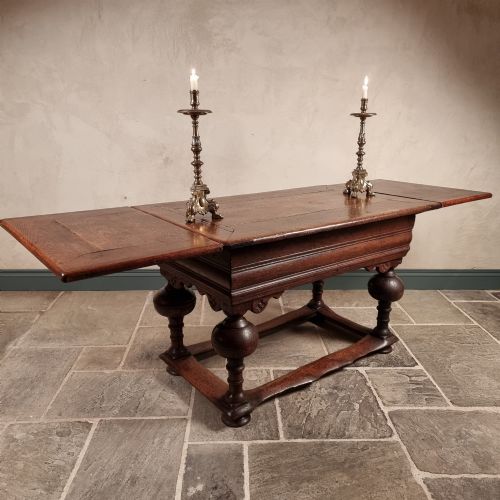
- A table with two hidden leaves stored beneath the main top that pull out from each end to extend the surface. This mechanism is frequently found on twentieth century oak tables.
- Pembroke table
- A small table with hinged drop leaves on two opposing sides, often supported by folding brackets. They served as occasional or breakfast tables.
- Gateleg table
- A drop leaf table where the legs swing out like gates to support the raised leaves. This form spans multiple centuries from the Georgian era onwards.
- Pedestal table
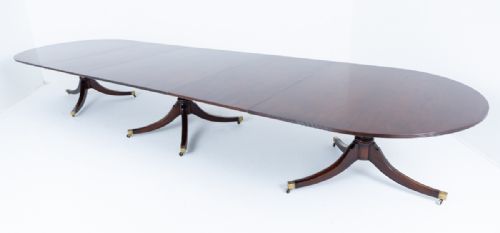
- A table where the top rests on one or more central pillars rather than four corner legs. These often feature triple or twin pedestals for stability on longer tables.
Extendable Wooden Table: Frequently Asked Questions
How do I operate a wind-out table?
Insert the winding handle into the socket beneath the rim and turn it clockwise to draw the table halves apart. Once the gap opens, drop the extra leaves into place and wind the mechanism back until the boards lock tight together.
Ensure the table bears weight evenly while winding to prevent strain on the internal wooden runners and brass screws. Keep the metal screw mechanism lightly lubricated so the halves glide smoothly without sticking.
How many people can these tables seat?
Seating capacity ranges from small four seater drop leaf versions up to grand extending tables accommodating twenty to twenty-two guests. The addition of extra leaves determines the maximum length achievable for larger gatherings.
When calculating seating, remember to account for the width of the table legs and pedestals so chairs fit comfortably underneath. Modular leaves allow you to adjust the size incrementally depending on the exact number of diners.
How do I tell a Victorian table from a Georgian one?
Georgian tables tend to feature solid mahogany with subtle drop leaf or gateleg frames, often dating from around eighteen hundred to eighteen twenty. Victorian examples frequently utilise extending mechanisms, wind-out systems, and heavier carved legs like claw and ball feet.
Look underneath the top for construction clues, tool marks, and the style of the brass castors. Oak draw leaf versions commonly point towards later Edwardian or nineteen twenties production.
How do I care for a polished wood surface?
Dust the timber regularly with a soft, dry cloth and apply natural beeswax periodically to nourish the grain and maintain the shine. Avoid placing hot dishes or wet glasses directly onto the polish to prevent ring marks.
Keep antique wooden tables away from direct heat sources and strong sunlight to prevent the timber from drying out or splitting. Use table mats and felt pads when hosting meals to protect the antique finish.