



Large Gateleg Dining Table
A large gateleg dining table provides generous seating for a crowd while folding away neatly when the meal ends.
Large Gateleg Dining Table
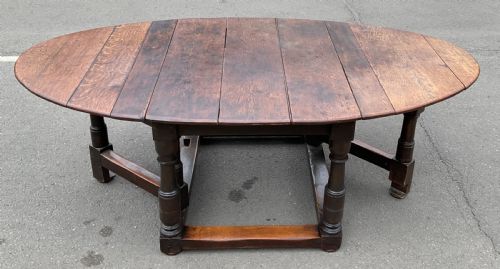
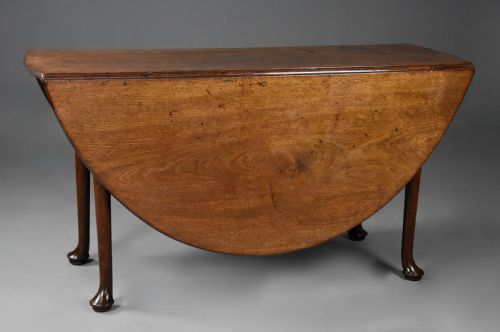
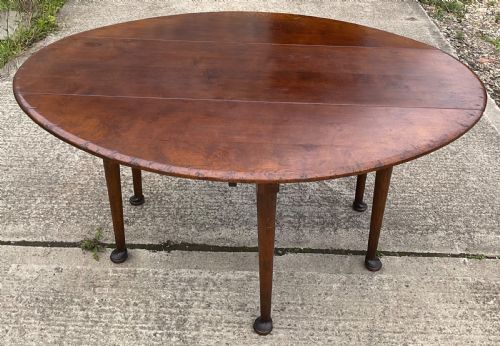
A large gateleg dining table stands as a practical centrepiece designed to accommodate numerous guests through hinged drop leaves supported by swing-out legs. The pieces found here span from the seventeenth century through the Georgian era up to early twentieth-century revivals.
Oak dominates the earlier examples, frequently seen with substantial turned stretchers and oval leaves, while later Georgian and nineteenth-century versions often utilise rich mahogany. Buyers frequently encounter sturdy oak forms designed for country dining alongside refined mahogany variations intended for formal spaces.
Formats range from standard single gateleg constructions to double gateleg designs capable of seating eight to ten people comfortably. Drop-leaf and wake dining table variations appear regularly, offering expansive surfaces that collapse against walls when floor space is required.
What varies in quality
The choice of primary timber and the selection of well-figured grain dictate the initial distinction between standard utility furniture and superior examples. Mature walnut and dense seventeenth-century oak command attention for their tactile surfaces and depth of colour.
Proportion and structural complexity elevate certain pieces above others, particularly double gateleg configurations that require intricate pivot mechanisms to support heavy leaves. Refined turning on the legs and the survival of a desirable faded patina separate exceptional workshop output from plain utilitarian builds.
Swedish country makers apparently believed that dinner guests needed robust painted pine swing leaves to survive seventeenth-century hospitality.
The Large Gateleg Dining Table Glossary
- Gateleg table
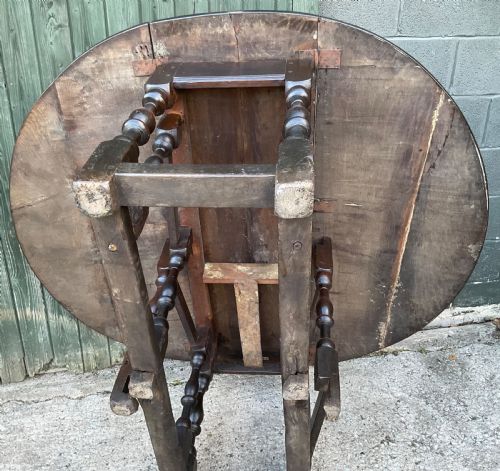
- A table with hinged flaps supported by legs that swing outward like a gate. This clever mechanism allows a compact frame to expand into a large dining surface.
- Drop-leaf
- A table top comprising a fixed centre section and two hinged flaps that drop down at the sides. It enables the furniture footprint to shrink dramatically when not in use.
- Wake table
- An exceptionally long table designed to seat large gatherings for feasts or community meals. These versions often feature extra sets of legs to support the expansive oval top.
- Bobbin turning
- A form of lathe-turned decoration resembling a string of rounded wooden beads or spools. It adds texture and visual rhythm to the structural legs of seventeenth-century furniture.
- Patina
- The surface sheen and softening of tone developed by wood through age, handling, and wax polishing. This quality reveals the authentic history of the piece.
Large Gateleg Dining Table: Frequently Asked Questions
How many people can sit at a large gateleg table?
Many examples on this page are configured to seat eight to ten diners comfortably when fully extended.
The generous oval format provides ample legroom around the swing-out gate legs without awkward central pedestals interfering with chairs.
Can I use a gateleg table every day?
These tables served as heavy-duty domestic furniture for centuries and handle daily dining with ease.
Dropping the leaves transforms the furniture footprint, making them suitable for rooms where floor space alternates between meals and open living.
How do I distinguish seventeenth century oak from later revivals?
Early pieces display distinct tool marks, pegged joinery, and timber shrinkage patterns that develop over hundreds of years of natural movement.
Revival pieces from the early twentieth century often present cleaner machine sawing and standardised turning that lacks the irregular hand-carved charm of the originals.