


Expressionist Landscape Wall Art
Expressionist landscape wall art delivers raw emotion through vigorous brushwork and bold palettes.
Expressionist Landscape Wall Art
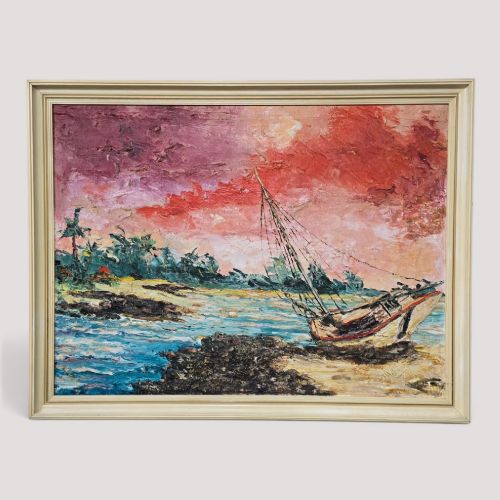
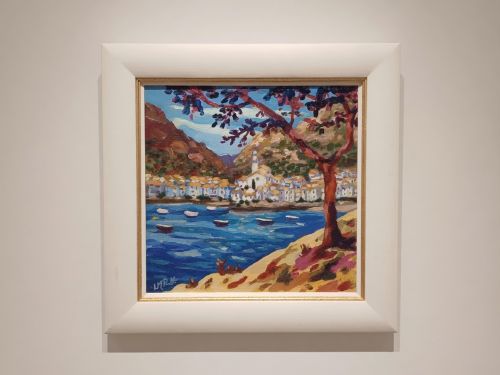
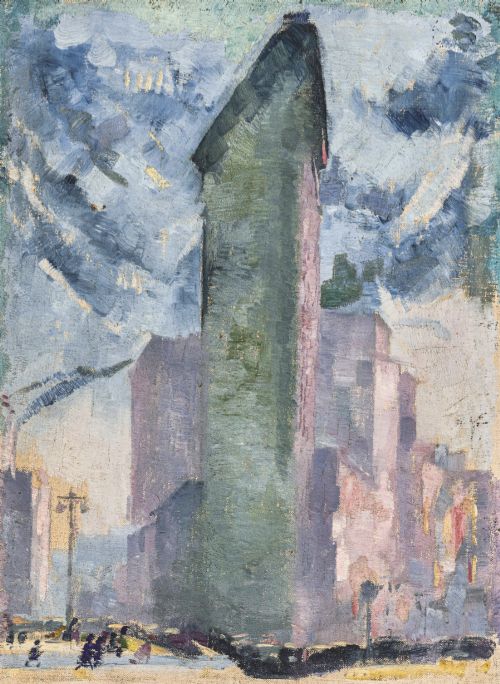
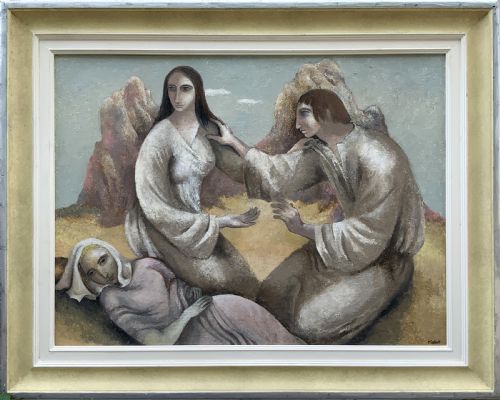
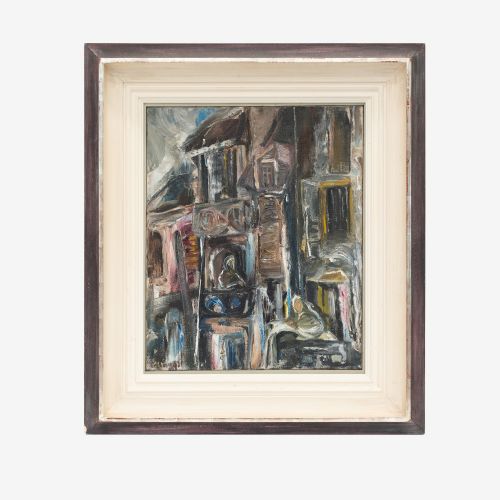
Expressionist landscape wall art captures subjective emotional responses to scenery rather than strict visual replication. When searching for expressionist landscape wall art, buyers encounter works spanning periods from the early twentieth century through the nineteen-sixties, reflecting movements such as Post-Impressionism, Fauvism, and Modern British styles.
The pieces appearing on this page take the form of paintings and sketches depicting rural vistas, village scenes, and urban streetscapes. Canvases and boards dominate the selection, often presenting dynamic views of rivers, coastlines, and rooftops.
How they were made
Artists create these works primarily using oil paint applied to canvas, wood, board, or paper supports. Many examples incorporate heavy impasto techniques, where thick layers of pigment sit proud of the surface to build texture and physical depth.
Mixed media and watercolour appear alongside traditional oils, executed within stylistic frameworks ranging from French and German expressionism to mid-century modernist abstraction.
Listings feature canvases, boards, and papers utilising oil paint, watercolour, and mixed media across mid-century modern and fauvist styles.
What varies in quality
Quality rests in the conviction of the brushwork and the confidence of the colour relationships rather than the scale of the composition. Stronger works demonstrate a deliberate handling of paint where impasto and line serve the emotional weight of the scene.
Provenance and documented attribution to named artists elevate certain pieces, distinguishing direct artistic vision from routine decorative output.
Lucy Pratt·Alfred Wolmark·Christine Nesbit·Lilian Colbourn·Joan Gillchrest·Hazel M Barnett·Gabriel Dauchot·Donald Mcintyre·Sir William George Gillies·Emanuele Cappello·Kenneth B Malpass·Sonia Lawson·Hans Kappel Øvre·Pierre Peltier·Markey Robinson
The Expressionist Landscape Wall Art Glossary
- Impasto
- A technique where paint is laid onto a canvas in very thick layers, usually thick enough that the brush or painting-knife strokes are visible. This method adds tangible texture and dimensionality to the surface.
- Fauvism
- An early twentieth-century style characterised by strong colours and painterly qualities rather than realistic or natural values. It emphasises simplified forms and saturated palettes.
- Post-Impressionism
- A predominantly French art movement that developed from about eighteen-eighty to nineteen-fourteen, extending impressionism while rejecting its limitations. Artists relied on symbolic colours and heavier outlines.
- Modern British
- A broad term encompassing art produced in Britain during the twentieth century that engaged with European modernist developments. It bridges traditional landscape observation and abstraction.
- Mixed media
- Artwork in which more than one medium or material has been employed. Artists combine paint with inks, charcoal, or collage elements to alter surface characteristics.
Expressionist Landscape Wall Art: Frequently Asked Questions
What is expressionist landscape wall art?
Expressionist landscape wall art comprises paintings and sketches that prioritize emotional intensity and subjective interpretation over strict realism.
These works utilise expressive brushwork, distortion of form, and non-naturalistic colour schemes to convey the artist's inner experience of a physical environment.
How do I date an expressionist painting?
Dating typically relies on signatures, gallery labels, exhibition records, and stylistic markers characteristic of specific decades.
Mid-century pieces often feature distinct modernist abstractions or heavy impasto, whereas works from earlier decades align with Fauvist or early German expressionist movements.
Where should I hang these paintings?
These works suit spaces with stable environmental conditions, away from direct sunlight and excessive humidity that might degrade canvas and oil paint.
Displaying them on neutral walls allows the bold brushwork and dynamic palettes to command attention without visual competition.
How do I care for oil paintings on canvas?
Maintenance requires keeping the canvas dust-free using a soft, dry brush and avoiding moisture or chemical cleaning agents on the painted surface.
Ensuring stable room temperatures prevents the canvas and wooden supports from expanding or contracting.